


Custom Packaging Trends in 2026: What's Actually Changing, and What It Costs to Ignore
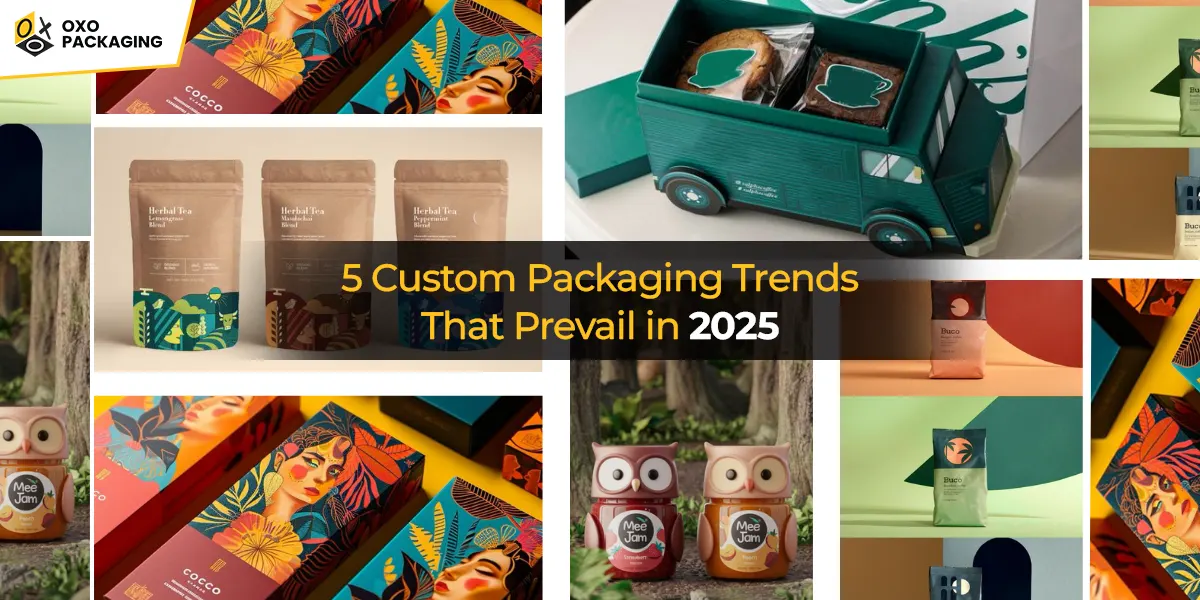
Custom packaging trends in 2026 are being driven less by aesthetics and more by three external forces: state packaging regulations that now bill brands for the materials they choose, carrier pricing that charges for box size rather than just weight, and a global retail transition to 2D barcodes that changes what has to fit on the artwork. Design trends still matter — matte finishes, printed interiors, and kraft minimalism are all having a moment — but the brands making smart packaging decisions this year are treating the box as a cost and compliance lever first, and a branding surface second.
2026 custom packaging trends at a glance
|
Trend |
What's driving it |
What to do about it |
|
Mono-material, recyclable packaging |
EPR fees in 7 US states; California SB 343 labeling rules; consumer preference |
Simplify to single-material corrugated, paperboard, or kraft; verify recyclability claims |
|
Right-sized packaging |
Dimensional weight (DIM) carrier pricing; EU empty-space rules |
Engineer boxes and mailers to fit products; set SKU-level packaging rules |
|
Plastic-to-paper migration |
Lower EPR fees for fiber; curbside recyclability; shopper preference for paper |
Switch to paper mailers, molded fiber, and paper void fill — but avoid mixed-material laminates |
|
2D barcodes (Sunrise 2027) |
GS1 global transition to QR/DataMatrix at retail point of sale |
Reserve dieline space for dual marking: UPC plus a GS1-compliant 2D code |
|
Digital short-run printing |
Low minimums, fast reorders, variable data printing |
Order smaller, iterate faster; run seasonal and personalized designs |
|
Functional unboxing |
Retention value of the delivery moment; backlash against waste |
Tear strips, dual peel-and-seal adhesive, interior printing; cut decorative excess |
|
Tactile minimalism |
Premium perception; recyclability of finishes |
Matte and soft-touch aqueous coatings, embossing, restrained kraft designs |
Here is what each shift means in practice, what it costs to ignore, and which trends you can safely skip.
Regulation is now designing the box
For most of the custom packaging industry's history, material choice was a private decision between a brand and its budget. That ended in 2025–2026. Seven US states have enacted extended producer responsibility (EPR) laws for packaging, which shift the cost of managing packaging waste onto the companies that put it on the market. If you sell into these states above the exemption thresholds, you register with a producer responsibility organization (in most states, the Circular Action Alliance), report the packaging materials you ship, and pay fees based on how much of each material you use and how recyclable it is.
US packaging EPR status, 2026:
|
State |
Law |
Status in 2026 |
|
Oregon |
Recycling Modernization Act (SB 582) |
Producer fees live since July 2025 |
|
Colorado |
HB 22-1355 |
Producer fees live since January 2026 |
|
California |
SB 54 |
Early fees in 2026; full program targeted for 2027 |
|
Minnesota |
Packaging Waste and Cost Reduction Act |
Registration phase; fees to follow |
|
Maryland |
SB 901 |
Registration deadlines in 2026 |
|
Washington |
Recycling Reform Act |
PRO membership required by July 2026 |
|
Maine |
LD 1541 (first US packaging EPR law) |
Stewardship organization selection underway |
More states — including New York, New Jersey, Massachusetts, and Illinois — have EPR bills pending, so the practical planning assumption is that the map expands.
The effect on custom packaging is straightforward: easily recyclable materials cost less to put on the market than hard-to-recycle ones, and that gap widens as fee schedules mature. A mono-material corrugated mailer with water-based inks sits at the cheap end of most fee structures. A laminated, mixed-material box with a plastic window and metallic foil sits at the expensive end — not because it costs more to make, but because it now carries an ongoing regulatory cost every time it ships.
Two related deadlines are shaping design decisions this year:
- Recyclability labeling. In California, SB 343 enforcement begins in October 2026: packaging that doesn't meet the state's recyclability criteria can no longer carry the chasing-arrows symbol. Brands that stamped the recycling logo on everything as a feel-good gesture are quietly redesigning dielines and print files to remove it where it no longer qualifies — a review that also applies to retail display packaging, which typically carries the most claim-heavy artwork in a product line.
- The EU's Packaging and Packaging Waste Regulation (PPWR). If you export to Europe, PPWR requirements around recyclability, empty space in shipped packages, and restricted substances began applying in August 2026, with more obligations phasing in through 2030.
What to do about it: audit your packaging bill of materials before your next reorder. Count how many materials each package uses, whether they separate for recycling, and whether your recyclability claims would survive scrutiny in California. Moving from a laminated multi-material structure to printed custom cardboard boxes or paperboard is the single change that addresses regulation, fees, and consumer preference at once.
Right-sizing: the box is now a line item on your freight bill
Dimensional weight pricing has existed for years, but 2026 is the year it became the dominant force in e-commerce packaging design. Major carriers bill on the greater of a package's actual weight or its dimensional weight — a formula based on the box's cubic size. A product that weighs one pound shipped in an oversized box can be billed as if it weighed four or five. Multiply that across thousands of monthly orders and packaging that's two inches too large in each dimension becomes one of the most expensive mistakes in the operation.
The response is right-sizing: engineering the box, mailer, or carton to fit the product with minimal void space. A custom die-cut mailer that eliminates two inches of void fill does three things at once:
- Cuts dimensional weight charges by shrinking the billed cubic size of every parcel
- Removes the cost of void fill itself — material, storage, and packing labor
- Reduces the material subject to EPR fees, since fees are assessed on what you ship
Right-sizing also changes which formats brands choose. Sellers shipping soft goods, books, or small rigid items are migrating from standard cartons to corrugated mailers, padded paper mailers, and fold-together boxes that hug the product. Larger operations are building SKU-level packaging rules — a defined box or mailer assignment for each product — instead of letting the packing station grab whatever fits.
One caution the trend articles skip: right-sizing has a floor. Cut protection too aggressively and damage rates climb, and a replacement shipment erases the savings of a dozen optimized parcels. The correct target is the smallest package that still passes your drop and compression requirements for that product — a structural design question, not just a measuring-tape exercise.
The plastic-to-paper migration is accelerating — with real trade-offs
The shift from plastic-based packaging to fiber-based alternatives is the most visible trend of the decade, and 2026 pushed it further into the mainstream. Poly mailers are giving way to padded paper mailers that survive automated sortation and go in curbside recycling. Bubble wrap and air pillows are being replaced by paper void fill and corrugated inserts. Molded fiber trays are displacing thermoformed plastic in electronics, cosmetics, and food packaging. Consumer surveys consistently show a majority of shoppers prefer paper-based, easily recyclable packaging, and EPR fee schedules typically price paper and card well below plastic per tonne.
Paper vs. plastic packaging in 2026:
|
Factor |
Paper / fiber |
Plastic |
|
Curbside recyclability |
High (uncoated and repulpable coated grades) |
Low to moderate; mono-material films only via store drop-off in most areas |
|
Typical EPR fee level |
Lower per tonne |
Higher per tonne |
|
Moisture / grease barrier |
Weak uncoated; needs coatings for food, candles, cosmetics |
Strong |
|
Protection per gram |
Lower — needs more material for equal cushioning |
Higher |
|
Consumer perception |
Preferred by most shoppers |
Increasingly read as waste |
|
Regulatory trajectory |
Favored |
Restricted (bans, fees, labeling limits) |
The honest version of this trend includes the trade-offs, because switching materials badly is worse than not switching at all:
- Barrier performance. Products that need moisture or grease barriers require coated or laminated papers — and the wrong coating makes the package unrecyclable anyway, which defeats the purpose and can still trigger higher EPR fees. The problem is category-specific: candle packaging has to resist wax and fragrance oils migrating into the board, while the grease-resistant coatings used in bakery packaging vary widely in whether they're repulpable. Ask your supplier that question specifically, stock by stock.
- Protection per gram. For fragile items, a structural solution — a corrugated insert engineered to suspend the product — usually beats loose paper fill on both protection and material use.
- Mixed materials are the trap. A paper mailer with a plastic bubble lining looks sustainable and is functionally unrecyclable. If you switch, switch cleanly: mono-material paper, or mono-material recyclable plastic, never a laminate of both.
The design language has followed the materials. Natural kraft with restrained one- or two-color printing, matte and soft-touch finishes instead of high gloss, and embossing or debossing for texture — these read as premium and environmentally serious at the same time, which is why they dominate 2026 packaging design. Even rigid box construction, the most premium end of the market, is trending toward uncovered board textures and debossing over foil-heavy wraps. One nuance worth knowing: soft-touch lamination, the finish everyone loves in the hand, is a plastic film. On a package marketed as recyclable, an aqueous soft-touch coating is the more defensible choice.
Sunrise 2027 puts a second barcode on your dieline
The least glamorous trend on this list may be the most consequential for packaging artwork. GS1's Sunrise 2027 initiative is the global retail transition from the traditional UPC barcode to 2D barcodes — QR codes and DataMatrix codes that carry far more data: batch numbers, expiry dates, traceability information, and links to product content via GS1 Digital Link. The 2027 milestone is when retail point-of-sale systems worldwide are expected to be ready to scan 2D codes. GS1's guidance for the transition is dual marking: packaging carries both the existing UPC and a 2D code, positioned so both scan cleanly at checkout.
For custom packaging, this is a 2026 problem, not a 2027 one, because packaging is designed, printed, and warehoused months ahead of sale. A practical artwork checklist for retail packaging designed this year:
- Reserve dieline space for a 2D code alongside the UPC, following GS1 placement guidance
- Maintain quiet zones and strong print contrast — small QR codes on dark or metallic backgrounds fail scans
- Confirm every product carries a properly licensed GTIN before encoding it into a Digital Link URI
- Keep the two codes separated enough that scanners don't misread one for the other
- If the code will carry batch or date data, plan for on-line printing at the packaging stage rather than pre-printed artwork
For many products the 2D code will live on custom labels rather than the box itself, which makes label stock, size, and print contrast part of the same artwork decision. There's an upside hiding in the compliance work: a single GS1-compliant QR code can serve the cashier, the logistics scan, and the customer's phone at once, replacing the assortment of marketing QR codes many brands already print. For products with regulatory disclosure needs — supplements, food, cosmetics — the 2D code becomes the place where detailed information lives without crowding the panel.
Short runs, fast reorders: digital printing keeps lowering the entry price
A decade ago, custom printed packaging meant plates, four-figure minimums, and a commitment to one design for a year. Digital printing has steadily dismantled that, and in 2026 the effects are fully visible in how brands behave:
- Minimums in the low hundreds, putting full custom packaging within reach of early-stage brands
- Seasonal and limited-edition packaging treated as routine marketing rather than a luxury
- Variable data printing that runs multiple designs — or individually personalized boxes — within a single order
- Faster iteration, with reorder cycles short enough to revise a design based on customer feedback
This changes the strategic calculus for small brands especially. When a custom box run required 5,000 units, plain stock packaging plus a branded insert was the rational choice below a certain order volume. With digital short runs, the crossover point where full custom packaging pays for itself has dropped substantially — several hundred orders a month is a common threshold, and subscription brands treat custom packaging as part of the product itself regardless of volume. The practical advice: don't over-order. A smaller order you can revise in eight weeks is often worth more than a marginal per-unit saving on boxes you'll still be shipping — or discarding — next year.
Unboxing grows up: function over confetti
The unboxing experience remains a genuine retention lever — it's the one physical touchpoint an e-commerce brand controls — but its execution in 2026 looks different from the crinkle-paper-and-glitter era. The elements gaining ground are functional:
- Tear strips and easy-open features, because the experience starts with opening, and hunting for scissors is friction
- Dual peel-and-seal adhesive strips, so the same mailer handles a return without tape — a small feature that measurably improves the returns experience in categories like apparel
- Interior printing, which delivers the branded reveal on the surface the customer actually looks at, without adding a single extra component
- Deliberate restraint — excessive packaging now reads as waste, not luxury; customers photograph absurdly oversized boxes to mock brands, not to praise them
The common thread: the strongest unboxing investments in 2026 are the ones that also reduce material, cost, or friction. Anything that adds a component needs to earn its place.
What's overhyped in 2026
A trends article that endorses everything is a catalog, so for balance:
|
Overhyped trend |
Why it's promoted |
Why most brands should skip it |
|
AR packaging experiences |
"Interactive engagement" |
Scan rates on marketing-only AR remain low; the same QR real estate is better spent on the GS1 Digital Link code you'll need anyway |
|
NFC chips on everyday products |
Authentication, "connected packaging" |
Justified for luxury goods and spirits where counterfeiting is real; on a $30 product, a printed 2D code delivers most of the value at near-zero cost |
|
"Biodegradable" plastics |
Green positioning |
Most require industrial composting facilities many cities lack, they contaminate recycling streams, and regulators are tightening what the label may claim |
Verified recycled content and mono-material recyclability are the safer claims — and under EPR fee structures, usually the cheaper ones.
How to prioritize: a practical order of operations
If you're planning packaging for the next twelve months, the trends above sort into a sensible sequence:
- Right-size first. It pays for itself immediately in freight and touches nothing else.
- Simplify materials toward mono-material recyclable structures — lower EPR exposure, matches consumer preference, future-proofs against labeling rules like SB 343.
- Reserve dieline space for a 2D barcode on anything destined for retail shelves.
- Use digital printing's low minimums to iterate rather than committing a year's volume to one design.
- Then spend on finishes and unboxing details — choosing the ones that add function or texture without adding components.
Brands that follow that order tend to discover something counterintuitive: the compliance-driven and cost-driven changes produce better-looking packaging anyway. A right-sized, uncoated kraft mailer with sharp one-color printing and a clean 2D code is simultaneously the cheapest, most compliant, and most current-looking package on the doorstep.
Regulation-driven material simplification. With seven US states operating packaging EPR programs and two already invoicing producers, brands are consolidating toward mono-material, verifiably recyclable packaging — corrugated, paperboard, and kraft — because it now costs measurably less to put on the market than mixed-material alternatives.
Increasingly, no. Recycled corrugated and kraft stocks are cost-competitive with conventional options, paper typically carries lower EPR fees than plastic, and right-sized fiber packaging reduces dimensional weight charges. The exception is barrier applications, where recyclable coated papers can still carry a premium over plastic laminates.
Most state programs exempt small producers below revenue or tonnage thresholds, but the thresholds differ by state, and Washington's small-business exemptions are narrower than Oregon's or Colorado's. If you sell into EPR states at meaningful volume, check each state's threshold rather than assuming you're exempt.
Sunrise 2027 is GS1's global milestone for retail point-of-sale systems to accept 2D barcodes (QR and DataMatrix) alongside traditional UPCs. It affects packaging designed in 2026 because artwork printed now will still be on shelves in 2027 — GS1 recommends dual marking, so new retail packaging should reserve space for both codes.
Marketing-only AR activations, NFC chips on low-priced products, and "biodegradable" plastics that require industrial composting. Each adds cost or compliance risk without the return that right-sizing, material simplification, or better structural design delivers.







 Let's Call