


Detailed Guide to Choosing the Best Coffee Packaging Material
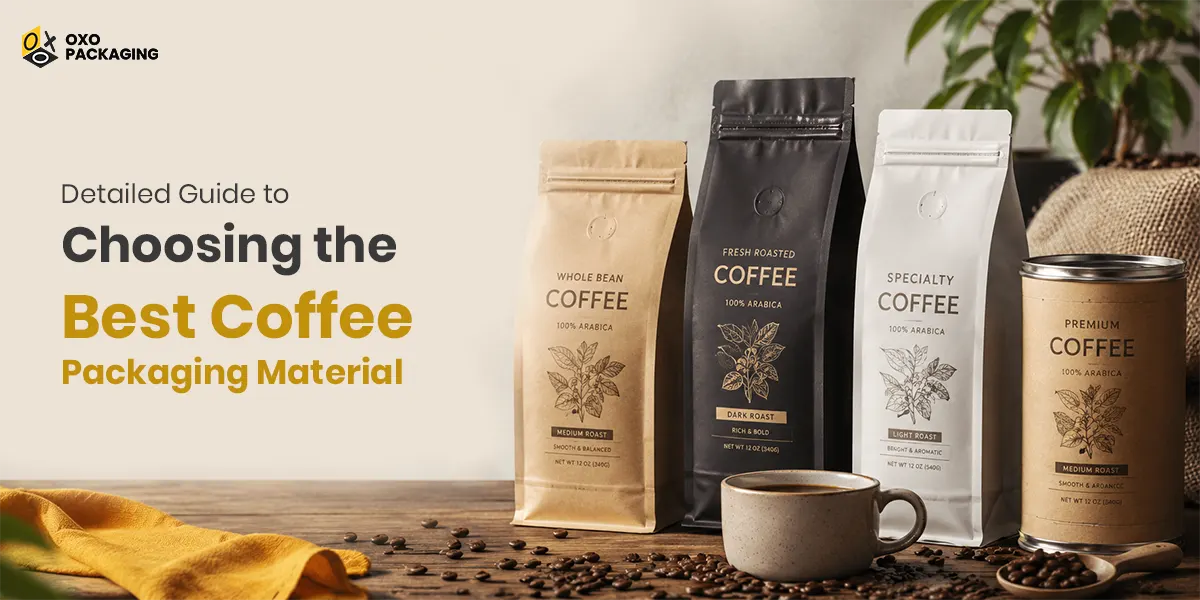
Coffee is more than a grocery item for individuals and families alike. People purchase it to start their mornings with an energetic vibe and have it with their loved ones in the second half of the day. But if the coffee content isn’t preserved to its best aroma and richness, the consumers won't purchase from that brand again. The secret ingredient to its quality isn’t only the source but how it’s being packed. Here in this blog, we’ll explore some of the top custom coffee packaging materials that your brand can opt for and offer freshness with every serving.
The Silent Destroyers of Coffee Freshness
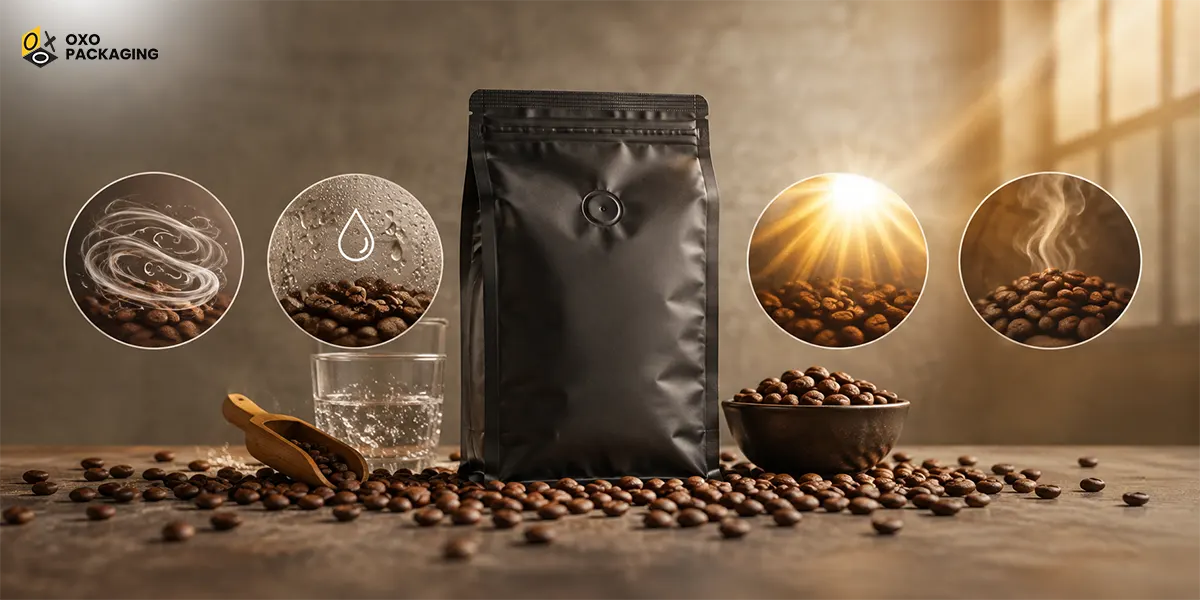
Once the coffee beans are ground or roasted, they become sensitive to their environment, and any change can either impact their quality in a positive or negative way. Below are the four major factors that can degrade the coffee’s excellence:
- Oxygen (oxidation): is the main cause behind the coffee quality loss. The beans that are stale because of the oxygen result in the compromise of the distinct flavor notes and complexity of the coffee.
- Moisture infiltration: as they are porous and hygroscopic in nature. This means that they rapidly absorb the humidity from their surroundings. While moisture accelerates, spoilage can cause the breeding ground for mold, which is non-usable at any phase.
- Light strength: as most new brands ignore this aspect, as the intensity of light can also degrade the coffee quality. To prevent this, the packaging must be layered with a sheet or resistive coating to minimize the UV rays’ impact.
- Heat: because even the ambient warmth can accelerate internal chemical reactions. At start there’s no change, but it speeds up the staling process, and the oils move towards the bean's surface and oxidize faster.
Coffee Packaging Materials to Pick for the Preservation of Beans & Powder
If you’re starting up your coffee brand or want to upgrade your packaging game, choosing the right materials can make a big difference. Below are some material options, along with the properties they offer and some pros & cons.
|
Material Type |
Oxygen & Moisture Barrier |
UV Light Protection |
Best For |
Pros |
Cons |
|
Aluminum Foil Laminate (PET/AL/PE) |
Excellent (Highest protection) |
Complete (100% opaque) |
Long-term storage |
Blocks all staleness triggers |
Not easily recyclable |
|
Metalized Polyester (VMPET/PE) |
High (Very reliable) |
High (Reflective) |
Retail packaging |
Budget-friendly alternative to pure foil |
Lower barrier than solid aluminum |
|
Kraft Paper with PLA/AL Lining |
Moderate to High (Depends on inner lining) |
High (Opaque paper layer) |
Specialty beans |
Premium organic looks |
Outer paper can stain or tear |
|
Monoplastic (Recyclable PE or PP) |
Moderate (Improving with tech) |
Low to High (Needs solid printing) |
Sustainable brands |
100% recyclable in standard plastic streams |
Higher oxygen transmission rate |
|
Glass Jars (with airtight seals) |
Excellent (Impermeable) |
Low (Unless amber/dark glass) |
Home storage |
Zero chemical leaching |
Heavy & breakable |
|
Tinplate / Metal Cans |
Excellent |
Complete |
Premium ground coffee |
Highly protective |
Expensive setup costs for brands |
Sustainable Options That are Much Better Than Traditional Materials
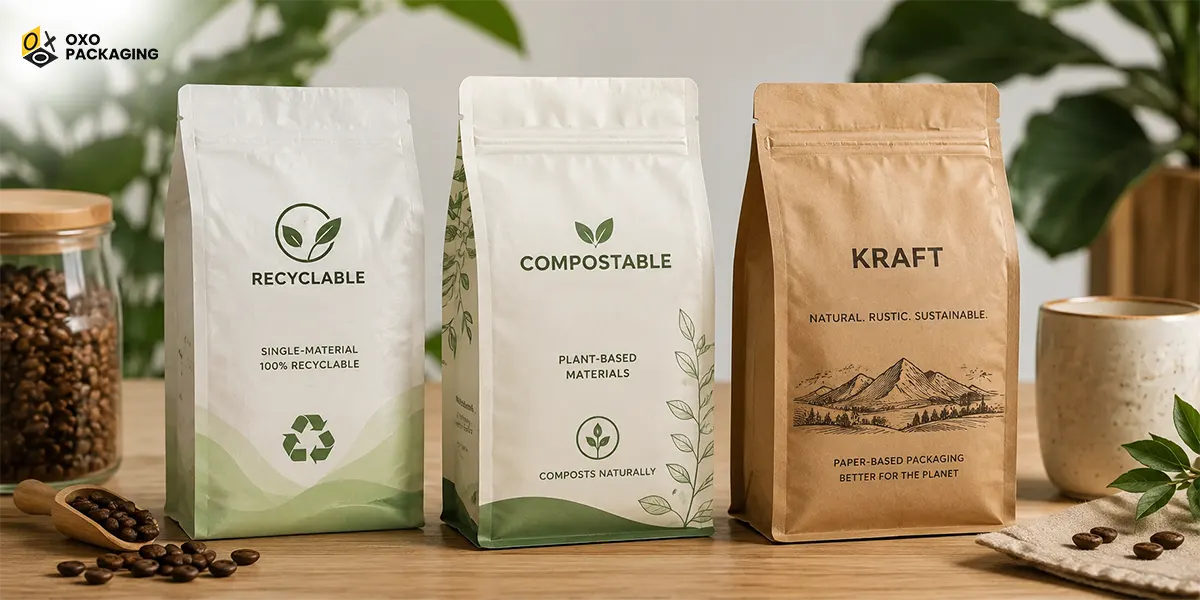
Unfortunately, the old material composition is now getting obsolete because they don’t offer the sustainability that is a major concern for people and the planet. Now brands have distinctive choices to consider, as some recyclable packaging options for coffee are briefly mentioned below:
- Recyclable plastics, which include single-layer or mono-material structures. These options are easy to recycle, and when we compare them with the older plastic options, they have a very short degradability timeframe as well.
- Compostable materials, which are either made from plant-based or rice paper choices. It is an optimal choice for brands whose target audience is highly planet-conscious and always purchases zero-waste items.
- Kraft is a full paper-based packaging solution that features organic, rustic, and natural looks. While sometimes, the material is lined internally to further upgrade its barrier strength properties.
The Bottom Line
All in all, we hope you understand the material options available for coffee packaging. There’s no mere one-selection that can offer flawless perks, but for each presentational demand, the options change. You should consult with an expert, as OXO Packaging is one of your trusted packaging vendors. Reach out to us by calling (510) 500-9533 or writing your query to sales@oxopackaging.com for a detailed response.
The one-way degassing valve is one of the functional solutions to get rid of the excessive CO2 buildup inside. It extracts the carbon dioxide from inside without letting the oxygen enter the packaging.
The requirement to integrate the degassing valve is only for the mylar packaging pouches. While for glass jars or tin containers, they don’t demand this customization as they preserve the coffee content without any further add-on.
The number of layers of the foil sheets can vary as per the packaging customization of the brand. Usually, it contains approx. 3-4 layers, which are enough to retain the freshness of beans.
There are multiple options available that can preserve the quality of coffee. But high-barrier LDPE is one of the reliable choices as it resists oxygen and moisture from the inside out.







 Let's Call