


Pros and Cons of Offset and Digital Printing
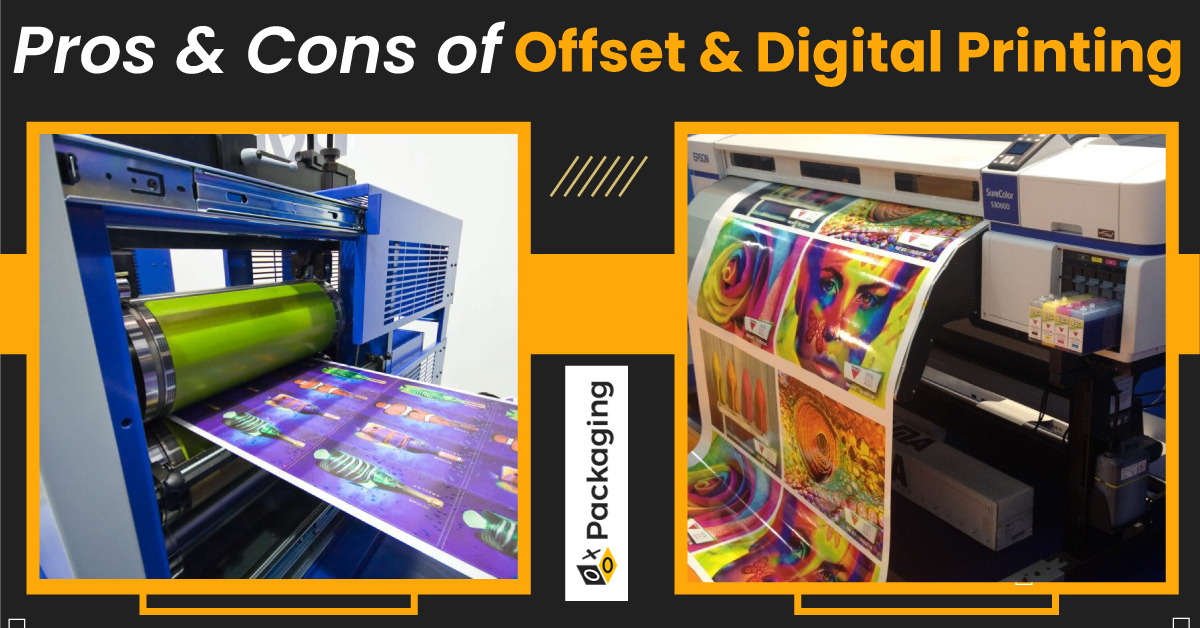
The most common paper printing type is offset printing. Whether a paper is used in the document form or is used in the packaging, the offset printing technology increases the value of the product. But before we dive deep into its applications let us first discuss how offset printing actually works. Offset printing is also termed ‘Offset Lithography’. In this printing process, the ink that gives the packaging or the document its color is transferred from the metal plate to the rubber. Once the ink reaches the rubber, it is then transferred to different substrates to produce the design and print necessary. Offset designing is pretty commonly used in the mass-scale printing of documents, newspapers, books, and packaging products.
Offset Printing VS Digital Printing
Digital and offset digital can differ in multiple aspects if we look at functionality and convenience from both patterns. As we all know, offset printing has been serving the printing industry for almost a decade and will always have a good job in printing. However, with new era technology advancements being invented, and in the printing industry, “digital printing” has closed the gap in quality that once existed. As a result, most people opt for digital tools to avoid errors.
The Offset Printing Process?
The Offset Printing process starts with the design selection. If you want to apply offset prints on Custom Printed Boxes in the USA, then the first thing you need in your hands is the designs.
- In the first step, the image, text, or design to be printed is placed on a metal plate. Sometimes it is a polyester, plastic, or paper plate.
- For the next step, the plate is then transferred to the tuber cylinder where the main printing process initiates. If both the sides of a Kraft paper need to be printed such as newspaper then two metal plates are used.
- In the next process, the actual printing on the paper happens. The rollers containing the ink feed the paper and after that our artwork design stamps or ‘prints’ onto the paper are created with high-quality color output.
What is Digital Printing?
Digital printing is a process by which digitally produced images are printed on different surfaces such as paper, packaging, and other items. Unlike offset printing, digital printing contains no plates and it is due to the less dependency on printing plates that distinguishes digital printing from traditional printing types.
Digital VS Offset Printing Pros and Cons
Let's take a look at the digital vs offset printing pros and cons so you can make an analysis of which printing method you should choose before manufacturing your product or retail packaging.
Benefits of Offset Printing
- The ink used in offset printing is natural. On the other hand digital printing use digital means to print the colors as no natural ink is used in this case. Therefore, the offset printing exhibit provides a natural look and texture to the custom box.
- As mentioned earlier offset printing technology is used when large-scale printing of newspaper and packaging is required in bulk quantities. Therefore, when the quantity of the printing is high, the cost per print reduces.
- Offset printing is highly flexible. You can apply offset printing on a variety of surfaces such as paper, leather, packaging, wood, and plastic. Moreover, offset printing is also flexible enough for pasting customized designs on the packaging surfaces.
- Offset printing is a fast and effective printing method. A single Web Fed machine produces 80,000 printing copies which are highly remarkable in speed.
Advantages of Digital Printing
- The color grading quality in digital printing is better when compared with other printing types.
- As no printing plates are used in the digital printing process, therefore the overall printing cost is significantly less than other printing options.
- The ink loss in digital printing is significantly minimal. It only releases the colors and inks where printing is necessary therefore the chemical wastage is also reduced. Digital printing is therefore eco-friendly.
- The processing type in digital printing is very efficient. No plates are required to be shifted from one place to another. Therefore the entire printing procedure occurs in one step only.
Limitations of Offset Printing
- In offset printing, ink from metal printing plates is transferred towards the rubber plates. This adds an extra step to the printing process. Due to this extra added step, time management becomes a real issue especially when one has to print a packaging item at the last minute.
- If you want to print address information, phone, and other text details separately for each document, packaging, or letter, then offset printing will cost more money and time. On the other hand, such kind of printing is easily and timely doable with digital printing.
- Offset printing is not a better option for short printing. As mentioned earlier, offset printing saves a lot of money on large-scale printing but when it comes to short prints, digital printing is always better.
Limitations of Digital Printing
- The final print made by the digital printer is less durable. Even though the color grading is qualitative with low time, the durability of the printed design is a major issue.
- Since pricing in digital printing is fixed, even if bulk orders are placed, the cost reduction with wholesale deals will remain a problem. To sum up, digital printing is more costly than offset printing.
- The diversity of printable fabrics is often limited in digital printing. On the other hand, screen and offset printing provide a vast array of diversified printable fabrics.
Conclusion
Now that you understand the Offset printing and digital printing difference, it is easier for you to select one. Both offset and digital printing have unique features, even if we keep their disadvantages at bay. Even though digital printing is an updated and latest printing technology, offset printing technology is by far the best printing option out there in the packaging. It is because offset printing provides cost-effective opportunities for the packaging retailers to print packaging surfaces in large quantities. Moreover, the packaging surfaces of any kind of product have the same print on them. Therefore, offset printing is a cost-effective and packaging-friendly printing choice for retailers.
Digital printing prints directly from a file, ideal for short runs, variable data, and quick turnarounds, while offset printing uses plates and wet ink for large quantities, offering superior color matching.
You can achieve longer print runs with digital, but printing a higher volume this way can be more expensive than with offset printing.
Offset printing's main advantages are its superior, sharp image quality, cost-effectiveness for large volumes, precise color control, durability, and versatility with various materials.
One drawback of digital printing is that it has a higher cost per page than other traditional offset printing methods, but this price is usually offset by avoiding the cost of setups needed to make printing plates.







 Let's Call