


Colored Dots on Food Packaging: What Do They Really Mean?

Have you ever noticed small colored dots, circles, or squares printed on a food package? These marks often appear in rows of yellow, cyan, magenta, black, or other colors. Many consumers wonder whether they indicate ingredients, food quality, expiration dates, or safety information
In most cases, colored dots on food packaging are printing marks used during the manufacturing process. They help packaging printers check colors, alignment, and print consistency. However, not every colored mark has the same purpose. Their meaning depends on the packaging design, printing method, and manufacturer.
Understanding these marks helps consumers avoid confusion and allows food businesses to maintain better packaging quality.
What Are Colored Dots on Food Packaging?
Coloured dots are small printed marks that packaging manufacturers may use to monitor the printing process. They are commonly found on snack bags, cereal boxes, candy wrappers, frozen foods packaging, and other printed food containers.
These marks are often called color control marks, printer marks, or ink control marks. They help printing operators confirm that the colors used in a design are producing the expected results.
For example, a potato chip bag may contain several colors, including red, yellow, blue, and black. Small dots printed near the edge of the package help operators check whether those colors are being applied correctly.
The dots are generally part of the manufacturing process rather than information intended for consumers.
Why Do Food Packaging Manufacturers Use Colored Dots?
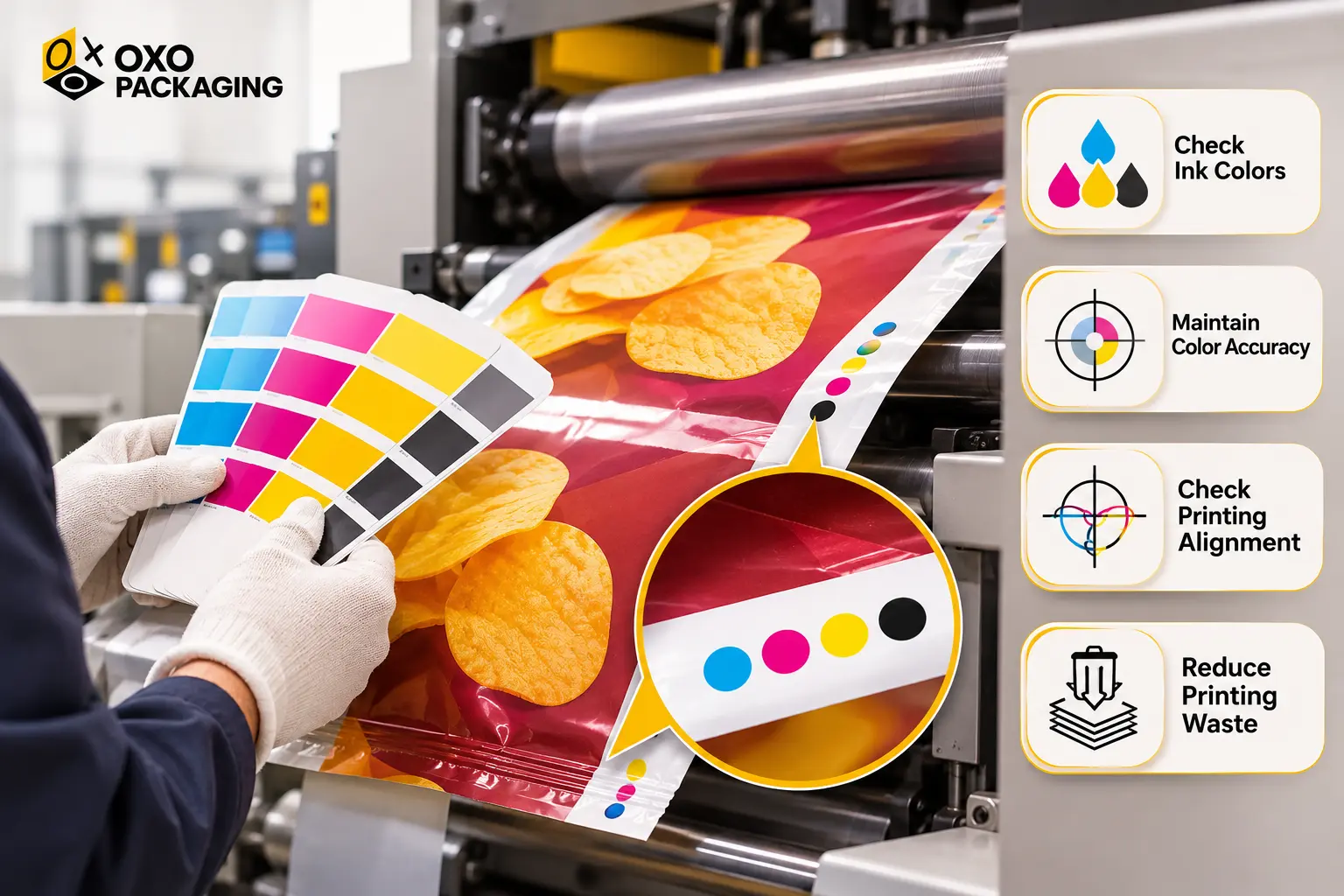
Food packaging manufacturers use dots for several practical reasons. These marks help make sure that the final package looks the same and looks good every time.
- Checking Ink Colors
Most full-color packaging designs use a printing process called CMYK, which stands for cyan, magenta, yellow, and black. Printers mix these four ink colors in amounts to create many different colors and images.
Color control marks help workers check if each ink is printing the way. If one color is too light, too dark, or not the same, the worker can look into it and fix the printing process.
This is very important for brands that need their logos, product images, and brand colors to look the same across packages.
- Maintaining Color Accuracy
Color consistency is very important for food brands. People often know products by their packaging colors, logos, and pictures.
Colored dots let the printing team compare the ink output to the color standards. Depending on how theproduction iss set up, workers also use special tools to check how dark the ink is and how accurate the color is.
These checks help make sure there are not many differences in color between different batches of packaging.
- Checking Printing Alignment
Marks can also help workers spot problems with how the colors line up. Alignment means making sure that each color is in the same place on the same package.
If the colors are not lined up right, text might look blurry, pictures might have colored edges and logos might look wrong.
Alignment marks let workers see these problems and fix them before bad packaging gets to the market.
- Reducing Printing Waste
Printing mistakes can waste paper, plastic, ink, and time. By checking colors and alignment while making the packages, food packaging companies can find problems sooner.
This helps them avoid throwing away packaging, keep costs down, and make the process better and faster.
What Do Different Colored Dots Mean?
The meaning of a colored dot depends on the printing system used by the manufacturer. However, some common colors have recognizable roles in commercial printing.
|
Color |
Common Printing Role |
|
Cyan |
One of the primary colors used in CMYK printing |
|
Magenta |
Helps produce reds, pinks, and other mixed colors |
|
yellow |
Used to create yellow tones and combine with other inks |
|
Black |
Adds dark tones, contrast, and readable text |
|
Additional spot colors |
Used for specific brand colors or special printing requirements |
A row of cyan, magenta, yellow, and black dots may indicate that the printer is monitoring the inks used in the design.
However, the presence of a particular color does not guarantee that the dot serves a specific function. Some marks are customized for individual production systems, and additional colors may be used for specialized printing.
Do Colored Dots Indicate Food Quality or Safety?
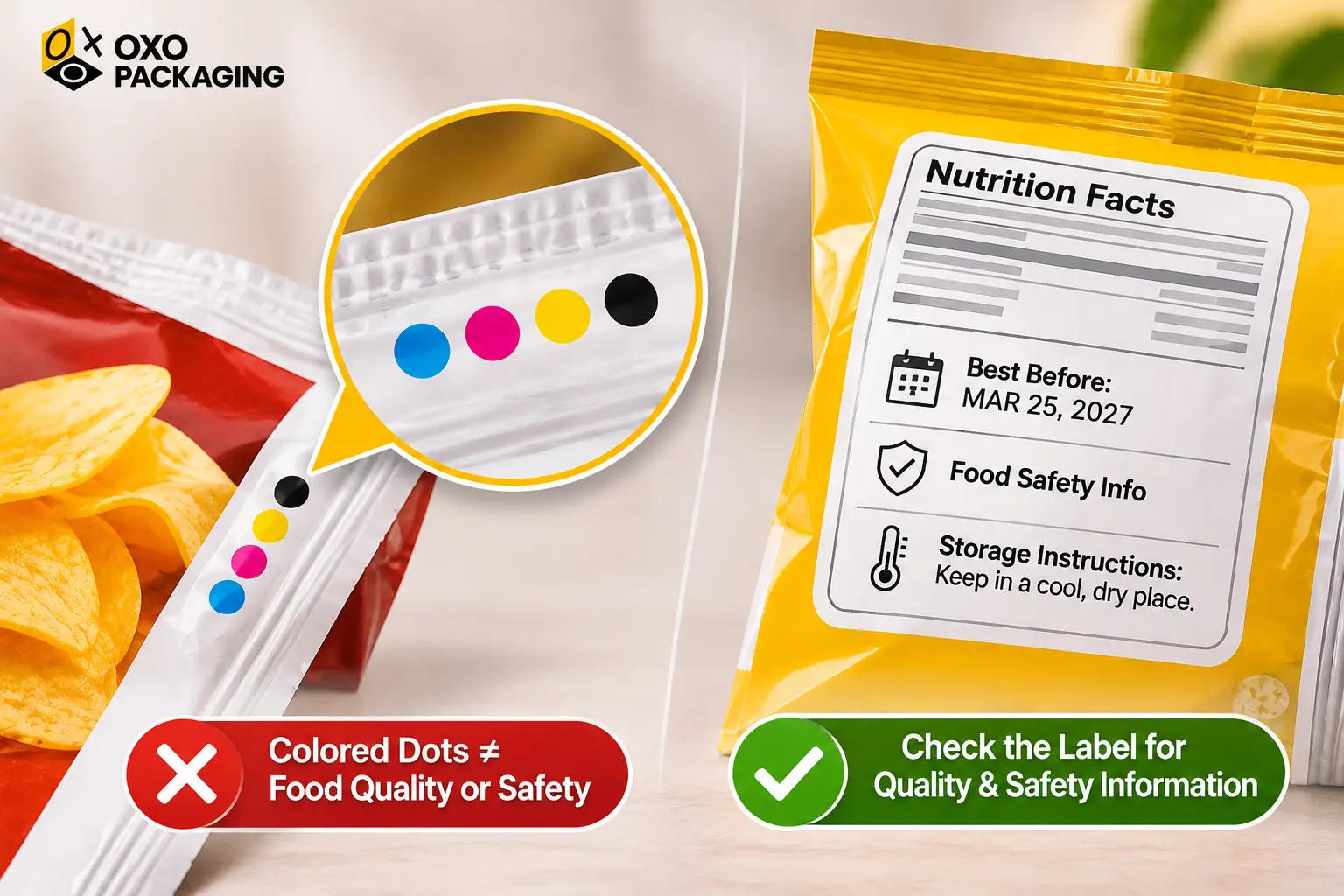
Colored dots do not indicate food quality, freshness, or safety. Colored dots are mostly tied to printing and packaging production.
A colored dot does not automatically mean that a product has passed a food safety inspection, is safe to eat, or has been approved by an authority.
To evaluate food safety, check the expiration or best?before date, ensure the packaging is intact, read the storage instructions, and examine any safety information on the label.
Avoid eating products whose packaging is damaged, leaking, swollen, or otherwise suspicious because those signs could mean a safety issue. Follow the manufacturer's storage instructions and any food safety guidance that applies.
Where Can You Find Colored Dots on Food Packaging?
Colored dots may show up in spots depending on the packaging format and how the printing is done.
Snack bags:
Small marks often show up near the sealed edges or along the back of the package.
Cereal boxes:
Color control marks may be printed near the bottom sides or other noticeable areas.
Candy wrappers:
Dots often appear along the edges of printed films.
Food bags:
Marks may be placed near seams or in areas that are removed during packaging conversion.
Food cartons:
Printing marks may appear on flaps, side panels, or production margins. Their placement is often chosen to make the marks useful during production while keeping them away from the design.
Conclusion:
Colored dots on food packaging are usually printing control marks that help manufacturers monitor ink colors, registration, and print consistency. They support accurate branding, reduce printing errors, and improve the quality of finished packaging.
Although these marks may look mysterious, they generally do not reveal ingredients, nutritional value, expiration dates, or food safety status. Consumers should rely on the product label and appropriate safety information when making purchasing decisions.
For food brands, understanding printing marks is also useful when developing custom packaging that combines attractive design, reliable production, and clear product information.
Colored dots usually help packaging printers monitor ink colors, printing accuracy, and alignment during manufacturing. Their exact purpose depends on the printing system.
No, colored printing dots are not universal vegetarian or non-vegetarian indicators. Check the product's ingredient list and relevant labeling information.
No, a black dot is commonly associated with black printing ink in the CMYK process. Its presence alone does not indicate harmful ingredients or chemicals in the food.
No, requirements depend on the printing process, production equipment, and applicable regulations. Some packages use visible control marks, while others use different inspection methods or remove the marks during production.






 Let's Call