


Best Label Material For Cosmetic Jars & Bottles to Count On
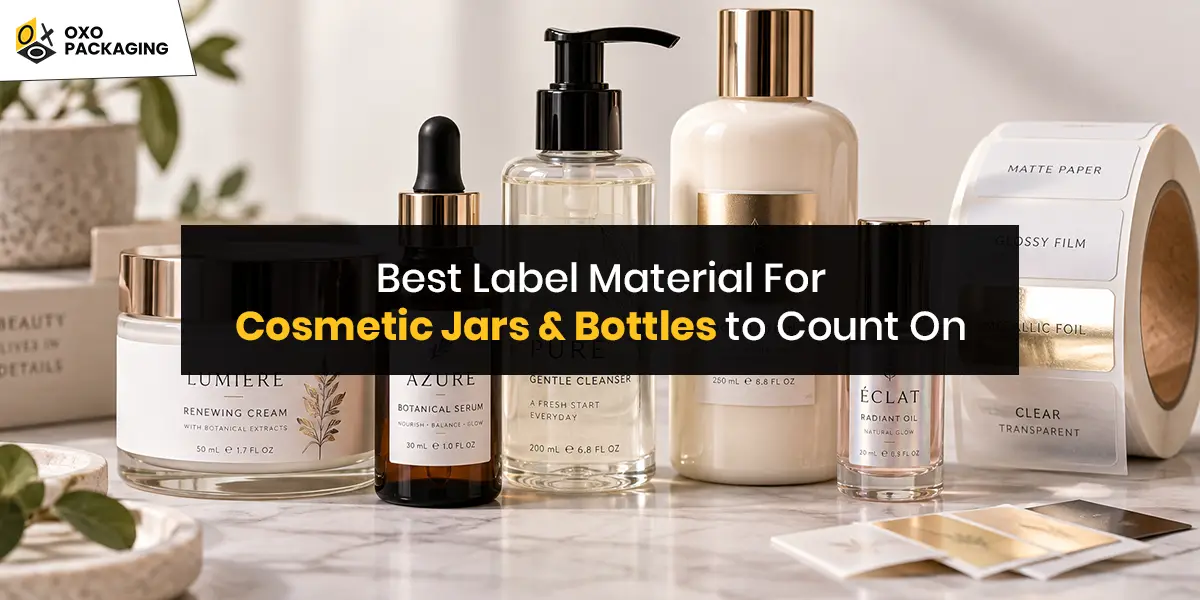
For cosmetic brands, presentation is the backbone of thriving in the competitive market, and if they fail to showcase their offerings distinctly, customers won’t make a purchase. There are indeed hundreds of options for users to buy the cosmetic products they want, but the brand’s presentability has a huge impact. The labels on the jars and bottle-based products communicate with the customers and impress them. Here we’ll explore how those materials for the labels can outshine your brand's packaging game. So, let’s read on.
Why Labeling is Important for Cosmetic Offerings?
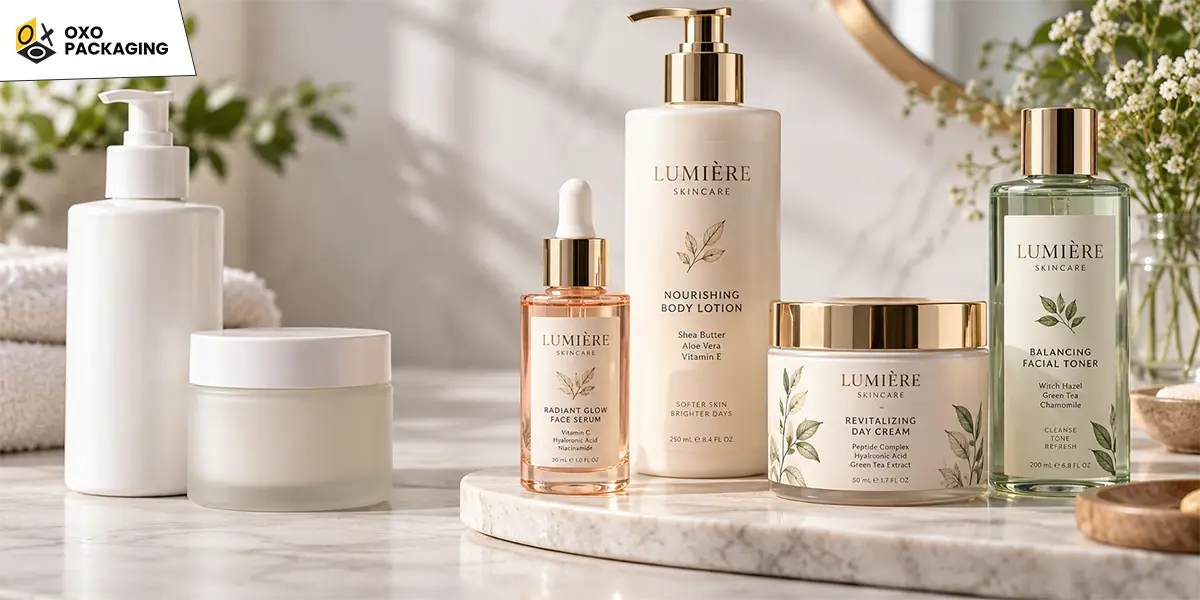
The purpose of labeling is simple, but it’s a customer demand beyond the regulatory requirements. What if you offer your best offering in a bottle or a jar that is entirely blank? There’s a chance that the customer may take it as a fake product and may never purchase from your brand again.
However, the scenario can get changed if your offering is labeled with an attractive finish sticker that showcases the ingredients, branding elements, and more. This time, the customer feels confident to make their purchase and will remember your brand’s packaging persona for a long time.
Other Alternatives for the Best Labels for Cosmetic Jars
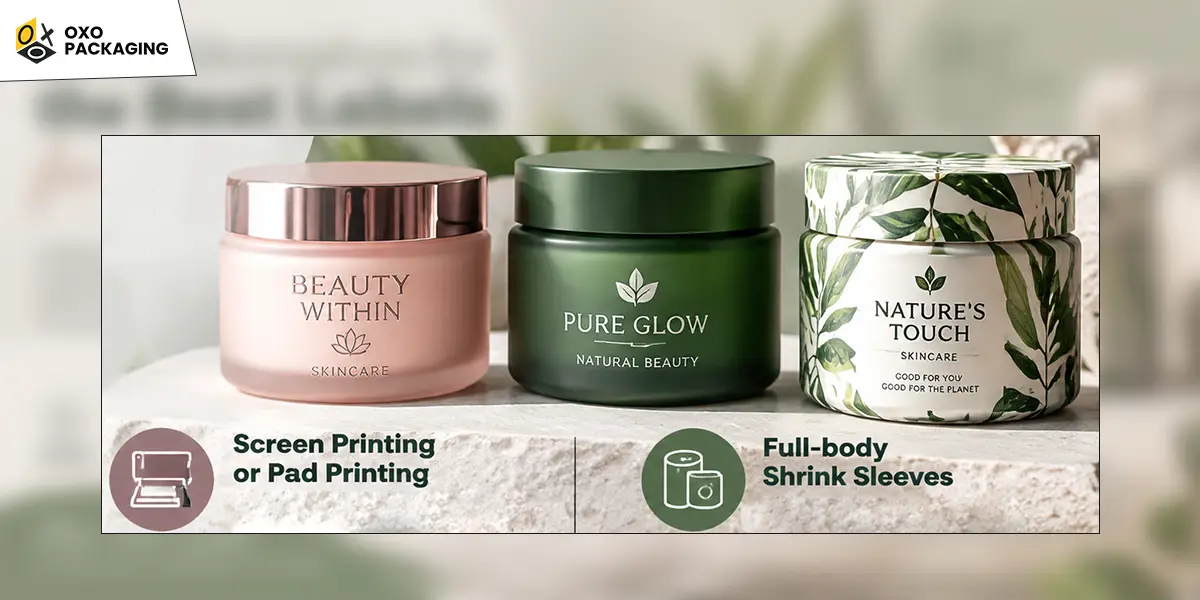
Labeling is just a technique to equip the packaging to get the maximum customer attention. Some of the impactful methods that your brand can also count on for the same job can be:
- Screen printing or pad printing to stamp the creative elements and information on the cosmetic bottles or jar containers for a tactile appeal.
- Full-body shrink sleeves to wrap the cosmetic packaging with paper-based covers, which are not only affordable for the brands but also kind to the planet as well.
Ideal Materials for Labeling on Cosmetic Jars & Bottles
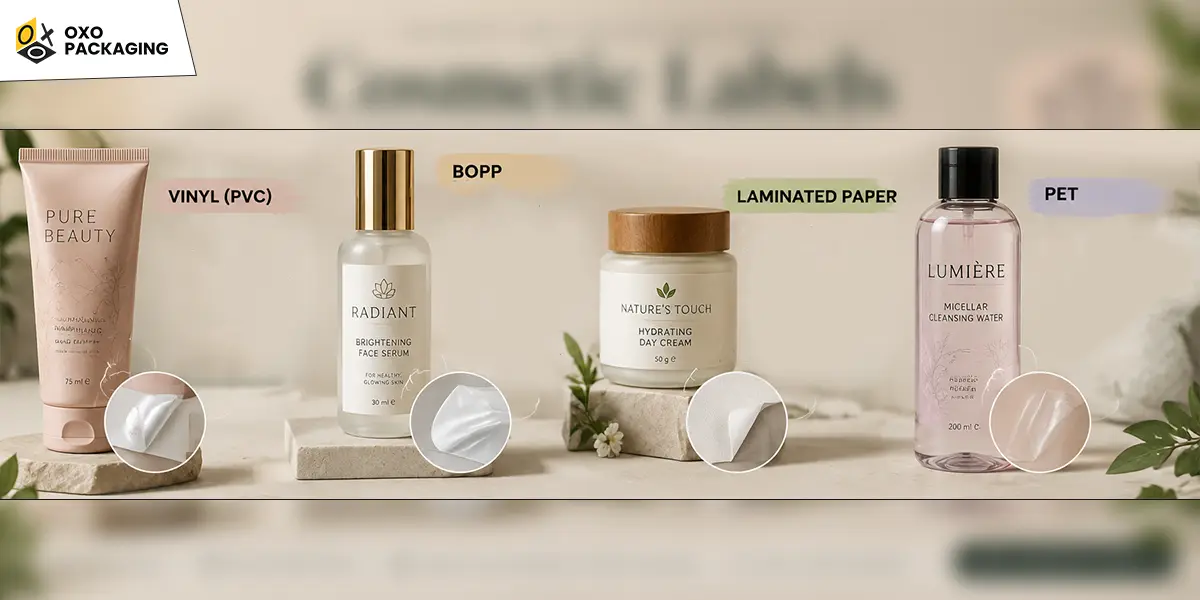
If you’re unsure about what labelling materials to consider for your cosmetic packaging needs, don’t worry. We understand the options in this can be confusing for new brands, but below we’ve mentioned their characteristics in a way so you can easily decide what you need.
-
Vinyl (PVC)
First of all, the top option is vinyl labels, which are best for squeezable tubes and soft plastic bottles. Even for the highly curved containers, the material adjusts its shape as per the packaging structure.
-
BOPP (Biaxially Oriented Polypropylene)
For the rigid jars or serum packaging bottles that are studied in nature, the BOPP material labels are the ideal solution here. It features high resistance against water, oils, and liquid options. That’s why it features luxury-style presentation over other options.
-
Laminated Paper
Another great option your brand can consider is laminated paper, which is the upgraded version of standard paper. It contains a coat of gloss or matte finish which acts as a protective lamination finish. This turns simple labels into a natural aesthetic packaging solution.
-
PET (Polyester)
Lastly, from the family of plastics, one of the finest options you can consider for the labeling needs of cosmetic packaging is PET. It features high tensile strength, making it a top option that resists chemicals and abrasive elements to protect the printed content.
Below is the detailed table to explore what appearance you can achieve for your packaging while considering the best-in-class cosmetic label materials:
|
Material |
Perks |
Best For |
Cons |
|
White BOPP |
Opaque background & bold color reproduction |
Standard rigid plastic or glass jars and bottles |
Lacks the transparent "no-label" aesthetic |
|
Clear BOPP |
Transparent "no-label look" |
Clear glass or plastic bottles |
Requires white ink underprinting for text legibility |
|
Metallic BOPP |
High-end luxury foil or silver finish |
Special-edition or premium cosmetic lines |
Reduce barcode scannability if placed over complex reflections |
|
Vinyl (PVC) |
Extreme flexibility & chemical resistance. |
Squeezable soft plastic tubes |
Higher cost than standard BOPP. |
|
Polyester (PET) |
Maximum dimensional stability |
High-end or luxury cosmetics |
Poor performance on flexible or squeezable surfaces |
|
Textured / Estate Paper |
Organic, tactile artisanal look |
Dry-use cosmetic items |
Degrades or stains in wet bathroom environments unless heavily laminated. |
The Bottom Line
All in all, we hope you’ve got a comprehensive idea of what materials are dependable for the labeling demands on cosmetic jars and bottles. If you’re still confused, then our packaging experts can recommend the options that are tailored for your presentational needs. You can reach out to us anytime by calling (510) 500-9533 or writing your query to sales@oxopackaging.com for a detailed response.
Yes. It’s one of the affordable options for brands with the lowest upfront cost compared to engraved printing or labeling.
No, the labels don’t peel off easily unless they’re poorly applied. If the surface where the labels are being applied is smooth and moisture-free, the labels stick there for a long time.
These labels are made from materials that resist liquid content and don't lose their physical characteristics even after being exposed to moisture.
The material choice can vary as per the brand’s presentational demands. For instance, the top option includes the Polyester (PET) and polyimide, which are durable in their category. While vinyl or polypropylene can also be used that have extreme environmental resistance capabilities.
Both can be used to communicate with customers about the product. Labels stick on the container or bottle unless peeled off by force. Whereas sleeves are a secondary labeling option that is temporarily wrapped until the customer starts using the product.






 Let's Call