


Explore the Best Materials for Playing Card Packaging Boxes
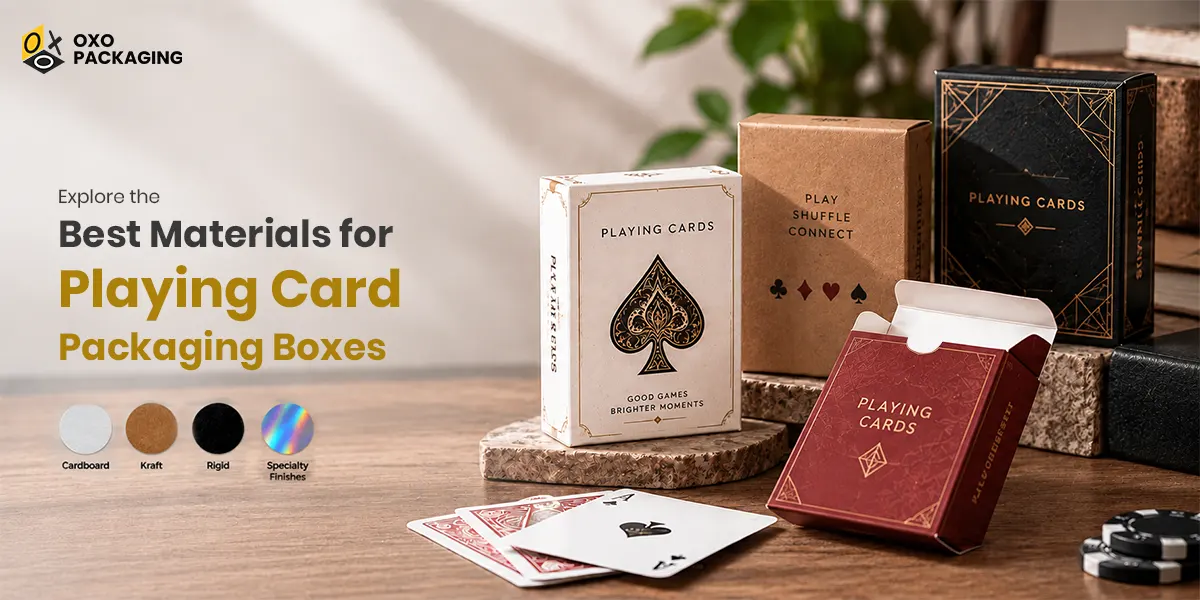
Playing cards are developed from high-quality materials in the finest way. The offering brands aim to ensure that the cards they craft are top-notch and last a long time. But that’s the actual product’s characteristics. Its presentation also counts a lot and lets the customer decide what brand they choose and which to skip.
We understand the mean time decision of the customers and how it can impact your sales. Here in this guide, we’ll explore the optimal materials for the card packaging and how it can contribute to your brand’s success. So, let’s read on.
The Game of Cards Starts with the Presentation
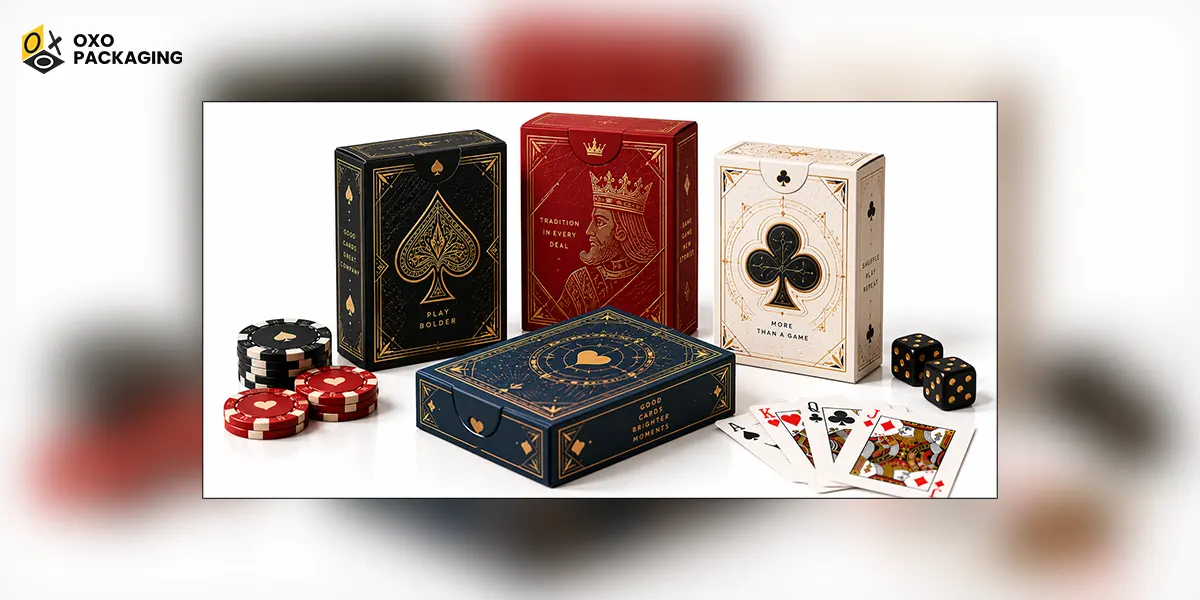
Card-playing enthusiasts are masters in every technique of the game, but that doesn’t mean they ignore the packaging aspects of the product. Rather, they sometimes evaluate brands based on how they present their offerings.
Meanwhile, if your brand doesn’t do the homework to present well, it’s a red flag for growing your sales. Also, it all starts with high-quality material, and that’s the only ingredient for exceptional packaging.
Popular & Reliable Packaging Materials for Playing Card Boxes
Below are the top material options that determine the actual quality of the card packaging. They can either be used individually or even sometimes in combination with the other to maximize the packaging presentation.
|
Material Type |
Standard Thickness / Weight |
Key Features & Advantages |
Best Suited For |
|
C1S Cardboard (Coated One Side) |
300gsm to 350gsm |
Lightweight, affordable, surface optimized for full-color printing |
Standard retail decks, promotional cards, and classic tuck boxes |
|
Kraft Paper (Brown/White/Black) |
Vows 250gsm to 350gsm |
100% eco-friendly & highly absorbent to inks |
Sustainability-conscious brands or minimalist designs |
|
Rigid Grey Board |
1.5mm to 3.0mm thickness |
Premium, specialty, or art paper, luxurious tactile feel. |
Collector’s editions, luxury gift sets, and multi-deck sets |
|
Corrugated Cardboard |
E-flute or F-flute layers |
Composed of multiple paper layers with a fluted center |
Tabletop game sets & subscription boxes |
|
Plastic / PVC |
0.20mm to 0.40mm |
Moisture-resistant and best for visibility |
Waterproof playing cards, casino-grade storage, or utility card games. |
Common Dimensions of the Playing Card Boxes That are Must-Consider
Along with the packaging material of the card boxes, don’t do the job. The size of the box your brand counts on for the playing card determines its style and presentational persona. For instance, some of the standard sizes of playing card packaging are mentioned below:
|
Deck Type |
Card Size (Inches) |
Box Size (Inches - W × H × D) |
Box Size (Millimeters - W × H × D) |
|
Poker / Standard |
2.5 × 3.5 in |
2.58 × 3.58 × 0.72 in |
66 × 91 × 19 mm |
|
Bridge |
2.25 × 3.5 in |
2.32 × 3.58 × 0.72 in |
57 × 89 × 19 mm |
|
Miniature |
1.75 × 2.5 in |
1.73 × 2.64 × 0.70 in |
44 × 67 × 17 mm |
|
Tarot |
2.75 × 4.75 in |
2.83 × 4.85 × 1.00 in |
72 × 123 × 25 mm |
|
Jumbo |
3.5 × 5.0 in |
3.62 × 5.12 × 0.90 in |
92 × 130 × 23 mm |
Factors to Don’t Ignore for Custom Playing Card Boxes
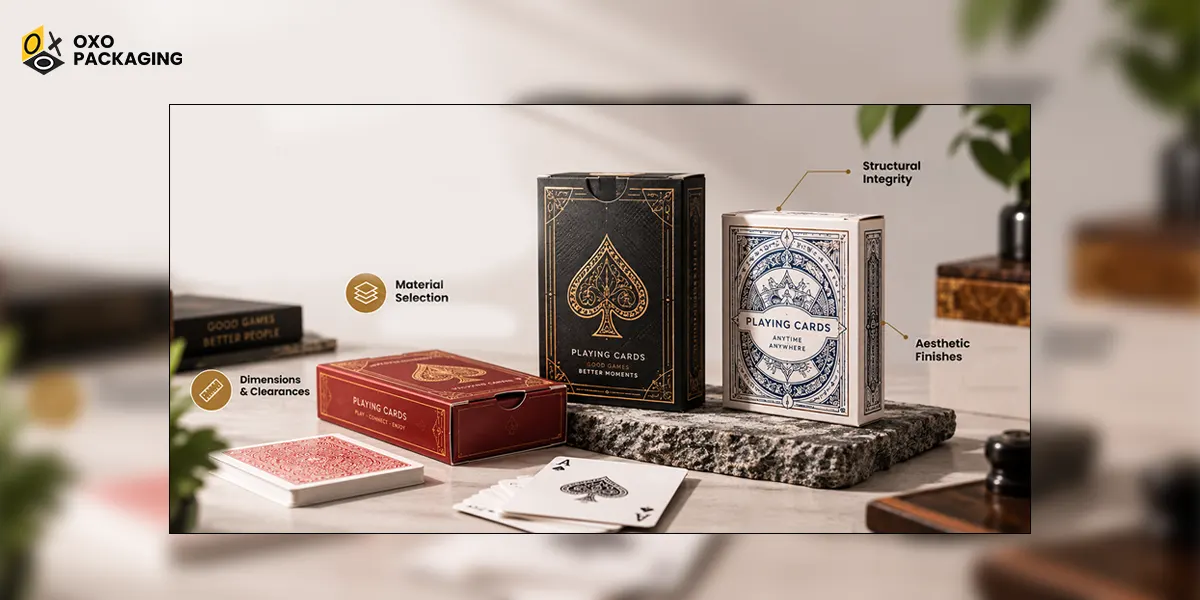
For the playing card boxes, there are some aspects that your business should count on to maximize the packaging reliability. Some of these may include:
- Material Selection: First of all, the material is the core of the card packaging boxes, and if it’s not selected optimally. There’s a chance that your brand won’t be able to achieve the player’s attention.
- Dimensions & Clearances: The way the box is built determines its packaging aspects, as an oversized box lets the cards roam inside. That’s why a near-to-snug fit is the best approach for the boxes.
- Structural Integrity: Cards have to go through an extensive supply chain before they reach the end user. Don’t let it get damaged before it's even delivered to the retail shelves by protecting them in quality packaging.
- Aesthetic Finishes: The appeal of the card box defines its brand’s persona, and it can be an influencing factor for your packaging. If you’re unsure, then feel free to reach out to a packaging expert and get a tailored solution as per your brand’s theme.
The Bottom Line
All in all, we hope now you understand what materials are best to consider for the playing card boxes. The selection of the above-mentioned options isn’t tricky, but you should go with the option that fits well for your brand. You can contact OXO Packaging anytime by calling us at (510) 500-9533 or writing your query to sales@oxopackaging.com for a text-based response.
Indeed. All of the paper-crafted boxes are planet-friendly as the material degrades within a minimal timeframe. While the non-sustainable elements can also be recycled, ensuring a semi-green packaging solution.
If a minor liquid is spilled on the boxes, they can easily resist and protect the box’s structure. The reason is the laminate finish, which shields the inner paper layer and helps keep the packaging in top condition.
The material’s characteristics can vary as per the box’s requirements. For instance, the ideal range for a standard tuck box is around 350 to 400 GSM, which is around 14 to 16 pt.
A standard box can accommodate approx. 54 cards at once. The customized version is capable of holding fewer or more cards as required by the brand.







 Let's Call