


How to Measure Cardboard Box Dimensions Accurately?
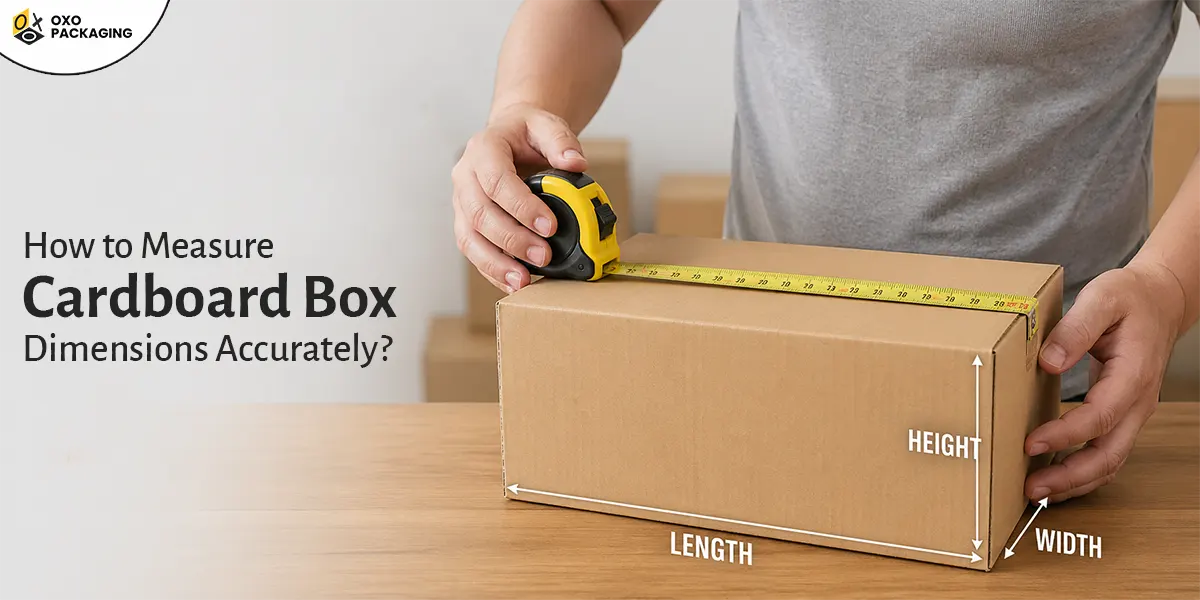
cardboard boxes are masters of all when it comes to shipping and premium packaging. The reason for this fam is high-end protection and secure deliveries across multiple distribution channels. However, most of the time, people choose the wrong size either for self-use, branding purposes, or product packaging.
Even if you measure your product and order boxes accordingly, you’ll likely get the wrong cardboard boxes. The reason is simple, cardboard box dimensions work differently! You have to understand the internal, external, box volume, and dimensions by length, width, and height. Read on to unlock how to accurately measure cardboard box dimensions for less breakage and more potential.
Standard Cardboard Boxes Sizes
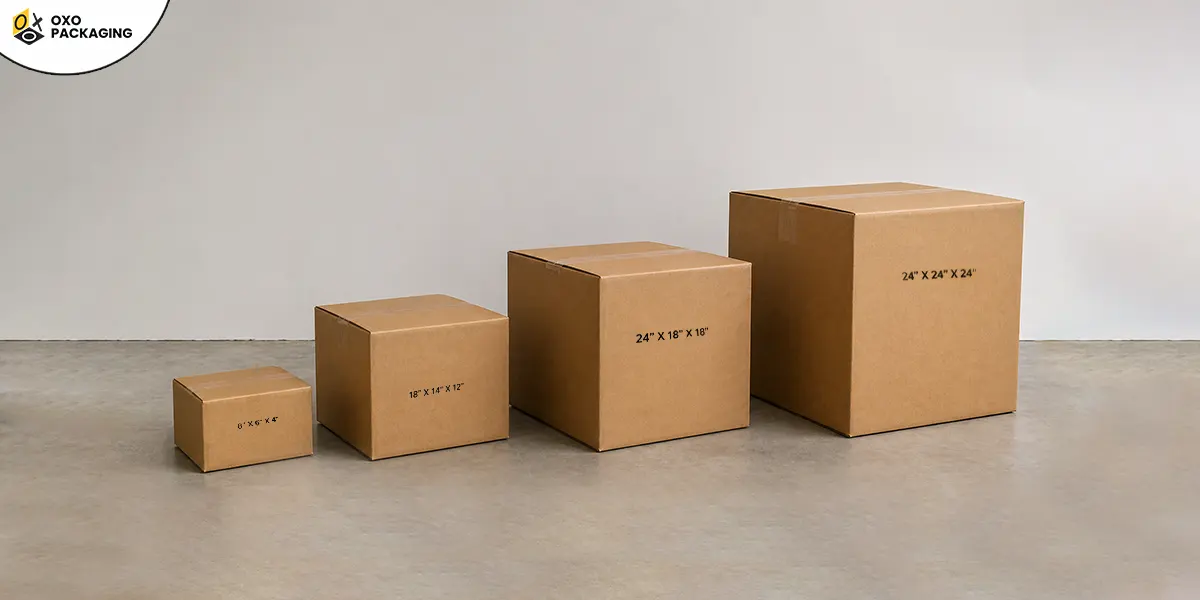
Before we explore the cardboard dimensions, it is important to understand the various sizes of cardboard boxes. Typically ranging from small, retail, shipping, and extra-large, with variations in length, width, and height to suit different items.
Here are some standard cardboard box sizes:
- Small Box: 8 x 6 x 4 inches (20.32 x 15.24 x 10.16 cm) and (203.2 x 152.4 x 101.6 mm)
- Medium Box: 18 x 14 x 12 inches (45.72 x 35.56 x 30.48 cm) and (457.2 x 355.6 x 304.8 mm)
- Large Box: 24 x 18 x 18 inches (60.96 x 45.72 x 45.72 cm) and (609.6 x 457.2 x 457.2 mm)
- Extra-Large Box: 24 x 24 x 24 inches (60.96 x 60.96 x 60.96 cm) and (609.6 x 609.6 x 609.6 mm)
Why Measuring Accurate Cardboard Box Dimensions Matters?
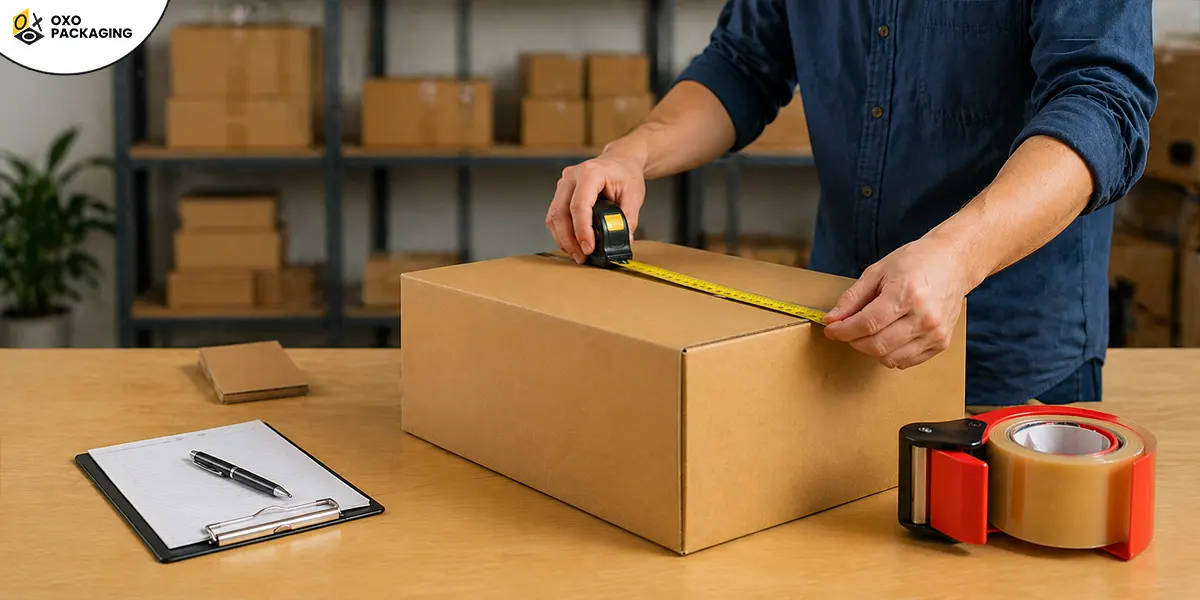
Getting the right size cardboard boxes is critical for logistics, cost management, and product protection. In the US, sizing up your shipping or cardboard boxes is important, as it directly impacts the courier's charge based on the space a package occupies rather than just its weight. Also, snug-fit boxes reduce the risk of damage during shipping and excessive movement.
Tools You Need to Measure the Cardboard Box Dimensions
To measure the dimension, you do not require a fancy measuring tool; a simple measuring ruler will do the trick. You can use a kitchen scale or a flexible measuring tape, which will be almost in every person's kitchen drawer.
Get the following essential tools:
- Ruler for small box packaging.
- Pointer for marking if needed.
- Measuring Tape for accurate measurement
- A Yardstick for measuring large boxes.
Steps for Measuring Cardboard Box Dimensions
 Hope you have found the right measuring tool. Now, follow these simple steps to measure the dimensions of a custom cardboard box accurately:
-
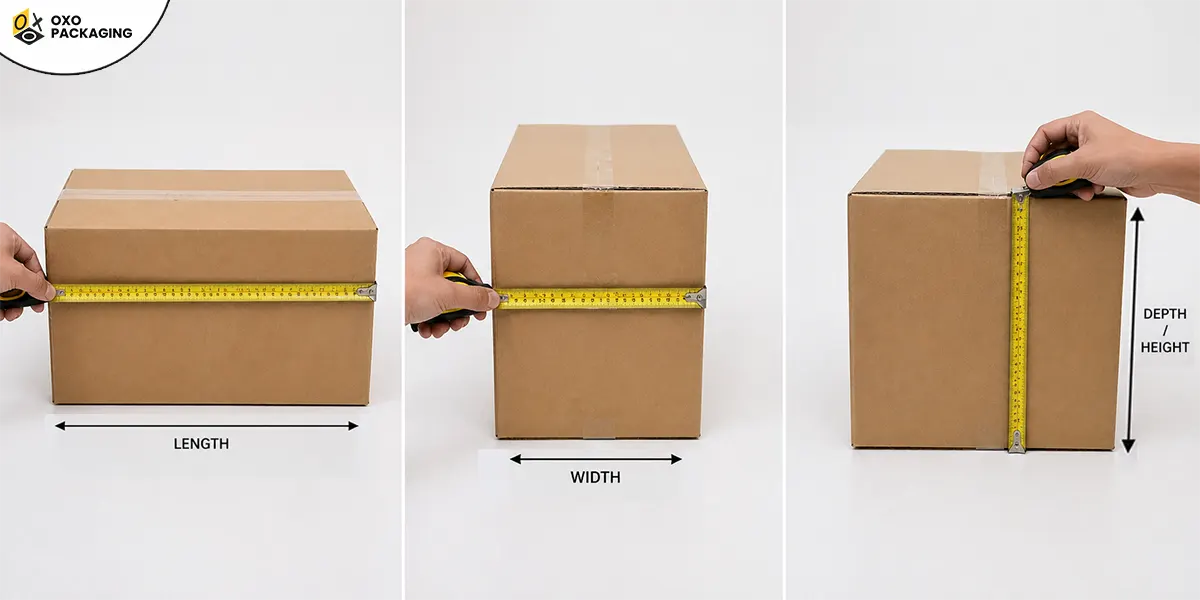
Understand the Three Dimensions of a Cardboard Box
Follow the order of measurement dimensions step by step, as mentioned below:
-
Measure the Length of the Box
The length of the box is specified as the longest side with flaps that fold over. By using a ruler or measuring tape, calculate the dimension, place it at one corner, and pull it to the next. The longest sides usually have flaps that tuck inside. You should always measure the box itself and not only the extra slaps for accurate measurement. After measuring the right unit, write it down in notes for further calculations.
-
Measure the Width of the Box
Now, calculate the width, which is at a right angle to the length. Width is considered the shortest side of the top opening of your box. To calculate the width, you have to rotate the box to a 90° angle. We measure this from one side to the other across the short gap. This tells us how much side-to-side room you have for your cool items. Now take the measuring tape and place it from top to bottom and note the reading.
-
Measure the depth/Height of the Box
Height and Depth of cardboxes are the same, referring to how tall the boxes are. Keep the box opening face in front of you and close the flaps securely before measuring the height or depth. Now, place the measuring tape from top to bottom and write the readings.
Calculating box Volume
Now, calculate the volume of the box after taking the three dimensions. Let’s take an example of the dimensions of a standard shipping cardboard box, which is 16” in length, 12” in width, and 12’ in depth/height. The following formula will be applied to calculate the volume of a box:
Volume = Length x Width x Height
Volume = 16 x 12 x 12
The volume of a standard shipping box will be 2,304 cubic inches.
-
Internal Dimensions Vs External Dimensions
Now you know how straightforward it can be to find the dimensions of your package, measure its exact length, width, and depth, and calculate the volume, there is still one essential consideration to keep in mind.
The industry standard for cardboard box dimensions relies on internal measurements, not external ones. The reason is that most of the cardboard boxes contain fragile items, which is why it’s important to calculate the internal dimensions. You need to leave a little room for bubble wrap or soft paper. Many people buy a box that is too small because they forgot the walls.
Cardboard walls can be thick if the box is made for heavy things. Leaving minimal room for movement inside the package will guarantee your products’ safety during shipping and handling and allow your business to provide high-quality products every time.
How to Choose Custom Printed Cardboard Boxes with the Correct Dimension
Choosing the right cardboard box for your item with the correct dimensions requires prioritizing internal dimensions to ensure a snug product fit, adding clearance for padding, and accounting for cardboard thickness. The following criteria are easily convenient, yet if you still lack in finding the right size cardboard box for your product, contact us today!
Cardboard boxes are almost always measured from the inside. Internal dimensions define the usable space, ensuring your product fits properly regardless of the cardboard's thickness. Standard ordering measurements are Length x Width x Depth.
Because the cardboard walls are thick. A 3 mm wall reduces internal space compared to external measurements.
To measure cardboard boxes, measure the interior length, width, and depth (height) in that order, using the longest opening side as length and the shorter as width.
Width × Depth × Height. Sometimes written as L × W × H. Always clarify orientation:
- Length = longest side of opening
- Width = shorter side of opening
- Height/Depth = vertical dimension







 Let's Call