


Corrugated Box Flute Types: A Complete Guide to Choosing the Right Flute
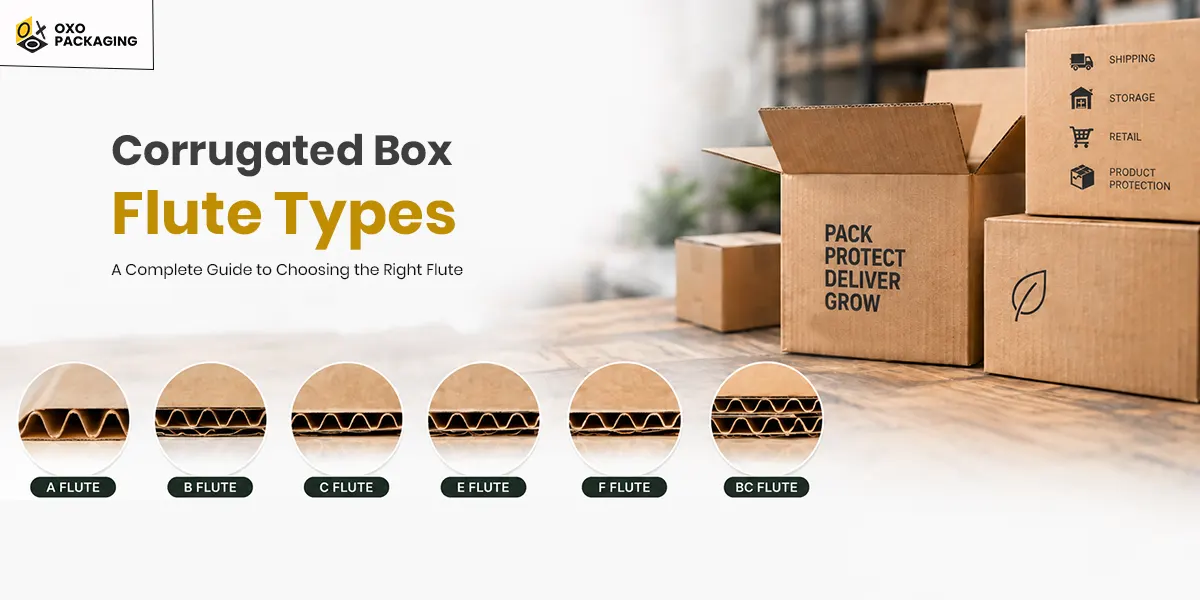
Corrugated boxes are widely used for shipping, storage, retail packaging, and product protection. But not every corrugated box has the same structure. One of the most important differences is the corrugated box flute type.
The flute is the way layers of paper are placed between the linerboards. It gives a corrugated box its cushioning, stacking strength, and resistance to crushing. Different flute profiles provide different levels of protection, flexibility, printability, and space efficiency.
Understanding corrugated flute types can help businesses select packaging that matches the product, shipping conditions, and budget.
What is Corrugated Box Flute?
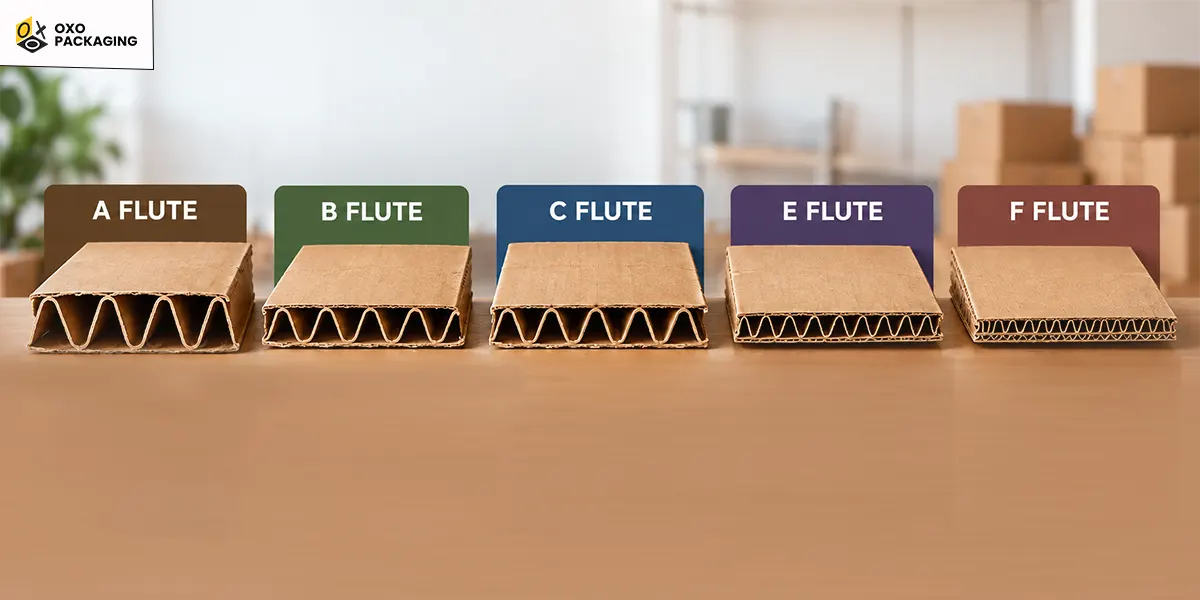
A corrugated flute is the fluted, or wavy, paper layer inside a corrugated board. It is bonded between one or more flat liner sheets to create a strong packaging structure.
The size and shape of the flute affect the overall performance of the box. Larger flutes generally provide better cushioning and decompression resistance, while smaller flutes create a smoother surface that is better suited for printing and retail presentation.
Common Corrugated flute types include:
- A flute
- B flute
- C flute
- E flute
- F flute
Some packaging may also use combinations of these flute profiles to create double-wall or specialty corrugated boards.
A Flute Corrugated Boxes
A flute is one of the types of corrugated flute profiles. A flute gives a lot of cushioning and compression strength. This makes A-flute good for products that need protection while they are being moved.
A-flute corrugated board is often used to ship items, heavy goods, and for packaging jobs where impact protection is important. I have seen A-flute corrugated board used in shipping cases.
Key characteristics of A-flute:
- Thick board structure
- Good cushioning
- Strong stacking performance
- Suitable for fragile or heavy products
- Provides protection during shipping
Because of its larger profile, a flute may not give the smoothest surface for detailed printing. It also takes up more space than smaller flute profiles.
B Flute Corrugated Boxes
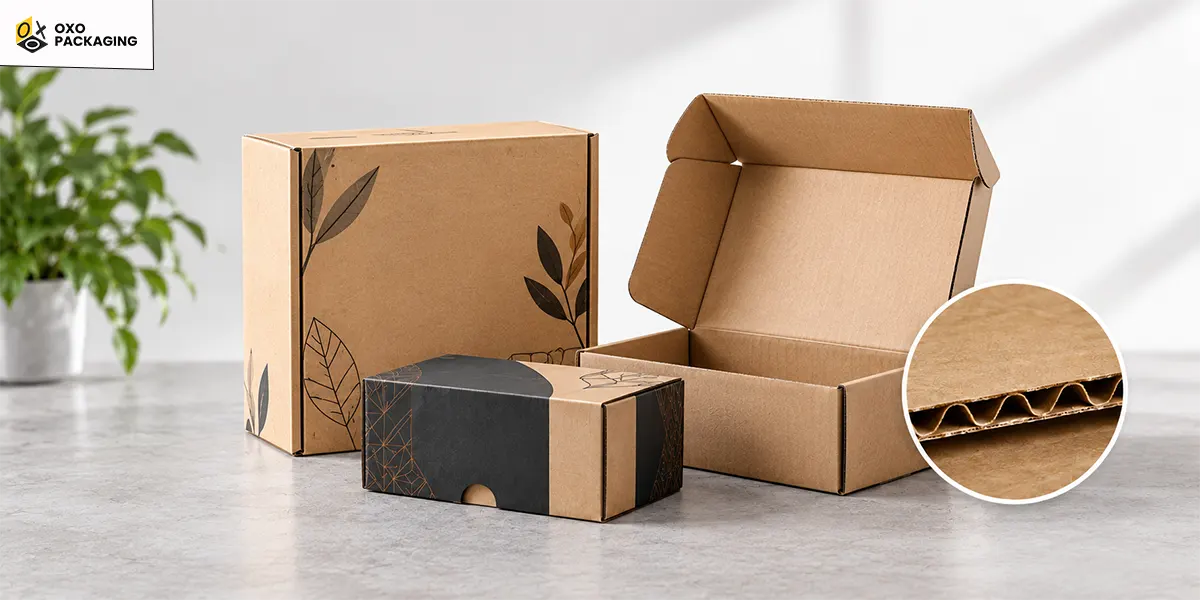
B flute is a flute that is often used for packaging that needs a balance between strength and space efficiency. It has a flat surface when compared with larger flute profiles, which makes it good for printing and folding.
B-flute boxes are often used for retail packaging, food packaging, product boxes, and shipping purposes.
Key characteristics of B flute include:
- Good puncture resistance
- stacking strength
- Better print surface than larger flutes
- More compact than A flute
- Suitable for die-cut packaging
B flute is a good choice when businesses want reliable protection without making the packaging too bulky.
C Flute Corrugated Boxes
Businesses often choose C flute because it is one of the common types of flute used in shipping boxes. C flute gives a mix of cushioning, stacking strength, and material efficiency.
C flute corrugated boxes are often used for shipping and general packaging. C flute protects products from impacts and compression while handling and transporting.
Key characteristics of C flute:
- Good cushioning
- Reliable stacking strength
- Versatile for shipping
- For many product types
- Commonly available for standard packaging
C flute is often chosen when a business needs an all-purpose corrugated box that balances protection and material usage.
F Flute Corrugated Boxes
F-flute corrugated boxes offer a fine flute profile, even finer than E-flute. This makes them ideal for uses where a smooth look, compact design, and high-quality printing are key.
F-flute packaging works for specialty retail goods, food products, and smaller boxes where presentation matters a lot.
Key features of F-flute include:
- Fine flute profile
- Smooth surface finish
- Lightweight construction
- Excellent printability
- Suitable for premium-looking packaging
F flute gives the appearance of paperboard while still offering the strength and structure that come with corrugated packaging.
Single-Wall VS. Double-Wall Corrugated Flutes
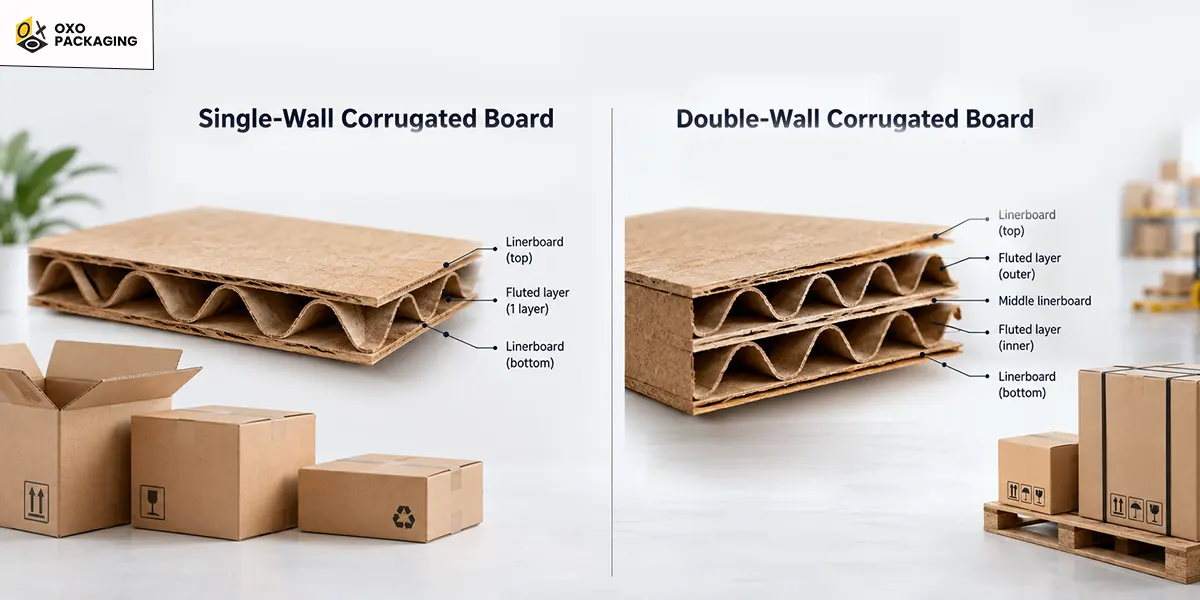
Flute sections are not limited to choosing a single profile. Corrugated board can also combine different flute types.
A single-wall corrugated board generally contains one fluted layer between two linerboards. It is commonly used for everyday shipping and product packaging.
The double-wall corrugated board contains two fluted layers and three linerboards. It provides additional strength and protection for heavier products and demanding shipping conditions.
For example, a double-wall board can combine B flute and C flute to provide a balance of cushioning, stacking strength, and durability.
Corrugated Flute Type Comparison
|
Flute Type |
General Profile |
Main Benefit |
Common Applications |
|
A Flute |
Thick |
Cushioning and compression |
Fragile and heavy products |
|
B Flute |
Medium-thin |
Strength and printability |
Retail and shipping boxes |
|
C Flute |
Medium |
Balanced protection |
General shipping |
|
E Flute |
Fine |
Smooth printing surface |
Retail and product packaging |
|
F Flute |
Very fine |
Detailed appearance |
Specialty and premium packaging |
The exact performance of a corrugated box also depends on linerboard grades, paper weight, box dimensions, construction, and manufacturing quality.
How to Choose the Right Corrugated Flute
Choosing the right flute depends on more than the product's size. Consider the following factors before selecting your packaging material.
Product Weight
Heavy products may require thicker or stronger corrugated constructions. Lightweight products may work well with finer flute profiles.
Fragility:
Fragile products can benefit from additional cushioning and compression protection. Larger flute profiles or double-wall construction may be appropriate for demanding shipping environments.
Printing Requirements
If the box will feature detailed branding, product information, or retail graphics, E or F flute may provide a smoother printing surface.
Shipping Conditions
Consider how the box will be transported and handled. Boxes that travel through multiple distribution points may need stronger construction to withstand stacking, impact, and compression.
Storage Space
Thicker corrugated boards can increase the overall volume of packaging. Businesses with limited warehouse space may prefer a thinner flute where product protection requirements allow it.
Budget
The right packaging should balance protection with material and shipping costs. Choosing a flute that is stronger than necessary can add unnecessary material, while choosing one that is too light can increase the risk of product damage.
Conclusion
Understanding corrugated box flute types make sit easier to select packaging that provides the right combination of protection, strength, appearance, and efficiency. A flute offers greater cushioning, B and C flutes provide versatile protection, while E and F Flutes are useful for thinner packaging and detailed printing.
Before placing a large packaging order, test the selected flute with the actual product. A sample can help confirm box strength, fit, stacking performance, and overall presentation before full-scale production.
Need help selecting the right corrugated box flute for your products? Contact OXO Packaging USA to discuss your box size, material, quantity, printing, and structural requirements. You can request a custom quote and packaging guidance from the OXO team.
A flute provides good cushioning and compression strength, while double-wall combinations can offer greater overall strength for heavy or demanding shipments.
E and F flutes have finer profiles and smoother surfaces, making them suitable for detailed graphics, branding, and retail packaging.
C flute is widely used for general shipping boxes because it offers a practical balance of cushioning, stacking strength, and durability.
Consider the product's weight, fragility, shipping conditions, printing needs, and required box strength before selecting a flute type.







 Let's Call