


E-Flute vs. B-Flute Mailer Boxes: Which One Stops Crushing?
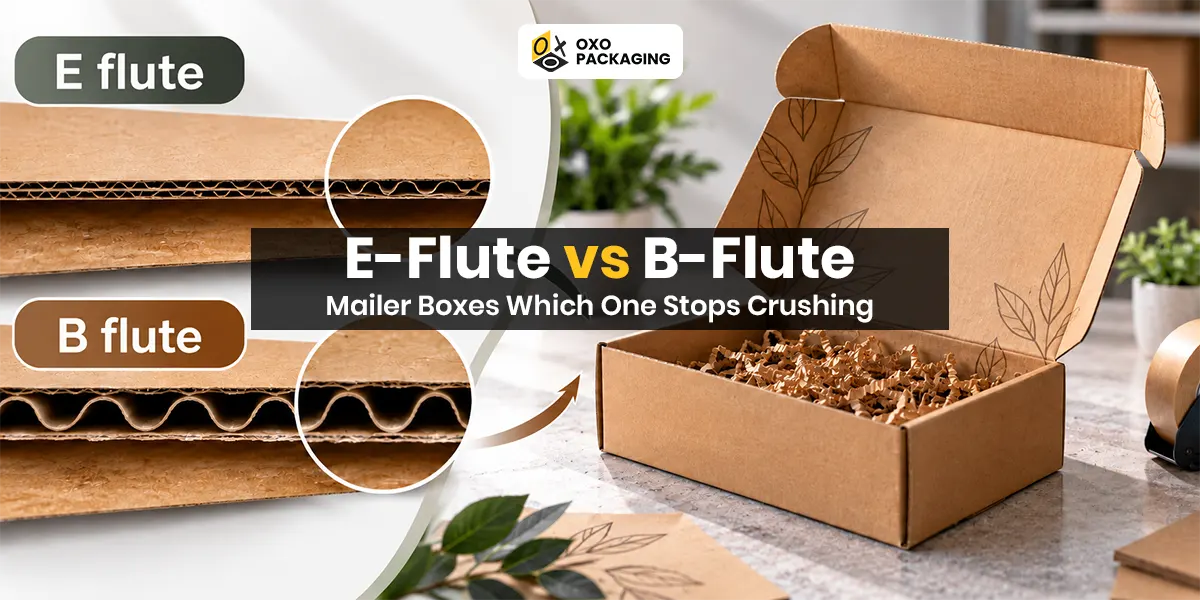
Choosing the right corrugated board can help reduce crushing, dents, and transit damage. For e-commerce packaging. E-flute and B-flute mailer boxes are two common options. Both use a fluting medium between lineboard layers, but their flute profiles create different performance characteristics
E-flute is thinner and has a tighter flute structure, while B-flute is thicker and generally provides greater cushioning and stacking strength. However, the best choice depends on product weight, box dimensions, shipping conditions, printing requirements, and budget.
What Are E-Flute and B-Flute Mailer Boxes?
Corrugated board is made by combining a fluting medium with linerboard. A single-wall board contains one corrugated medium between two liners. The liners may use kraft liner, while top-liner, virgin fiber or recycled fiber.
E-flute has smaller, more closely spaced flutes than B-flute. Its thin profile creates a smooth surface that works well for printed e-commerce packaging and compact products.
B-flute has larger flutes and a thicker overall board profile. This gives it more cushioning and can provide better resistance to impacts, compression, and rough parcel handling.
Other structures, such as F-flute, C-flute, and EB-flute, are also available. Double-wall construction can combine different flute profiles when additional strength is required. For businesses ordering corrugated mailer boxes, selecting the right flute can help balance product protection, box size, and shipping requirements.
Which Flute Stops Crushing Better?
If crushing resistance is the main concern, B-flute generally has an advantage over E-flute, particularly for larger or heavier products. Its thicker construction can provide greater cushioning and stacking strength.
However, flute type alone does not determine box performance. The linerboard grade, ECT rating, box dimensions, joints, closure style, and manufacturing quality also matter.
The edge crush test measures the compressive strength of corrugated board along its edge. The Mullen burst test measures resistance to bursting or puncturing. A box compression test measures how much compressive force a completed box can withstand.
For more technical evaluation, the McKee formula can estimate box compression strength from board properties and box dimensions. TAPPI T811 is associated with edgewise compressive strength testing, while ASTM D642 covers compression testing of shipping containers. A flat crush test can also evaluate the resistance of corrugated medium to crushing.
E-Flute vs. B-Flute for Shipping
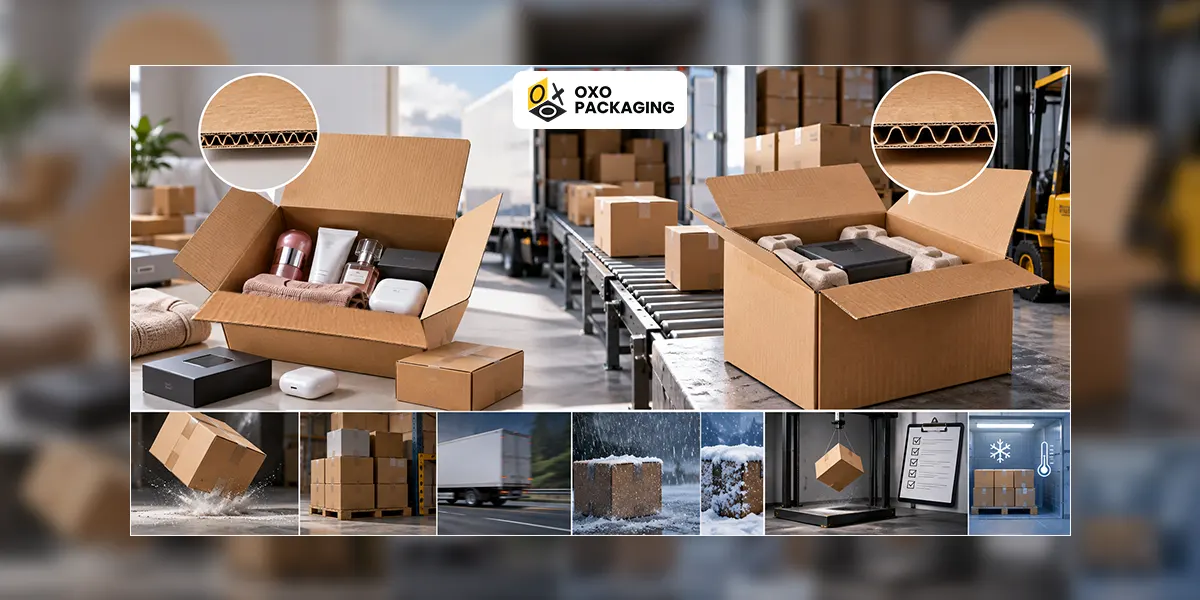
Packaging for parcels faces challenges like being squished, dropped, shaken, stacked, and exposed to different weather. In the process, delivery boxes often get handled many times before they get to the customer.
E-flute is good for things like cosmetics, clothes, small items, tiny electronics, and other products that don’t need much protection. Because it is thinner, it can also make the box smaller. It helps with storing them better.
B-flute is better for things or packages that face more rough handling. It can offer protection and strength when boxes are stacked in places where packages are prepared and shipped.
Moisture can make paper-based packaging weaker. Cold chain shipping can add more moisture and temperature issues. For shipping situations, the packaging team can run drop tests to check how well the package resists punctures and follow rules, like ISTA 3A, to see how the packaged product performs.
Does E Flute Help Lower Shipping Expenses?
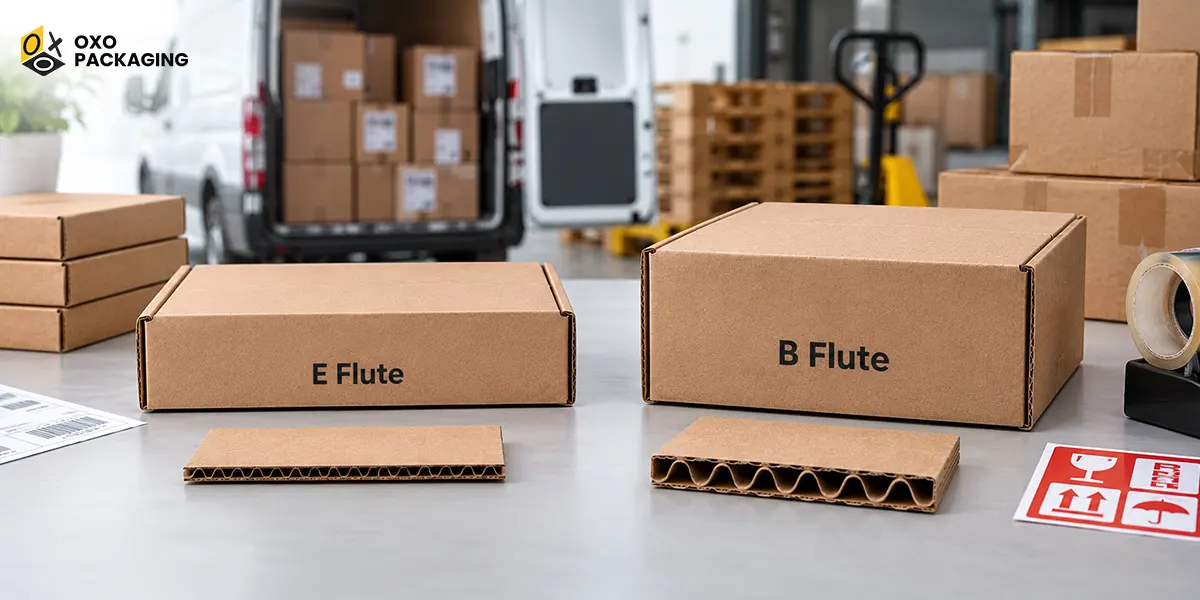
E Flute can offer an advantage when the size and weight of the package matter. A thinner envelope can take up less room and might help with better stacking on pallets.
Still,l shipping companies like USPS, UPS, and FedEx might charge based on weight or dimensional weight (DIM) depending on what is being sent. Cutting down the size can therefore be just as important as cutting down the material weight.
B-flute might add a bit of thickness. Preventing broken packaging and damage during transport can be very important for business. The right decision should look at the cost per unit compared to how the product is protected, what shipping needs are, and what it would cost to replace items if they get damaged.
Businesses purchasing mailer boxes wholesale can also compare board grades and quantities to determine which construction provides the required protection at the desired production volume.
Which Flute is Better for Printing and Branding?
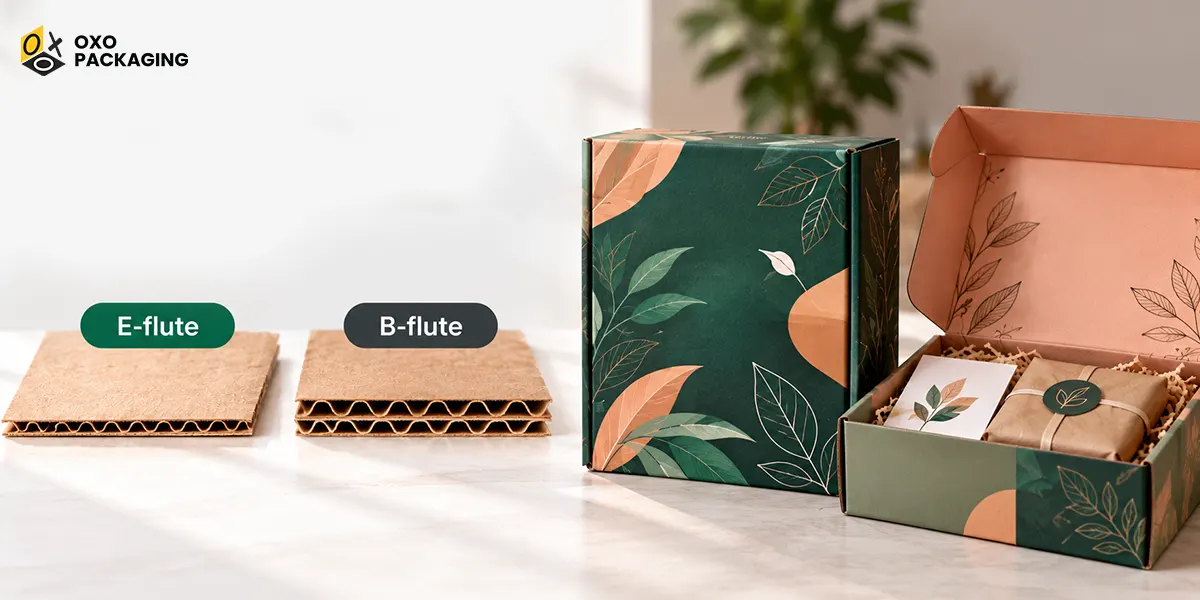
E-flute provides a relatively smooth printing surface, making it popular for branded custom mailer boxes. It can support flexographic printing, digital printing, and offset/litho-lamination.
Digital printing is useful for shorter runs and variable designs, while offset/litho lamination can provide detailed graphics and premium presentation. CMYK and Pantone color systems can be used to maintain brand consistency.
B-flute can also be printed, but its larger flute profile may create more surface variation. Excessive pressure or poor board quality can contribute to washboarding, which may affect print appearance.
For subscription boxes and e-commerce packaging, brands can also consider inside printing and box inserts to improve the unboxing experience.
Sustainability Considerations
Both E-flute and B-flute boxes can be recyclable when manufactured with compatible paper-based materials. Many corrugated boxes are curbside recyclable, although local recycling rules vary.
Buyers seeking responsible sourcing can request FSC-certified materials. Claims about recyclability or environmental benefits should be specific and supported by evidence. In the United States, marketers should also consider the FTC Green Guides when making environmental claims.
Yes, E-flute can be suitable for parcel shipping when the product is lightweight, and the box has an appropriate board grade and ECT rating.
Yes, B-flute generally has a thicker profile and larger flutes than E-flute, which can provide additional cushioning and stacking strength.
E-flute is often preferred for detailed printing because its tighter flute structure creates a smoother surface for branding and graphics.
Not necessarily. Pricing depends on board grade, dimensions, printing, quantity, supplier, and other production specifications.
The required ECT depends on box dimensions, product weight, stacking conditions, and shipping environment. Testing the complete package is the safest approach.
It may be possible for some products, but heavier items may require a stronger board, a higher ECT rating, or a different flute structure such as B-flute or double-wall corrugated board.







 Let's Call