


Mason Jar Sizes: A Comprehensive Guide on Mason Jar Sizes
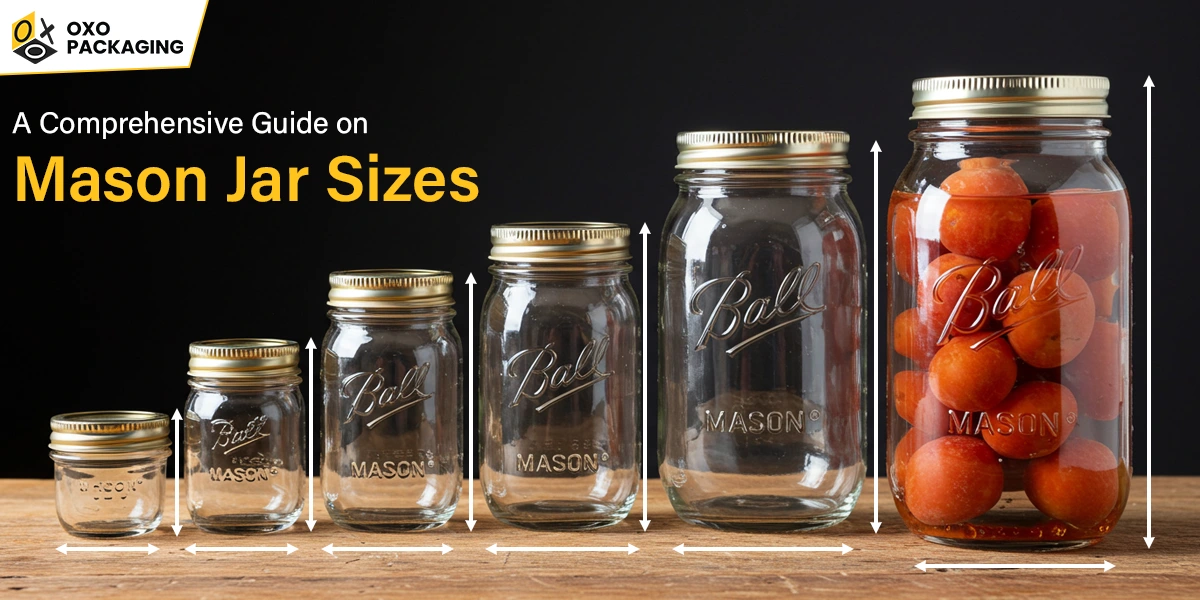
Mason jars are versatile glass containers with screw-on lids. They are very useful for canning and storage, and for creating DIY projects. Since they come in so many sizes, ‘Which one should you pick?’ is a valid question to ask.
Exploring mason jar sizes helps you choose the right size depending on your particular needs. Whether you are preserving fruits and vegetables, storing dry goods, or creating decorative displays, understanding the right jar sizes is key to choosing the ideal jar every time.
Read this blog to learn about Mason jar sizes to choose the right one for your business needs.
Dive into the Main Types of Mason Jars
Before jumping right into mason jar sizes, consider the main types of mason jars. Their size heavily relies on these types, categorized by their mouth type, style, and shape. Have a look at them:
Mouth Types
Standard mouth sizes make pouring and drinking easy, while wide mouths are ideal for packing whole produce or scooping.
Regular Mouth Jars
These jars measure 2\3 inches in diameter. They are best for liquids, pourable sauces, syrups, and drinking glasses. And, regular mason jars are slightly cheaper and universally compatible with standard lids.
Wide Mouth Jars
These jars have a slightly larger diameter than regular mouth jars. Wide-mouth jars measure ~3 inches in diameter. They are significantly easier to clean, fill with solid foods like pickles and salads, and eat directly from.
Dive into the Main Types of Mason Jars
Before jumping right into mason jar sizes, consider the main types of mason jars. Their size heavily relies on these types, categorized by their mouth type, style, and shape. Have a look at them:
1.Mouth Types
Standard mouth sizes make pouring and drinking easy, while wide mouths are ideal for packing whole produce or scooping.
-
Regular Mouth Jars
These jars measure 2\3 inches in diameter. They are best for liquids, pourable sauces, syrups, and drinking glasses. And, regular mason jars are slightly cheaper and universally compatible with standard lids.
-
Wide Mouth Jars
These jars have a slightly larger diameter than regular mouth jars. Wide-mouth jars measure ~3 inches in diameter. They are significantly easier to clean, fill with solid foods like pickles and salads, and eat directly from.
2.Specialty Shapes and Styles
Mason jars vary widely in shape and style to suit different functional and aesthetic needs. While they all feature a threaded top for standardized lids, their overall designs range from traditional rounded silhouettes to decorative, stackable, and geometric forms.
-
Quilted Crystal
They are named so because of a textured, embossed, diamond or grid pattern on the jar exterior that resembles a quilt. These jars feature a decorative, diamond-patterned exterior common for jams and jellies. Apart from canning jams and jellies, you can use these quilted jars for making candles or gifts.
-
Straight-Sided
Unlike shouldered jars, these feature smooth, perpendicular walls from base to rim. Their straight edges make them completely freezer-safe, as they allow contents to expand evenly without cracking the glass, and make it much easier to scoop contents out.
-
Shouldered
These jars serve as a quintessential silhouette of home canning. Shouldered jars feature a noticeably rounded curve or "shoulder" that tapers inward as it reaches the neck. They are ideal for traditional hot water bath canning and vacuum sealing.
-
Hexagon Jars
They contain a six-sided, geometric jar that offers a modern, sophisticated aesthetic. Six-sided jars catch the light beautifully and are widely used for retail items like honey, preserves, or boutique candle making.
-
French Square Jars
These feature four flat sides meeting at sharp, distinct corners. This gives jars a boxy profile that maximizes shelf space and gives a much more upscale, premium look than basic round-shaped mason jars.
Why Mason Jar Dimensions Matter?
Before jumping right into the mason jar size guide, first consider why mason jar dimensions matter. These dimensions are important for determining the proper use, filling ease, and safety of food preservation.
For example, talking about mason jar specifications, Wide-mouth jars (3-inch opening) are ideal for solid foods and easy cleaning, while regular-mouth (2.4-inch opening) jars are better for pouring liquids. Choosing the right size ensures proper, safe canning, prevents food waste, and maximizes storage efficiency. Consider here the common dimensions of mason jar types:
1. Pint Mason Jar Dimensions
A standard 16-oz (1 pint) Mason jar generally measures approximately 5 to 5.25 inches in height and about 3 to 3.5 inches in diameter. They hold 16 fluid ounces (approx. 473-500 ml) and are available in regular mouth (approx. 2.75-inch opening) or wide-mouth options.
2. Wide Mouth Jar Dimensions
Wide-mouth jars feature a standard 3-inch (approx. 86mm) inner diameter opening and a 3.38-inch outer diameter, ideal for easy cleaning, filling, and, in Mason Jar Lifestyle cases, accessing contents with a spoon or hand. They are commonly available in 16 oz, 32 oz, and 64 oz volumes, with consistent lid sizes (86mm) across all volumes.
3. Regular Mouth Jar Dimensions
Regular mouth jars feature a standardized opening of approximately 2.5 to 2.75 inches (70mm) in diameter. They have a slightly narrower top that tapers from a wider base, making them ideal for pourable foods. Common sizes include 16 oz (5-inch height) and 32 oz (roughly 7-inch height).
Material Options for High-Quality Mason Jars
Before we further discuss the sizes of the mason jars, which are ideally suitable for food items. These jars are a great choice for their durability, high-quality, temperature protection, and food-grade options. The following are some major types of glass materials for the mason jars
Clear Glass: Clear glass is one of the most used material options for mason jars. This type of glass is ideally suitable for the visibility of the contents of these jars.
Amber/Colored Glass: These materials are ideal for the protection of the light-sensitive content from light and UV.
Vintage Glass: Vintage glass is sometimes used for decorative purposes other than canning and preserving food items.
Quilted/Crystal Glass: This type of glass material is ideally suitable for the textured and aesthetic appeal over the other types of glass materials for mason jars.
Explore Standard Sizes of Mason Jars
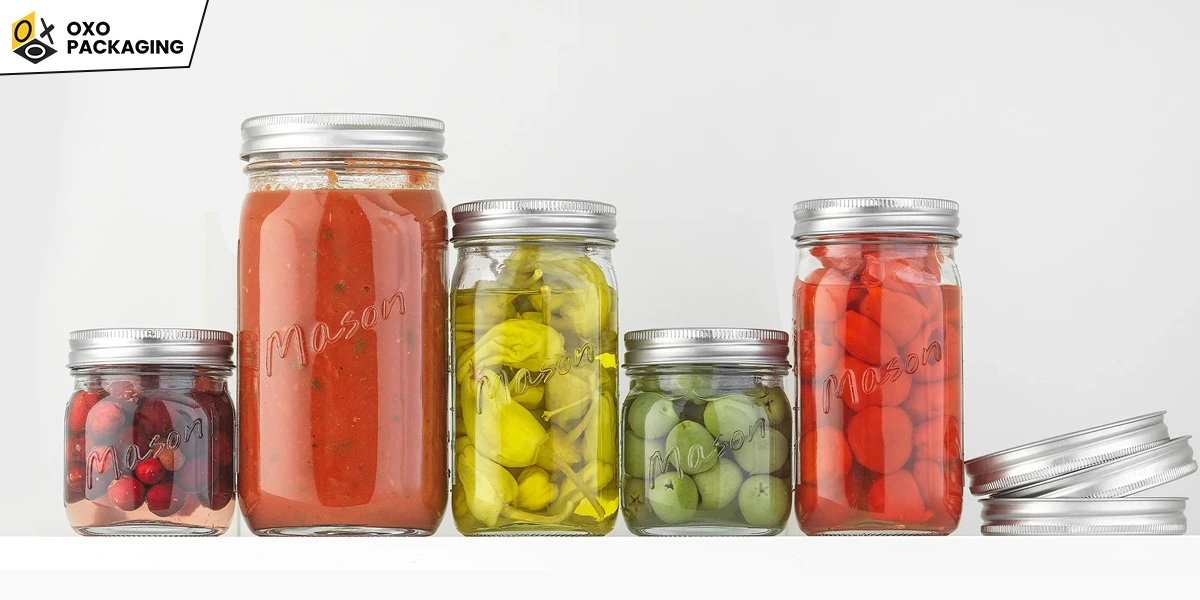
Mason jars are available in a variety of sizes, which makes them adaptable to versatile uses. Each mason jar size serves a unique purpose, from small jars for individual servings to large jars ideal for bulk storage. Let’s explore standard sizes of mason jars and their popular uses:
Small Jars: 4 oz, 8 oz, 12 oz
Small mason jars are usually divided into three sizes: 4 oz, 8 oz, and 12 oz. The smallest size, often used for spices, herbs, or small servings. 8 oz is commonly used for jams, jellies, and individual servings. The uses of small standard-sized mason jars are mentioned below:
|
Small Jars |
Uses |
|
4 oz |
These are miniature jars ideal for single-serving jams, jellies, or spice mixes. 4-oz jars are also a popular choice for wedding favors and small gifts. |
|
8 oz |
8-oz jars are also known as "half-pint jars." These jars are perfect for preserving jams, honey, and sauces in small quantities. Their compact size makes them convenient for personal use. |
|
12 oz |
Slightly larger than 8 oz or half-pint jars, which are commonly used for specialty products like salsas or candles. |
Medium Jars: 16 oz, 24 oz
Medium mason jars are usually divided into two standard sizes: 16 oz and 24 oz. 16 oz is a popular size for canning fruits, vegetables, and sauces. However, another versatile size, 24 oz, is ideal for various canning and storage needs.
|
Medium Jars |
Uses |
|
16 oz |
16-oz jars are often called "pint jars." This size is versatile for canning fruits, vegetables, and soups. They also work well as drinking glasses or for overnight oats. |
|
24 oz |
These jars are perfect for storing dry goods like rice or pasta and are a popular choice for making layered salads. |
Large Jars: 32 oz, 64 oz, 128 oz
Large mason jars are usually divided into three standard sizes: 32 oz, 64 oz, and 128 oz. 32 oz is suitable for larger servings of fruits, vegetables, and meats. While 4 oz is primarily used for canning apple and grape juice, or for storing larger quantities of food. Other details are:
|
Large Jars |
Uses |
|
32 oz |
32-oz jars are called “quart jars.” This size is commonly used for canning large batches of pickles, sauces, or whole fruits. They’re also great for storing bulk items. |
64 oz |
64 oz jars are half-gallon jars. They are ideal for fermenting kombucha or sourdough starter. These jars are also suitable for storing cereals or flour. |
|
128 oz |
128 oz jars are perfect for large-scale storage needs. These are basically 1-gallon jars, which are great for keeping large quantities of liquids or dry goods. |
Difference between Wide-Mouth Jars and Regular-Mouth Mason Jars
One major difference in Mason jar design is the mouth size. Based on mouth size, there are two main types: wide-mouth jars and regular-mouth jars. Overall, wide-mouth jars have a larger opening, which makes them easier to fill with larger items and clean, while regular-mouth jars are more readily available and better suited for pourable foods. Let’s dive deep into their difference:
Wide-Mouth Jars
These jars allow easier filling with larger items like whole fruits, vegetables, and meats. Their larger opening makes it easier to clean the jar, especially by hand. Wide-mouth jars are ideal for canning whole fruits and vegetables, meat, and items that are difficult to clean.
Regular Mouth Jars
These jars are better suited for pourable foods like jams, jellies, sauces, and pie fillings. Lids for regular mouth jars are generally more common and often cheaper. Regular mouth jars are suitable for preserving pourable foods and for stacking in smaller spaces.
To give you a comparative review, consider this table for wide-mouth and regular mouth jars in terms of features and uses:
|
Feature |
Wide Mouth |
Regular Mouth |
|
Opening Size |
Larger, easier to access |
Smaller, more compact |
|
Ideal for |
Whole foods, crafts |
Liquids, jams, and sauces |
|
Ease of Cleaning |
Easier |
Slightly harder |
Considerations for Wide-Mouth vs Regular-Mouth Jars
If you want easy access and hassle-free cleaning, choose wide-mouth jars, especially for crafts or preserving large items. But if you are looking to store liquids or save space, choose regular-mouth jars.
Mason Jar Size Chart
Have a quick look at the mason jar size chart summarizing the common sizes for mason jars and their ounce capacities:
|
Mason Jar Size |
Ounces |
Milliliters |
Best Uses |
|
2 oz |
2 oz |
60 ml |
Spices, samples, gifts |
|
8 oz (Half Pint) |
8 oz |
240 ml |
Jams, jellies, and sauces |
|
10 oz |
10 oz |
300 ml |
Dips, salsas, dry goods |
|
16 oz (Pint) |
16 oz |
480 ml |
Canning, drinks, storage |
|
32 oz (Quart) |
32 oz |
960 ml |
Bulk food storage, canning, and beverages |
|
64 oz (Half Gallon) |
64 oz |
1.9 liters |
Kombucha, pantry staples, décor |
Choose the Right Mason Jar Size for Your Needs
When it comes to choosing a mason jar, consider which type of items you want to store inside it. Then, opt for the respective size as different sizes serve various purposes:
|
Purpose |
Sizes |
Uses |
|
Food Preservation and Canning |
8 oz and 16 oz |
Ideal for canning jams, jellies, and sauces. |
|
Food Preservation and Canning |
32 oz and 64 oz |
Works well for canning whole fruits, pickles, or larger food batches. |
|
Food Storage and Organization |
10 oz and 16 oz |
Great for organizing dry goods like spices, nuts, and grains. |
|
Food Storage and Organization |
32 oz and 64 oz |
Store pasta, cereal, or baking supplies. |
|
DIY Crafts and Home Décor |
2 oz and 8 oz |
Perfect for DIY candles, party favors, or mini floral arrangements. |
|
DIY Crafts and Home Décor |
16 oz and 32 oz |
Popular for creating decorative centerpieces for rustic lighting. |
|
Beverage Serving and Entertaining |
16 oz |
Commonly used for serving drinks like iced coffee, lemonade, or cocktails. |
|
Beverage Serving and Entertaining |
32 oz |
Make fun oversized drink containers, great for sharing at parties. |
Consider Label Size Guide For Mason Jars
This guide will help you prevent design errors, ensure brand readability, and eliminate costly ordering mistakes. The right label size for a Mason jar depends on whether you are labeling the lid or the jar body:
-
Lid Labels
|
Lid Style |
Label Size |
|
Wide Mouth Lids |
2.5 inch (60-70mm) |
|
Mini or 4 oz Jars |
1.5 inch (30-40mm) |
-
Front Glass Labels
|
Jar Types |
Label Size |
|
Half-Pint Jars |
2.5″ × 3.5″ |
|
Pint Jars |
2.5″ × 5.0″ |
|
Quart Jars |
3.25″ × 3.0″ |
How to Use a Mason Jar Size Guide?
Match your food type or storage goal to correct capacity, mouth style, and processing rule. For the ideal usage of the size guide, you need to follow the canning and freezing rules:
- From he headspace Leave ¼ inch for Jams, ½ for fruit, and upto 1 ¼ inches for pressure canning.
- For the freezing purposes, use only straight sided jars and leave a ½ inch headspace to prevent glass breakage.
- Match unlisted sizes of the jars in canning recipes’ to the next larger size tier.
Branding and Labeling Techniques to Stand Out in the Market
Here are customization options and strategies to make your unique label for mason jar packaging:
- Premium Labels: Upgrade from standard paper to water-resistant and oil-resistant materials like vinyl, BOPP, or metallic foils.
- Lid Branding: Let’s say the lid is premium real estate. Use custom-printed metal or wooden lids, or apply die-cut custom stickers directly to the tops of the lids.
- Interactive Elements: Integrate QR codes on your labels to link consumers to your brand story, ingredients, or exclusive recipes.
Where to Find the Right Mason Jar Sizes?
Choosing the right mason jar sizes is crucial for fully utilizing their usefulness. Whether you are canning, storing, or crafting, choose different sizes and their uses to ensure you get the right jar for your needs. You can also contact OXO Packaging to customize right-sized mason jars without compromising quality and integrity
A mason jar is also called a canning jar or preserving jar. It is a glass jar used in home canning to preserve food.
A 12oz mason jar is equivalent to a three-quarter pint size. This is a common size for canning, preserving, and pickling, and is also popular for drinking beverages
Wide mouth 64oz mouth jars are commonly used for whole fruits and vegetables but are ideal too for canning salsas, syrups, sauces, fruits, vegetables, and juices.
The usage of the jar can differ as per the item. For instance, liquid content is directly poured, while for semi-liquid, some eatables must be added first to avoid the overflow of liquid.
Yes! The jar may expand or contract depending on the environment it’s being placed in. That’s why it’s recommended to avoid overfilling it and leave some room.
Mason jars come in a variety of shapes and capacities. However, popular canning jar sizes include 4, 8, 16, 28, and 32 ounces.
A small mason jar is typically 4 oz (1/2 cup) or 8 oz (1/2 pint), though they can range from 2 oz to 12 oz. These small sizes are commonly used for jams, jellies, spices, or wedding favors.
A standard 16-oz (1 pint) glass mason jar typically weighs between 234 and 284 grams (about 8.25 to 10 ounces) empty, including the lid and band.







 Let's Call