


Hang Tag Sizes: Standard Dimensions and Which to Choose

Custom hang tags may be small, but they play an important role in product branding, pricing, and customer communication. The right tag can display your logo, product details, price, care instructions, or a short brand message without making the packaging look crowded. However, choosing the right size is just as important as selecting the right material and design.
From clothing and accessories to gifts and retail products, different items require different hang tag dimensions. Understanding the standard hang tag size, hole placement, and printing requirements can help you create tags that look professional and fit your products properly.
What Are Hang Tag Dimensions?
Hang tag dimensions refer to the overall height and width of a tag before printing and finishing. The dimensions you choose depend on the product and the amount of information you need to include, and the visual impact you want to create.
Common rectangular hang tag sizes include:
|
Tag Type |
Common Size |
|
Small |
1.5 × 2 inches |
|
Standard |
2 × 3 inches |
|
Medium |
2.5 × 3.5 inches |
|
Large |
3 × 4 inches |
|
Square |
2 × 2 inches |
|
Slim |
1 × 3 inches |
These are general options rather than strict industry rules. Brands can select dimensions that suit their products and design requirements.
What is the Standard Hang Tag Size?

There is no single universal standard hang tag size. However, 2 × 3 inches is one of the most commonly used options because it provides enough space for branding and basic product information while remaining compact.
A 2 × 3-inch tag can accommodate a logo, product name, price, barcode, website, social media handle, or short message. It is particularly suitable for clothing, accessories, handmade products, and retail merchandise.
For smaller products such as jewelry hang tags for earrings or bracelets, a 1.5 × 2-inch tag is more practical. Larger products or premium brands may prefer 3 × 4-inch luxury hang tags because they offer more room for detailed information.
Understanding Hang Tag Size in CM
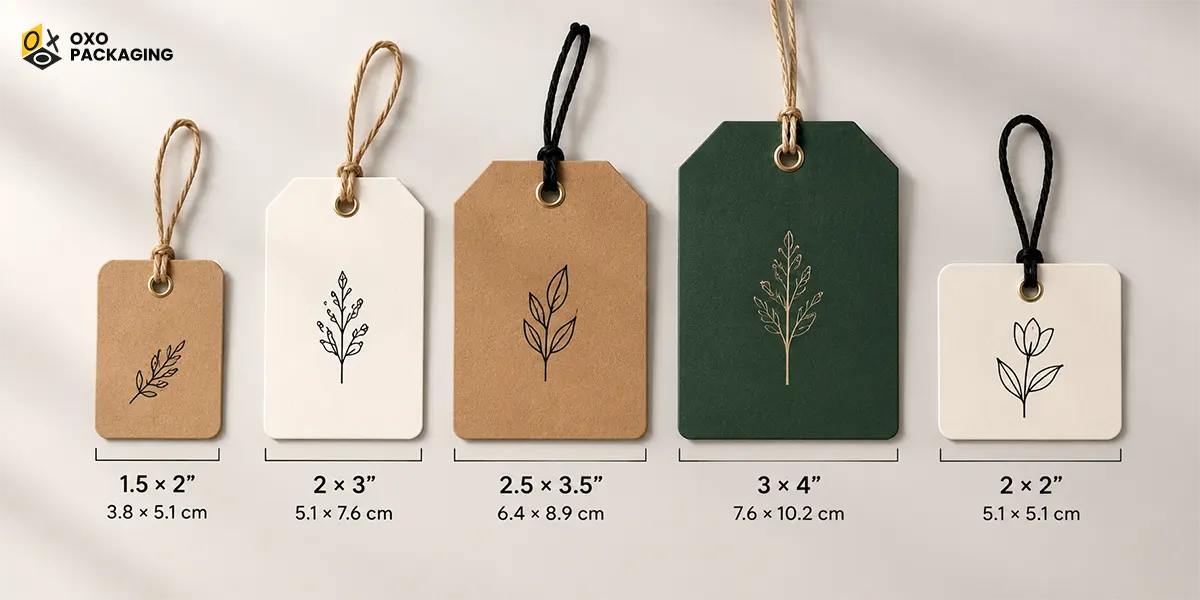
If your printer or packaging supplier works with metric measurements, knowing the hang tag size in cm can make ordering easier.
Here are some common conversions:
- 1.5 × 2 inches = approximately 3.8 × 5.1 cm
- 2 × 3 inches = approximately 5.1 × 7.6 cm
- 2.5 × 3.5 inches = approximately 6.4 × 8.9 cm
- 3 × 4 inches = approximately 7.6 × 10.2 cm
- 2 × 2 inches = approximately 5.1 × 5.1 cm
These measurements describe the finished tag size. If your design includes rounded corners, die-cut shapes, or other finishing details, your supplier may recommend additional specifications
Swing Tag Size for Clothing and Retail Products
The term swing tag size is often used interchangeably with hang tag size, particularly in the fashion and retail industries. Swing tags are commonly supplied as hang tags with string, ribbon, or plastic fasteners already attached methods.
A 2 × 3-inch swing tag is a popular choice for clothing because it provides sufficient space without overpowering the garment. A slim 1 × 3-inch format can work well when the brand wants a minimal appearance.
For premium apparel, a larger tag can create a more noticeable presentation. It can include branding on the front and information such as sizing, materials, pricing, or care details on the back.
Choosing the Right Clothing Hang Tag Size
The ideal clothing hang tag depends on the garment and the information you need to display. For basic apparel, 2 × 3 inches is usually a practical starting point. It provides enough space for:
- Brand logo
- Product name
- Size
- Price
- Barcode
- Website or social media details
Smaller tags are suitable for accessories such as socks, scarves, and small fashion items. Larger clothing hang tags can be used for jackets, premium garments, handmade clothing, or products where storytelling is part of the branding. The tag should remain easy to read while maintaining a balanced relationship with the garment.
What is the Ideal Hanging Tag Size?
The hanging tag size should be selected according to both the product and attachment method. A tag that is too large may become inconvenient or visually distracting, while one that is too small may not provide enough room for essential information.
Consider these factors when selecting a size:
Product size:
Small products generally need smaller tags.
Information:
More text, a barcode, or a separate price tag may require a larger surface.
Brand style:
Minimalist brands may prefer compact tags, while luxury brands can use larger formats.
Attachment:
Consider where the hole will be placed and how the tag will hang.
Printing:
Detailed artwork may require more space to remain clear and readable.
Understanding Hang Tag Hole Size
The hang tag hole size is another specification. The hang tag hole size lets you attach a hang tag to a product with string, ribbon, twine or a fastener.
A hang tag hole size around 1/8 inch ( 3 mm) works well for thin strings while a larger hang tag hole size may be better for thick ribbon or cords. Make sure the hang tag hole size matches the attachment material exactly.
Hole placement is equally important. The hang tag hole size should be far enough from the edge so that the tag does not tear.
Your packaging supplier can recommend the hang tag hole size and the best position, for it based on the tag material and the way you plan to attach it.
Hang Tag Size in Pixels: What You Need to Know
If you are creating your design digitally, you may need to know the hang tag size in pixels. Pixel dimensions depend on the physical size and printing resolution.
For example, at 300 DPI:
- 1.5 × 2 inches = 450 × 600 pixels
- 2 × 3 inches = 600 × 900 pixels
- 2.5 × 3.5 inches = 750 × 1050 pixels
- 3 × 4 inches = 900 × 1200 pixels
A resolution of 300 DPI is commonly used for high-quality print designs. However, always check your printer's artwork requirements before preparing the final file.
Remember that pixels are primarily relevant to digital artwork, while inches or centimeters define the physical size of the finished tag.
How to Choose the Right Hang Tag Size
Before selecting your final dimensions, ask a few simple questions:
- How large is the product?
- How much information needs to be printed?
- Where will the tag be attached?
- What string, ribbon, or fastener will be used?
- Does the design require a barcode or QR code?
- Should the tag feel minimal, standard, or premium?
- Would a custom shape or size improve the presentation?
Conclusion:
Choosing the hang tag size means finding a good mix of branding, easy reading, practical use, and how it fits with the product. A common size like 2 by 3 inches is often used in retail. Works well for many products. It’s not the only choice available.
If you're looking for clothing tags, gift tags, swing tags, or any special kind, think about the size of the product, the design style, how the tag will be attached, and what information needs to be shown. Sometimes standard sizes don’t fit. That’s where custom-size hang tags come in. They give your brand control and help make your product look more polished and professional.
A common standard hang tag size is 2 × 3 inches, but sizes can vary based on the product and design.
A 2 × 3-inch clothing hang tag is a popular choice because it provides enough space for a logo, price, size, and product details.
A 2 × 3-inch hang tag is approximately 5.1 × 7.6 cm.
A hole around 3 mm (1/8 inch) is commonly suitable for thin strings, though the ideal size depends on the attachment method.
Yes, custom-size hang tags can be made to fit specific products, packaging, branding, or unique shapes.







 Let's Call