


Labels vs. stickers: The difference, and Which Your Packaging Needs
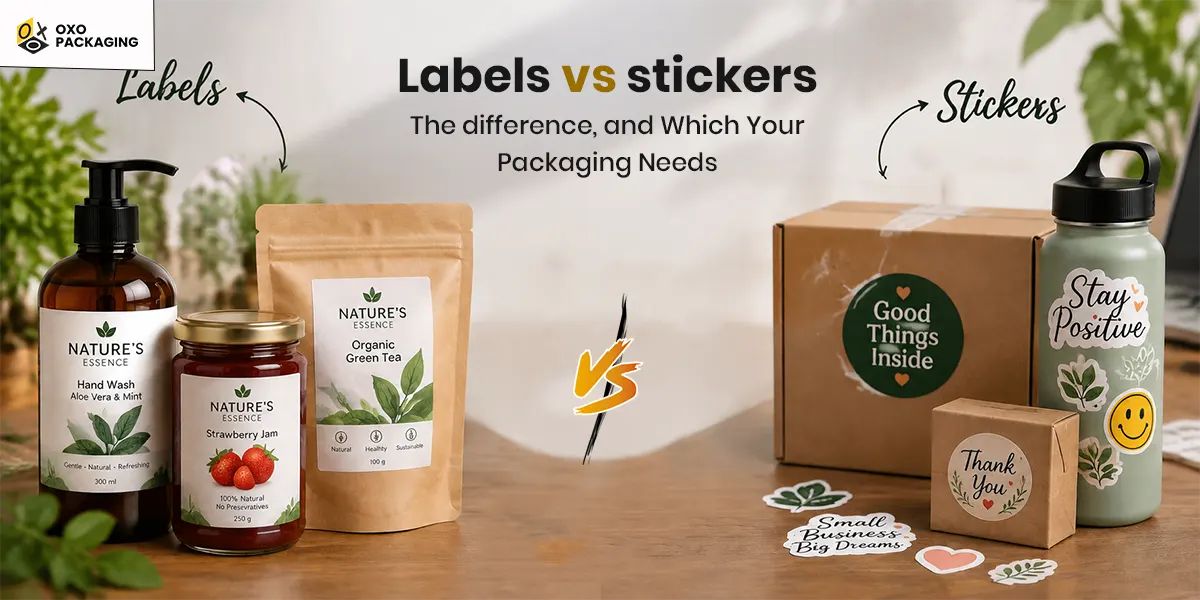
Packaging does more than protect a product. It also communicates important information, builds brand recognition, and helps products stand out on shelves and online. Labels and stickers are two common packaging elements used for branding and product identification. Although people often use these terms interchangeably, they can serve different purposes.
Understanding stickers vs. labels can help businesses select the right option for product packaging, shipping boxes, jars, bottles, bags, and retail products. From branding and product information to decorative applications, knowing how each works makes it easier to create packaging that looks professional and performs well.
What is a label?
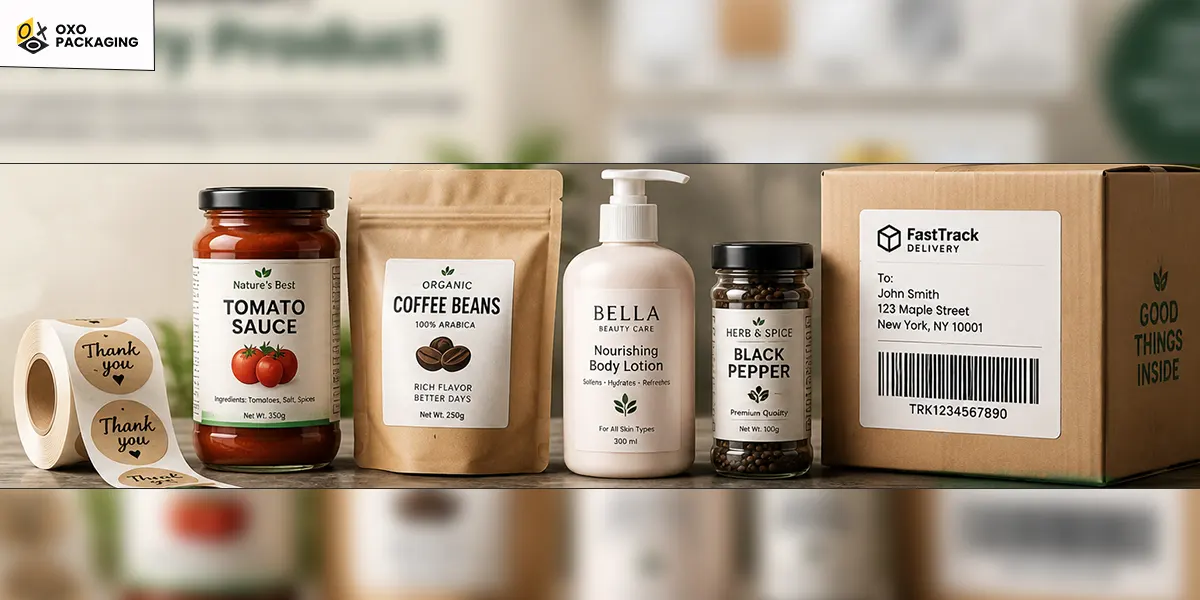
A label is a printed piece of material attached to a product or package to provide information, identification, branding, or instructions. Labels commonly include product names, ingredients, directions, barcodes, warnings, prices, and company information.
Labels are often designed around the specific requirements of a product. For example, food packaging may need labels containing nutritional information and ingredients, while cosmetic products may require usage instructions and ingredient details.
Labels can be made from materials such as paper, kraft paper, plastic, vinyl, or synthetic films. They may also include finishes such as matte, gloss, foil stamping, or waterproof coatings.
What is a Sticker?
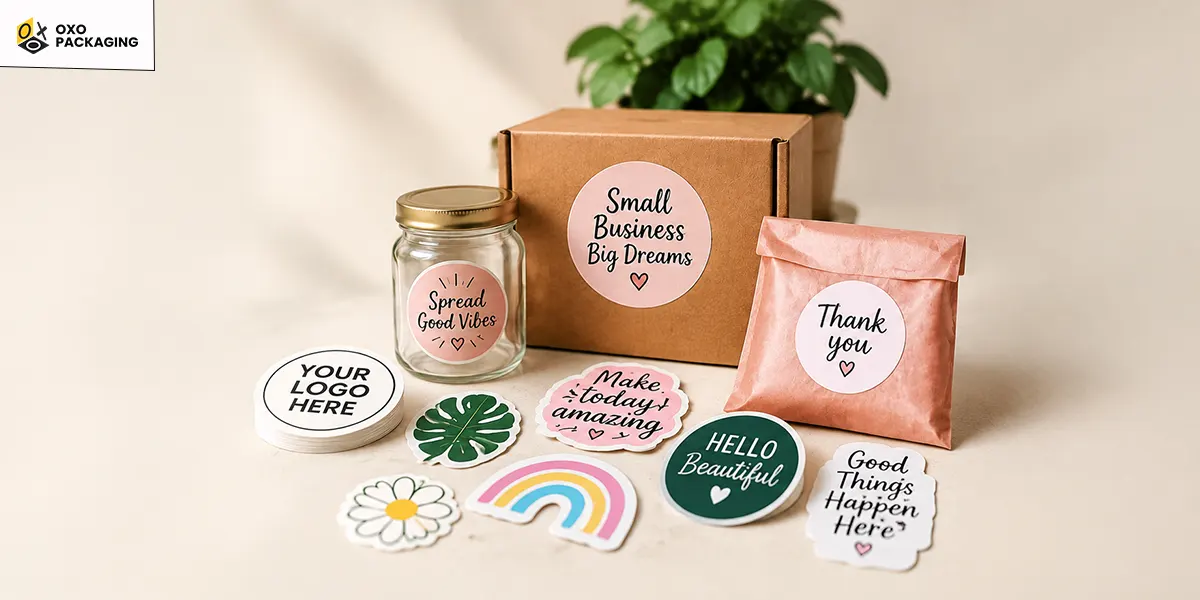
A sticker is an adhesive-backed piece of printed material that can be applied to a wide range of surfaces. Stickers are commonly used for decoration, promotional branding, logos, special messages, seals, and creative packaging details.
Unlike informational labels, stickers are often used when the main goal is visual appeal or brand promotion. A business may place a logo sticker on a mailer box. Add a thank-you sticker to an order, or use a decorative sticker to create a seasonal packaging design.
Stickers can come in different shapes, sizes, finishes, and materials. Custom-cut stickers can also follow unique outlines instead of traditional rectangular or circular shapes.
What is the Difference Between a Label and a Sticker?
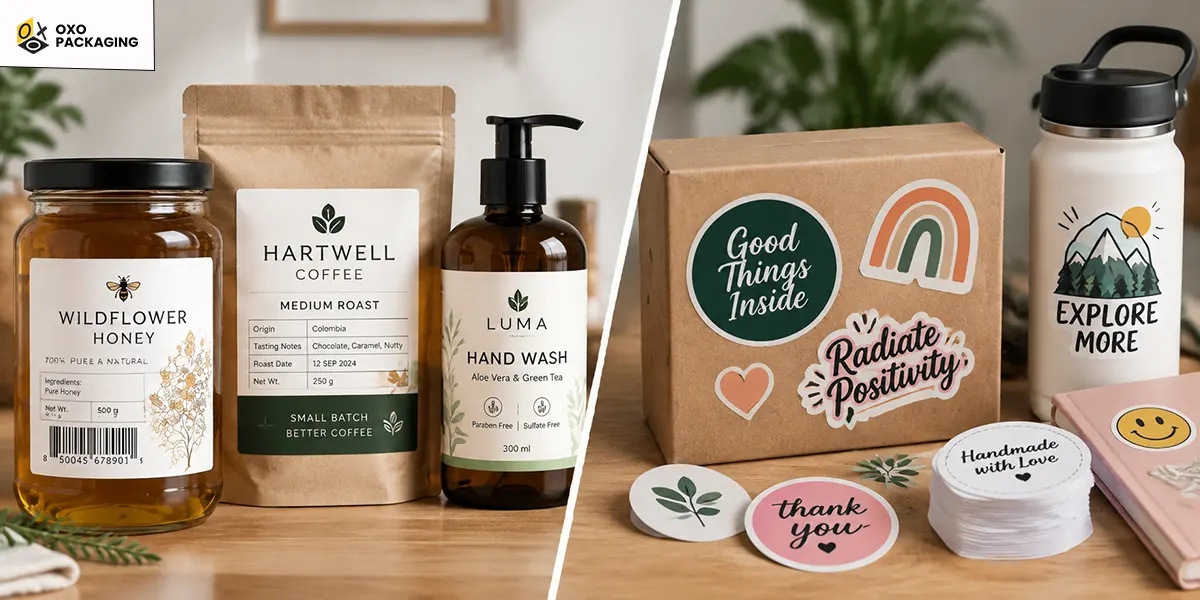
So, what is the difference between a label and a sticker? The biggest distinction is usually their intended purpose.
Labels are generally created to identify a product and communicate useful information. Stickers are commonly associated with decoration, promotion, branding, or general adhesive applications.
However, there is no universal technical rule that completely separates the two terms. In the packaging industry, a product described as a sticker can function like a label, and a label can also have decorative characteristics.
The difference between labels and stickers can therefore be understood through their typical applications.
|
Feature |
Labels |
Stickers |
|
Main purpose |
Product identification and information |
Decoration, branding, promotion |
|
Common content |
Ingredients, barcode, instructions, product details |
Logo, artwork, message, graphics |
|
Packaging use |
Bottles, jars, cartons, bags |
Boxes, mailers, bags, promotional packaging |
|
Shape |
Often standardized or product-specific |
Can have creative custom shapes |
|
Branding |
Yes |
Strong focus on visual branding |
|
Information |
Usually more detailed |
Often limited or visual |
|
Material option |
Paper, film, synthetic materials |
Paper, vinyl, plastic, specialty films |
Stickers vs Labels: Where They Overlap
The debate about stickers versus labels can become confusing because both products have backing and can be printed with custom designs. For example a coffee company may use a printed label on a coffee pouch that contains the coffee company's logo, roast information, ingredients, weight and barcode.
The same coffee company could use a small logo sticker to seal a tissue wrap or decorate a shipping boxes. In both cases the sticker and label have backing. The sticker or label is customized. The difference comes mainly from how the sticker or label's being used. This is why asking "are labels and stickers the thing" does not always have a simple meaning. No answer. Labels and stickers are products. Their typical functions and applications can differ.
When Should You Use Stickers for Packaging?
Stickers are a practical option when packaging needs an extra visual or promotional element. They can be applied to primary packaging, secondary packaging, shipping cartons, tissue paper, and shopping bags.
Businesses can use stickers for:
- Logo branding
- Promotional messages
- Thank-you notes
- Seasonal campaigns
- Product seals
- Packaging closures
- Limited-edition designs
- Social media handles
- Event and promotional packaging
For example, a custom sticker can turn a plain shipping box into a branded unboxing experience without requiring the entire box to be custom printed.
Choosing between a Sticker and Label
When choosing between a sticker and a label, begin by thinking about what the packaging part's meant to do.
If you want to share a lot of details about the product, a label could be the choice. If you want to show a logo, a picture, a special message, or a seal, a sticker might be the better option.
You should also think about the surface of the packaging. Glass, plastic, brown paper, printed cardboard, and soft bags can all have needs for glue and strength. If the packaging might get wet, be kept in a place, touch oils, or be handled a lot, pick a material and glue that works for those situations.
Size is important too. A small bottle might need a label that fits where there is space, while a big box could have room for a big label that shows the brand clearly.
Conclusion:
Understanding stickers vs labels make sit easier to choose the right packaging solution. While both are adhesive-backed products, labels are generally used for product identification and information, whereas stickers are commonly used for branding, decoration, promotion, and seals.
The answer to what the difference is between a label and a sticker ultimately depends on the intended application. If your packaging needs detailed product information, consider a label. If you want to add branding or a creative finishing touch, consider a sticker. For many brands, using both together can create packaging that is informative, attractive, and memorable.
Labels and stickers are similar because both can be adhesive-backed and customized. However, labels are typically used for product information and identification, while stickers are often used for branding, decoration, promotion, or seals.
The main difference is their typical purpose. Labels usually communicate product details such as ingredients, instructions, or barcodes, while stickers are often used for decorative, promotional, or branding purposes.
The right option depends on your packaging goal. Choose labels when detailed product information is required and stickers when you need branding, decoration, promotional messaging, or a packaging seal.
Yes, a package can use a product label for essential information and a sticker for branding, decoration, sealing, or promotional messaging.
Common options include paper, kraft paper, vinyl, plastic, and synthetic materials. The best choice depends on the packaging surface, durability requirements, moisture exposure, and desired appearance.







 Let's Call