


Milliliters to Ounces – Everything You Need to Know About Conversion
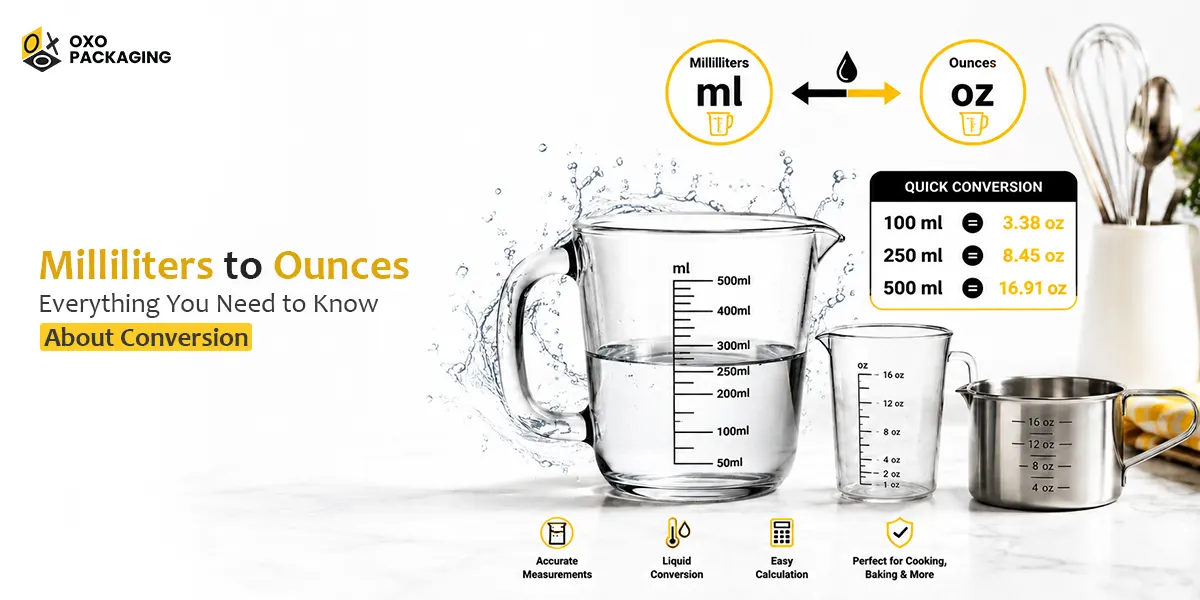
Measurements are the backbone of products that tell us the exact quantity and help brands assign a specific cost. Yet, milliliters and ounces are among those units that are not only used for packaged products but also in the product phases.
That’s why here in this blog, you’ll learn about these terminologies and understand how to convert milliliters to ounces. So, read on to explore more details.
What are Milliliters?
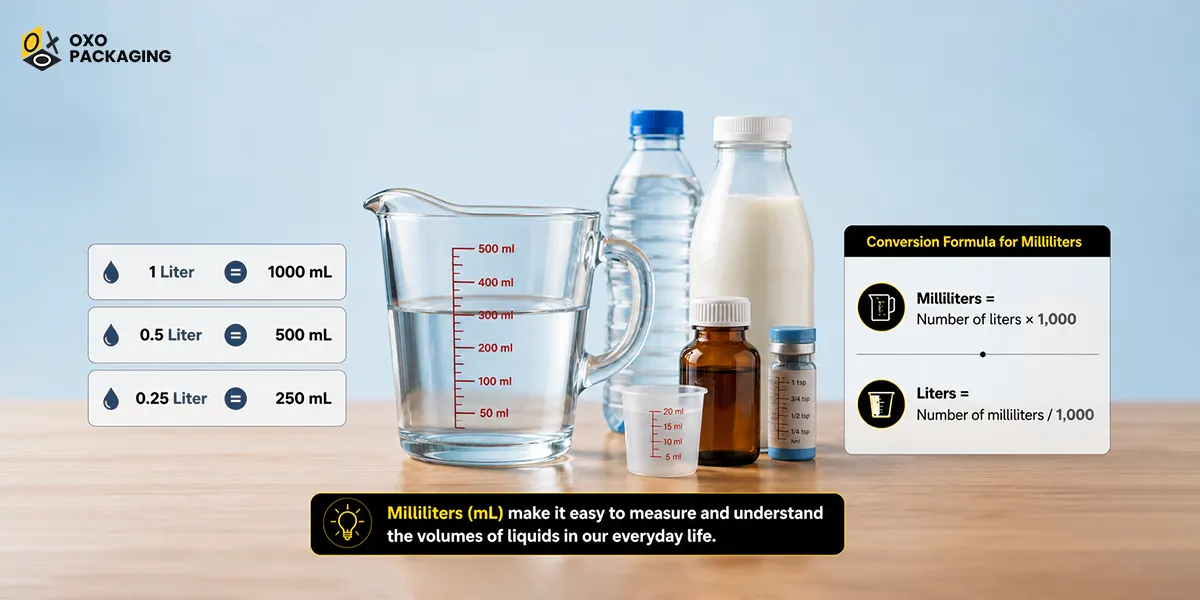
Milliliters are the common way to calculate the volume of a content. Initially, it was a French unit for volume measurement, which later became the Système International d’Unités or SI. It’s now so common that whatever we purchase in liquid terms, we refer to the mL if it’s less than a liter and its multiple.
Meanwhile, from milk to beverages and even some semi-liquid products, the weight is mentioned in milliliters. While it’s the 1/1000th unit of a liter, which states that:
- 1 Liter = 1000 mL
- 0.5 Liter = 500 mL
- 0.25 Liter = 250 mL
Conversion Formula for Milliliters
- Milliliters = Number of liters × 1,000
- Liters = Number of milliliters / 1,000
What are Ounces?
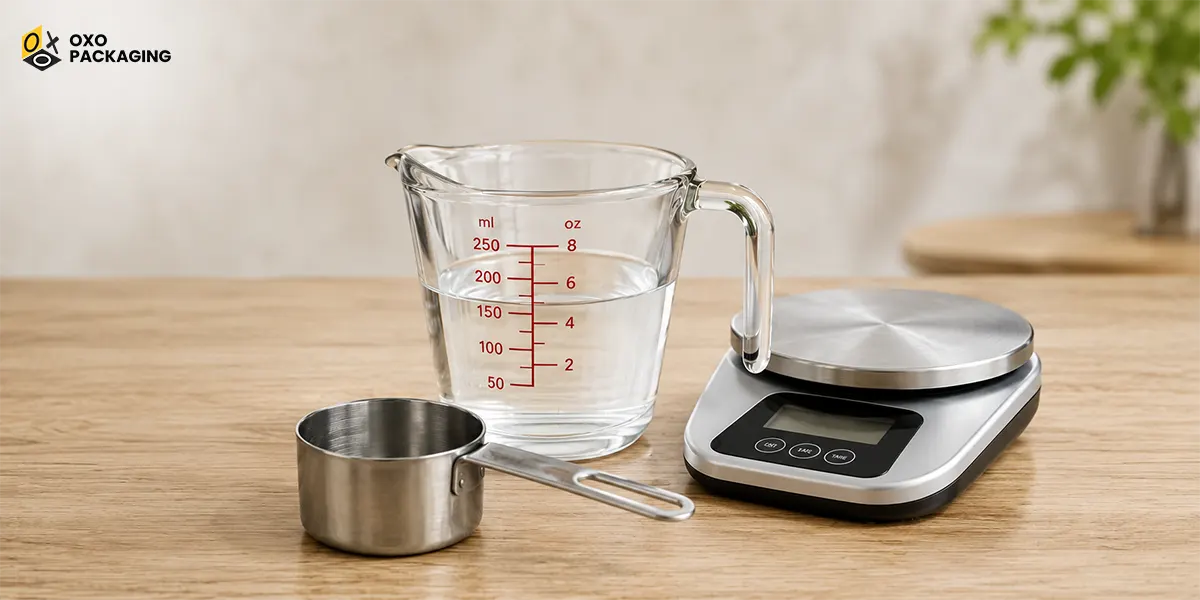
An ounce is the smallest unit of mass, which is derived from oz. This numerical unit is widely used in regions that follow the imperial systems unit. That’s why its application is widespread from personal to professional work and beyond.
However, it’s popular in industries including culinary, food, manufacturing, and liquid-linked products. Because this unit is the most common version of pouring, its usage can vary depending on the type of job.
Region-wise Milliliters (ml) to Ounces (oz) Conversion Formulas
Since each region follows its own standard version of calculation, the end figures differ from each other. For instance, below are the formulae for both of the
|
Conversion |
USA Formula |
UK Formula |
|
ml → oz |
oz = ml ÷ 29.6 (or 29.57) |
oz = ml ÷ 28.4 |
|
oz → ml |
ml = oz × 29.6 |
ml = oz × 28.4 |
Milliliters to Fluid Ounces Conversion Table
Below are some of the conversions of ml to ounces in the UK & US versions. Most of these weights are common in our daily eatables and non-food items.
|
Milliliters (mL) |
Fluid Ounces (fl oz) |
|
1 mL |
0.033814 |
|
2 mL |
0.067628 |
|
3 mL |
0.101442 |
|
4 mL |
0.135256 |
|
5 mL |
0.16907 |
|
6 mL |
0.202884 |
|
7 mL |
0.236698 |
|
8 mL |
0.270512 |
|
9 mL |
0.304326 |
|
10 mL |
0.33814 |
Calculation as per USA & UK Standards
|
Milliliters (ml) |
USA Calculation (÷ 29.57) |
UK Calculation (÷ 28.4) |
Approximate Result (oz) US |
Approximate Result (oz) UK |
|
150 ml |
150 ÷ 29.57 |
150 ÷ 28.4 |
5.07 |
5.28 |
|
200 ml |
200 ÷ 29.57 |
200 ÷ 28.4 |
6.76 |
7.04 |
|
300 ml |
300 ÷ 29.57 |
300 ÷ 28.4 |
10.15 |
10.56 |
|
500 ml |
500 ÷ 29.57 |
500 ÷ 28.4 |
16.91 |
17.61 |
|
600 ml |
600 ÷ 29.57 |
600 ÷ 28.4 |
20.29 |
21.13 |
|
750 ml |
750 ÷ 29.57 |
750 ÷ 28.4 |
25.36 |
26.41 |
|
1000 ml |
1000 ÷ 29.57 |
1000 ÷ 28.4 |
33.82 |
35.21 |
Usage of the Millimeter Scale in Various Industries
The general uses of ML in different industries include:
- Medicine to determine the exact dosing of liquid medications, cough syrups, eye/ear drops, and vaccinations.
- Personal care to measure the volume of cosmetics, skincare, and hand sanitizers, etc.
- Food to precisely measure small liquid or semi-solid ingredients such as milk, cooking oil, and more.
Usage of Ounces Scale in Various Industries
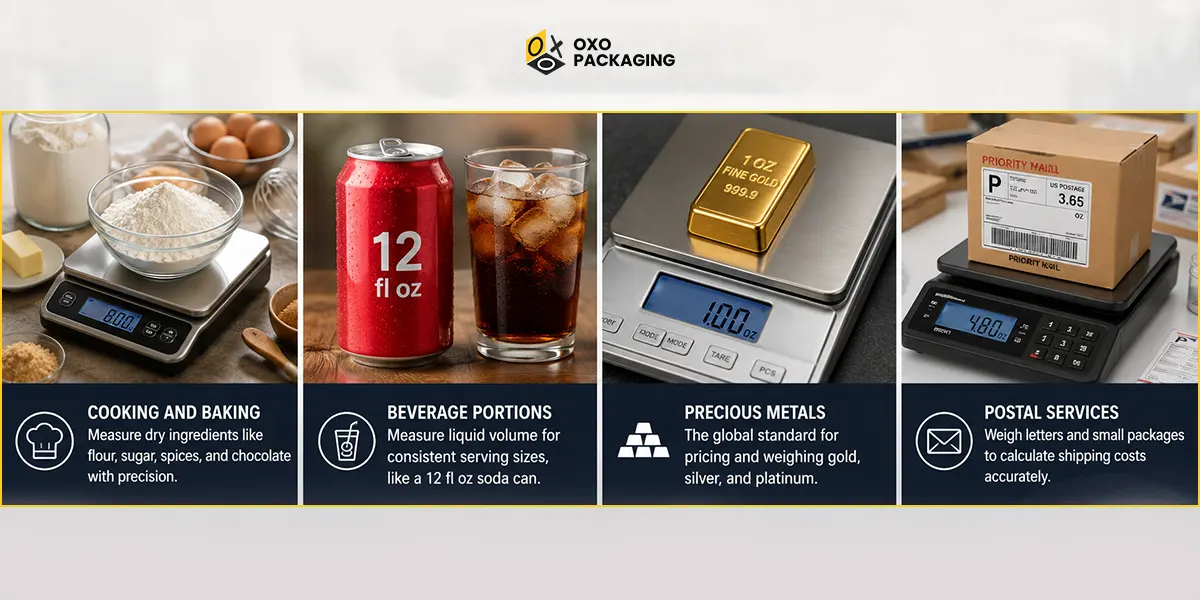
Unlike the usage of ML scales, the usage of ounce scales is also applicable in various industries, such as:
- Cooking and baking to measure the dry weight of ingredient items such as flour, sugar, spices, and chocolate.
- Beverage portions to measure the liquid volume for distinctive serving sizes, like a 12 fl oz soda can.
- Precious metals, which are the global standard for pricing and weighing gold, silver, and platinum.
- The postal service industry calculates the weight of letters and small packages to precisely calculate the shipping costs without any conversion requirements.
1 ounce of content equals 29.5735 mL. While the formulae we used for this calculation is mL = Ounces × 29.5735. When we convert the mL into ounces, it reflects that 1 mL is equal to 0.0338 US fl oz.
Both of the units are good to consider depending on the region and calculation types. While ounces or oz is mostly used in the American household vocabulary, it is mostly referred to in ml by the rest of the nations.
The usage of any unit depends upon the actual ingredient recommendations. If the entire recipe is in ml, then convert the ounces to ml. That’s how it minimizes the confusion of pouring the raw materials and ensures the consistency of the output.







 Let's Call