


Rigid Box Dimensions: Everything You Need To know
Product packaging does more than protect your items. It also creates a strong first impression. Luxury brands often choose rigid boxes because they look premium and last longer than folding cartons.
However, selecting the correct rigid box dimensions is just as important as choosing the material. A box that is too large wastes space and increases shipping costs. A box that is so small may damage the product or make packaging difficult.
This guide explains rigid box dimensions. You will also learn how to measure a rigid box and select the right size for your products.
What are Rigid Box Dimensions?
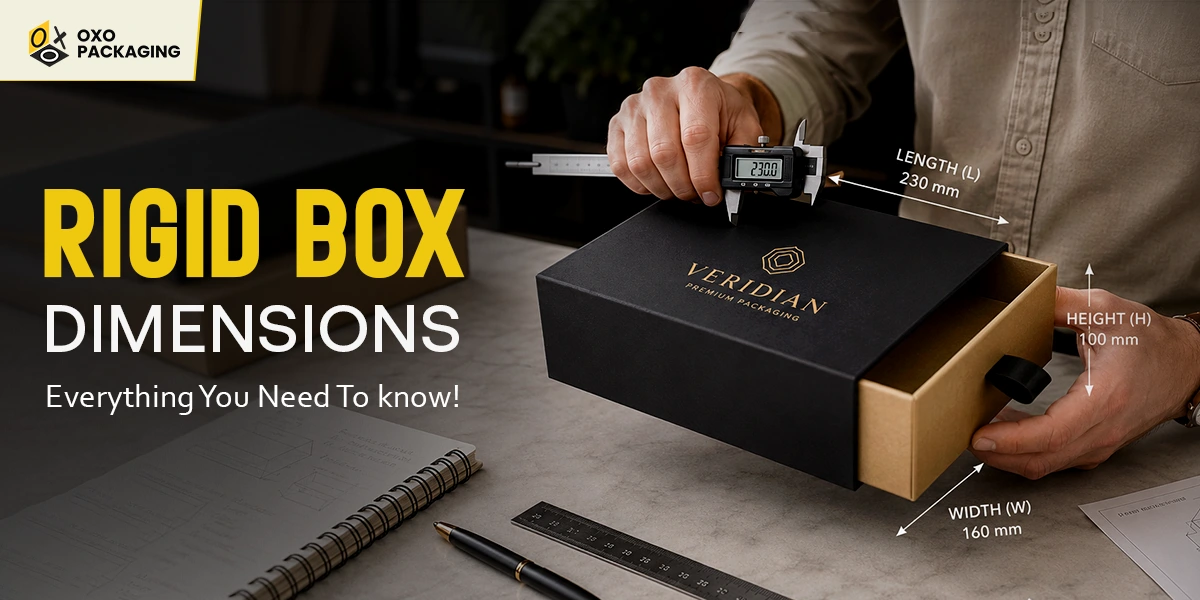
Rigid box dimensions describe the size of a rigid box. Every box has three basic measurements.
- Length (L)
- Width (W)
- Height (H)
Manufacturers usually write them in this order: Length × Width × Height (L × W × H). These measurements help designers create packaging that fits the product perfectly. Correct dimensions improve product protection, presentation, and shipping efficiency.
Why Do Rigid Box Dimensions Matter?
Many businesses focus on design first. They often ignore the box size. This mistake increases packaging cost. The right dimensions offer several benefits.
- Protect products during shipping.
- Reduce space inside the box.
- Lower packaging material costs.
- Improve customer experience.
- Create a professional appearance.
- Support better product presentation.
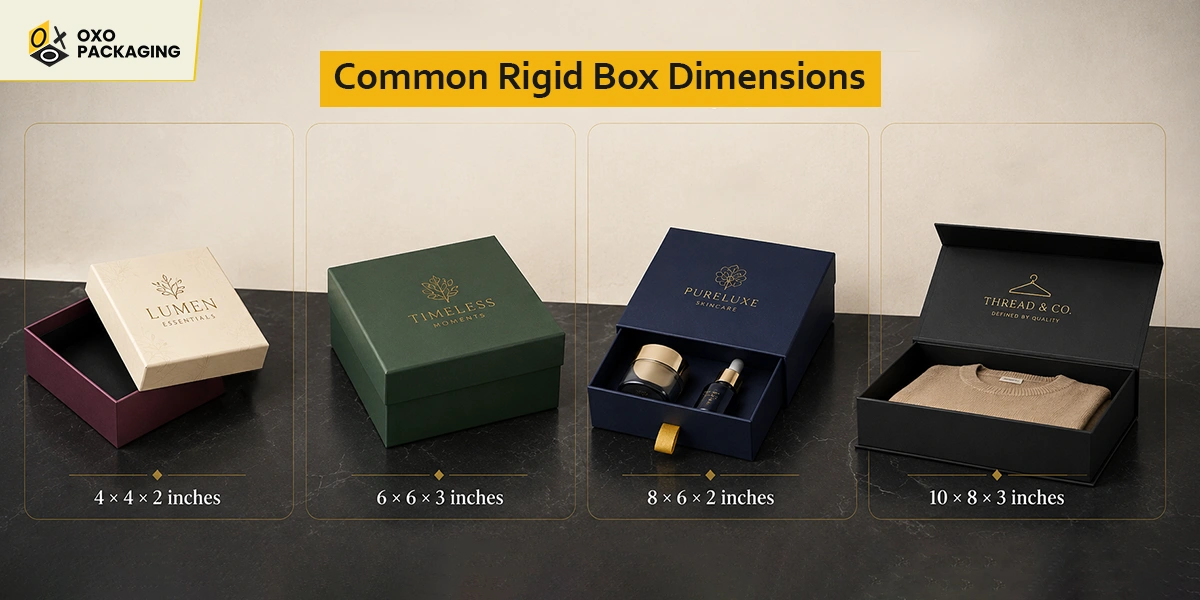
Standard Rigid Box Dimensions
|
Box Type |
Common Dimensions |
|
Small Rigid Box |
4 × 4 × 2 inches |
|
Gift Box |
6 × 6 × 3 inches |
|
Cosmetic Box |
8 × 6 × 2 inches |
|
Apparel Box |
10 × 8 × 3 inches |
|
Electronics Box |
12 × 10 × 4 inches |
|
Luxury Product Box |
14 × 12 × 5 inches |
How to Measure Rigid Box Dimensions
Measuring a rigid box is very simple; you just need a ruler or a tape measure. These are the steps to follow:
Measure the Length
Length is the longest size of the box. Measure from one side edge to the opposite inside edge.
Measure the Width
Width is the shorter side of the opening. Measure across inside the box.
Measure the Height
Height measures the distance from the bottom to the top edge. Always measure the inside height for accurate product filling.
External VS Internal Dimensions
|
Internal Dimensions: |
|
|
External Dimensions: |
|
Common Products and their Rigid Box Dimensions
Different products require different box sizes.
Jewelry
Small jewelry needs compact boxes.
Typical size:
- 3 × 3 × 1.5 inches
Watches
Watch boxes need extra depth.
Typical size:
- 4 × 4 × 3 inches
Perfume Bottles
Perfume packaging requires a secure fit.
Typical size:
- 5 × 3 × 2 inches
Mobile Phones
Electronics need protective packaging.
Typical size:
- 7 × 4 × 2 inches
Clothing Accessories
Belts, wallets, and scarves require larger boxes.
Typical size:
- 10 × 8 × 2 inches
These dimensions may vary depending on the product.
Factors that Affect Rigid Box Dimensions
Several factors influence the final box size:
Product Size
The product always determines the box dimensions. Measure the item carefully before designing packaging.
Protective Inserts
- Foam inserts need extra space.
- Cardboard inserts also increase box dimensions.
- Always include insert measurements.
Product Weight
- Heavy products require thicker board.
- Thicker walls slightly reduce internal space.
Branding Needs
- Luxury brands often prefer larger presentation boxes.
- Extra space improves the unboxing experience.
Shipping Requirements
- Shipping carriers charge based on package size.
- Compact boxes reduce transportation costs.
Popular Styles and their Dimensions
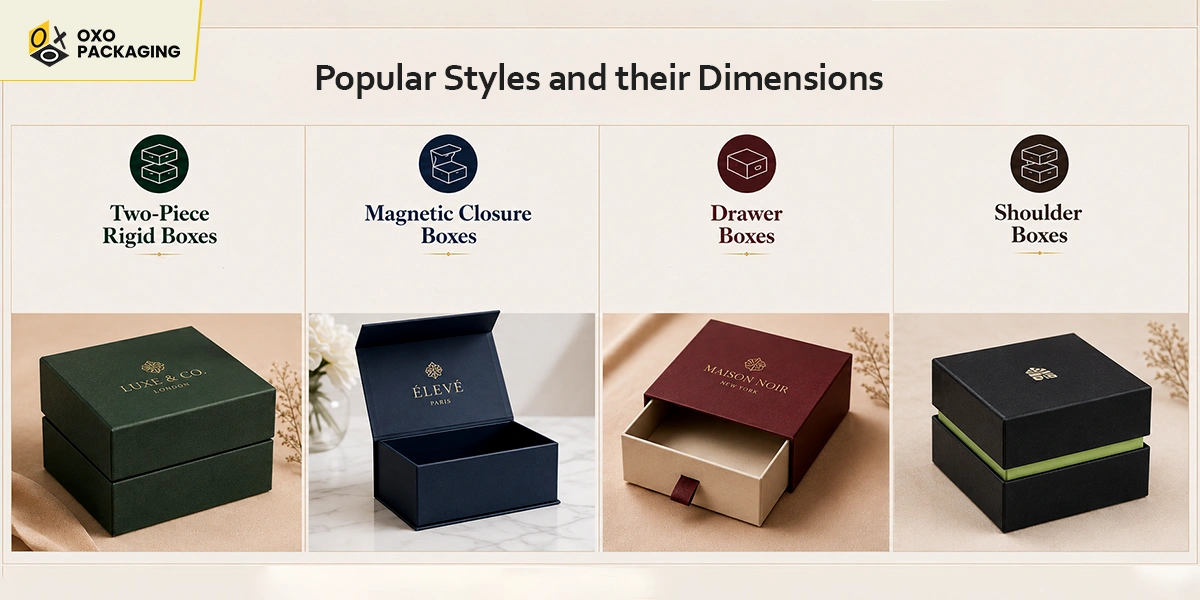
Rigid boxes come in different styles. Each style uses different dimensions.
Two-Piece Rigid Boxes
These two-piece rigid boxes include a lid and a base. They work well for luxury gifts.
Magnetic Closure Boxes
These boxes feature a folding lid. They require additional space for magnets.
Drawer Boxes
These boxes slide open smoothly. Their dimensions include the outer sleeve and inner tray.
Shoulder Boxes
These boxes contain three separate parts. They offer a premium presentation. Their dimensions depend on all three components.
Common Mistakes to Avoid
Avoid these common mistakes to ensure your rigid boxes fit perfectly and protect your products.
- Guessing the product size instead of measuring it accurately.
- Ignoring the space needed for foam or cardboard inserts.
- Choosing a box that is too large for the product.
- Selecting a box that is too small to close properly.
- Forgetting to allow extra space for the lid.
- Measuring only the outside dimensions of the box.
- Overlooking the thickness of the rigid board.
- Ignoring shipping size and weight requirements.
- Skipping a prototype before placing a bulk order.
- Using the same box dimensions for different product sizes.
- Leaving too much space inside the box.
- Forgetting to consider protective wrapping or tissue paper.
- Focusing only on appearance instead of product protection.
- Not checking the dimensions after adding custom inserts.
- Ordering large quantities without testing the box fit first.
How Accurate Dimensions Improve Customer Experience
Accurate rigid box dimensions play an important role in creating a positive customer experience. A well-sized box keeps the product secure during shipping and prevents unnecessary movement that could cause damage.
Customers also appreciate pacakging that is easy to open and neatly presents the product. When the box fits perfectly, it gives the impression of quality, attention to detail, and professionalism.
It also reduces the need for excessive fillers, making the package look cleaner and more organized. Many customers keep and reuse premium rigid boxes, which increases your brand's visibility even after the purchase. By choosing the right dimensions, businesses can improve customer satisfaction, strengthen their brand image, and encourage repeat purchases.
Conclusion:
Choosing the correct rigid box dimensions improves product safety, presentation, and shipping efficiency. Accurate measurements reduce packaging waste and lower transportation costs. They also create a better unboxing experience for customers.
Always measure your product before selecting a box size. Consider inserts, branding, and shipping requirements during the design process. Custom dimensions often provide the best results because they match your product perfectly.
The right rigid box does more than hold a product. It strengthens your brand and leaves a lasting impression on every customer.
Rigid box dimensions refer to the length, width, and height of a rigid packaging box.
Measure the inside length, width, and height using a ruler or measuring tape.
Internal dimensions ensure the product fits safely inside the box.
Yes. Most packaging manufacturers like OXO Packaging offer fully custom rigid box dimensions.
Rigid boxes are commonly used for jewelry, cosmetics, electronics, perfumes, watches, gifts, and luxury retail products.







 Let's Call