


Roll labels vs. Sheet labels: Hand vs. Machine application
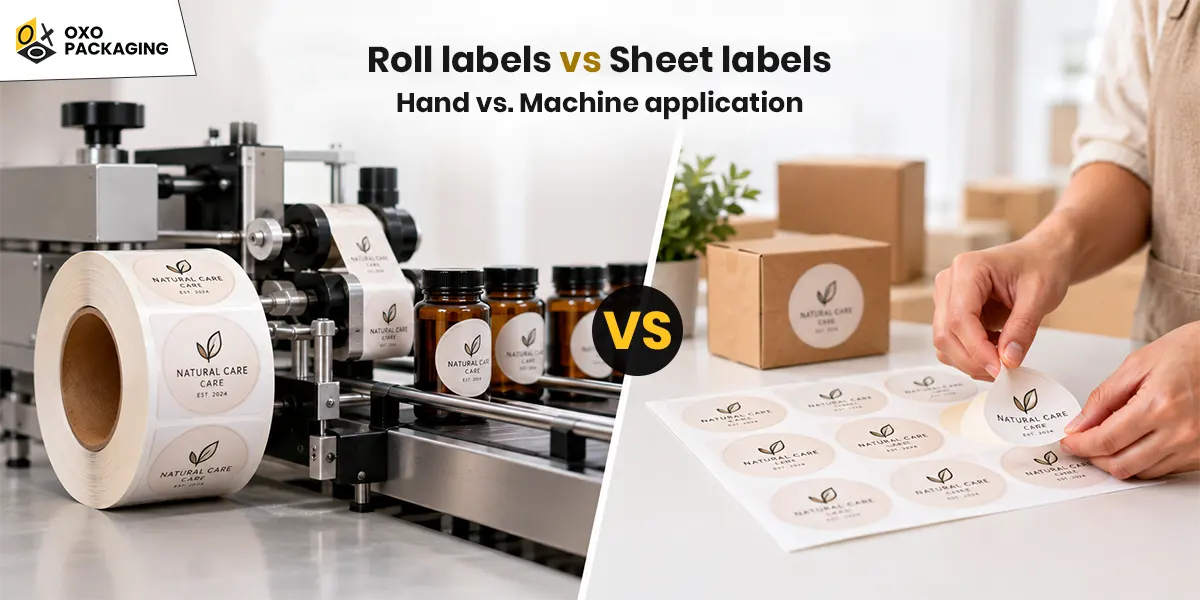
Choosing the right label format can affect how quickly, neatly, and efficiently products are packaged. While both roll labels and sheet labels provide the same basic purpose — displaying product information, branding, barcodes, or instructions — their formats are designed for different application methods.
The choice often comes down to how labels will be applied. Small businesses and handmade brands may prefer applying labels by hand, while manufacturers and high-volume operations may need automated labeling machines. Understanding the difference between roll labels and sheet labels can help you select a format that matches your packaging process, order volumes, and equipment.
What are Roll Labels?

Roll labels are individual labels wound continuously around a roll. Each label is separated by a gap or liner, allowing it to be peeled away one at a time. They can be produced in different shapes, sizes, materials, and finishes to suit bottles, jars, boxes, bags, tubes, and other packaging.
One major advantage of roll labels is their compatibility with labeling equipment. Machines can feed labels from the roll and apply them rapidly and consistently to products. This makes them particularly useful for businesses handling large production runs.
Roll labels can also be applied manually. A person can peel each label from the roll and place it directly onto the product. However, for very small quantities, sheet labels may sometimes be easier to handle.
What are Sheet Labels?
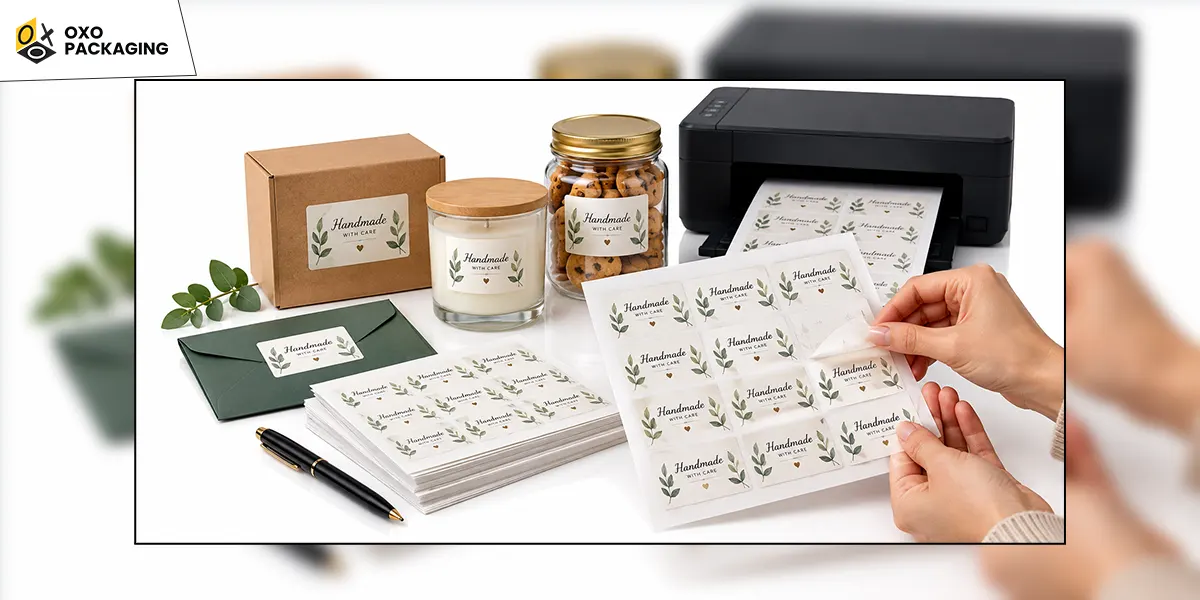
Sheet labels are printed on flat sheets, usually containing multiple labels per page. The labels are arranged in rows and columns with spaces between them, making the sheets convenient to print, organize, and store.
Sheet labels are commonly used for office products, small-batch packaging, shipping labels, product stickers, and promotional applications. They are especially convenient when labels need to be printed using a standard desktop or office printer.
Because they come on flat sheets, they are generally intended for manual application rather than automated labeling machines. The user removes each label from the sheet and places it on the product by hand.
Sheet Labels vs. Roll Labels: What is the Difference?
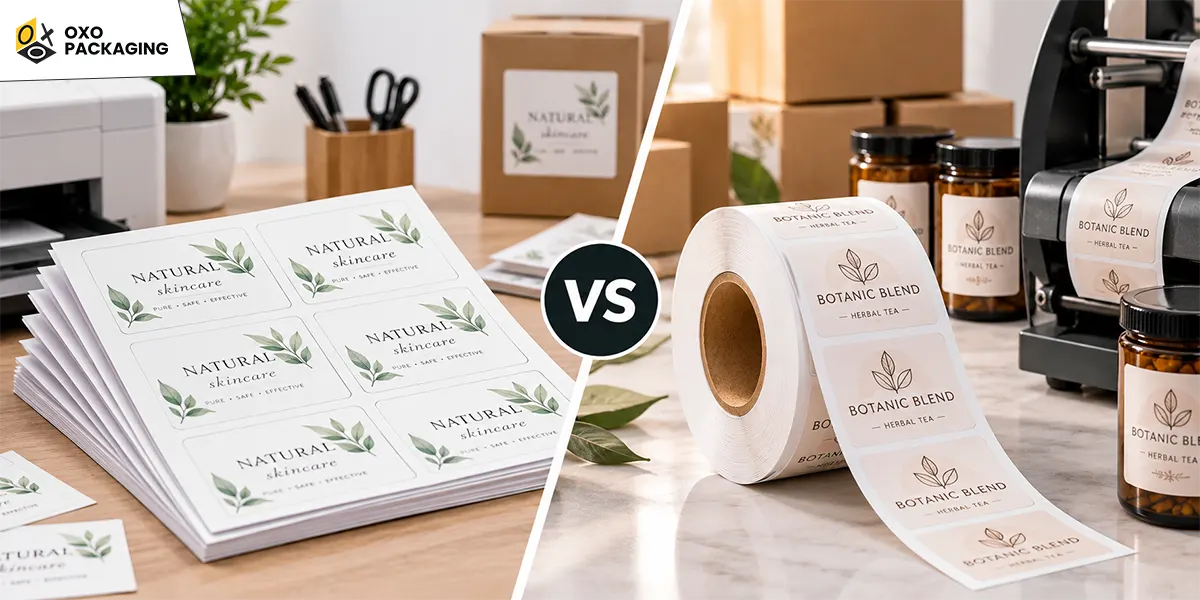
The main difference between sheet labels and roll labels is their format and application method. Sheet labels come on flat pages, while roll labels are wound around a continuous roll. This simple difference affects how easily they can be printed, stored, handled, and applied.
Here is a basic comparison:
|
Feature |
Roll Labels |
Sheet Labels |
|
Format |
Continuous roll |
Flat sheet |
|
Manual application |
Yes |
Yes |
|
Machine application |
Yes |
Generally not suitable |
|
High-volume production |
Well suited |
Less efficient |
|
Desktop printing |
Depends on equipment |
Convenient |
|
Storage |
Compact rolls |
Flat sheets |
|
Application speed |
Fast |
Moderate |
|
Best for |
Production and automation |
Small batches and manual work |
The right option depends less on the label itself and more on your workflow.
Roll Labels for Machine Application

One of the biggest reasons businesses choose roll labels is automation. Labelling machines are designed to pull labels from rolls and apply them to products at a consistent speed.
For example, a beverage company must label thousands of bottles during a production run. Applying each label manually would require a lot of labor and time. A roll?fed labeling machine can keep dispensing and applying labels as products move along a production line.
Using a labeling machine also improves consistency. When equipment is properly calibrated, labels can be positioned exactly the same on every package. This makes a more uniform appearance.
Roll labels are therefore particularly useful for:
- Large production runs
- Bottles and jars
- Food and beverage packaging
- Cosmetic containers
- Pharmaceutical packaging
- E-commerce fulfillment
- Retail products
- Automated production lines
Sheet Labels For Hand Application

Sheet labels are a good choice, especially when labels are applied by hand. A worker can set a sheet on a work surface, pull one label out, and stick it onto a package. Sheet labels make the process simple and direct.
This method works well for businesses that produce quantities or for products that need careful placement. Sheet labels fit these needs neatly.
Take a handmade candle business that makes hundreds of candles in many scents. Workers use sheet labels to write the product name, scent, ingredients, and branding on each container. Sheet labels keep the information clear and tidy.
Sheet labels can also help when a business needs different designs on one printed sheet. Instead of handling separate rolls, multiple label designs can be arranged together. Sheet labels save time. Reduce confusion.
Which is Better: Roll Labels or Sheet Labels?
The question of which is better, roll labels or sheet labels, depends on your application rather than one format being universally better.
If your priority is automated application, production speed, and consistent placement, roll labels are generally designed for that workflow. If your priority is simple printing and manual application for smaller quantities, sheet labels may be more convenient.
Before ordering, consider these questions?
- How many labels do you need?
Small quantities may be easier to manage on sheets, while larger runs can benefit from rolls.
- How will labels be applied?
Manual application gives you flexibility with either format, while automated application typically requires rolls.
- What equipment do you use?
Check your printer and labelling machine specifications before ordering.
- How consistent must placement be?
Machine application can provide greater consistency across large production runs.
- Will your production volume increase?
A growing business may benefit from selecting a format that supports future automation.
Conclusion:
Knowing how roll labels differ from sheet labels helps you pick the labels for your packaging workflow. Roll labels work best when you need labels quickly and you use a machine. Sheet labels are handy when you only need a few labels, and you apply them by hand.
Which label you pick depends on how many you produce, the equipment you have, how you apply the labels, and what your packaging needs are. Whether you pick roll labels or sheet labels, choosing the format can make labeling faster, more organized, and keep your work consistent.
Yes, roll labels are designed to work with automatic and semi-automatic labeling machines, making them suitable for high-volume production.
Yes, sheet labels are commonly applied manually, making them practical for small batches, handmade products, and low-volume packaging.
It depends on your workflow. Roll labels are suitable for automation and larger quantities, while sheet labels can be convenient for manual application and smaller runs.







 Let's Call