


Wax Paper vs Butter Paper: Explore the Key Differences!
People often get confused about different types of papers used for baking and cooking, such as wax paper, butter paper, parchment paper, and baking paper. There are different names used interchangeably for certain types of papers. This is why people get confused when making the right choice. One of the confusions is that wax paper and butter paper are the same, which is not true. They both have similarities in terms of texture and usage. Read this blog to know the key differences between wax paper vs butter paper and make the right choice!
What is Wax Paper?
Wax paper is known for its extensive use in baking and cooking because of its excellent properties. Typically, a thin layer of paraffin wax is coated on the paper to ensure moisture resistance and prevent stickiness.
Not only does it work as an essential tool to make cooking and baking smooth, but also wax paper can also be used as a liner. Wax paper is extensively used by individuals in their kitchen and also in baking businesses to ensure efficient and effective baking.
Some people have a misconception that wax paper and butter paper are the same. This is not the fact! Both are different because of their different construction and uses. So when exploring wax paper vs butter paper, know that they are different.
Common Uses of Wax Paper
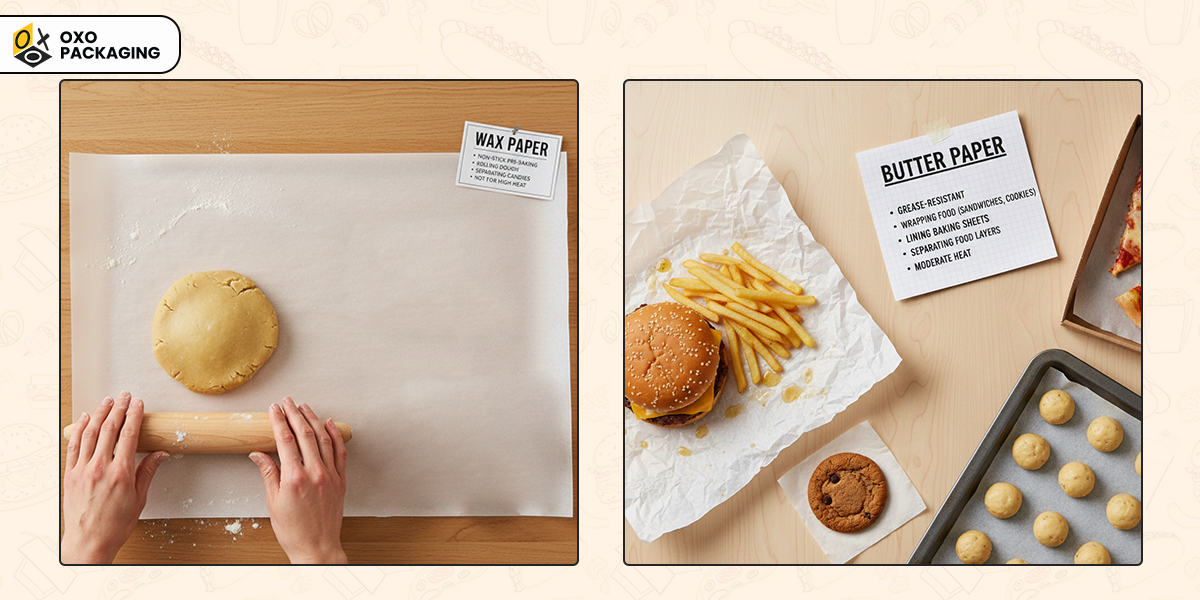
Wax paper is mainly used during food preparation rather than cooking. It is perfect for rolling cookie dough, wrapping cheese and sandwiches, covering food before refrigeration, and separating burgers or patties before freezing.
The wax coating creates a protective barrier against moisture and sticking, making food handling easier. Since it is not heat-resistant, wax paper should never be placed in an oven or used for baking.
What is Butter Paper?
Understanding the concept of butter paper is important when analysing wax paper vs butter paper. Both wax paper and butter paper are used primarily for baking and cooking. Butter paper is known for its grease-proof properties and moderate heat resistance. Know that butter paper and parchment paper are also different because parchment paper has a silicon coating, and butter paper does not have it.
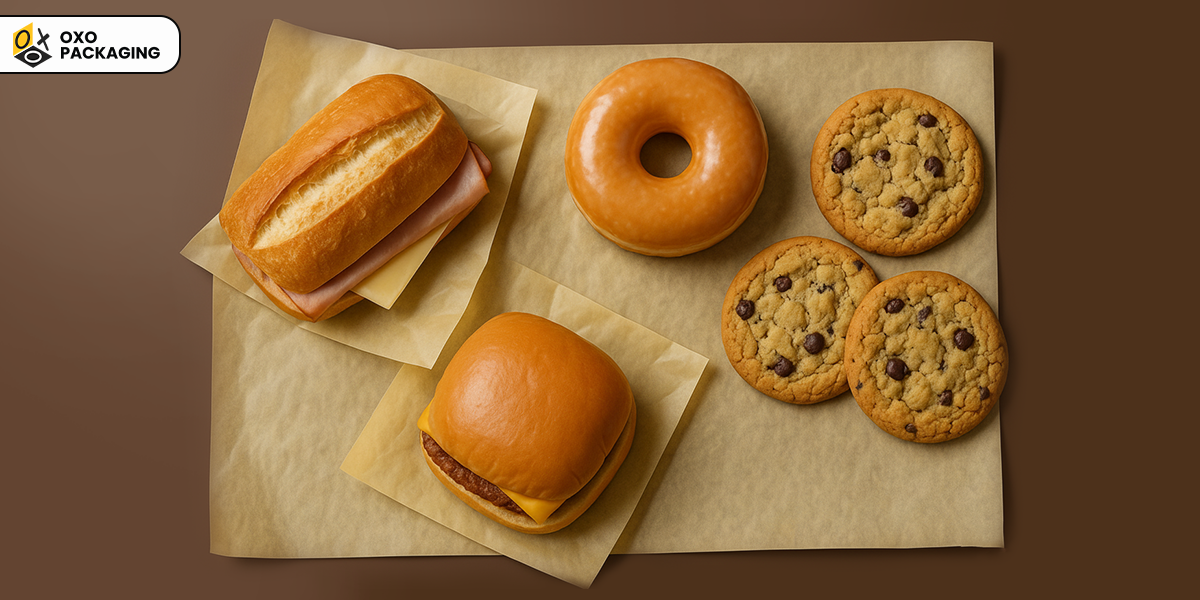
Butter paper is used to wrap cooked and baked food like sandwiches, donuts, burgers, rolls, and cookies. It is not naturally grease-proof cellulose-based paper coated with a soybean-based wax, which makes it grease-proof.
Oily, buttery, moist, or greasy food items are generally wrapped in butter paper to ensure customers can have the food without any mess. So when understanding wax paper vs butter paper, know that both can contain different types of waxes to resist grease and moisture. However, they are still different.
As discussed earlier, parchment paper has exceptional heat resistance, which makes it ideal for use in baking at high temperatures in the oven. Butter paper has moderate resistance to heat, meaning you can wrap hot food items like sandwiches, mini pizza, chicken breads, or fries. It is advisable to avoid using butter paper for baking items in the oven at high temperatures.
Common Uses of Butter Paper
Butter paper is commonly used in kitchens and bakeries because of its grease-resistant and non-stick properties. It is ideal for lining baking trays, wrapping sandwiches, burgers, cookies, and pastries, and separating layers of baked goods.
Many food businesses also use butter paper for serving snacks and packing takeaway food, as it helps keep food fresh while preventing oil and grease from leaking through the paper.
Difference Between Butter Paper and Wax Paper
The following are some key differences between wax paper vs butter paper you must know:
Cost: Butter paper is typically more costly than wax paper.
Color: Butter paper is translucent paper that comes in brown, pink, and white colors. While wax paper has a white color.
Weight: Butter paper is thicker than wax paper and is slightly heavier than wax paper.
Texture: Butter paper is generally stiffer and more durable than wax paper.
Heat Resistance: Wax paper is not heat-resistant, but butter paper can withstand moderate temperatures.
Customization: Both can be customized.
Can Butter Paper and Wax Paper Be Used in the Oven?
One of the biggest differences between butter paper and wax paper is their heat resistance. Butter paper can generally withstand moderate baking temperatures, making it suitable for lining baking trays and wrapping certain baked goods. However, you should always check the manufacturer's recommended temperature before using it in an oven.
Wax paper, on the other hand, should never be used in an oven. The wax coating can melt or burn when exposed to direct heat, which may affect your food and create safety concerns. Wax paper is best reserved for food preparation, wrapping, and storage rather than baking.
What to Choose? Butter Paper or Wax Paper
Choosing between butter paper and wax paper depends on the purpose of usage. If you want to make your baking process mess-free and smooth, you must go with the wax paper because it contains a thin layer of wax.
The presence of a wax layer on wax paper makes your baking tasks easier by preventing the stickiness of baking stuff like doughs and baked items. However, wax paper is not heat-resistant. This is why they are ideal for using as an essential tool to make the pre-baking process easier.
On the other hand, choose butter paper if you want to prevent grease from your baked and cooked items. Butter paper is known for its grease resistance.
It can also withstand moderate temperatures. So you can easily wrap sandwiches, burgers, cookies, etc. You can also go with butter paper if you want to separate layers of food to prevent sticking.
Common Mistakes to Avoid When Using Butter Paper and Wax Paper
These are common mistakes you should avoid when using these papers mentioned below:
|
Common Mistakes |
Why Should You Avoid It? |
|
Using wax paper in the oven |
The wax coating can melt or burn when exposed to high temperatures. |
|
Assuming butter paper and wax paper are the same |
Although both have non-stick properties, they differ in heat resistance and intended use. |
|
Wrapping very hot food in wax paper |
The heat may soften or melt the wax coating, affecting the food. |
|
Reusing heavily greased paper multiple times |
Excess grease and food residue can reduce hygiene and performance. |
|
Ignoring the manufacturer's instructions |
Always check the recommended temperature and usage guidelines before using either paper. |
|
Choosing the wrong paper for the task |
Use butter paper for baking and grease resistance, while wax paper is better for food preparation, wrapping, and storage. |
Where to Buy Butter Paper and Wax Paper?
If you run a bakery business or want to use butter and wax papers for kitchen use, you must know the right place to get them. You can get butter paper and wax paper from a wholesale retailer, a custom packaging company, or a baking supplies store. It is better to buy them from a reliable custom packaging company that offers customization freedom, plus free shipping and bulk discounts.
Yes! Parchment paper is the same as baking paper because it is used for baking due to its heat-resistant properties. However, butter paper differs from parchment paper because butter paper is not heat-resistant and does not contain a silicon coating.
Wax paper contains a thin layer of wax, typically paraffin wax, that makes it non-sticky. The non-sticky properties of wax paper make it ideal for rolling out dough, wrapping sandwiches, and separating layers of food for storage. Also, it has some non-food usages like in arts and crafts, household cleaning, and wrapping silverware.
Aluminum foil and Silicone Baking Mats are two popular alternatives to parchment paper as they are heat-resistant and non-sticky.







 Let's Call