


A Comprehensive Guide on Auto Parts Packaging for Businesses
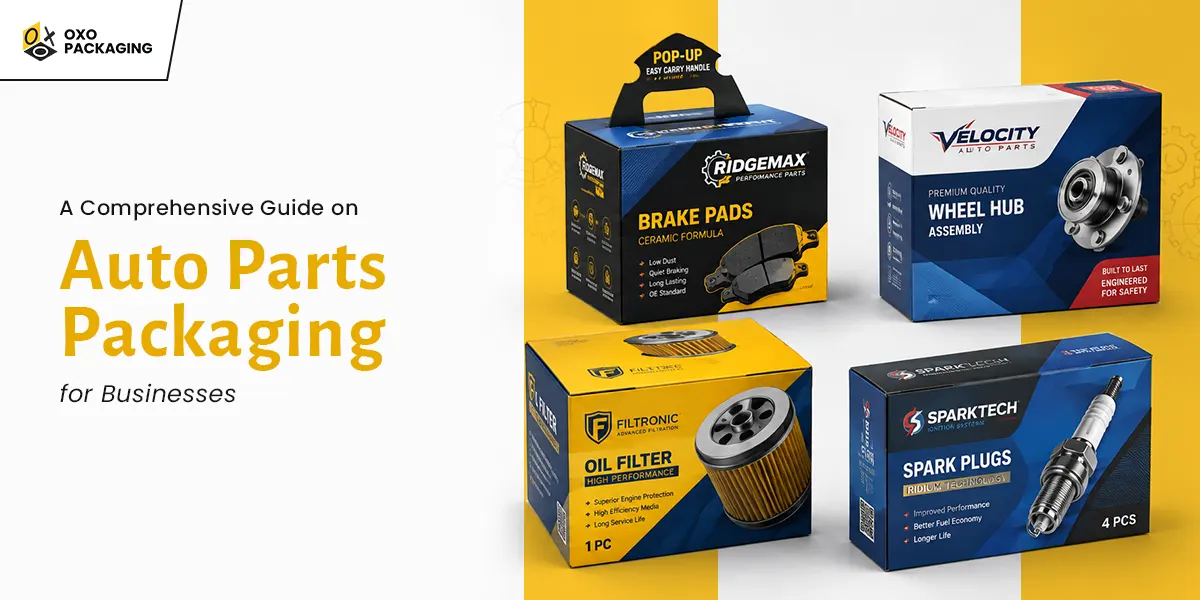
Whether you are auto parts manufacturers, vehicle assembly companies (OEMs), or aftermarket retailers, automotive packaging is worth exploring. If you are not already considering it as a central piece.
By investing in the right packaging, you can prevent damage to your auto parts and reduce shipping costs. Due to this, smart automotive businesses like yours are choosing reliable packaging solutions for auto parts.
That’s why the auto parts packaging market size is more likely to hit around USD 13.90 billion by 2034. To keep your assembly lines protected while holding specific parts securely in place, explore this blog in detail with the right packaging:
Why Auto Parts Packaging Matters?
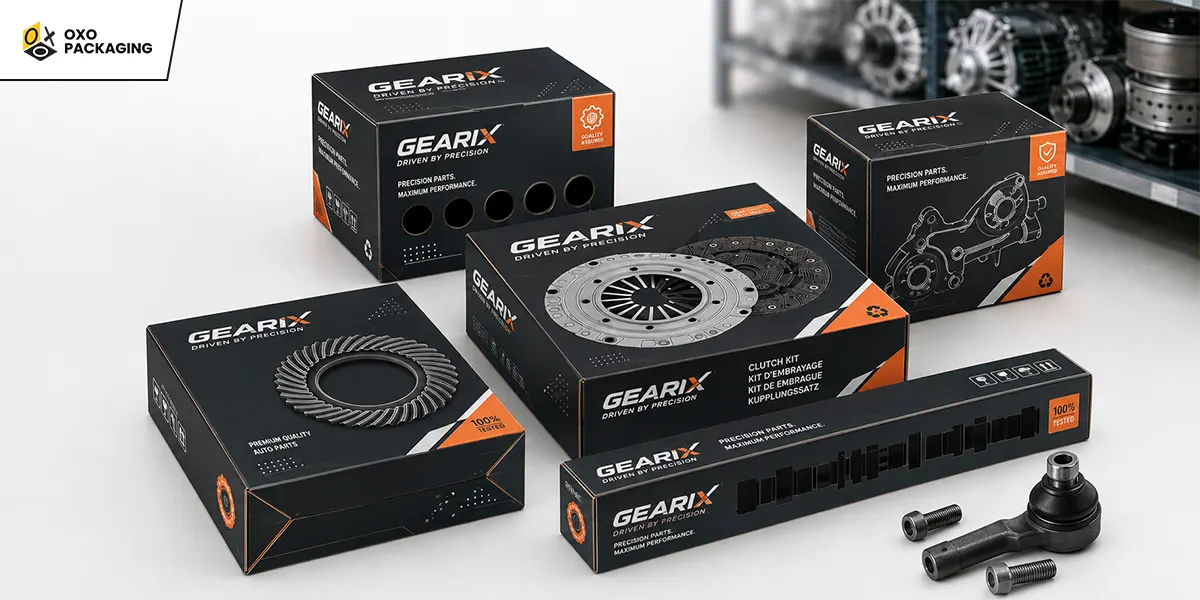
Before learning how to choose the right packaging design for your auto parts, understand its importance. Have a look at the following reasons for investing in automotive packaging:
- Damage Prevention: Shields your high-precision metal, glass, and electronic parts from moisture, dust, vibrations, and physical impact.
- Supply Chain Efficiency: Improves stackability, optimizes trailer and warehouse space density, and supports automated handling systems.
- Cost and Waste Reduction: Minimizes expensive returns, replacement delays, and warranty claims through secure, custom-fit designs.
- Safety and Compliance: Meets strict legal standards for transporting dangerous goods, sharp edges, and volatile materials.
Explore Common Types of Automotive Packaging
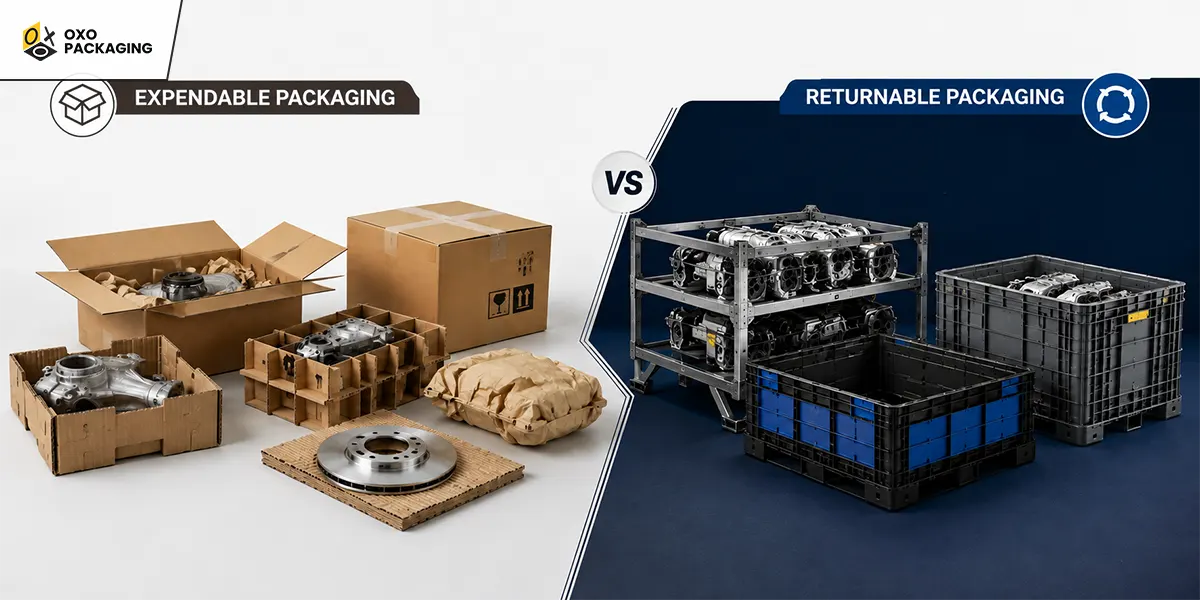
Since you have read the importance of auto parts packaging, now consider its common types. Packaging for your auto parts is categorized into two main types, including expendable (one-time use) and returnable (reusable). Dive into their main difference:
- Expendable Packaging: Single-use disposable containers made from paper, wood, or corrugated cardboard meant to be recycled at the destination.
- Returnable Packaging: Multi-use sturdy containers like plastic totes, metal racks, and specialized collapsible bins designed for long life cycles.
Apart from their lifespan, both these types protect your automotive components from physical and environmental damage during shipping.
Consider Common Packaging Materials
As you explored expendable and returnable packaging systems, they utilize different materials. Popularly used materials are below:
- Corrugated Cardboard Boxes: Utilize different flute profiles (such as B-flute for light parts and double-wall BC-flute for heavy assemblies like engines).
- Plastic Totes and Trays: Durable, moisture-resistant bins (such as standardized VDA KLT boxes used in European manufacturing lines) for small hardware and parts.
- Foam and Dunnage Inserts: Customized expanded polystyrene (EPS) or polyethylene cushions designed to cradle fragile items and prevent shifting.
- Wooden Crates and Pallets: Heavy-duty timber structures deployed for large, bulky, or exceptionally heavy exterior and powertrain elements.
Key Factors That Affect Auto Parts Packaging
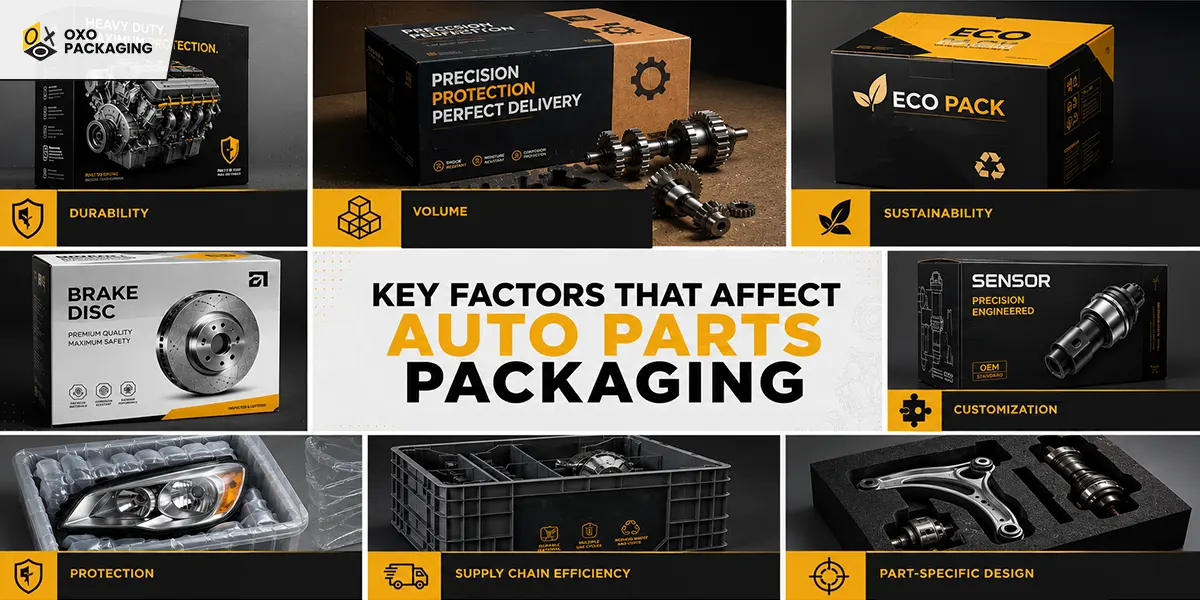
Here are some elements, such as part weight and fragility, customization for unique shapes, and sustainability requirements, that influence automotive packaging. Let’s discuss them in detail:
Durability
Heavy auto items like engines, transmissions, or brake rotors have heavier weight. So, you must choose materials that can bear them, such as high-strength corrugated fiberboard, reinforced tape, and heavy-duty wooden or plastic pallets.
While delicate sensors, glass, and electronics require precision foam inserts or air pillows to absorb severe transit vibrations. To prevent corrosion for your metal parts, you need moisture barriers or volatile corrosion inhibitor (VCI) packaging to stop rust during extended transit or storage.
Volume
High volumes justify custom, returnable plastic containers, while low volumes require flexible, single-use corrugated boxes. Stackable, modular, and collapsible container designs maximize trailer density and cut return-shipping volume for empty bins.
Sustainability
High-volume supply chains often use durable, reusable plastic or metal bins, while low-volume or aftermarket routes use single-use corrugated cardboard. Many companies swap single-use foam and bubble wrap for heavy-duty honeycomb cardboard to protect fragile car parts like lights and sensors safely.
Customization
Tailor your automotive packaging to specific parts to ensure supply chain efficiency and product safety. Use custom inserts and molds to fit your unique part shapes tightly. As a result, they prevent shifting and impact damage during shipping.
Apart from custom-fit designs, there are some other crucial aspects of customized packaging for your auto parts, such as:
Logistics and Cost Efficiency
Tailored stackable or nestable designs maximize container and vehicle space. For this purpose, you can use custom returnable racks and plastic crates to lower long-term replacement waste and shipping expenses.
Branding and Marketing
Custom printing, logos, and specific finishes create a professional unboxing experience for retail or replacement buyers. Incorporate options like window cut-outs that allow quick part identification without breaking seals and enhance your product visibility in a crowded market.
How to Design Auto Parts Packaging Strategically?
When it comes to designing automotive packaging, you must follow a systematic process explained in the steps below:
Part Analysis and Material Selection
In the first step, analyze your auto parts in detail and then choose suitable packaging material accordingly. For example, use heavy-duty corrugated cardboard, molded foam, or wooden supports to handle heavy weight and shield sharp edges.
And pick anti-static (ESD) bags and conductive materials to protect sensitive circuits from static shock. On the other hand, you can use low-slip films or thermoformed plastic trays to stop scratches and movement.
Structural and Logistics Design
After choosing suitable material, build custom-fitted inserts or dividers so your auto parts do not touch or rattle during shipping. Then, pick stackable, collapsible plastic or metal containers for factory-to-factory transit to lower long-term costs. Afterwards, print part numbers, barcodes, and handling icons clearly on the largest flat surface for easy scanning.
Branding and Information
In the last step, focus on enhancing your branding and marketing. Use transparent polythene windows or accurate vector graphics so buyers and mechanics can identify your part instantly in a saturated market. Add clear logos, high-contrast text, and simple color codes to separate genuine parts from aftermarket alternatives.
Find the Right Partner for Designing Your Automotive Packaging!
Until now, you have navigated through a comprehensive guide on auto parts packaging; the next step is to look for a credible packaging supplier. Choosing the right packaging partner matters because it ensures precise part protection, optimizes supply chain efficiency, and reduces overall costs. Consider OXO Packaging as a reliable option that ensures superior component safety, optimized logistics, and regulatory compliance.
The best materials for custom auto parts packaging are corrugated cardboard, polyethylene foam, and rigid board, depending on the weight and fragility of the component
Auto parts packaging suppliers can be found through specialized global custom box manufacturers, like OXO Packaging
Yes, OXO Packaging offers wholesale custom packaging specifically designed for auto parts. We provide bulk order discounts, custom sizing, and protective materials for various automotive components.
Choosing the right car diffuser packaging solution requires your focus on material safety, functional design, and brand presentation. Key factors include leak-prevention components, durable outer boxes, and clear user visibility.







 Let's Call