


Box, Poly Mailer or Poly Bag: Which One Should Ship Your Clothing?
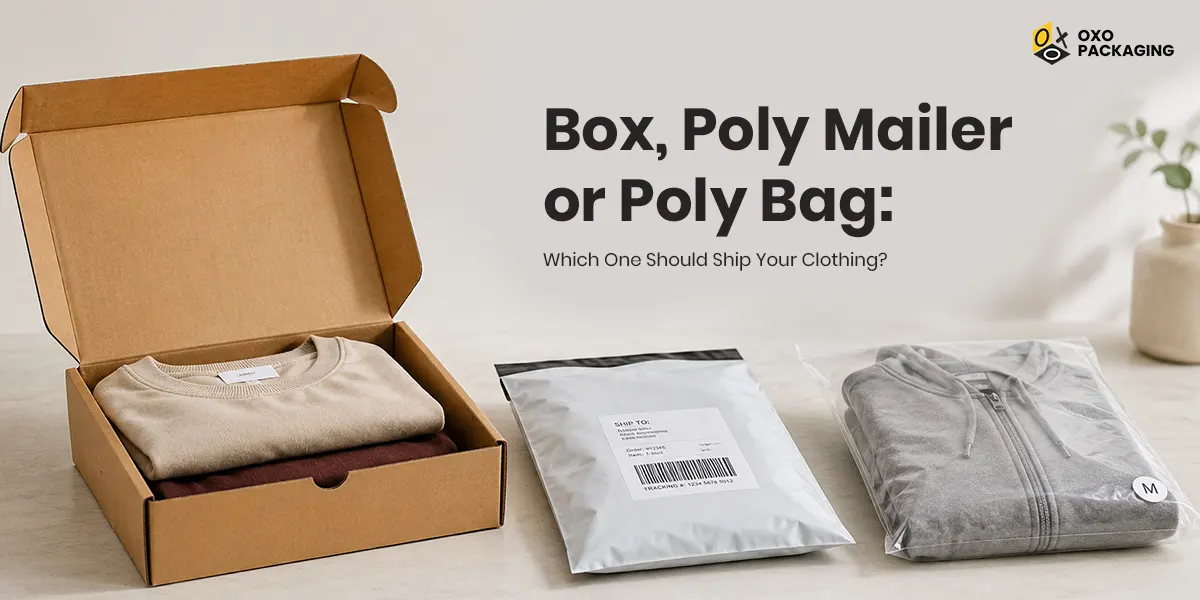
Poly bags have always been a more common choice than boxes for shipping clothing items for several businesses. Factors like low cost and cheap shipping rates give them a competitive edge over shipping boxes.
But the right shipping choice also depends upon your clothing item's durability, weight, and your branding goals. That’s why you can’t always rely on poly mailers or bags by overlooking these aspects. It might affect your shipping and ultimately your business reputation.
Here, a question arises: when to choose between boxes and poly mailers for delivering your clothing items. Get a detailed answer here!
What Is a Poly Mailer?
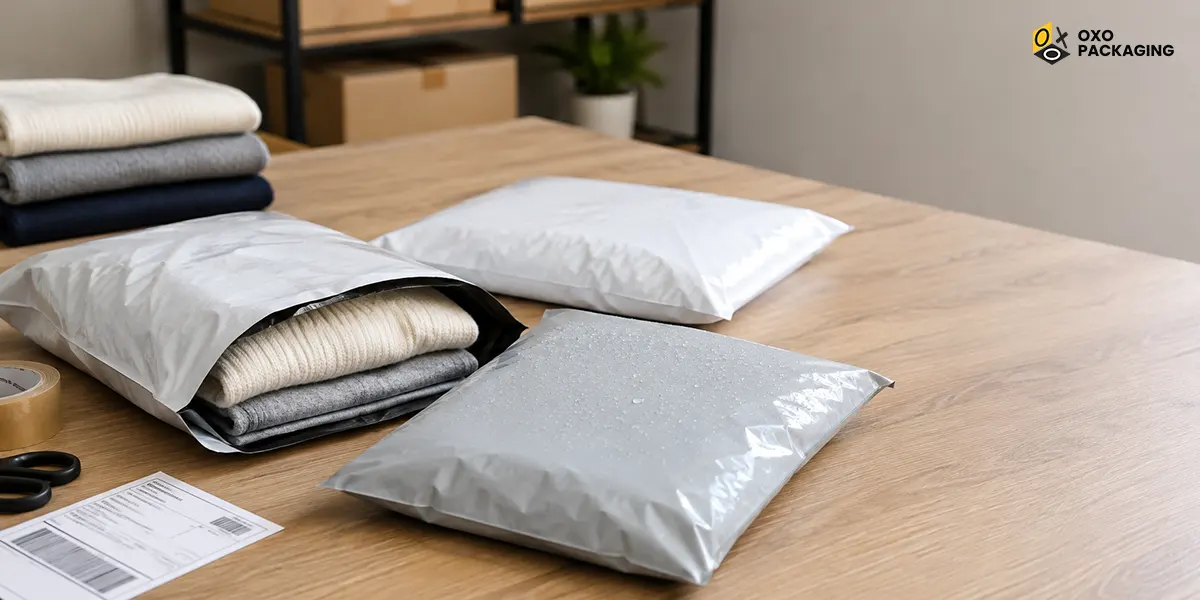
A poly mailer is a lightweight, water-resistant plastic envelope used to ship non-breakable items. Made from polyethylene plastic, often LDPE, poly bags are flexible, stretchy, and tough. The best thing about them is that they protect your products from water, dust, and tearing, though they lack rigid structural support.
Pros of Poly Mailer
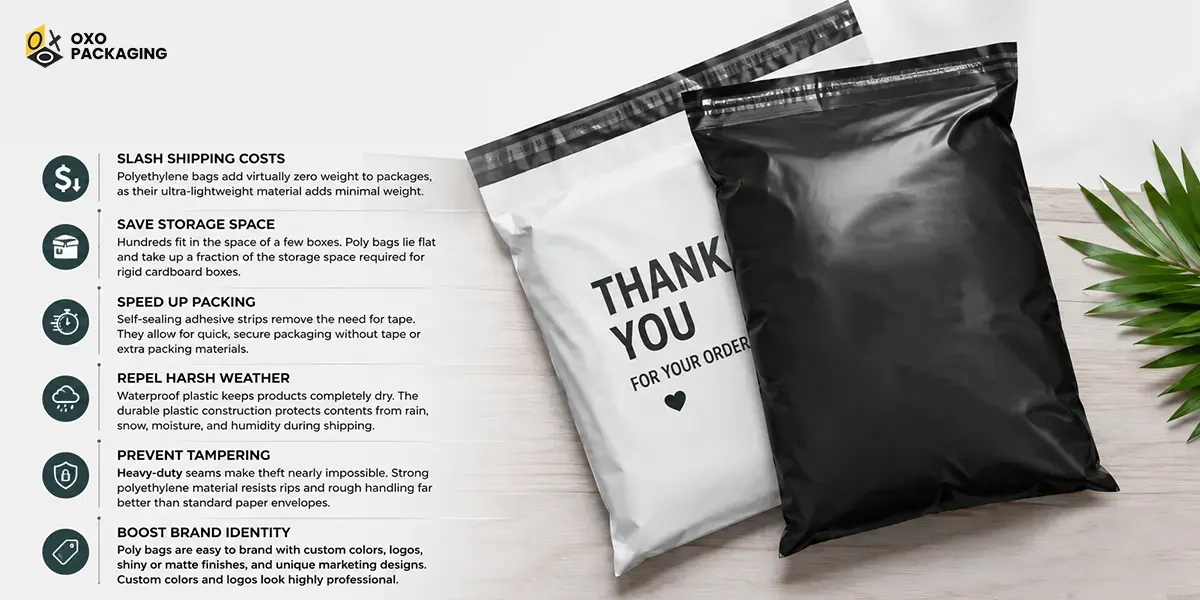
Several brands prefer to choose poly bags for the following reasons:
- Slash Shipping Costs: Polyethylene bags add virtually zero weight to packages, as their ultra-lightweight material adds minimal weight.
- Save Storage Space. Hundreds fit in the space of a few boxes. Poly bags lie flat and take up a fraction of the storage space required for rigid cardboard boxes.
- Speed Up Packing. Self-sealing adhesive strips remove the need for tape. They allow for quick, secure packaging without tape or extra packing materials.
- Repel Harsh Weather. Waterproof plastic keeps products completely dry. The durable plastic construction protects contents from rain, snow, moisture, and humidity during shipping.
- Prevent Tampering. Heavy-duty seams make theft nearly impossible. Strong polyethylene material resists rips and rough handling far better than standard paper envelopes.
- Boost Brand Identity. Poly bags are easy to brand with custom colors, logos, shiny or matte finishes, and unique marketing designs. Custom colors and logos look highly professional.
Cons of Poly Mailer
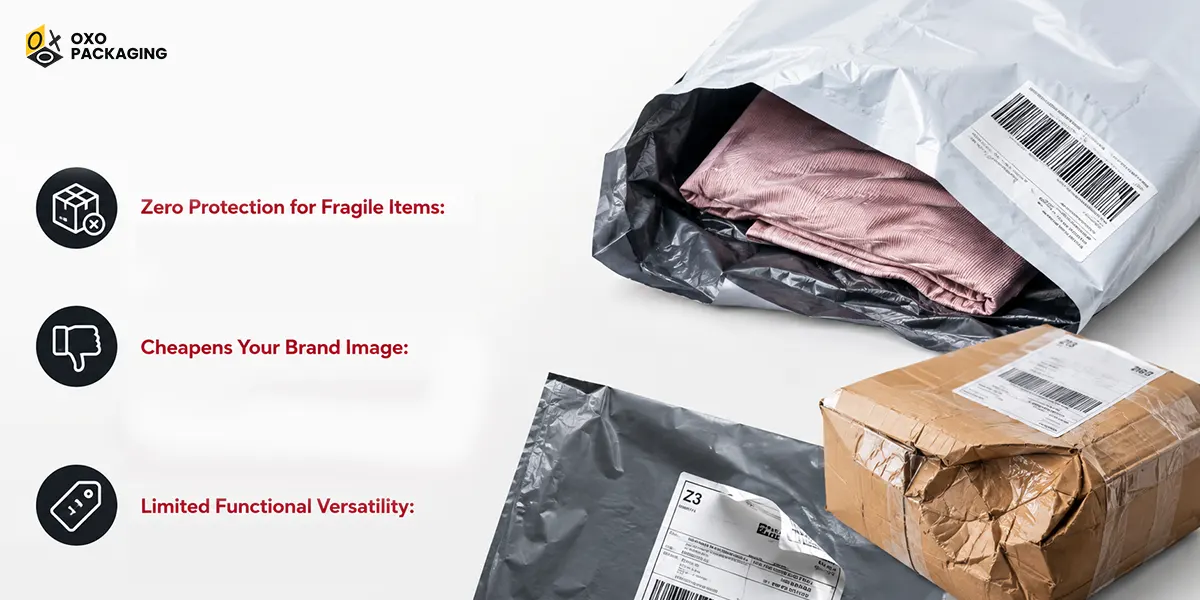
Poly mailers are popular for a reason, but they come with high hidden costs such as:
- Zero Protection for Fragile Items: Since apparel bags lack structural integrity, items get easily crushed, bent, or broken during transit. These damaged goods lead to costly customer returns and refunds.
- Cheapens Your Brand Image: They look wrinkled, industrial, and uninspiring upon arrival. Customers associate plastic bags with cheap products. Also, buyers often have to tear or cut them, risking damage to the product inside.
- Limited Functional Versatility: Poly bags work well for soft goods like clothing or bedding. Shipping labels can wrinkle or peel off uneven plastic surfaces, which may affect your brand integrity.
What Poly Bags Are Best For?
Poly mailers are the gold standard for shipping clothing, blankets, books, and any durable goods that do not need rigid cushioning. Making the switch means less waste, higher profit margins, and happier customers.
What Is a Shipping Box?
A shipping box is a rigid container designed to protect goods during transport and storage. Built with flat outer liners and a wavy, inner fluted layer of corrugated fiberboard that absorbs shocks and resists crushing. Unlike poly bags, apparel boxes protect oddly shaped items while resisting knocks and bumps effectively during shipping.
Pros of Shipping Box
Shipping boxes are cardboard chameleons that quietly keep the world moving. Look into their benefits:
Structural Superpowers: Corrugated layers trap air to cushion heavy impacts. Built-in vertical arches in clothing boxes also support immense weight without crushing. It means maximum structural protection with almost zero added shipping weight.
Eco-Friendly Legends: Made mostly from recycled pulp and easily biodegradable materials, shipping boxes collapse down in seconds to save precious closet space. Customers can also reuse them for storage, moving gear, or cat forts.
Silent Salesman: High-contrast surfaces of clothing boxes make brand logos and unboxing graphics pop. Their plain exterior options also keep your valuable deliveries completely stealthy.
Logistics Champions: Flat sides of shipping boxes grid together perfectly to maximize truck space. They also fit seamlessly onto automated warehouse conveyor belts globally. With fibrous paper textures, boxes bond instantly with standard packing adhesives.
Cons of Shipping Box
Shipping boxes are the unsung heroes of global commerce, but they also have a dark side, such as:
- Weather Fragility: Cardboard is not waterproof. Rain, snow, or high humidity can weaken the structural integrity of the box, leading to crushing or tearing during shipping.
- Higher Shipping Costs: Boxes are bulkier and heavier than alternatives like poly mailers, which can increase dimensional weight and raise carrier postage fees.
- Storage Requirements: Unassembled boxes take up significant physical space in a warehouse or room before they are built.
- Slower Packing Speeds: Standard shipping boxes need extra handling, folding, and tape sealing compared to self-locking mailer alternatives.
What Shipping Boxes Are Best For?
Shipping boxes are best for fragile, heavy, or high-value items that need structural support and protection from crushing. They deliver your products safely from warehouses to customers when presentation is also part of the shipping process.
A Comparative Overview: Boxes vs Poly Mailers
Boxes and poly mailers protect clothing during shipping, but they fit different needs based on weight, cost, and fragility. Look into their comparison:
|
Feature |
Corrugated Boxes |
Poly Mailers |
|
Best Used For |
Heavy items, structured garments, or multiple pieces |
Lightweight, soft, or single clothing items |
|
Weight |
Heavier (adds to shipping costs) |
Very lightweight (saves on shipping costs) |
|
Protection |
High crush and impact resistance |
Protects against moisture, dirt, and tears |
|
Storage Space |
Takes up a lot of room before assembly |
Flat and takes up very little storage space |
|
Cost |
More expensive per unit |
Inexpensive per unit |
|
Custom Branding |
Easy to print custom logos inside and out |
Available in custom colors and printed designs |
|
Eco-Friendliness |
Highly recyclable and often made from recycled content |
Usually plastic (recyclable only at specific drop-offs) |
Are Poly Mailers Cheaper Than Boxes?
Poly mailers are cheaper than boxes in both unit price and shipping fees. They cost about $0.05 to $0.30 each, while corrugated or mailer boxes cost between $0.45 and $1.25 or more. Poly mailers weigh only 0.5 to 1.5 ounces, whereas cardboard boxes weigh 6 to 16 ounces. This lower weight reduces base postage costs. Poly mailers mold to the item and take up less space in delivery trucks, helping you avoid extra dimensional weight charges.
Cost Breakdown by Supply Type
Poly mailers generally cost between $0.05 and $0.40 per unit at standard e-commerce volumes. However, corrugated and shipping boxes range from $0.50 to $4.50+ per unit depending on size and structural strength. Here are the estimated per-unit costs below for specific packaging supply types:
|
Supply Type |
Average Cost (Bulk/Volume) |
Ideal Use Case |
|
Standard Poly Mailers |
$0.05 – $0.15 |
Apparel, t-shirts, soft goods |
|
Eco-Friendly / Recycled Mailers |
$0.10 – $0.30 |
Sustainable brand apparel |
|
Custom-Branded Mailers |
$0.15 – $0.60 |
Direct-to-consumer (DTC) retail |
|
Plain Folding Cartons |
$0.15 – $0.50 |
Lightweight retail goods, inner product boxes |
|
Standard Corrugated Boxes |
$0.50 – $2.00 |
Heavy items, multi-item orders, transit |
|
E-Commerce Mailer Boxes |
$1.50 – $4.50 |
Premium subscription boxes, gift unboxing |
When to Choose Poly Mailers?
Use poly bags for t-shirts, leggings, underwear, hoodies, and activewear that compress flat. They weigh very little (0.5 to 1.5 ounces) and take up less space, helping you avoid high dimensional weight fees.
When to Choose Shipping Boxes?
Use rigid corrugated boxes for luxury apparel, garments with sharp hardware, or clothes prone to creasing. They are best for large orders, heavy winter coats, or bulk sets that do not fit securely in a bag.
Boxes vs Poly Mailers: Which One is Best for Cloth Shipping?
Put simply, choose poly mailers for lightweight, soft clothing if your goal is to reduce shipping and manufacturing costs. But if you sell heavy, multi-item, or luxury orders, they need rigid protection yet premium presentation, which mailer boxes provide. Now, if you have made up your mind what to choose and want to seek a reliable custom packaging supplier, consider OXO Packaging.
The best poly mailer size for clothes is 10×13 inches for standard shirts and light items, and 14.5×19 inches for bulky items like hoodies or heavy jackets.
Poly mailers are lightweight, water-resistant plastic envelopes that provide a cost-effective and flexible way to ship apparel without the bulk of cardboard boxes.
You can buy shipping bags for clothes from large retailers, online marketplaces, shipping carriers, or custom packaging suppliers like OXO Packaging.
Yes, clear bags are suitable for shipping clothes, but how you use them matters. Clear cellophane, OPP, or poly bags work great as inner layers. They keep clothes clean, dry, and free from dust.







 Let's Call