


How Does Box Weight Affect Packaging, Shipping, and Costs for Your Brand?
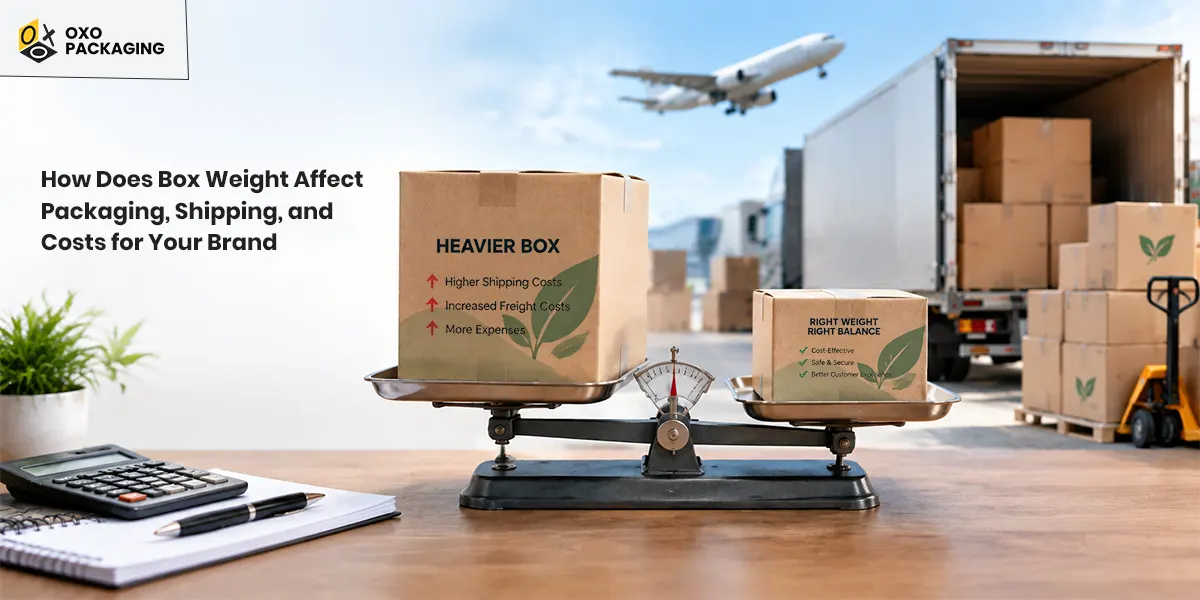
When choosing packaging for a product, brands often focus on design, size, printing, and durability. However, box weight is another important factor that can directly affect the packaging, shipping, and overall packaging costs. A box that is heavier than necessary may increase shipping expenses, while packaging that is too light may not provide enough protection.
For any brand, finding the right balance between strength and weight is essential. From material selection to box dimensions, every decision can influence shipping costs, freight costs, and the customer experience. Understanding how weight works can help businesses create efficient and cost-effective product packaging without sacrificing quality.
Why Box Weight Matters in Packaging
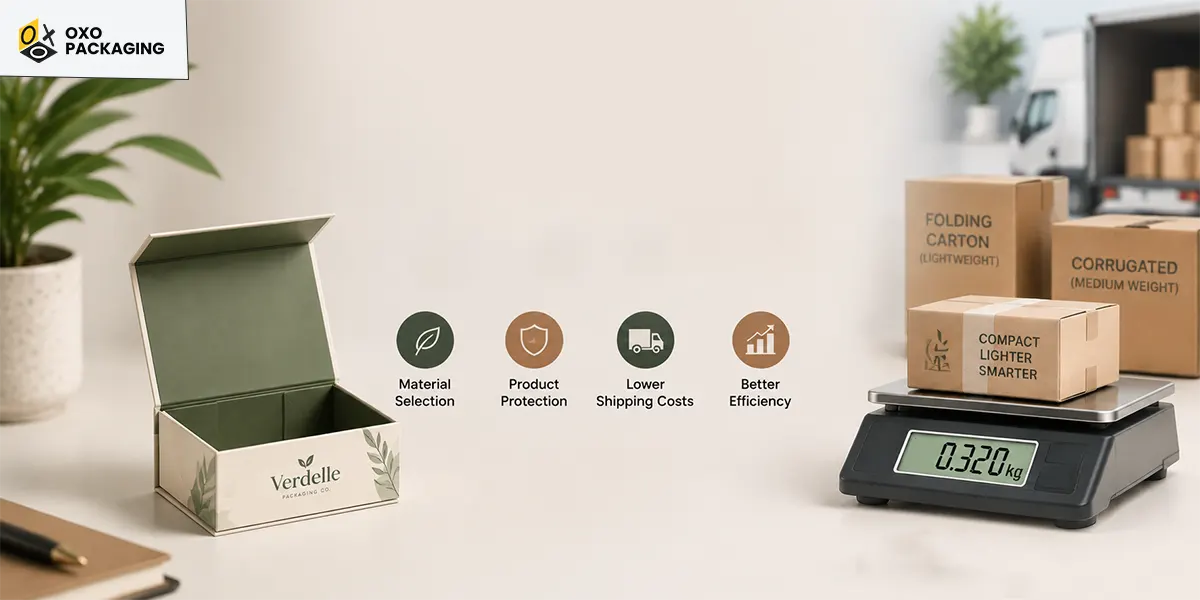
Box weight refers to how much the empty packaging weighs before the product is placed inside. The final shipping weight includes the packaging, product, inserts, labels, protective materials, and other components.
The material weight is one of the main factors that determines the total weight of a box. For example, a thick rigid box generally weighs more than lightweight folding cartons. Corrugated packaging may also weigh more depending on its flute structure and board thickness.
While heavier packaging can provide greater strength and a premium feel, it is not always the most practical choice. A brand selling thousands of products may notice a significant difference in transportation expenses when each package weighs even a few extra ounces.
How Material Choice Changes Box Weight
Packaging materials have different weights and performance characteristics. Common options include paperboard, kraft, corrugated board, and rigid board. Paperboard is often suitable for lightweight retail products and can help reduce shipping weight. Kraft can provide a natural appearance while offering a practical packaging solution. Corrugated materials are commonly selected when products need stronger protection during transportation.
Rigid boxes is heavier but can create a premium presentation for luxury products and gifts. The right choice depends on the product, shipping method, required protection, and brand positioning.
Instead of simply choosing the lightest material, businesses should consider the strength-to-weight ratio. A lightweight box that breaks easily can create higher costs due to damaged products, replacements, returns, and customer dissatisfaction.
Box Weight and Shipping Costs
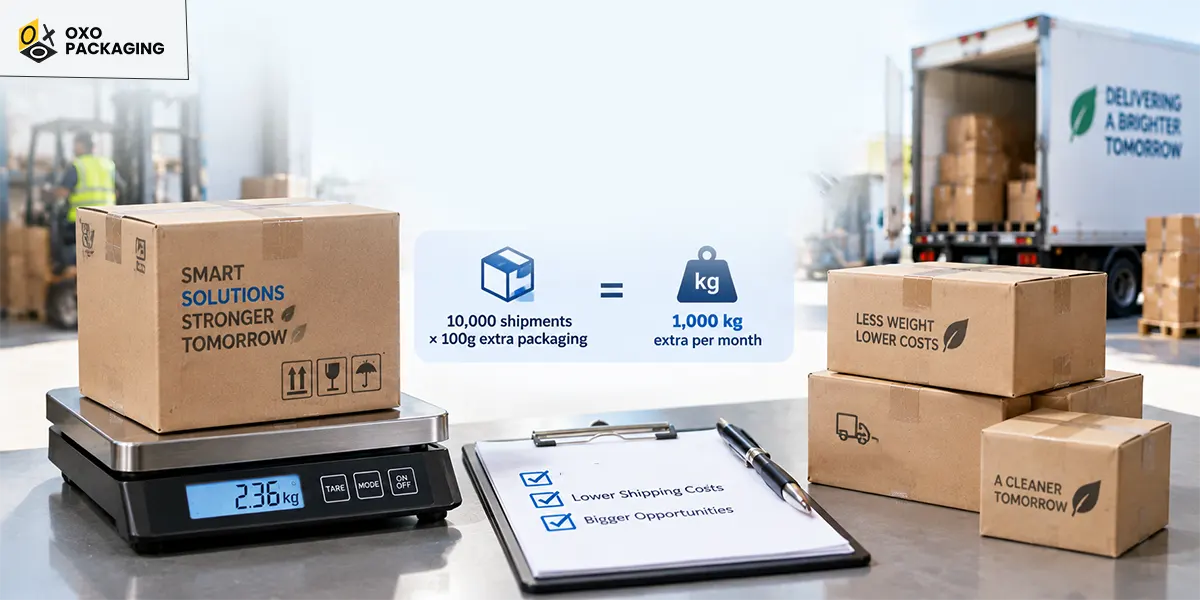
One of the effects of packaging weight is its impact on Shipping Costs. Carriers often look at the weight of a package when figuring out shipping charges. So cutting down on packaging weight can make each shipment cheaper.
For example, think of a company that ships 10,000 products every month. If the packaging is 100 grams heavier than it needs to be, that extra weight adds up to 1,000 kilograms for the monthly shipment.
This is why companies that ship a lot of products should pay attention to their packaging structure. Small differences in weight can add up to a lot when multiplied across hundreds or thousands of shipments.
Shipping charges don't always depend only on the actual weight.
Understanding Dimensional Weight
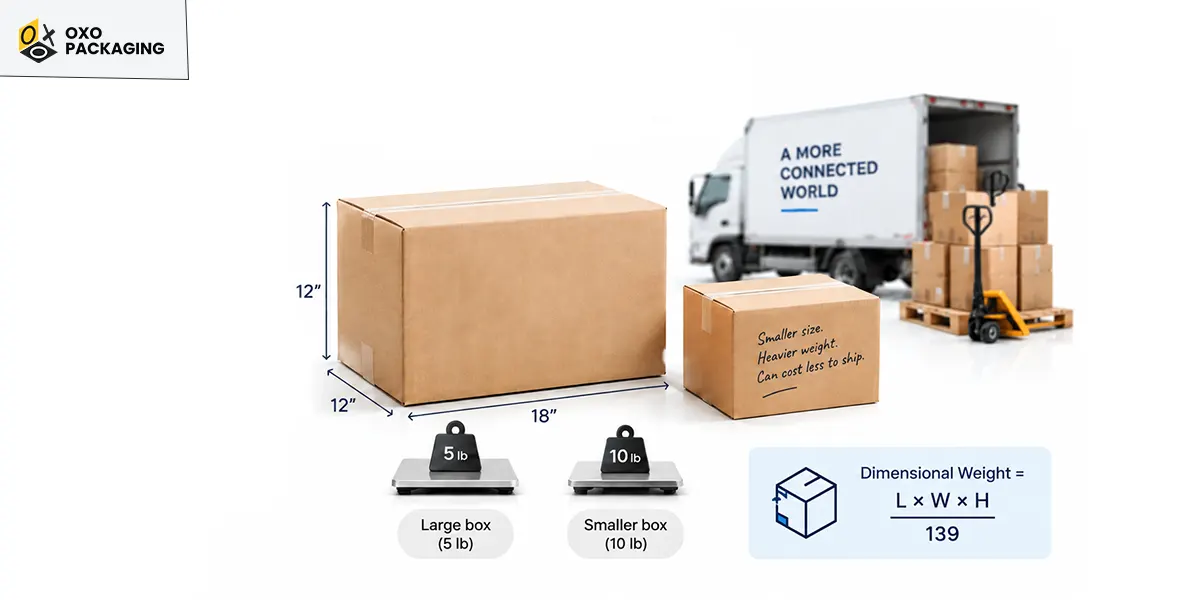
Dimensional Weight is another thing that brands need to think about. It is a way that shipping carriers use to set prices based on how much space a package takes up, not just how much it weighs.
A big light box can take up a lot of space in a delivery truck or plane. Because of that, a carrier might use volume to figure out the shipping cost instead of actual weight.
This means that box dimensions are just as important as Box Weight.
For example, a package that is light but has a lot of space can cost more to ship than a smaller package that is a little heavier. Brands can fix this by choosing packaging that fits the product well.
How Box Weight Affects Packaging Costs
The relationship between weight and packaging costs is not always straightforward. Heavier materials may cost more because they require more raw material. They can also increase storage, handling, and transportation expenses.
On the other hand, lightweight materials may sometimes require additional layers, inserts, or protective components to provide the same level of protection. A smart packaging strategy considers the total cost rather than focusing only on the price of the box.
For example, a slightly more expensive lightweight material could reduce Shipping Costs enough to create overall savings. Similarly, a stronger box might prevent product damage and reduce replacement expenses. Brands should therefore evaluate packaging based on its complete lifecycle cost.
Ways to Reduce Box Weight Without Losing Protection
Brands can use several strategies to create more efficient packaging:
- Choose the right material:
Select a board grade that provides sufficient strength without unnecessary thickness.
- Right-size the box:
Design packaging around the product to reduce empty space.
- Optimize inserts:
Use protective inserts only where they are necessary.
- Review box construction:
Structural changes can sometimes improve strength without adding material.
- Consider shipping requirements:
Evaluate both actual and dimensional weight before finalizing packaging.
- Test packaging:
Conduct drop and compression tests before reducing material thickness.
- Order in suitable quantities:
Efficient production and bulk ordering can help manage packaging expenses.
Balancing Weight, Protection and Cost
Reducing the weight of the box should never mean making the packaging too weak. The best way to handle this is to find a balance between using materials and making sure the product is protected.
If a package arrives damaged, the savings from using packaging can quickly go away because of refunds, replacements, returns, and bad customer reviews. If the packaging is too heavy, it can add to the cost of moving and handling the package.
The best packaging solution gives the product the strength to stay safe during the whole trip without using extra materials.
Conclusion:
Box Weight affects Packaging, Shipping and Packaging Costs both directly and indirectly. The choice of material, the size of the box, its structural design, and any protective parts added all play a role in determining how heavy the final package ends up being. It’s not just about physical weight. Dimensional Weight also matters. That means even if you lower the weight of the box, shipping costs might not go down if the box takes up too much space.
For a growing brand, the smartest move is to build packaging that fits the product, meets transportation needs, and looks good to customers. Whether the need is for cartons, window packaging boxes, or custom packaging boxes, thoughtful design can help cut down on materials used and keep Freight Costs low. At the same time, the packaging stays professional and appealing.
When companies treat Box Weight as part of a packaging strategy, they can develop solutions that do more than just hold products. These solutions protect goods, support branding efforts, and make shipping easier and more cost-effective.
Heavier boxes can increase shipping charges because carriers often calculate costs based on actual package weight. Reducing unnecessary material weight can help lower shipping expenses.
Dimensional Weight is a shipping calculation based on the space a package occupies rather than its actual weight. Large, lightweight boxes may therefore have higher shipping charges.
Yes, using efficient, lightweight materials can reduce material usage and shipping expenses. However, the packaging must still provide enough strength to protect the product.
Window Packaging Boxes may add a small amount of weight because of the transparent film, but the overall weight mainly depends on the box material, thickness, size, and construction.







 Let's Call