


Explore Smart Packaging, Its Types, Examples, & How It Works
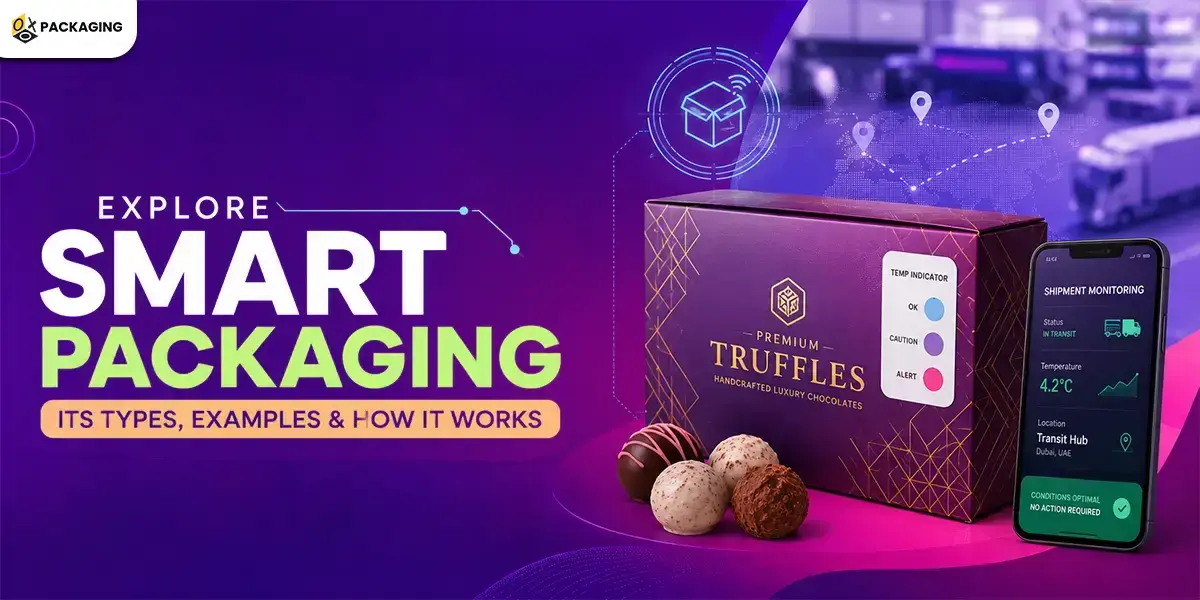
If you handle perishable goods, high-value electronics, pharmaceuticals, or complex supply chains, smart packaging comes as a breeze for you. It reduces waste, improves supply chain transparency, and enhances consumer engagement.
Let’s suppose you ship delicate luxury gourmet chocolate in temperature-sensitive truffle boxes across borders. When a sudden heatwave traps the cargo on a delayed tarmac, threatening a total melt. Smart thermal-indicator labels change color and alert the logistics system to reroute the shipment to a cooled facility in real time. Understand the significance of smart packaging in detail to make its best use:
What is Smart Packaging?
Smart packaging technology is an advanced system that goes beyond basic containment and protection. It uses built-in technology, such as active chemical elements, digital tags, or internal sensors, to actively extend shelf life, track products through the supply chain, or communicate real-time quality and digital data to users.
Popular Types of Smart Packaging
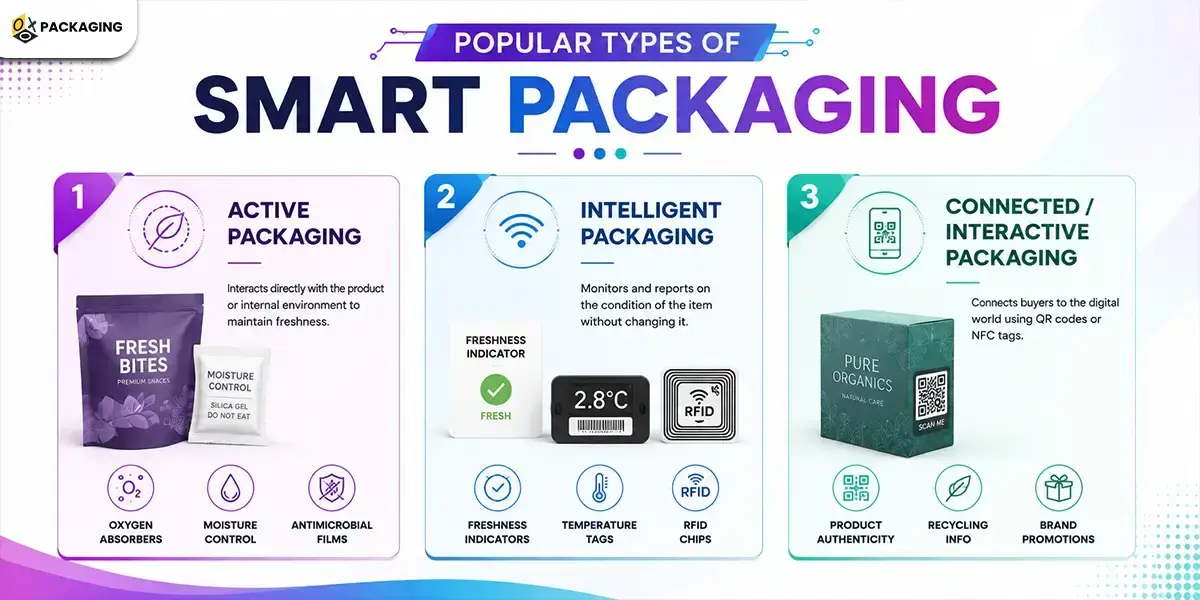
After having an overview of smart packaging, consider its common types. Have a look at the three main types:
-
Active Packaging
Interacts directly with the product or internal environment to maintain freshness. Examples include oxygen absorbers, moisture-controlling silica gel packets, and antimicrobial films that slow down food spoilage.
-
Intelligent Packaging
Monitors and reports on the condition of the item without changing it. Examples include freshness indicators, temperature-monitoring tags, and RFID chips that check storage quality or trace transit location.
-
Connected/Interactive Packaging
Connects buyers to the digital world using QR codes or NFC tags. Scanning these codes lets consumers check product authenticity, view recycling instructions, or access brand promotions. Put simply, interactive packaging turns your product boxes into digital tools for consumer interaction
Real-World Examples of Smart Packaging
Forward-looking brands have already started leveraging smart pack packaging solutions to boost their brand image. Here are some main examples of brands:
- Kellogg's & Nintendo: Embedded NFC tags in Super Mario cereal boxes let fans tap their game controllers to unlock power-ups and digital coins.
- Malibu Rum: Added Near Field Communication (NFC) bottles that users tap with a smartphone to access drink recipes, local party spots, and playlists.
- Hershey's & Heinz: Placed dynamic QR codes on packaging to give shoppers instant mobile access to full ingredient sourcing, allergen info, and recipe ideas.
- Diageo: Utilized tamper-proof NFC tags on premium liquor bottles; once opened, the tag permanently changes its status so consumers know the bottle was not refilled or faked.
Explore Key Smart Packaging Trends
Smart packaging is evolving rapidly, shifting from simple product containment to active digital engagement, real-time safety monitoring, and strict regulatory compliance. Key innovations for smart product packaging include:
-
Digital and Connectivity Innovations
Moving beyond static links, Near Field Communication (NFC) and dynamic codes offer instant authentication, personalized marketing, and interactive brand experiences. Augmented packaging uses AR technology that acts as a visual portal, letting consumers scan boxes for immersive storytelling or virtual product try-ons.
-
Active and Intelligent Monitoring
It has built-in smart labels that change color or output data regarding cold-chain breaches to guarantee food and pharmaceutical safety. Materials embedded with absorbers actively draw out ethylene gas, moisture, or oxygen to extend shelf life and minimize spoilage. Ultra-high frequency (UHF) RFID tags are seeing explosive adoption in supply chain logistics and inventory management.
-
Sustainability Integration
The industry is prioritizing biodegradable or easily removable electronic components to prevent smart tech from contaminating recycling streams. The use of artificial intelligence minimizes raw material usage while maintaining the physical structural integrity of smart-enabled cartons.
Role of Smart Packaging in Supply Chain Transparency
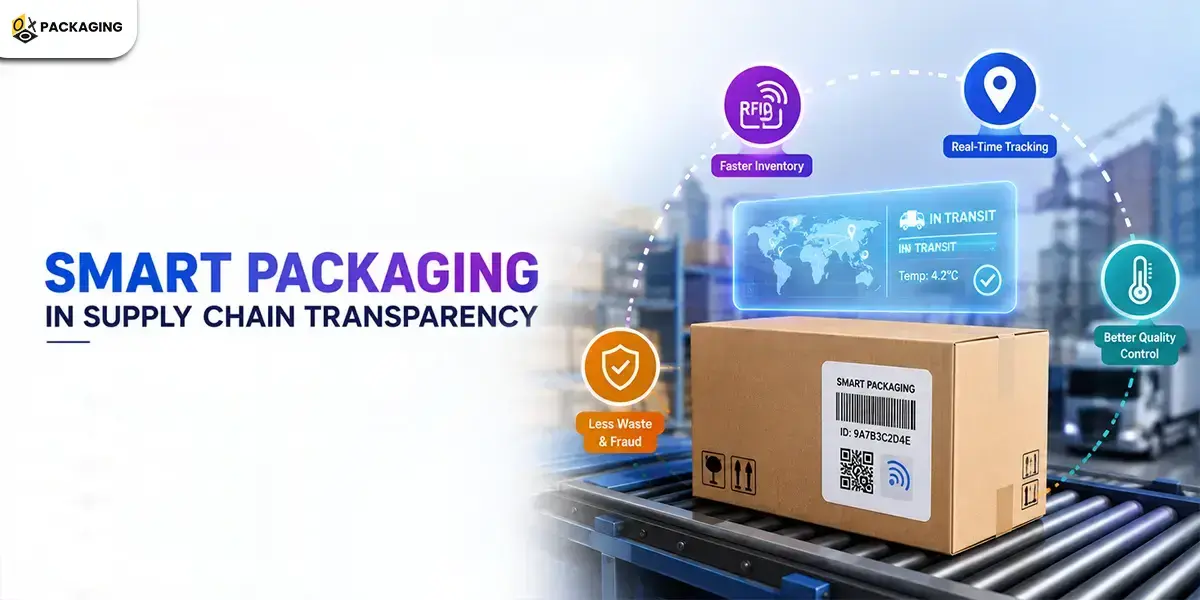
Smart packaging simplifies the supply chain by automating inventory counts and instantly flagging damaged or spoiled products before they cause major delivery delays. Here are ways it simplifies complex supply chain operations:
- Faster Inventory: Automated RFID scanning lets workers check whole pallets at once without opening boxes or manual counting.
- Real-Time Tracking: GPS and smart tags show exact shipment locations, reducing lost items and delivery surprises.
- Better Quality Control: Temperature sensors warn teams if perishable goods get too warm, preventing spoiled deliveries.
- Less Waste & Fraud: Unique digital IDs prove product safety and stop fake items from entering the market.
How Does Smart Packaging Ensure Supply Chain Transparency?
RFID and NFC tags provide continuous, automated, real-time location and movement tracking inside warehouses and in transit without manual scans. Also, dynamic QR codes offer digital identities that update dynamically, letting operators and buyers trace manufacturing origins and handling steps instantly.
Smarter Packaging Starts with the Right Partner!
Since you have developed a basic understanding of smart packaging, consider OXO Packaging, a smart packaging partner. We provide smart packaging features like QR codes to let your customers build trust in your business!
Smart packaging uses built-in tools like sensors, indicators, or digital tags to preserve items, track quality, share data, or connect users to digital content.
Intelligent packaging is actually a type of smart packaging. It tracks and shares data. However, smart packaging is a broad term for any packaging that does extra tasks beyond just holding a product
Active packaging is a specific type of smart packaging that physically or chemically interacts with the product or its internal environment to actively preserve freshness and extend shelf life.
An oxygen scavenger sachet placed inside a beef jerky or fresh pasta bag is a common example of active packaging. It actively absorbs residual oxygen from the package environment to prevent mold growth and stop food spoilage, extending product shelf life.







 Let's Call