


Explore an Ultimate Guide on Cereal Box Sides!
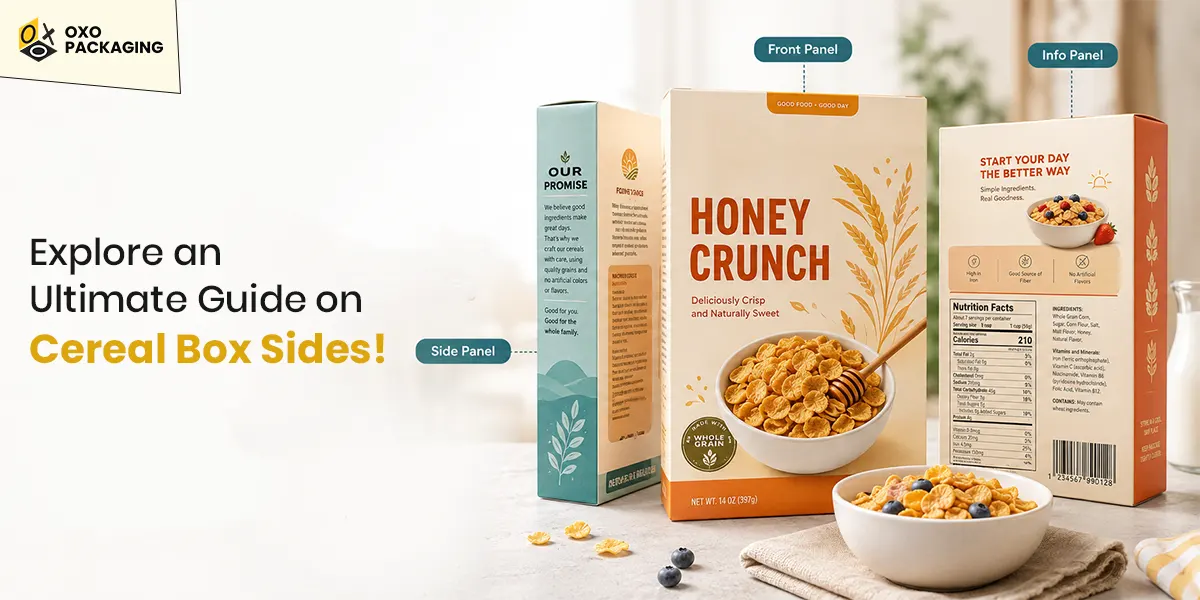
A cereal box has only a few seconds to make an impression. From the bold artwork on the front to the nutritional information printed on the back or side, every panel has a purpose. Where packaging becomes more than a protective container for cereal brands like yours.
It is a communication tool that introduces your cereal product, builds recognition, provides essential information, and encourages shoppers to make a purchase. Understanding cereal box sides and what goes on each side of a cereal box can help you create packaging that is both practical and persuasive. Read on!
Why Are Cereal Box Sides Important?
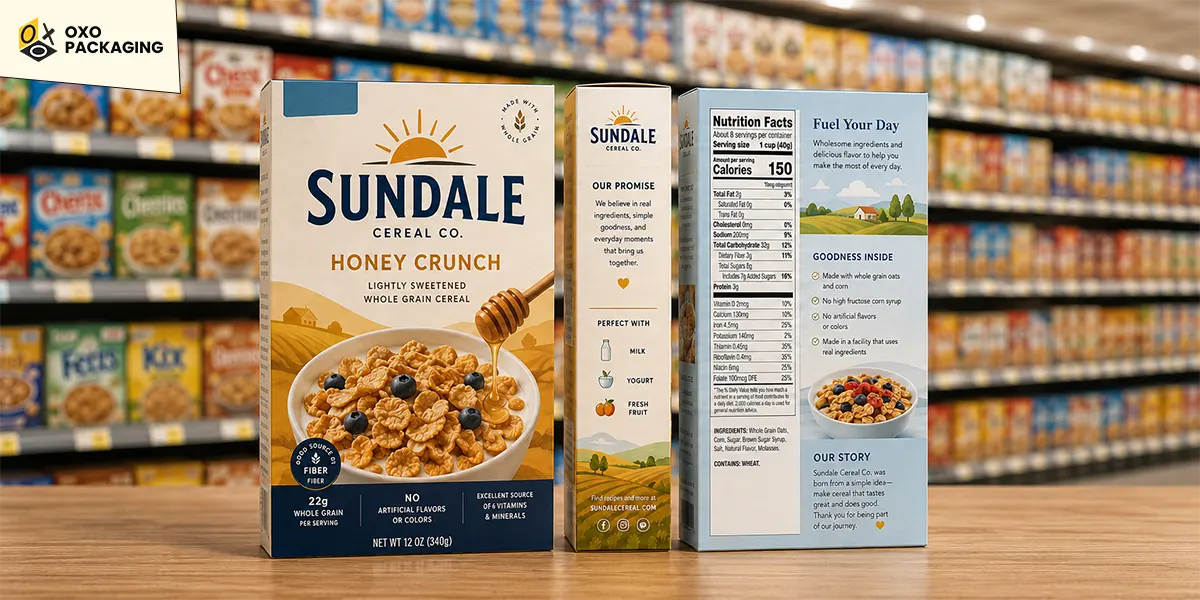
Walk through a supermarket, and you'll see dozens of cereal brands competing for attention. Bright colors, distinctive illustrations, memorable logos, and compelling messages help your products stand apart from the surrounding competition.
However, the front panel isn't the only opportunity to communicate with shoppers. The remaining panels can provide valuable space for nutritional information, product benefits, brand stories, promotional messages, serving suggestions, and other details. When used strategically, the entire box becomes a branded experience rather than simply a container.
A well-planned cereal boxes can accomplish three important objectives:
- Capture attention
- Educate consumers
- Reinforce brand identity
What Are the Four Sides of a Cereal Box?
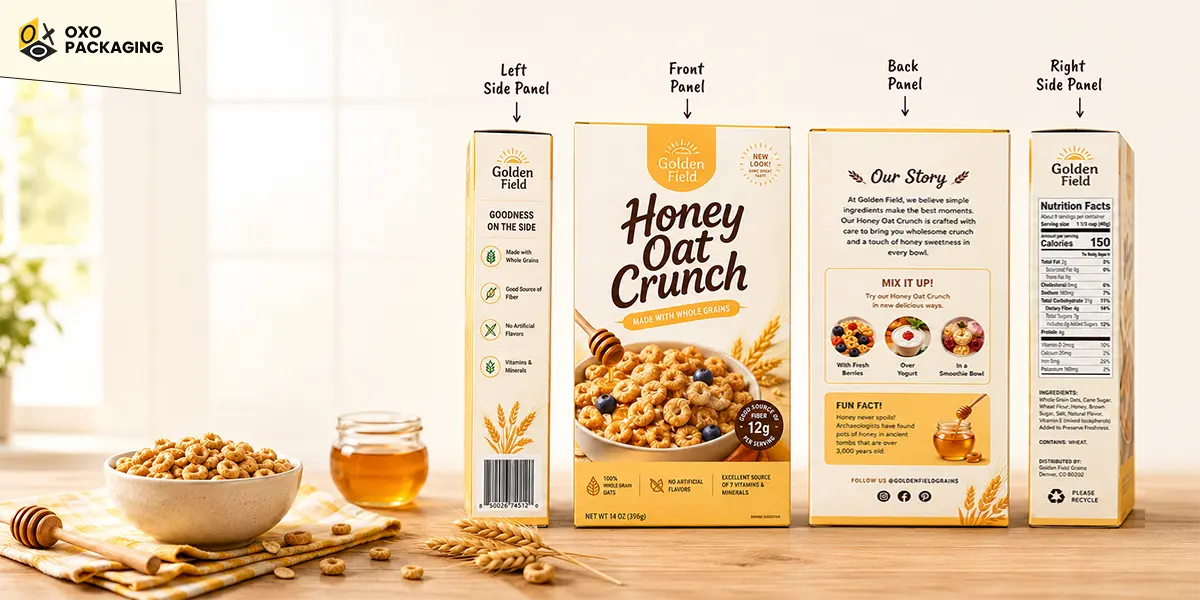
Although packaging structures can vary according to the box style and design, a conventional cereal carton typically presents four major panels: front, back, and two side panels.
1. Front Panel: Make the First Impression
The front is usually the most visible portion of a cereal package. It needs to communicate the product's identity quickly. Common front-panel elements include:
- Brand name and logo
- Cereal variety or product name
- Product photography or illustrations
- Key selling points
- Relevant certifications or claims
- Distinctive colors and typography
The goal isn't to fill every available space. Instead, the design should establish a clear visual hierarchy so shoppers immediately understand what the product is and why it deserves attention.
For children's cereals, illustrations and characters may dominate the design. A health-focused cereal, on the other hand, may emphasize cereal box ingredients, cereal box nutrition label benefits, or a clean visual style.
2. Back Panel: Tell the Brand's Story
The back of cereal box offers more room for information and engagement. You can use this space for:
- Company stories
- Product information
- Serving suggestions
- Recipes
- Educational content
- Games and puzzles
- Promotional campaigns
- Website or social media information
For family-oriented products, interactive activities can make the package more engaging. For premium or health-conscious cereals, the same panel might explain sourcing, ingredients, or the brand's philosophy.
Instead of treating the back as leftover space, you can use it to deepen the relationship with the customer.
3. Side Panels: Inform and Reinforce
The side panels are particularly useful for information that doesn't belong on the front. One side of the cereal box might highlight nutritional characteristics or product benefits, while the other, such as cereal box back can accommodate nutrition facts, serving information, preparation instructions, barcode information, or additional branding.
These panels can also reinforce claims such as high fiber, whole grain, low sugar, or gluten-free where such claims are appropriate and substantiated. The key is consistency. Colors, fonts, imagery, and messaging should feel connected across all panels so the package presents one recognizable brand.
Standard Cereal Box Dimensions
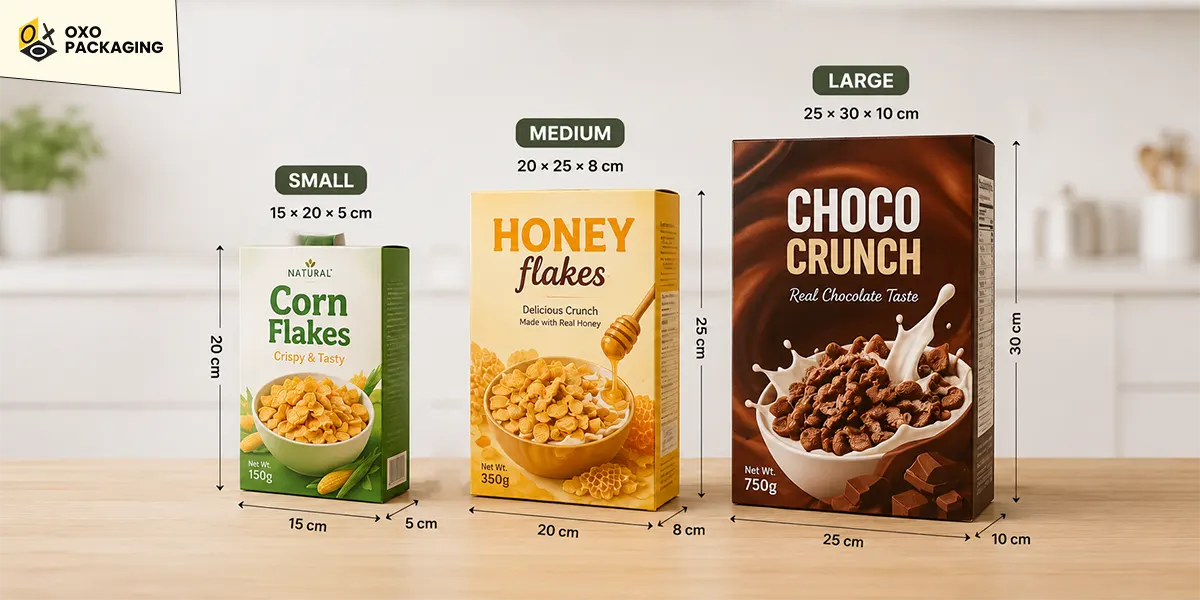
Cereal cartons don't have one universal size. Dimensions vary according to the product quantity, packaging structure, shelf requirements, and brand specifications. The most common dimensions are:
- Small: 15 × 20 × 5 cm
- Medium: 20 × 25 × 8 cm
- Large: 25 × 30 × 10 cm
Consider these measurements as examples rather than fixed industry standards. You can manufacture a custom cereal box according to the product's volume, filling requirements, structural design, and retail needs.
Choosing dimensions carefully is important because box size affects material usage, shipping, shelf presentation, and the amount of printable space available for branding.
How Custom Cereal Boxes Strengthen Branding?
Custom packaging gives cereal brands considerably more control over the customer experience. Instead of relying on a generic carton, you can select your preferred dimensions, artwork, colors, typography, finishes, and structural features. A customized cereal box can help you:
- Create market recognition: Consistent visual elements on the top panel of a cereal box make products easier to identify.
- Differentiate from competitors: Distinctive graphics and structural choices can help a product stand out on crowded shelves.
- Communicate its personality: Playful, premium, minimalist, natural, or family-focused designs can immediately establish a brand's character.
- Target specific audiences: Packaging can be designed around the expectations of children, families, health-conscious consumers, athletes, or other target groups.
Don't Ignore the Information Panels
Attractive graphics may get shoppers to notice a cereal box, but useful information can help them decide whether to purchase it.
Nutritional facts, ingredients, serving information, product claims, and other required details should be presented clearly and legibly.
The available space can also be used for less formal communication, such as a brand story, recipe, promotional offer, QR code, or social media invitation, provided these elements don't interfere with required information.
Make Every Panel Work Together
The strongest cereal packaging designs don't treat each panel as an independent piece. The front attracts attention. The sides provide supporting information, including nutrition facts on a cereal box. The back creates engagement and adds depth to the brand story.
Together, these panels can guide a shopper from recognition to information to purchase. That's why cereal box design should begin with more than the front artwork. Before production, you should map out what information belongs on every panel and establish a consistent visual hierarchy across the complete package.
Where to Find Well-Customized Cereal Boxes?
Whether you're launching a new cereal or refreshing an established product, OXO Packaging helps you get perfectly customized cereal boxes. Our experts don't leave the sides of the box as an afterthought. Instead, we use every panel intentionally, maintain a consistent brand identity, and make sure the information consumers need is easy to find.
A standard retail cereal box is typically about 12 inches tall, 8 inches wide, and 2 inches deep (30.5 cm × 20.3 cm × 5.1 cm).
Cereal boxes are getting smaller due to a practice called "shrinkflation," where manufacturers reduce product weights or box volumes while keeping prices the same or higher
A cereal box is appealing because of bright colors, fun cartoon characters or mascots, and clear pictures of a delicious bowl of cereal.
The cereal box theory states that cartoon mascots on children's sugary cereals are drawn looking downward at roughly a 9.7 to 10-degree angle so they make direct eye contact with short children walking down the grocery aisle, which builds trust and drives pester power







 Let's Call