


What Materials Are Commonly Used for Frozen Food Packaging?
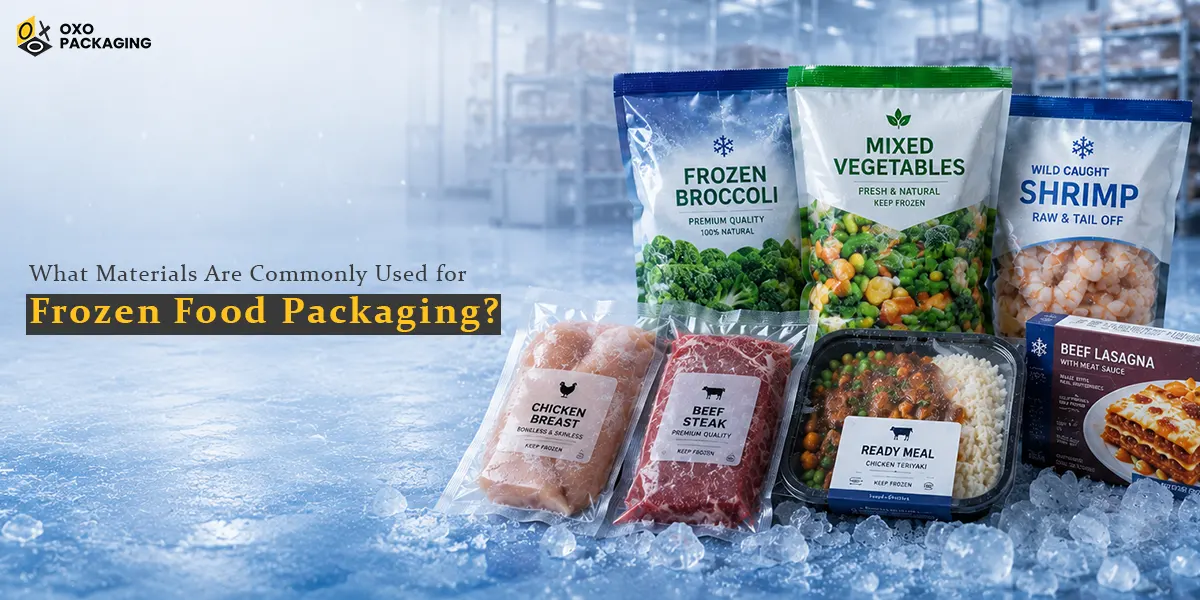
When it comes to frozen food packaging, you need to choose the right materials. Selecting the right material prevents freezer burn and contains liquid upon expansion. This way, they ensure food safety during storage and thawing.
Also, your packaging materials must be food-grade and chemically inert. As a result, they do not transfer substances or odors into the food. Understanding the specific material ensures compliance with strict FDA health regulations in the US.
Explore the most common types of frozen food packaging materials here. And choose the most protective material combination for your specific frozen products.
Explore Common Frozen Food Packaging Materials
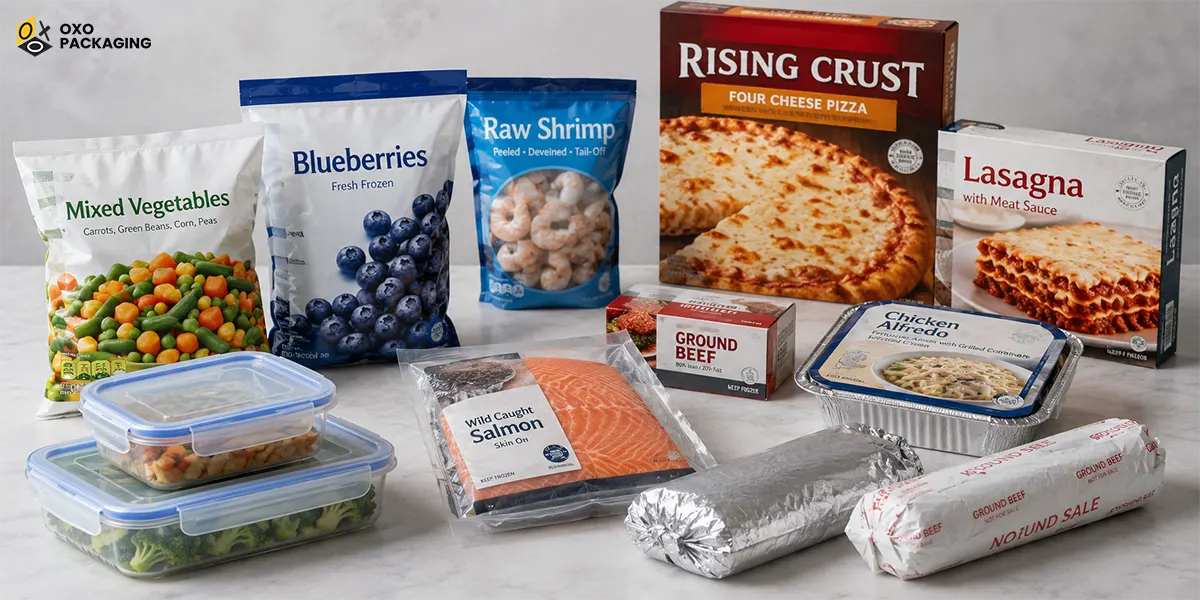
Frozen food packaging needs materials that prevent freezer burn, block moisture, and withstand extreme sub-zero temperatures. Here are some common types:
Plastic
Plastic is the most common packaging for frozen food. It mainly relies on Polyethylene (PE) and Polypropylene (PP) to withstand sub-zero temperatures (-40°C). These plastic types resist tearing and block moisture to prevent freezer burn. The exact type of plastic used depends entirely on the type of food.
- Low-Density Polyethylene (LDPE): Highly pliable, retains softness in sub-zero conditions, and is highly resistant to moisture, making it ideal for manufacturing flexible freezer bags, stand-up pouches, and shrink wraps.
- Polypropylene (PP): Excellent low-temperature impact resistance (does not easily become brittle) and can seamlessly transition from the freezer to the microwave. PP packages are suitable for use in hard containers, microwaveable ready meals, and reusable tubs.
- High-Density Polyethylene (HDPE): Stronger and stiffer than LDPE; excellent for locking in food shape and stopping odors from permeating the packaging. Semi-rigid containers and sturdy plastic bags are usually made from HDPE.
- Polyethylene Terephthalate (PET): Offers high clarity to visually display the food, while providing excellent resistance to abrupt temperature changes. Transparent trays, clear lids, and boil-in-the-bag pouches, often combined with PE layers, are its prime examples.
Aluminum Foil
Aluminum foil is an excellent, cost-effective food packaging frozen types. It provides an impermeable barrier against oxygen, moisture, and light, perfectly preserving food quality and preventing freezer burn.
Foil trays and containers are ideal for batch-cooked meals, ready-to-heat dishes, and frozen desserts. Heavy-duty foil sheets are great for wrapping meats, hams, and poultry directly before freezing, as standard thin foil is prone to tearing at lower temperatures.
However, commercial brands prefer to use laminated foil bags for storing dehydrated goods or dense frozen items such as heavy, protein-packed, or starch-filled frozen foods.
Wax Coated Cardboard
Just like plastic, cardboard boxes for frozen foods packaging need specialized materials that withstand extreme freezing temperatures, moisture, and condensation. They are ideal packaging solutions for frozen pizzas, meats, and baked goods. Its common types include:
- Solid Bleached Sulfate (SBS): A premium, bright white board that offers excellent print quality. It provides the highest structural integrity and is usually FDA-approved for direct food contact.
- Clay-Coated Recycled Board (CCRB): A cost-effective and highly sustainable option that is strong, durable, and provides a smooth surface for vibrant branding and graphics.
- E-Flute Corrugated Board: A lightweight, thin corrugated material that is ideal for shipping individual frozen items. It offers excellent insulation and structural rigidity without adding excess bulk.
Glass
For freezer food packaging, you must use borosilicate or tempered glass. These materials are highly resistant to thermal shock, preventing the glass from cracking or shattering as temperatures plummet below freezing or when moving to a microwave.
Borosilicate glass is used in reusable containers, meal-prep dishes, and liquid-heavy foods, making a safe transition from the freezer straight to the oven or microwave. Tempered glass is best for storing solids and dense foods. If it does break due to extreme force, it shatters into small, blunt granules rather than sharp, dangerous shards.
Flexible Bags
Made from multi-layer laminates (such as PET/PE or BOPP/PE), frozen food packing bags withstand extreme sub-zero temperatures. They also prevent freezer burn and block oxygen, while maintaining structural integrity and freshness for meats, vegetables, and seafood.
Their common types include stand-up pouches, pillow bags, flat bottom pouches, block bottom pouches, slider bags, and vacuum sealed bags.
Shrink Film
Made from Polyolefin (POF) and Polyethylene (PE) films, shrink film for frozen packaging is FDA-compliant. They do not release harmful fumes and maintain flexibility and puncture resistance at temperatures as low as -40°C without turning brittle or cracking.
Polyolefin (POF) shrink film is FDA-approved for direct food contact. It provides high clarity, puncture resistance, and aesthetic shelf appeal. You can use it for bundling and wrapping boxed frozen meals.
However, polyethylene (PE) film is a heavy-duty, highly resilient material, making it ideal for heavier frozen goods, meats, and poultry because they withstand extreme cold and rough handling during shipping.
Tips for Preventing Freezer Burn in Frozen Food Packaging
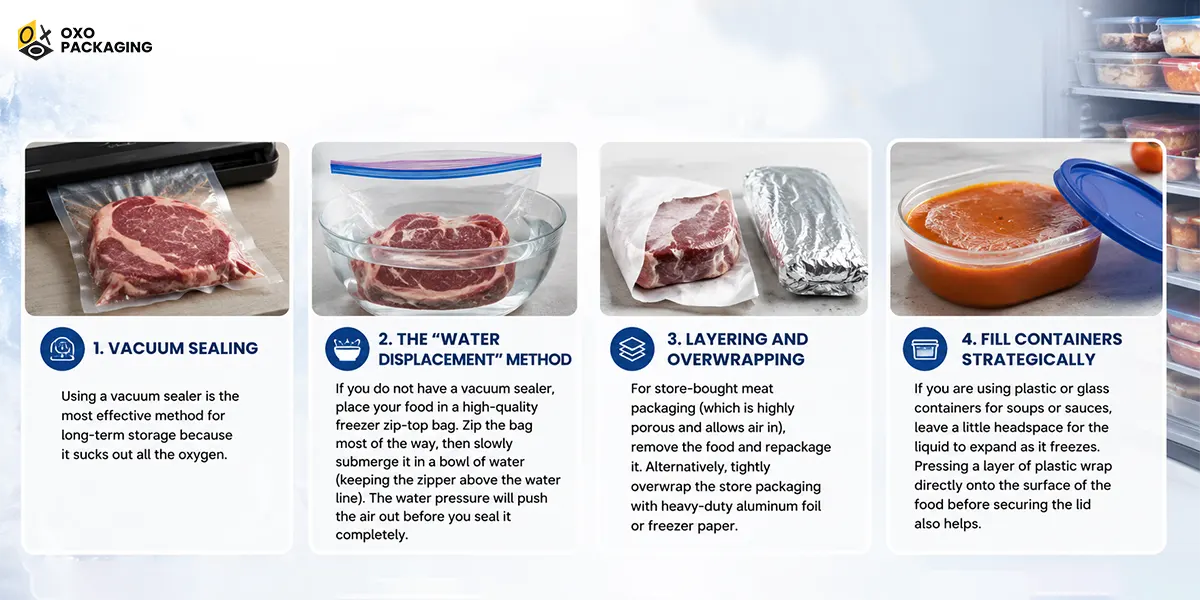
Freezer burn occurs when food is exposed to the dry, cold air inside your freezer. It causes moisture to evaporate and form ice crystals on the food's surface. Here are some useful tips to prevent it:
- Vacuum Sealing: Using a vacuum sealer is the most effective method for long-term storage because it sucks out all the oxygen.
- The “Water Displacement” Method: If you do not have a vacuum sealer, place your food in a high-quality freezer zip-top bag. Zip the bag most of the way, then slowly submerge it in a bowl of water (keeping the zipper above the water line). The water pressure will push the air out before you seal it completely.
- Layering and Overwrapping: For store-bought meat packaging (which is highly porous and allows air in), remove the food and repackage it. Alternatively, tightly overwrap the store packaging with heavy-duty aluminum foil or freezer paper.
- Fill Containers Strategically: If you are using plastic or glass containers for soups or sauces, leave a little headspace for the liquid to expand as it freezes. Pressing a layer of plastic wrap directly onto the surface of the food before securing the lid also helps.
What is Suitable Storage Time for Frozen Food Packaging?
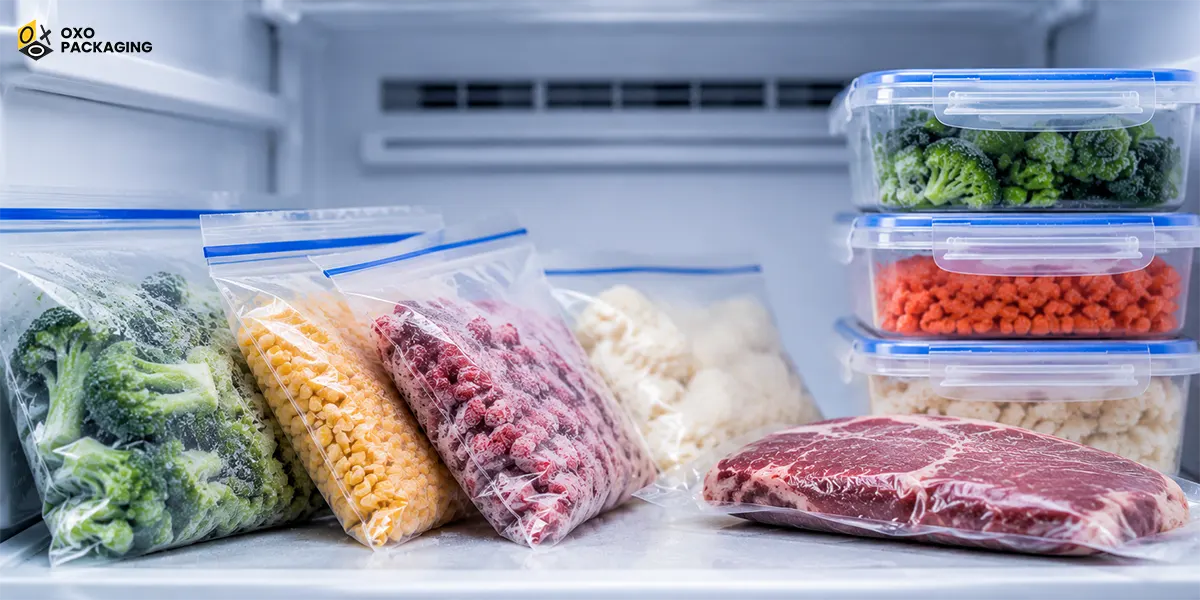
Suitable storage time depends primarily on the food type rather than the packaging material. When kept continuously at 0°F (-18°C), food remains safe to eat indefinitely. However, to maintain peak quality, flavor, and texture, specific foods should be stored within established limits.
Where to Find Frozen Food Packaging?
Are you packaging raw meats, ready-to-eat meals, or baked goods? OXO Packaging helps businesses like yours to provide custom, commercial-grade freezer-safe boxes and bags based on your needs and product demands.
The ideal choice depends on your specific needs, but multi-layer plastic laminates and vacuum-sealed bags are generally the best for preventing freezer burn and retaining freshness.
Manufacturers primarily use flexible plastics, coated paperboard, aluminum, and rigid plastics to maintain freshness and prevent freezer burn.
Five primary materials, including plastic, glass, aluminum, paperboard, and biodegradable or eco-friendly containers, are used in food packaging.
Top choices include heavy-duty aluminum foil, vacuum sealer bags, BPA-Free plastic containers, polyethylene (PE) freezer bags, and tempered glass (labelled for freezer safety).







 Let's Call