


Explore The Art and Science of Ice Cream Packaging!
Are you among ice cream manufacturers, gelato makers, artisanal scoop shops, dessert brands, or frozen food distributors? And looking for ways to protect your frozen treats from freezer burn and attract ice cream consumers on crowded retail shelves? Look nowhere else but this blog, as it sheds light on the art and science of ice cream packaging.
With proper packaging, your ice cream or frozen desserts remain safe from freezer burn and drive impulse purchases in crowded retail freezers. Let’s dive into detail:
Why Does Ice Cream Packaging Matter?
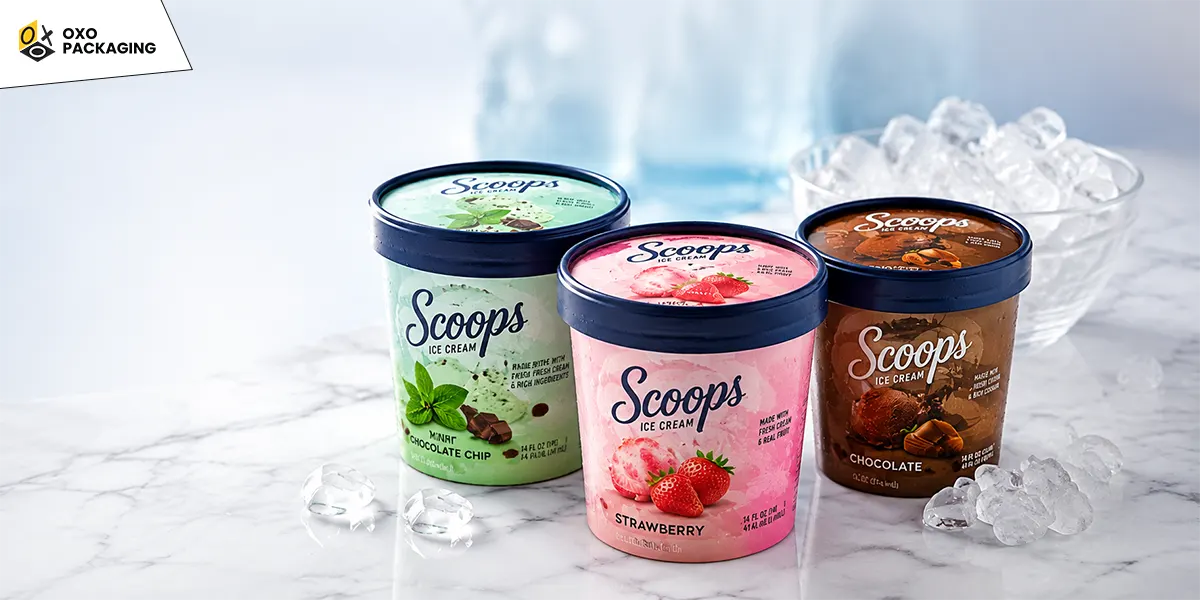
Proper packaging for ice cream matters as it serves as a complex blend of thermal science and visual art. Ice cream packaging protects a fragile, sub-zero emulsion from moisture loss and temperature swings while using bold typography, tactile paperboards, and vibrant colors to attract ice cream buyers in a competitive market.
The Science of Protection
Your ice cream containers must withstand extreme cold around –20°F without becoming brittle or failing structurally. Also, use lined paperboard and specific polymers to block water vapor transmission, stopping destructive freezer burn.
The Art of Attraction
Apart from ice cream protection, visual identity also plays a significant role in attracting ice cream customers. For example, high-contrast colors and lifestyle imagery instantly communicate flavor profiles like mint, chocolate, or complex swirls. For your brand storytelling, typography and minimalist layouts help you stand out against legacy competitors in retail freezers.
Maintain Ice Cream Integrity Through Cold Chain Packaging
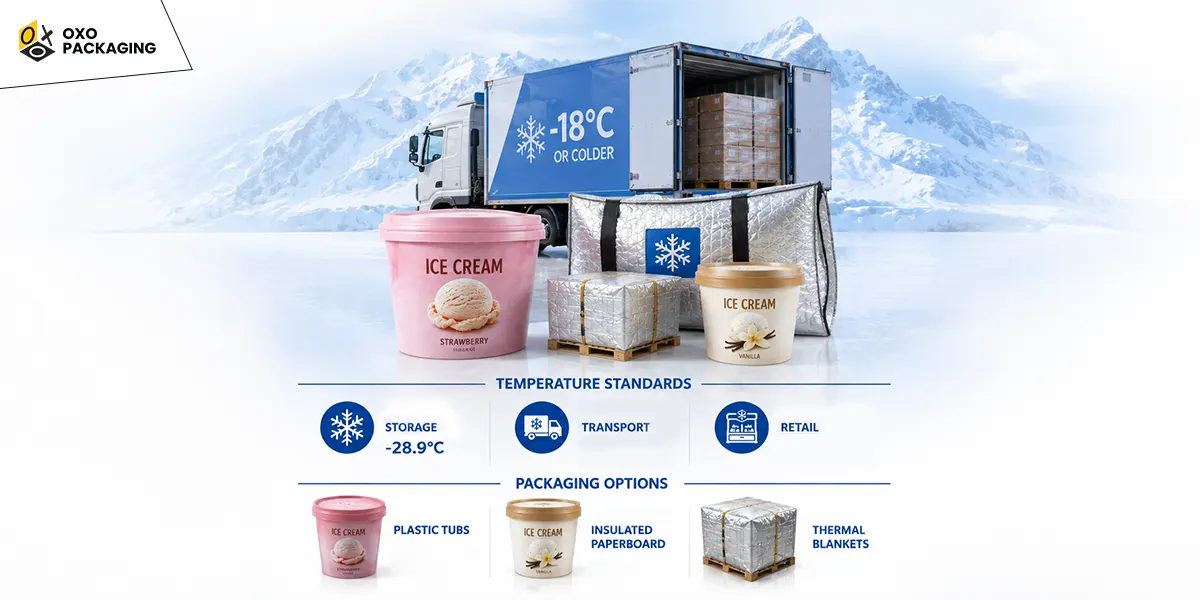
Maintaining your ice cream quality in the cold chain requires keeping temperatures at -18°C (0°F) or colder. It’s quite challenging for businesses. To retain optimal temperature, your packaging must resist deep-freeze conditions, stop heat transfer, and prevent large ice crystals from ruining the texture. Follow these instructions:
Temperature Standards
- Storage: Keep commercial freezers at -28.9°C to stop heat shock.
- Transport: Move products in reefers set below -18°C.
- Retail: Maintain store display cases at deep-freeze levels.
Packaging Options
- Plastic Tubs: Offer strong durability and good insulation.
- Insulated Paperboard: Works well for lightweight, single-serve items.
- Thermal Blankets: Protect multiple pallets during transit.
Key Benefits of Ice Cream Packaging
From protecting delicate frozen desserts from thermal shock, moisture, and air, preventing freezer burn, while also serving as an important tool for brand marketing, ice cream packaging brings versatile benefits:
-
Prevent Freezer Burn
Blocks air and moisture exchange that cause dry, crystallized ice crystal layers. By using tight lids, wax linings, and thick plastic or coated paper, you keep dry air out. This stops water inside the ice cream from turning into gas and escaping.
-
Ensure Food Safety
Containers use FDA-approved or food-safe plastics and coated papers that do not leach chemicals into dairy. Plastics and liners avoid harmful hormone-disrupting agents like Bisphenol A. Materials are built to stay strong at sub-zero temperatures without cracking or shedding micro-particles.
-
Boost Customer Experience
Offer spill-proof convenience that enhances user experience. Using sensory visuals or tactile finishes on containers can spark cravings before customers even open the tub. Wax or polymer inner linings stop melting messes so customers can enjoy their treat without sticky hands. High-resolution photos or illustrations of swirls and chunks build immediate excitement among ice cream buyers.
-
Enhance Branding and Marketing
Use bold shades that pop against frosty white freezer doors. Make flavor names and vivid ingredient graphics clear and easy to read at a glance. Unique tubs, clear dome lids, or artistic holder designs make your frozen products instantly memorable. Feature clear labels and earth-toned designs to highlight eco-friendly or sustainable ingredients that build your strong brand values.
Consider Ice Cream Packaging Materials
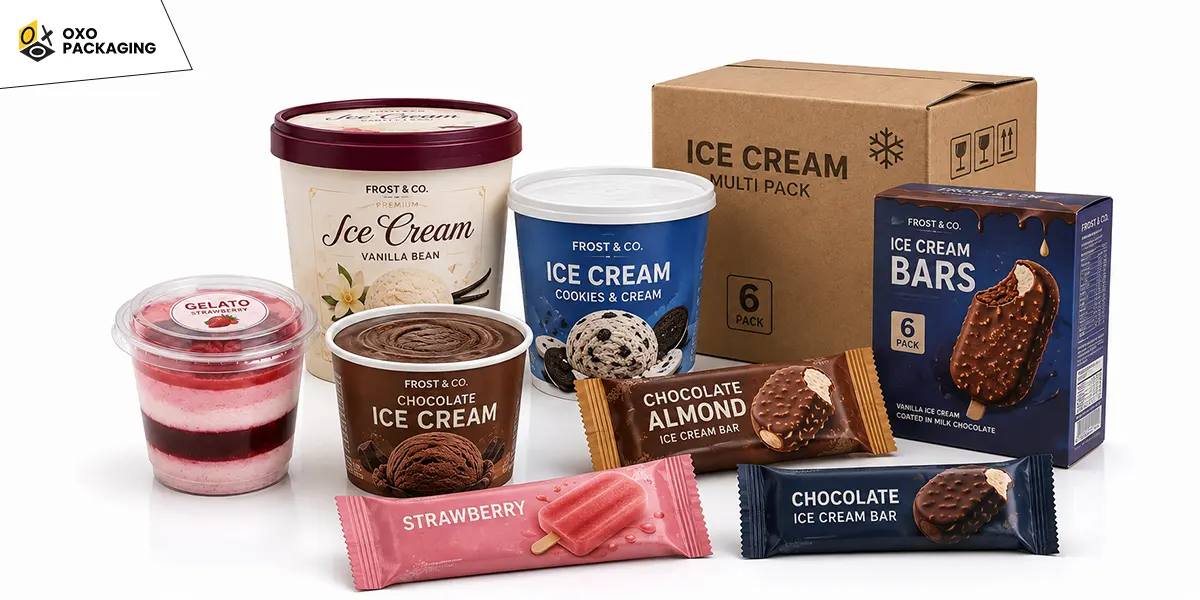
Ice cream packaging needs materials that withstand deep-freeze temperatures down to -30°C, block moisture, and prevent leaks. Common materials include:
-
Paper and Paperboard
- Poly-Coated Paperboard:Cardboard lined with a thin layer of polyethylene (PE) or water-based coatings. Used for standard ice cream tubs and pint containers because it resists moisture and prints brand designs easily.
- Corrugated Cardboard: Used for outer multi-pack boxes and bulk transport cartons to provide stacking strength.
-
Plastics
- Polypropylene (PP) & High-Density Polyethylene (HDPE): Rigid, durable plastics used for reusable or large family-size tubs. They seal tightly to prevent freezer burn.
- PET (Polyethylene Terephthalate): Clear plastic used for single-serve dessert cups or gelato to showcase the product's layers and colors.
-
Flexible Films and Wrappers
- BOPP (Biaxially Oriented Polypropylene) & LDPE: Flexible films used as individual wrappers or stick-novelty pouches for items like ice lollies and chocolate-coated bars.
- Aluminum Foil Laminates: Used for premium or heat-sensitive novelties to provide a strong barrier against external heat and light.
Advantages and Disadvantages of Ice Cream Packaging Materials
Have a look at the pros and cons of ice cream packaging materials to choose the right one tailored to your needs:
|
Materials |
Pros |
Cons |
|
Plastic (PP and In-Mold Labeling) |
Highly durable at low temperatures, provides an airtight seal, moisture-resistant, and reusable or recyclable. |
Slower to degrade, relies on petrochemicals, and can crack under extreme physical stress if low-grade polymers are used. |
|
Coated Paper and Cardboard |
Eco-friendly, lightweight, biodegradableoptions available, and excellent for colorful shelf branding. |
Weakens when exposed to moisture or condensation, poor thermal insulation, and prone to structural damage during long-term storage. |
|
Laminated Foil and Flexible Films |
Ideal for single-serve bars or sandwiches, lightweight, blocks air and light well, and keeps shape during manual or automated wrapping. |
Difficult to recycle due to multi-layer bonding and offers zero structural rigidity for scoopable products. |
Protect Your Frozen Creations with OXO Packaging!
Until now, you have explored how quality ice cream packaging protects texture, prevents freezer burn, and elevates your brand. Sourcing food-safe, durable containers ensures your frozen treats maintain structural integrity and visual appeal from the freezer case to the customer. You can explore custom packaging suppliers like OXO Packaging to keep your ice cream pristine and attractive for buyers!
Ice cream packaging uses food-grade materials designed to withstand deep-freeze temperatures, prevent moisture loss, and stop freezer burn.
Automated high-speed machinery fills preformed paperboard cartons, plastic tubs, or cups. Seals them with lids and sends them through blast freezers at temperatures below -18°C to lock in texture and freshness.
The best ice cream packaging balances thermal insulation, moisture resistance, and strong brand presentation. Polyethylene-coated paperboard pints and In-Mold Label (IML) plastic tubs are the top choices.
Both glass and plastic work for storing ice cream. However, glass is better for pure taste and safety, while plastic is safer from drops and easier to handle.







 Let's Call