


Everything You Need to Know About the History of Coffee Packaging
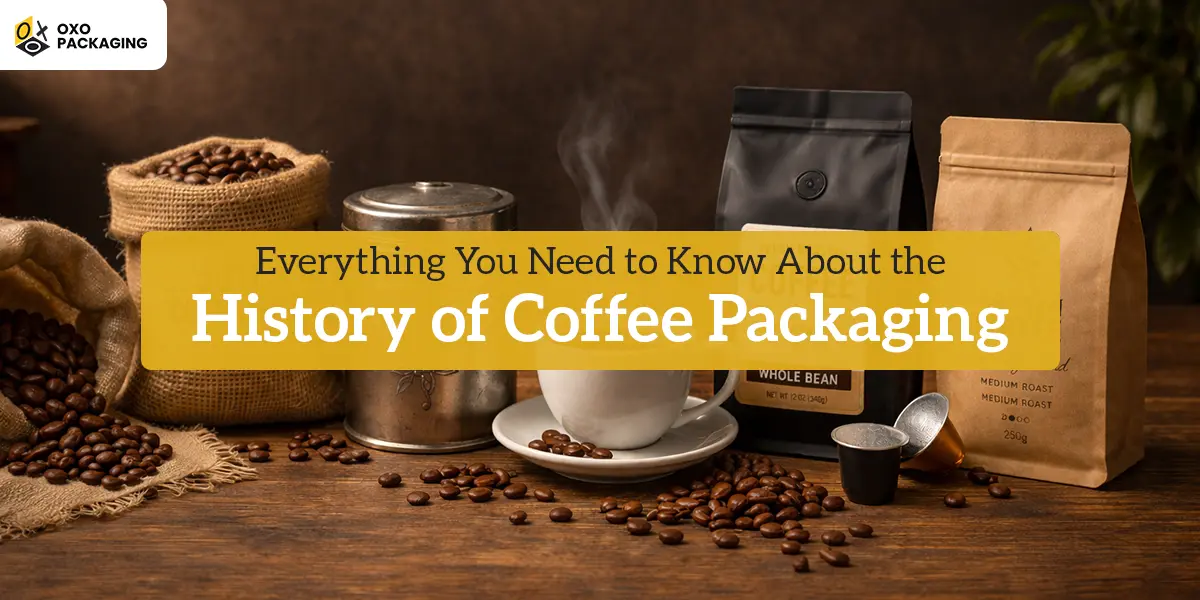
What began as simple beeswax-lined sacks in ancient times to preserve and pack coffee has now evolved into precision-engineered, airtight packaging that modern brands rely on today.
From 18th-century jute bags and metal containers to the advanced pods, resealable closures, and kraft bags of 2026, coffee packaging has undergone relentless transformation. Each innovation serves a critical role, providing a barrier against light, oxygen, and moisture to lock in freshness, aroma, and strong taste.
Therefore, modern times not only demand protection from external factors but also a packaging that works as a silent salesman and a promotional tool for building a brand and its identity to connect with modern consumers.
Let’s explore the origin of coffee packaging and its types to figure out which packaging is suitable for your beans. Read on!
The History of Coffee Packaging: 1700s to 2026
Let’s find out how coffee packaging has evolved over the years:
1700-1800 - When Preservation & Protection Were the Goal
The earliest form of packaging coffee appeared around 1720. At this time, in France, ground coffee was packaged in sacks of greased leather or bags lined with beeswax exterior. These packages protect the contents and conserve aroma.
The first crude coffee packaging in America began when coffee sellers started to sell their roasted coffee in narrow-mouthed pots and jars with the promise of preserving aroma for up to 12 months.
As the 19th century began, paper bags and later tin foil-lined paper bags were introduced.
1900s–1960s: Freshness Takes Center Stage
The early 20th century saw the widespread use of vacuum-sealed tin cans, invented by Hills Brothers, which provided superior protection against external factors.
However, one of the greatest breakthroughs for coffee packaging in the 20th century was the invention of the degassing valve by the Italian company Goglio.
With technology innovations, flexible bags have appeared as more flexible, durable, and cost-effective packaging materials.
1970s–2010s: The Specialty Revolution and Innovation
The third wave in coffee culture centered on the rise of specialty coffee chains like Peet’s and Starbucks. Packaging became a vital tool in marketing and telling a brand’s story.
In the 1980s, the invention of the one-way degassing valve was a watershed moment, allowing roasters to package coffee immediately after roasting by letting carbon dioxide escape without letting oxygen in.
However, growing concern about plastic pollution has driven the need for compostable, recyclable, and biodegradable packaging. This fact pushes bags developed into multi-layered structures, often incorporating aluminum or specialized metallized recyclable plastic and kraft paper to enhance barrier properties against moisture and light.
2020s–2026: Sustainability and Intelligent Packaging
During 2017, the first fully compostable custom coffee bags were introduced, featuring compostable films, zippers, and degassing valves, using materials like Mylar and Kraft.
The industry then shifted away from non-recyclable multi-material pouches towards single-material (mono-material) solutions and Polylactic Acid (PLA) bio-plastics.
As of 2026, coffee packaging trends have become a key component of customer experience and sustainability. The key trends include packaging that meets regulatory requirements and makes a statement with sustainability, while a minimal and vibrant design elevates consumers' experience.
Types of Coffee Packaging
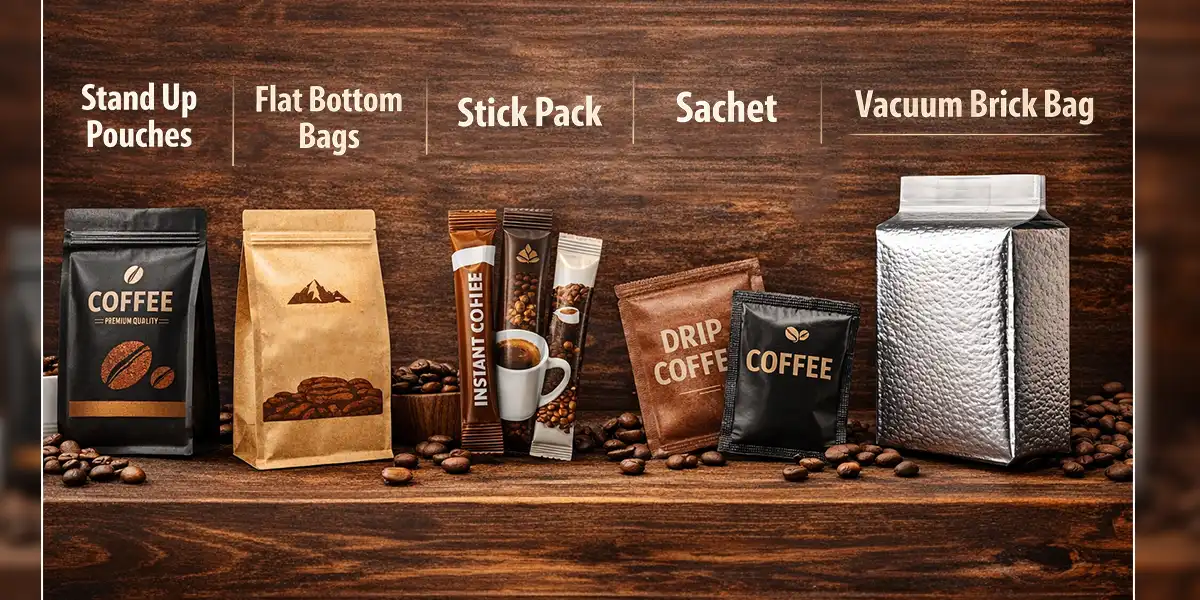
Now you know the history behind coffee packaging, it’s easier to understand which packaging is best for your coffee. Let’s find out through multiple types of coffee packaging:
Stand Up Pouches
Stand-up coffee pouches are a perfect option for retail shelf display. They stand straight on shelves, and the two sides of the surface allow you to print essential information and branding details. They are cost-effective, easy to use, flexible, and feature a reasonable closure for easy storage, making them ideal for locking freshness.
Flat Bottom Bags
Flat-bottom coffee bags are a premium, stable option with five panels for branding, creating a "box" look with high retail impact. They are relatively inexpensive. The folding can be adjustable, making it convenient to store coffee of different capacities, and the filled bags can stand upright on shelves for display.
Stick Pack
Stick pack packaging is durable, airtight tubes that are designed for convenience, single-serving, and holding 2-5 grams of instant coffee, ground coffee, or 3-in-1 mixes.
Sachet
A sachet is a type of packaging that offers convenience through steeped or drip coffee. They are portable tubes that typically contain three to four sealed edges and are used as outer packaging. Made from materials like polyethylene or aluminum, these lightweight, portable, and often recyclable packets are ideal for single-use consumption and easy distribution.
Vacuum Brick Bag
Vacuum brick bags are ideal if you want rigid and extended shelf life packaging. These bags are made of aluminum foil film, ideal for ground coffee, creating a compact, stackable "brick" shape that is efficient for shipping and retail storage. These bags undergo steps such as vibration, pressing, reforming, vacuuming, and sealing to achieve an attractive shape.
Materials Used in Coffee Packaging
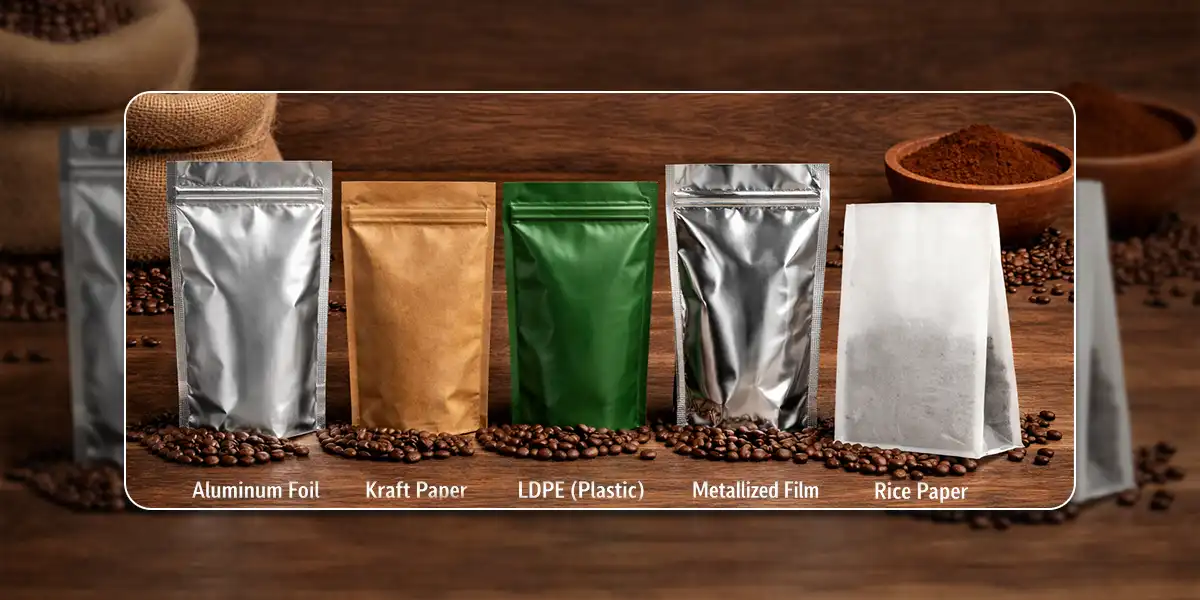
When packing coffee beans or ground coffee, the first concern is preserving the strong aroma. Choosing the right materials provides high-barrier protection against oxygen, moisture, and light to maintain freshness. The most common and efficient materials used in coffee packaging are:
-
Aluminum Foil
One of the best materials used in coffee packaging is aluminum foil, which works as an isolation against moisture and oxygen, making it ideal for long-term storage and shipping of high-fat coffee beans. You can also combine it with vacuum sealing to extend the shelf life.
-
Kraft Paper
Kraft coffee bags offer biodegradable and eco-committed packaging for brands seeking sustainable options. These bags are excellent for branding and preserving freshness when customised with a resealable closure and multilayers.
-
Low-Density Polyethylene (LDPE)
This is a very common material typically used for inner layers to keep packaging waterproof, airtight, and heat-sealable. It is often used for recyclable pouches designs, particularly in mono-material and eco-conscious packaging.
-
Metallized Films
Metallized film is chosen for coffee packaging because it provides an excellent, cost-effective barrier against oxygen, moisture, and light, which are key to preserving aroma and preventing stale beans. This option is more affordable and more flexible than aluminium foil while offering premium, glossy or matte aesthetics that enhance shelf appeal.
-
Rice Paper
Rice paper is a new, creative, and effective coffee packaging solution that also focuses on sustainability, offering a biodegradable and renewable alternative to plastic. The textured, fibrous look appeals to modern eco-conscious consumers while its durability, moisture resistance, and compatibility with protective liners ensure coffee remains fresh and secure.
Customize Future Trendy Coffee Packaging Wholesale
Future trends in coffee packaging focus on sustainability, smart technology, and bold, memorable aesthetics that connect with consumers. Technology integration has also made coffee packaging more tech-infused, interactive, and minimal, which piques interest and builds brand.
Want to customize coffee packaging with wholesale discounts, sustainable materials, minimal artwork, QR codes, and unlimited customization? OXO Packaging can be your trusted partner
Coffee packaging has evolved from functional bulk transport to advanced, brand-focused, and sustainable solutions. Early methods included 18th-century jute sacks, beeswax-treated bags, and jars, followed by 19th-century tin cans for freshness.
Current coffee packaging trends focus heavily on sustainability, with widespread adoption of biodegradable, compostable, and post-consumer recycled materials. Key trends include minimalist aesthetics, functional designs like resealable pouches with degassing valves, and vibrant, quirky branding tailored to Generation Z.
Coffee packaging protects beans from light and oxygen by using specialized high-barrier materials. These materials block UV rays and air, combined with one-way degassing valves that let trapped carbon dioxide escape without allowing oxygen in. This stops the oxidation process (staling) and protects delicate oils from breaking down due to light.







 Let's Call