


How Long Does Flour Last in Mylar Bags? A Detailed Guide!
Flour is a staple ingredient for bakeries, restaurants, food businesses, and households. However, storing large quantities can be challenging because flour is sensitive to oxygen, moisture, heat, light, and odours. Poor storage can reduce its freshness and affect its quality.
Mylar bags offer an effective solution for long-term flour storage. Their strong barrier properties help protect flour from external moisture, light, oxygen, and odours. With proper preparation and storage conditions, flour can remain usable for several years.
So, how long does flour last in Mylar bags? White and all-purpose flour can commonly last around 10-15 years when packed correctly with oxygen absorbers and stored in a cool, dry, dark environment. However, shelf life varies according to flour type, packaging quality, and storage conditions.
How Long Does Flour Last in Mylar Bags?
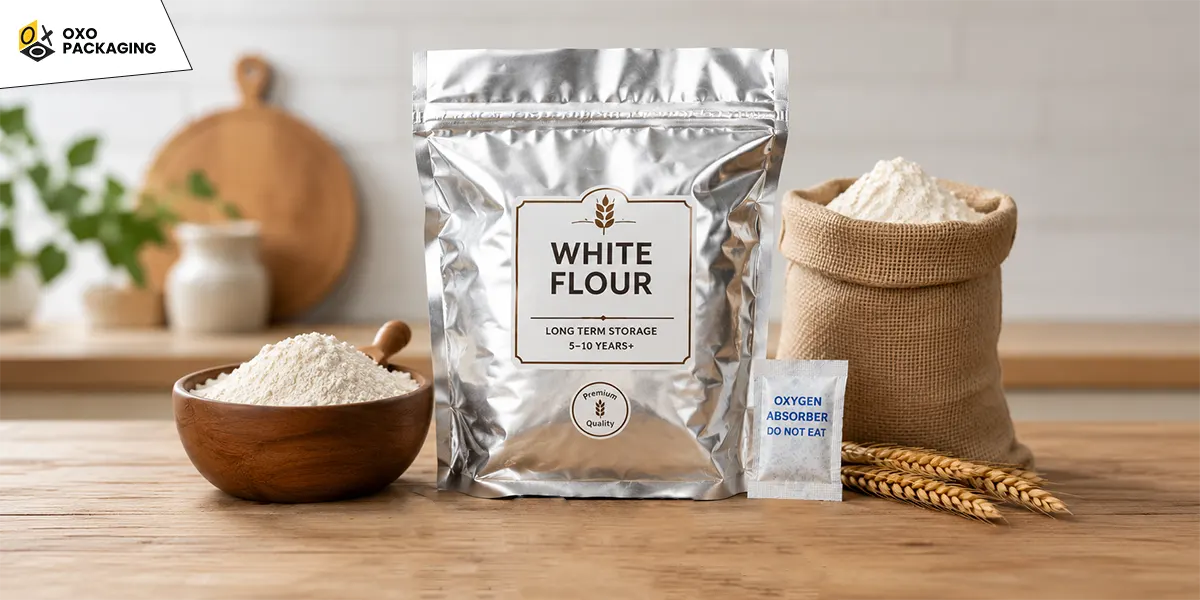
The storage period depends on the type of flour and how it is packaged. Refined white flour generally lasts longer because it contains less natural oil than whole-grain flour.
When flour is placed in a food-grade Mylar bag, sealed properly and combined with an appropriately sized oxygen absorber, its shelf life can increase significantly.
Here is a general comparison:
|
Flour Type |
Typical Pantry Life |
Mylar Bags with oxygen absorber |
|
All-purpose flour |
6–12 months |
Around 10–15 years |
|
White flour |
6–12 months |
Around 10–15 years |
|
Bread flour |
6–12 months |
Several years to 10+ years |
|
Whole wheat flour |
1-3 months |
Around 1–3 years for quality |
|
Nut flour |
3-6 months |
Around 1–2 years |
These figures are estimates rather than guarantees. Storage temperature, moisture, oxygen exposure, and the condition of the flour can significantly affect its usable life.
White Flour vs Whole Wheat Flour Shelf Life in Mylar Bags
When stored properly in sealed Mylar bags with oxygen absorbers, white flour lasts 10 to 15 years. However, whole wheat flour lasts 1 to 5 years and up to 10 years max under ideal conditions.
Why White Flour Lasts Longer?
White flour has lower oil content. The refining process removes the germ and bran, which contain the natural oils and fats that spoil over time. Without those oils to go rancid, refined white flour remains stable for over a decade.
Why Whole Wheat Flour Spoils Faster?
Whole wheat retains the germ and bran, which are rich in reactive lipids that oxidize and turn rancid even in low-oxygen environments. While sealed Mylar blocks oxygen and pests, the natural oils inside whole wheat degrade much faster, giving it a practical maximum window of 1 to 5 years before tasting bitter or stale.
Why Does Flour Go Bad?
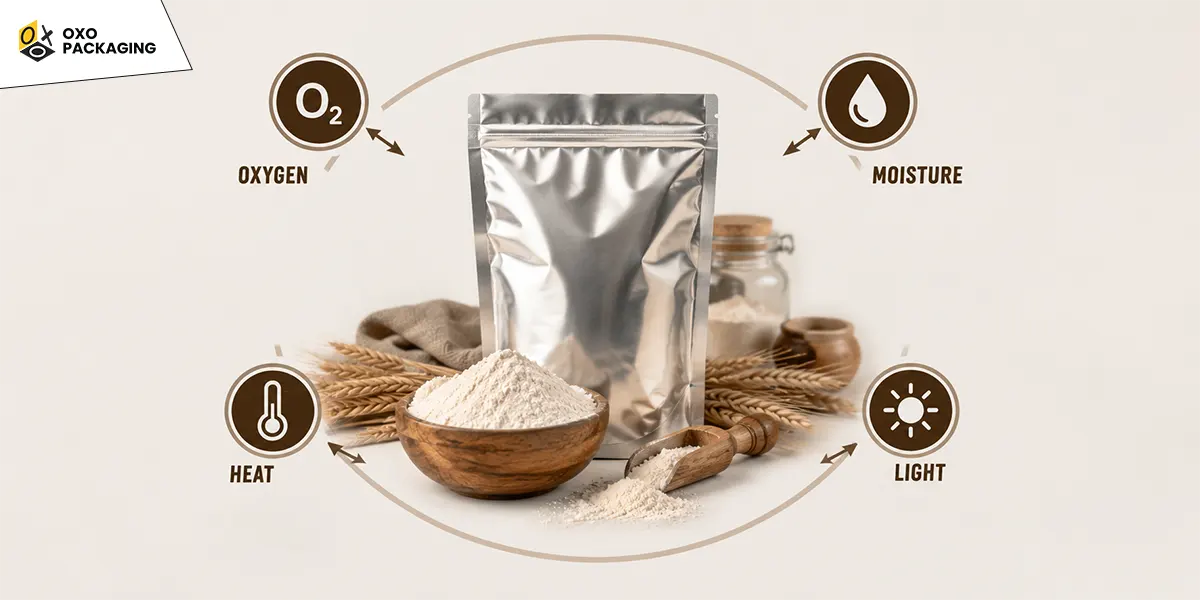
Understanding what damages flour can help you choose better packaging. Several factors can reduce flour quality over time.
Oxygen:
Oxygen encourages oxidation, particularly in flour containing natural oils. This can eventually create a stale or rancid smell and taste. Removing residual oxygen from the package can therefore help slow quality deterioration.
Moisture:
Moisture can cause flour to clump and encourage mild growth. Flour should be completely dry before packaging. Mylar packaging. Mylar provides a strong moisture barrier, but the bag must also be properly sealed to maintain that protection.
Heat:
High temperatures accelerate chemical reactions that affect food quality. A cool storage environment is therefore better for long-term flour storage.
Light:
Light can contribute to quality over time. The reflective structure of many Mylar bags helps limit light exposure, making them suitable for products that benefit from dark storage.
Why Are Mylar Bags Good for Flour Storage?
Mylar bags are made using barrier films designed to provide strong protection against environmental factors. This is useful for long-term storage of dry food products. One of their main advantages is their ability to limit exposure to oxygen and moisture.
They also help protect contents from light and external odors. OXO Packaging existing guide similarly highlights Mylar's moisture-resistant, light-reflective, and smell-resistant properties for flour storage.
For businesses handling flour in bulk, this can make storage more convenient. Instead of keeping large quantities in ordinary paper packaging, flour can be portioned into approximately sized Mylar bags and sealed for longer-term storage.
Do You Need Oxygen Absorbers for Flour?
Oxygen absorbers are strongly recommended when the goal is long-term storage. They help remove residual oxygen from the sealed package, reducing the amount available for oxidation. However, oxygen absorbers do not replace good packaging practices. The flour should be dry, the Mylar bag should be food-grade and undamaged, and the heat seal should be complete.
Choose an oxygen absorber based on the bag size and packaging application. Some storage guides recommend approximately 300-500 for a gallon-sized bag, although the correct capacity depends on the amount of air remaining inside the package.
How to Store Flour in Mylar Bags
Follow these steps to maximize flour storage life:
Start with Fresh Flour
Always use fresh, good-quality flour. Check it carefully for insects, unusual odours, moisture, or signs of contamination before packaging.
Choose Food-Grade Mylar Bags
Select durable, food-safe Mylar bags designed for dry food storage. Avoid bags with punctures, weak seals, or visible damage.
Portion the flour
Rather than placing all your flour into one oversized bag, divide it into practical quantities. Similar portions reduce repeated exposure to air after opening.
Add an Oxygen Absorber
Place the appropriate oxygen absorber inside the bag before sealing. Follow the absorber manufacturer's instructions for capacity and handling.
Heat-Seal the Bag
Remove excess air without excessively compressing the flour. Then create a strong, continuous heat seal across the opening. A reliable seal is essential for maintaining the package barrier.
Label Each Bag
Write the flour type, packing date, and any relevant batch information on each bag. This makes stock rotation easier, especially for bakeries and food businesses.
Explore Best Storage Conditions for Flour in Mylar Bags
Store flour in Mylar bags in a cool, dark, and dry location with a steady temperature between 10°C and 20°C. Apart from that, consider following these instructions to store flour in Mylar bags effectively:
- Freeze the flour for at least 72 hours beforehand to kill any microscopic insect eggs. Let it return completely to room temperature before sealing to prevent condensation.
- Place sealed Mylar bags inside hard outer containers, like food-grade plastic buckets or storage totes, to protect against punctures and rodents.
- White and all-purpose flour lasts 10 to 15 years, while whole wheat flour lasts 5 to 10 years due to its higher oil content.
Does Whole Wheat Flour Last as Long?
Not usually. Wholesale wheat flour contains more natural oils because more parts of the wheat kernel are retained. These oils can oxidize over time, causing the flour to develop an unpleasant smell and taste.
For this reason, whole wheat flour generally has a shorter shelf life than refined white flour. Some storage sources estimate only a few years under Mylar conditions, particularly at ordinary temperatures.
If you need very long-term storage, storing the whole wheat berries and grinding them when required may be a better option than storing ground whole wheat flour for many years.
If you need very long-term storage, storing whole wheat berries and grinding them when required may be a better option than storing ground whole wheat flour for many years.
Mylar Bags vs Traditional Flour Packaging
Traditional paper flour bags are convenient for short-term use but offer less protection from environmental exposure. Mylar bags create a much stronger barrier when properly sealed.
For long-term storage, the combination of food-grade Mylar bags, oxygen absorbers, proper sealing, and cool storage can dramatically extend flour's usable life compared with ordinary pantry packaging.
This makes Mylar particularly useful for bakeries, food manufacturers, wholesalers, preparedness storage, and households purchasing flour in bulk.
Conclusion:
So how long does flour last in Mylar bags? If you keep things in the way white flour or all-purpose flour can stay good for about 10 to 15 years when you put the flour in good Mylar bags with oxygen absorbers.. Whole wheat flour and other flours, with a lot of oil, usually do not last as long.
Just having the bags is not enough. You need flour, you need to control moisture, you need to get the oxygen out, you need to seal the bags well, and you need to keep the flour in a cool and dark spot. All these things work together to make the flour last as long as possible.
If you are looking for packaging to store a lot of flour, picking strong custom Mylar bags can give you the protection and the choice you need for different amounts of flour. Good packaging can help keep your flour safe while making your long-term storage much easier to handle.
White flour can last around 10–15 years when properly sealed with oxygen absorbers. Store it in a cool, dry, and dark place for the best results.
Yes, Mylar bags protect flour from moisture, light, oxygen, and odours. They are suitable for long-term flour storage when sealed correctly.
Store sealed bags in a cool, dry, and dark location. Keep them away from sunlight, heat, humidity, and pests.
Use a reliable heat seal to close the bag completely after adding the flour and oxygen absorber.







 Let's Call