

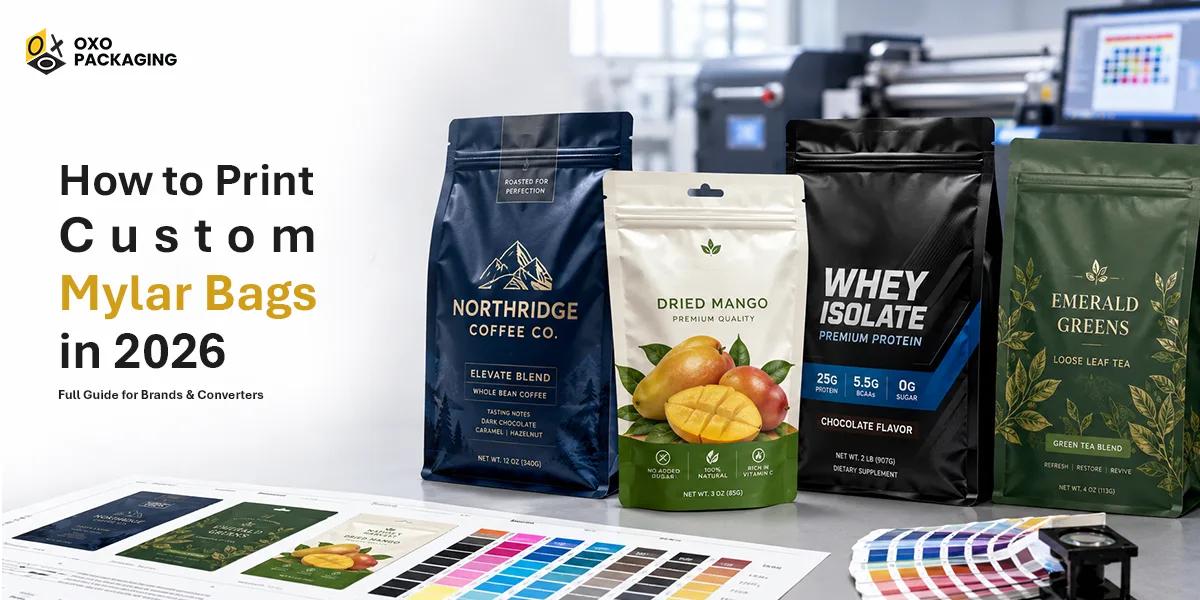
How to Print Custom Mylar Bags in 2026 | Full Guide for Brands & Converters
Since mylar bags are the top choice for selling perishable products, they are more likely to hit $33.2 billion by 2028. They help businesses like yours protect your products from all kinds of damage.
Because of superb barrier protection and regulatory compliance, you maintain your brand integrity. Another significant factor is printed Mylar bags that pop up your products on crowded shelves or sites.
So all brands and packaging converters must know how to print custom Mylar bags in 2026. Doing so will help you prevent print errors and bring your visual brand storytelling to life precisely. Let’s begin:
What are Mylar Bags?
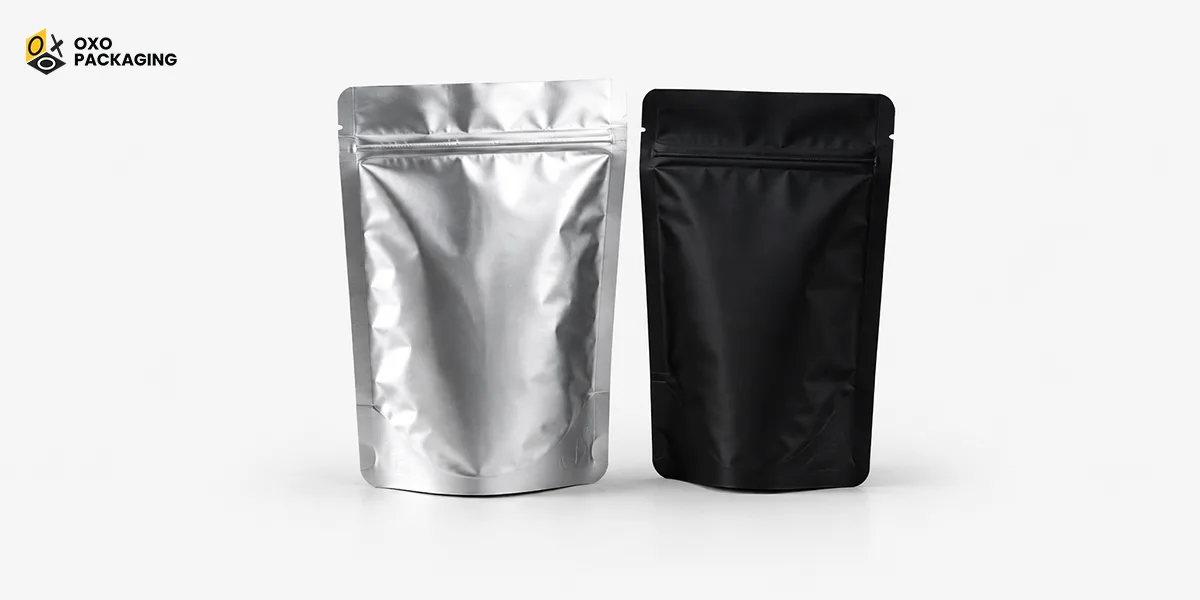
A Mylar bag is a multi-layer pouch made from a strong polyester film (BoPET) and a micro-thin aluminum foil layer. It blocks light, moisture, and oxygen completely. When sealed shut with an oxygen absorber inside, it creates a tight barrier that keeps dry foods and other perishable products fresh for many years.
Key Attributes of Mylar Film
Mylar film is a specialized, durable polyester film made from stretched resin. It features high tensile strength, exceptional electrical insulation, and strong resistance to moisture and extreme temperatures.
|
Property |
Function |
|
Barrier and Chemical Resistance |
Blocks water vapor, oils, grease, and common solvents and prolongs shelf life. |
|
High Tensile Strength |
Resists tearing, pulling, and puncturing under heavy stress. |
|
Dimensional Stability |
Maintains shape and size without stretching or shrinking under varied pressures. |
|
Flexibility |
Lightweight and adaptable to diverse surfaces while maintaining structural integrity. |
|
Printable Surface |
Digital Printing, Flexography, and Rotogravure |
Why Is Mylar Standard Packaging for Businesses in 2026?
Compared to glass jars, rigid boxes, and standard plastic, custom mylar bags provide excellent protection and high customization while being cost-effective. Consider some significant reasons here that give mylar bags a competitive edge over others:
-
Meet Rising Eco-Friendly Demand
Sustainable flexible packaging represents a major shift in modern manufacturing due to consumer preference and environmental necessity. Mylar bags have a lightweight design that reduces resource consumption.
Also, their flexible structures minimize post-consumer landfill volume. Having lower weight, Mylar bags dramatically cut transportation fuel use. As a result, they optimize cargo space to lower overall logistics emissions.
-
Offer Immense Benefits for Small-Batch Markets
Modern digital presses allow brands like yours to launch targeted product variations instantly. Mylar packaging supports this agility by combining high-quality aesthetics with low production minimums.
Digital printing on mylar bags eliminates expensive setup plates. So you can leverage cost-effective runs for small test markets. Meanwhile, you can also keep limited-edition products fresh during storage.
-
Support High Customization for Your Needs
When it comes to high business customization like flexible sizing, bespoke closures, and premium visual finishes, mylar bags serve best. You can adjust barrier thickness and material layers to block light, moisture, and oxygen.
By applying photo-realistic digital or offset graphics, you highlight your brand identity in a saturated market. You can also tailor physical dimensions, safety features, and striking artwork to match your unique product needs.
-
Bring Versatility for Every Product Category
Whether you sell nutraceuticals, food, cosmetics, health powders, coffee, snacks, or liquids, mylar bags minimize product spoilage and extend shelf life from weeks to years. They ensure consistent product quality while locking in the flavor, aroma, and texture of your products.
-
Serve Ideally for E-Commerce and D2C Brands
Mylar packaging has become a cornerstone for direct-to-consumer (D2C) brands due to its lower shipping costs. Their edge-to-edge high-definition printing for brand storytelling also makes mylar pouches a differentiating packaging option.
Role of Mylar Bags Across Fast-Growing Industries
Mylar bags replace heavy containers with flexible, cost-effective storage across sectors like food prep, pharmaceuticals, and agriculture:
Give Products Premium Shelf Appeal
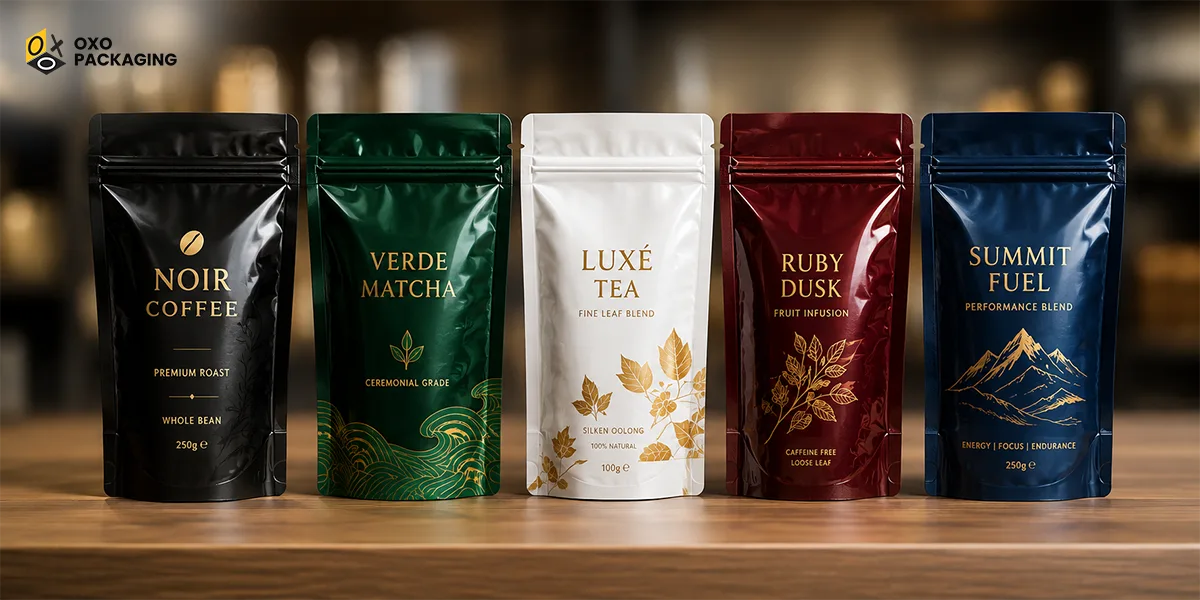
With flexibility to high-end custom finishes, striking structural designs like stand-up pouches, and tactile coatings, mylar bags immediately catch the consumer's eye. You can highlight specific brand elements with a raised, glossy shine to stand out in a competitive market.
Fulfil Evolving Regulatory Packaging Needs
Custom Mylar bags with pigment-based digital printing help brands like yours meet strict packaging regulations. This combination ensures safety, durability, and legal compliance across multiple industries.
Key Compliance Benefits
- Regulatory Alignment: Meets FDA, FSSAI, Health Canada, and regional standards.
- Consumer Safety: Incorporates child-resistant zippers and tamper-evident seals.
- High Legibility: Ensures sharp text for complex dosage and ingredient lists.
A Step-by-Step Guide on How to Print Custom Mylar Bags
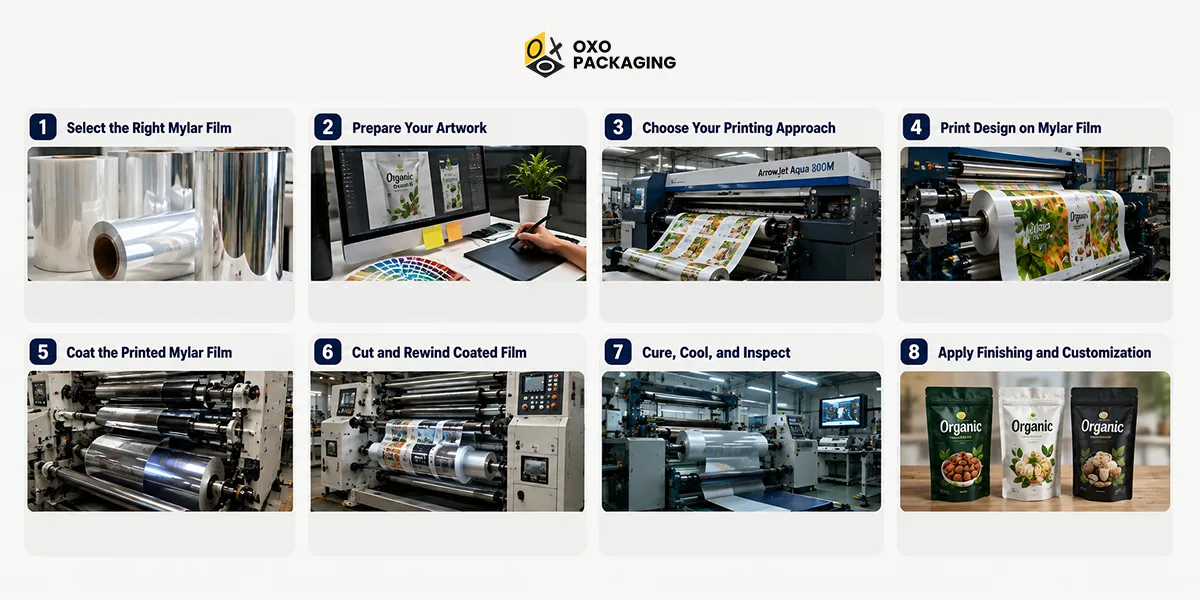
Let’s jump right into learning how to print custom mylar bags in 2026, especially if you're a business owner or packaging converter:
-
Select the Right Mylar Film
To choose the right Mylar substrate (BOPET polyester film), evaluate thickness, barrier type, and application requirements. Select based on clear, metallized, or coated options and 2 mil to 12 mil thicknesses. Here are some substrate types:
- Clear PET: Provides high tensile strength, clarity, and basic environmental stability when light block is unnecessary.
- Metallized (Aluminized) PET: Features an aluminum micro-layer for maximum oxygen, moisture, and UV light blocks required for food preservation.
- Coated PET: Features specialized layers for enhanced heat-sealing, chemical resistance, or specific adhesive bonding.
-
Prepare Your Artwork
After choosing a suitable substrate, ensure you set dimensions matching your specific bag template or dieline. Include adequate bleed areas and keep text away from seal zones. Save files in high resolution (300 DPI or vector format) to prevent blurring on smooth surfaces.
-
Choose Your Printing Approach
Modern digital presses like the ArrowJet Aqua 800M print directly onto flat Mylar (PET/MET-PET) webs before lamination. This setup requires pigment-based aqueous inks to ensure the final product holds up to industrial processing.
- Material Handling: Presses must precisely manage PET and MET-PET films.
- Output Quality: Systems require high resolution and exact color consistency.
- Ink Performance: Inks must offer strong adhesion and long-term durability.
- Process Compatibility: Inks cannot degrade during downstream lamination or heat sealing.
-
Print Design on Mylar Film
Print your graphics onto laser-safe clear or vinyl sticker paper, cut out the design, and smoothly apply it to the Mylar surface to avoid air bubbles. rotogravure, flexographic, or UV-curable digital printing systems configured with solvent or UV inks for permanent, high-volume production.
-
Coat the Printed Mylar Film
Remove dust, oils, or loose ink particles using an isopropyl alcohol wipe and a clean microfiber cloth. Untreated Mylar has very low adhesion; if the ink or coating beads up, the film may require a priming agent or prior corona treatment to grip the liquid layer.
Select a clear acrylic, polyurethane, or UV-curable liquid topcoat designed specifically for plastic or film substrates. Use a fine spray applicator, roller coater, or dip-coating method to lay down a thin, uniform, bubble-free layer over the printed side.
-
Cut and Rewind Coated Film
Because Mylar is a highly dense, non-fibrous plastic, choosing the correct cutting tool dictates your edge quality. Shear slitting is best for coated film, where two rotating circular knives act like scissors. This is the industry standard for coated polyester films because it delivers the cleanest cut and generates minimal dust.
Then, use a closed-loop tension system linked to a magnetic powder brake or servo motor. Unwind tension must remain constant to pull the web smoothly into the blades without inducing web wrinkles.
-
Cure, Cool, and Inspect
To process Mylar film correctly, you must follow a precise sequence of thermal conditioning and quality checks. First, cure the film by exposing it to a controlled heating cycle, typically between 150°C and 200°C, to cross-link any surface coatings or relieve manufacturing stresses.
Next, immediately cool the film using chilled rollers or an air-quench system to rapidly drop its temperature, which locks in the physical dimensions and prevents warping. Finally, inspect the finished roll under high-intensity lighting or automated optical sensors to scan for defects like pinholes, wrinkles, gauges, or uneven thickness before final slitting.
-
Apply Finishing and Customization
Choose a personalization method like heat transfer printing or custom labels. Print designs on transfer paper, align on the bag, and press at roughly 200°F for 10 seconds using a heat press. Let the bag cool completely before rolling off the transfer sheet. Then, adjust your surface finishes (matte or glossy).
Digital Printing and Mylar Bags: Future of Flexible Packaging
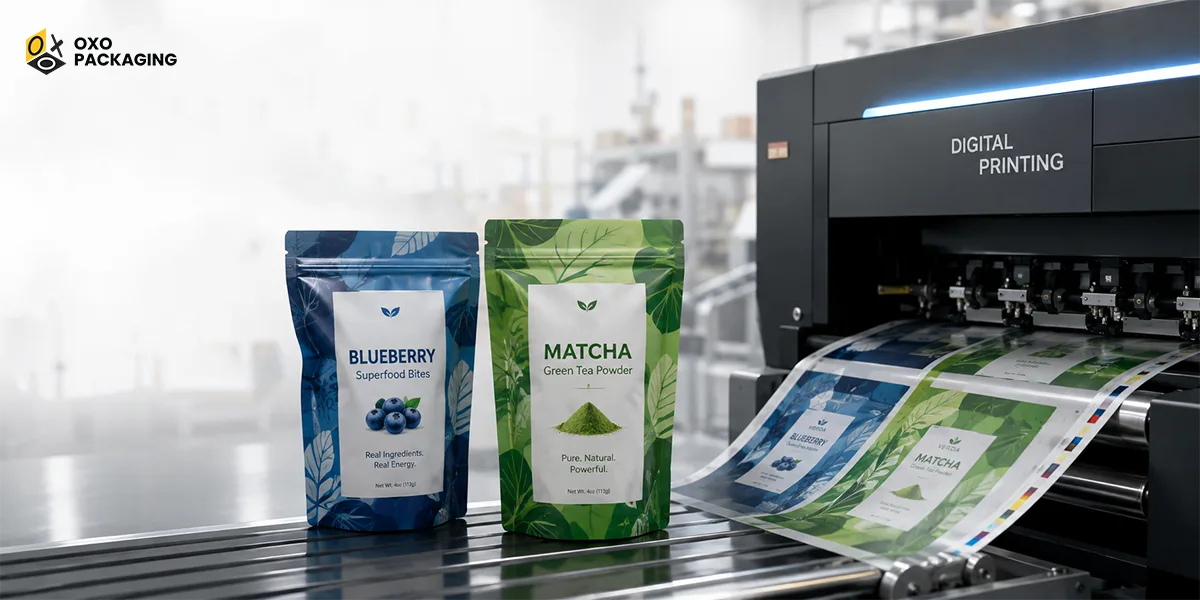
Digital printing and Mylar are the future of flexible packaging because they deliver unmatched customization, sustainable efficiency, and superior barrier protection. Together, they enable variable data printing, reduce plastic waste, and extend product freshness.
Why Choose OXO Packaging for Custom Printed Mylar Bags?
Looking for credible suppliers for custom Mylar bags wholesale? Look no further than OXO Packaging, which provides top-tier barrier protection, advanced printing flexibility, and bulk value.
Making custom printed Mylar bags involves designing your artwork, choosing a printing method like digital sticker application or direct heat transfer, and applying the design to the pouch.
Printing on Mylar bags requires specialized techniques like custom sticker labels, applying heat transfers, or utilizing commercial digital/flexographic printing for bulk quantities.
Yes, you can easily design your own Mylar bags by creating custom artwork or ordering personalized prints directly through manufacturers like OXO Packaging.
Yes, Mylar can be printed using rotogravure, flexography, and UV digital printing, or modified DIY approaches like low-heat transfer paper and custom sticker labels.






 Let's Call