


Explore Packaging Nutraceutical vs. Pharmaceutical Packaging
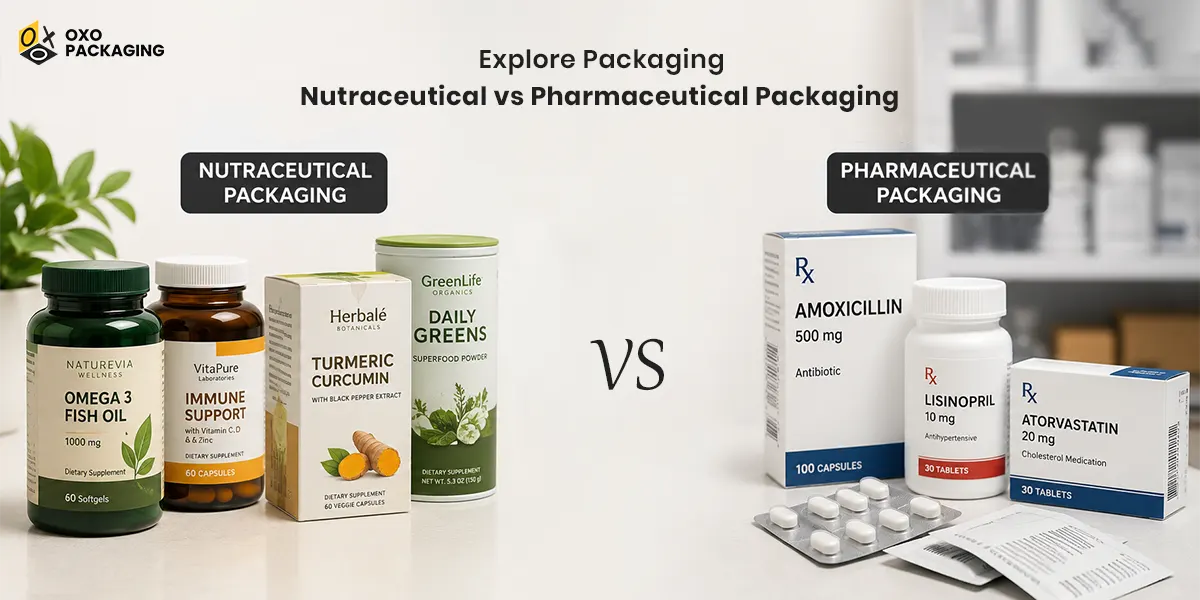
Pharmaceutical and nutraceutical packaging may look similar on a shelf or screen. But treating them similarly can lead to regulatory penalties or dissatisfied customers. When it comes to pharmaceuticals, your packaging must follow GMP regulations.
Though these regulations don’t apply to nutraceutical packaging. Following this, nutraceutical brands must adhere toFDA guidelines. If you ignore packaging for nutraceutical vs. pharmaceutical packaging, you may face major issues. It can result in regulatory shutdowns, seizures, devastating brand reputation, and crippling fines.
To avoid this, this blog highlights major differences that health businesses like yours should know. Read on!
Regulatory and Compliance Standards
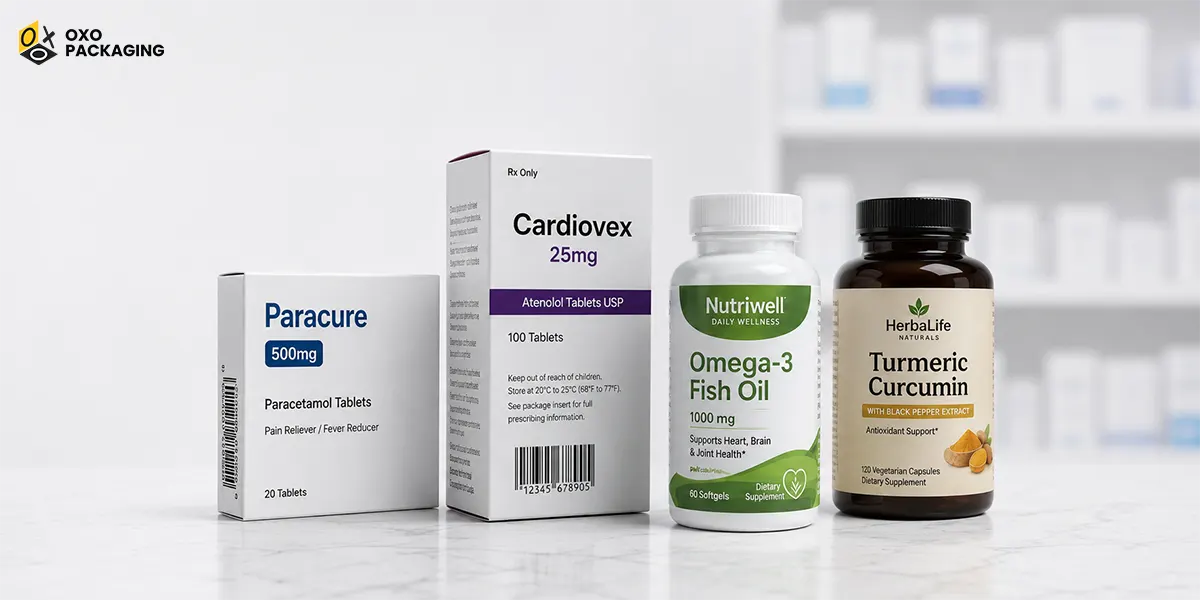
If you sell pharmaceutical products, e.g., tablets, capsules, syrups, and drops, your packaging lines must meet regulatory protocols. Since Good Manufacturing Practices (cGMP) strictly govern pharmaceutical packaging, you must ensure serialized tracking, child-resistant features, and specific safety validations.
For this purpose, you can include barcode placements on pharma boxes that use unique tracking systems to prevent counterfeiting. But you can’t treat nutraceutical packaging with this rigid lens because they fall in the category of dietary supplements.
Unlike pharmaceutical packaging, nutraceutical packages have greater regulatory flexibility in labeling. However, they must still comply with basic FDA dietary supplement rules. For example, you need to list specific ingredients, serving sizes, and usage directions on health boxes, pouches, or bags.
|
Features |
Pharmaceuticals |
Nutraceuticals |
|
Pre-Market Approval |
Container closure systems must undergo rigorous, mandatory pre-market approval |
FDA does not mandate pre-market approval for the packaging itself |
|
Safety Testing |
Must pass sterility and humidity integrity checks |
Must ensure their containers are “food grade” and free of chemicals of concern, such as utilizing BPA-Free Certification. |
|
Anti-Counterfeiting |
Every single unit must have a unique 2D barcode for real-time serialisation traceability. |
Serialization is not required. Brands may voluntarily implement tamper-evident seals and lot codes to prevent adulteration |
Market Trends and Consumer Behavior
The nutraceutical packaging market scales toward the multi-billion-dollar mark. Following this, pharmaceutical companies are mimicking the barrier properties of pharmaceutical packaging, e.g., rigid plastic packaging and tamper-evident designs, to protect product integrity and prevent oxidation.
Also, pharmaceutical packaging design focuses purely on patient safety, clinical clarity, and medical adherence. The priority here is functional unit-dosing like blister packs and legible instructions for patients.
But in the packaging of nutraceutical products, the target audience changes from patients to consumers. It means packaging acts as a primary marketing tool. Younger consumers purchase supplements as lifestyle items. Hence, supplement box design must immediately communicate wellness benefits, brand identity, and lifestyle appeal to stand out in a competitive retail market.
The noteworthy thing here is the consumer base values and clean labeling. They expect clear, minimalist designs that signal trust and make ingredients like "brainergy" blends and longevity supplements easy to understand.
Following this trend, use custom printing and vibrant color palettes with soft-touch finishes to make your supplement packaging a status symbol rather than just a health necessity.
|
Features |
Pharmaceuticals |
Nutraceuticals |
|
Primary Goal |
Deliver precise clinical data, prevent degradation, and strictly follow medical safety |
Attract consumers, convey lifestyle benefits, and ensure basic freshness |
|
Design Aesthetics |
High-end, vibrant, custom-printed, using matte and soft-touch finishes to differentiate from competitors |
Strict, highly standardized, minimalist, and utilitarian to denote medical authority and safety |
Labeling and Disclosure Guidelines
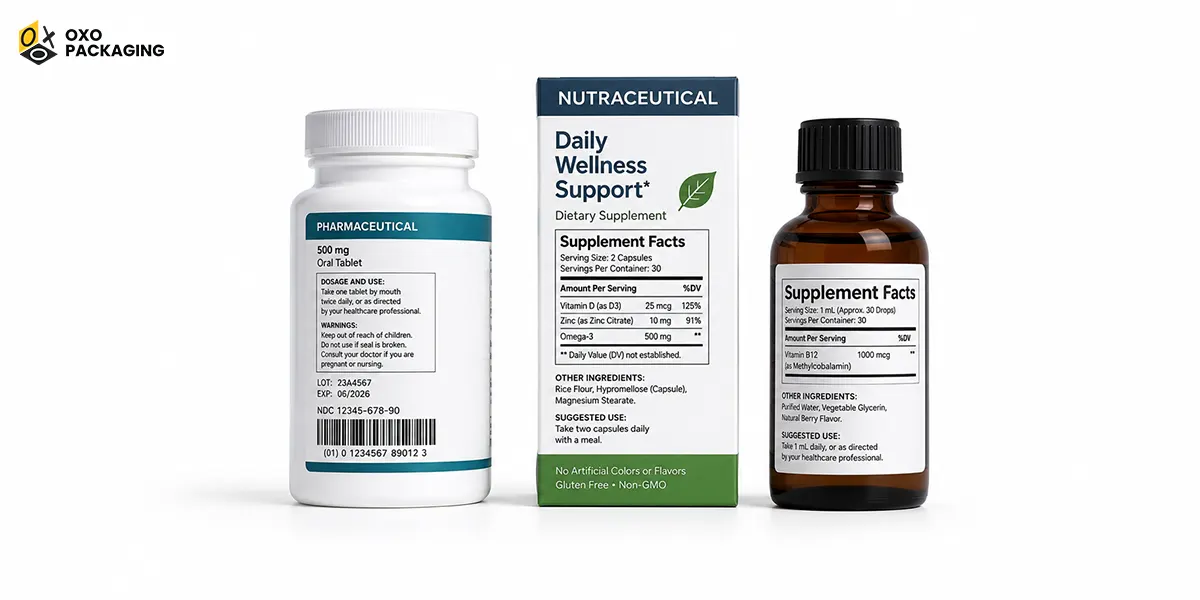
Pharma regulations dictate explicit, medically accurate dosage instructions, warnings, and contraindications. FDA mandates pharmaceutical companies and businesses to include comprehensive dosage instructions, ingredient lists, route of administration, and expiration dates.
The regulatory body also emphasizes informed use, fair balance of risks and benefits, and specific safety warnings to avoid patient harm or misuse. You must incorporate unique identifiers like NDC numbers and GS1 barcodes to let patients track products securely through the supply chain.
While nutraceutical packaging must not make disease-treatment claims, e.g., acting as a drug. Misbranding a supplement with drug-like claims or failing to include required pharma safety data can result in lawsuits and FDA or local health agency enforcement.
Since supplement packaging operates under less stringent rules, you have space for creative branding and marketing-focused design. Though less regulated, packaging labels need strict adherence to prevent unfounded claims and legally guarantee that the portrayed health and nutritional benefits are accurate.
|
Features |
Pharmaceuticals |
Nutraceuticals |
|
Primary Goal |
Direct disease treatment, prevention, or mitigation |
Promoting general well-being and supporting body functions |
|
Required Information |
Generic/brand names, active ingredients with exact amounts, pharmacological class, indications, contraindications, dosage, and adverse reactions |
"Supplement Facts" panel, ingredient lists (in descending order), net quantity, and manufacturer's address |
|
Claims and Approvals |
All indications and claims must be backed by clinical studies and pre-approved by regulatory agencies |
Claims relate to structure/function (e.g., "supports heart health"). Pre-market approval is not required, but claims must be truthful and non-misleading |
Material Choice and Design Options
Pharmaceutical packaging focuses heavily on the preservation and efficacy of life-saving drugs. So it demands sterile, highly inert barrier materials to protect potent drugs. Materials like Aclar, PVDC, and Alu-Alu (cold-formed aluminum) laminates are strictly validated to prevent leaching.
Primary packaging relies heavily on blister packs for moisture, oxygen, and contamination defense. Rubber closures for custom vials are rigorously tested for self-sealability, leachability, and sterility.
However, nutraceuticals also need moisture and UV-light protection for active ingredients like vitamins, this industry extensively utilizes lightweight, flexible packaging, e.g., resealable pouches and folding cartons, to minimize shipping costs and extend shelf life.
Apart from materials selection, tamper-evident features and Child-Resistant (CR) closures are regulatory requirements for pharma packaging to prevent accidental ingestion or tampering. However, nutraceutical design prioritizes the user experience, brand philosophy, and visual appeal on retail or e-commerce shelves. Its prime example includes easy-open mechanisms such as bottles with wide-mouth openings for easy filling and pouring.
Creative Marketing vs. Strict Rules
In pharmaceuticals, packaging design is entirely utilitarian, straightforward, and compliant. The goal is to provide essential dosage instructions and safety in transparent, standardized formats. But for the packaging of nutraceuticals, brands usually use specialized hot foil stamping, embossing, and other premium finishes to stand out in a crowded retail and direct-to-consumer (DTC) market.
Environmental and Sustainable Initiatives
Pharmaceutical companies are typically exempt from many broad consumer packaging waste regulations. This is because their priority is medical safety and material stability. But that’s not the case in nutraceuticals due to consumer expectations and regulations demanding sustainable solutions. For example, the EU's Packaging and Packaging Waste Regulation (PPWR) mandates nutraceutical brands to use recyclable structures and post-consumer recycled (PCR) plastics.
Though the FDA does not mandate specific environmental initiatives for nutraceuticals, you must choose materials from the FDA’s cleared substances database and comply with 21 CFR Parts 170-199. Also, manufacturers must prove that inks, dyes, coatings, and packaging materials do not migrate harmful substances into the dietary supplement under normal conditions.
Why is OXO Packaging the Ultimate Choice?
Now that you have explored packaging nutraceutical vs. pharmaceutical packaging in detail, you must partner with a credible packaging supplier. OXO Packaging is a one-stop solution for you because we deliver FDA-compliant, hygienic, and tamper-resistant solutions that ensure patient safety.
The primary ISO standard for pharmaceutical packaging is ISO 15378. It sets the quality management system requirements for manufacturers of primary packaging materials, e.g., glass, plastic, rubber, and aluminium that come into direct contact with medicinal products.
In pharmaceuticals, packaging is the comprehensive system designed to contain, protect, and identify the drug product. However, packing is the physical operational process of grouping, wrapping, and securing those products for safe transportation and storage.
Pharmaceutical packaging is categorized into three levels: Primary, Secondary, and Tertiary, based on its proximity to the medication. It utilizes materials like glass, plastic, and metal to protect drugs from contamination, light, and moisture.
FDA requirements mandate that all container closure systems protect the drug from environmental factors, prevent contamination, and remain non-reactive with the active ingredients.







 Let's Call