


The Ultimate Guide to Soap Labeling Requirements
Product creation is not for doing legally recognized business. It needs some legal packaging, labeling, and licensing requirements. Promote your brand identity, create a strong presentation, and boost your brand sales by meeting the label requirements and regulations of the concerned department for your soap brand.
Learn in detail how and when you need to ensure compliance for your soap business.
Significance of Soap Labels
No doubt, beautifully crafted soap of your brand might attract a wider range of your prospects, customers, and consumers. But what the legal requirements to promote your brand and products is an integral part of marketing your soap business.
Otherwise, you might violate federal regulations unknowingly, lose your customers' trust, and face fines, product seizures, or rebranding. This guide will help you understand the soap and cosmetic labeling laws, breaking down what exactly you need to put on your packaging to safely package, promote, and market your soap product with 100% compliance.
Before you leap to the in-depth understanding of the labeling requirements, you must understand the difference between “soap,” “cosmetics,” and drugs, which forms the foundation of all labeling rules:
Deciding Your Category: Is Your Product Legally a Soap, Cosmetic, or Drug?
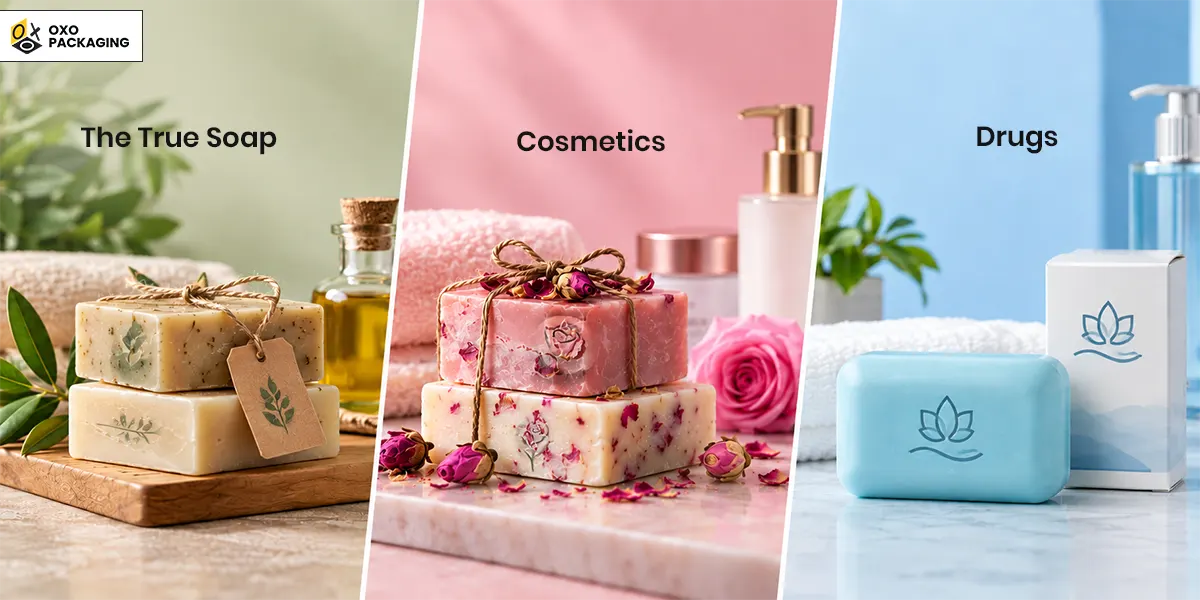
The nature of your soap entirely depends on ingredients, marketing claims, and how it cleans. Soap can be categorized in the US as a true soap, cosmetic, or drug. Let’s explore how they differ from one another:
-
The True Soap
True soap is regulated by the Consumer Product Safety Commission (CPS) rather than the Food and Drug Administration (FDA). It must be made primarily of fats, oils, or alkali, and marketed only for cleaning agents, not otherwise.
-
Cosmetics
Cosmetics, on the other hand, are regulated by the Food and Drug Administration (FDA). If you claim it “moisturizes,” “exfoliates,” or uses synthetic detergent, or showcase it as cleansing, beautifying, or promoting attractiveness, you must consider it under the FDA regulations.
-
Drugs
Like cosmetic items, FDA soap regulations apply to your soap items if you claim it cures acne, "treats eczema,” or “kills germs.”, and so on. In simple words, marketing claims for your soap products dictate which laws you must follow for your soap business.
Essential Requirements: The Anatomy of a Compliant Label
The core anatomy of general and consumer labels includes the product name or identifier, manufacturer or supplier information, net quantity, and traceability markers for your products. And talking about the industry-specific labeling requirements includes FDA guidelines for food and beverages, standard pictograms for chemicals, and FDA UDI rules for medical devices.
-
Front of Package Labeling: The Principal Display Panel (PDP)
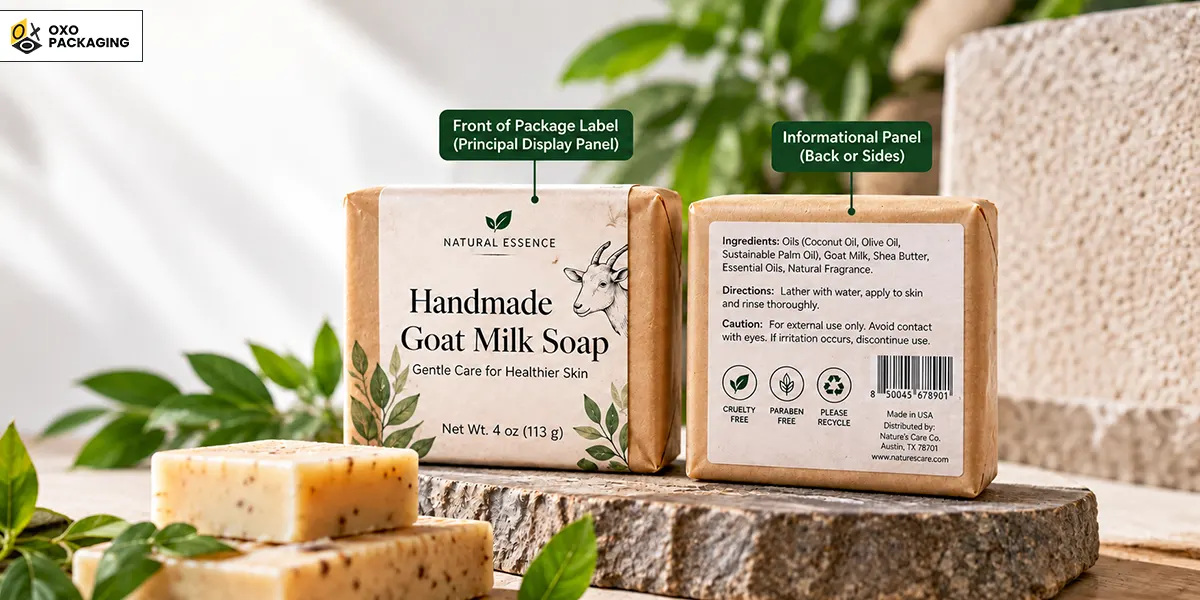
A soap bar label on the front of the package is important to know exactly what the product is, e.g., “handmade goat milk soap” or “body cleansing bar”. The second important thing to learn is the quantity of the contents used to produce the soap products, which must be listed in both the US customary (ounces/pounds) and metric (grams) systems. Place this information in the bottom third of the front panel for easy identification.
-
The Informational Panel – The Back or Sides
The information panel on the back or sides of the packaging of the soap products must include different important and useful information for the prospects, customers, and consumers. This information includes:
-
Name and Place of Business
The legal name and physical address of the company are an integral part of the packaging. The address information includes street, city, state, or ZIP. The street address can be omitted sometimes if your business is listed in a public directory.
-
Ingredient Declaration (crucial for cosmetics/Melt and Pour)
Other important information that must be placed on the packaging of your soap items includes a soap ingredients label. This must be printed in descending order of predominance (highest percentage to lowest). Use common English names, or standard International Nomenclature Cosmetic Ingredients (INCI) names consistently. Also mention how to handle “true soap” ingredients, like saponified oils, and standard ingredients like oils and lye.
-
Directions for Safe Use and Warnings (if applicable)
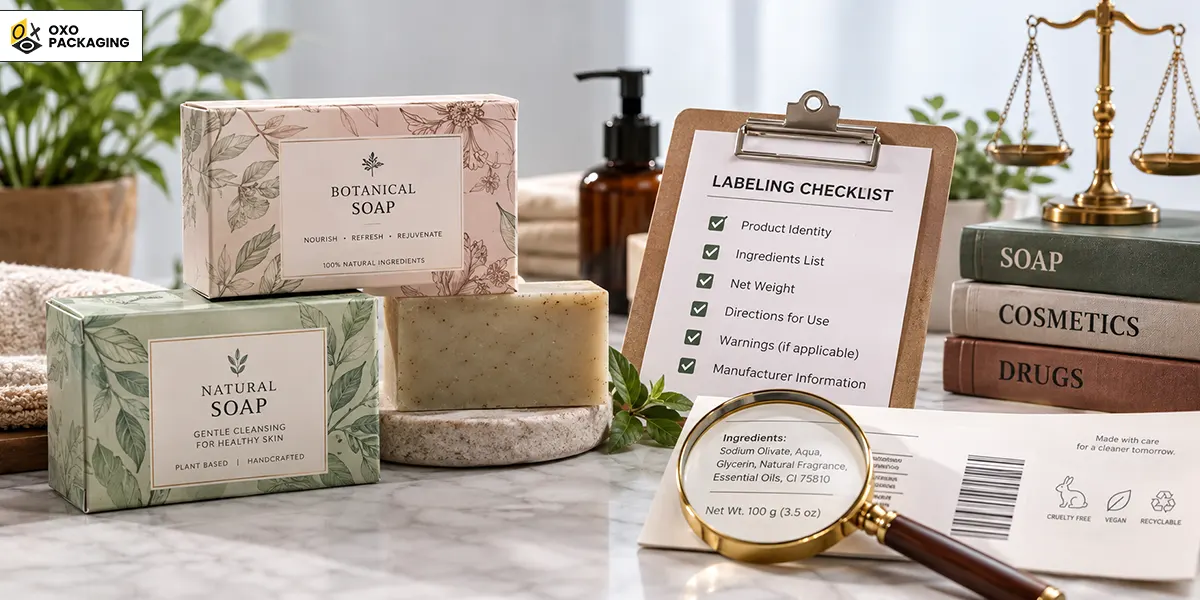
The instructions must be placed on your custom soap packaging in a clear way to meet the specific care of the products, like “keep out of eyes,” or allergy warnings for the products, etc. However, we can summarize the compliance requirements for different soap items that fall under different heads, like true soap, cosmetic soap, and drug soap:
Table: The Compliance Matrix: When Are They Required?
|
Product Classification |
Regulating Body |
Are Directions Required? |
Are Warnings Required? |
Ingredient List |
|
True Soap (Cleanses only; made of fats & lye) |
CPSC/FPLA |
No (Unless a hazardous substance under FHSA) |
No (Except for severe risk or children's formulas) |
Optional: Recommended for consumer trust |
|
Cosmetic Soap (Claims to moisturize, exfoliate, or uses synthetic detergents) |
FDA |
Yes (If a consumer could misuse it or use it unsafely) |
Yes (If a potential health hazard or allergy risk exists) |
Mandatory: Recommended by the INCI names in descending orders |
|
Drug Soap (Claims to treat acne, kill germs, or cure eczema) |
FDA |
Mandatory (Strict Drug Facts panel required) |
Mandatory (Strict Drug Facts panel required) |
Mandatory: Split into “Active” and “Inactive” ingredients |
Best Practices for Professional Label Design and Layout
Professional label design must be diligently designed, produced, and placed on the soap packaging with the efficient use of legible font and size as directed by the federal guidelines. It says that the minimum font sizes for net weight and warnings are commonly at least 1/a6 of an inch based on package size.
Choose waterproof or oil-resistant materials to produce quality labels to ensure compliance details don’t smudge or rub off during use. Some important information that you should include: batch codes and expiration dates to ensure traceability for the best professional practices of quality control and recalls.
Common Labelling Mistakes to Avoid
Though you are more concerned with what to do to create highly professional soap labels for homemade soap and commonly used soaps, fulfilling the compliance requirements, you should also avoid some risky mistakes that include the following:
- Mistake 1: Don’t make medical claims on cosmetic labels (e.g., calling a lavender soap an “anxiety cure”);
- Mistake 2: Avoid hiding or omitting the physical business address from your packaging labels;
- Mistake 3: Be aware of incorrectly formatting weight (forgetting metric conversions);
- Mistake 4: Avoid mislabeling “Melt and Pour” bases as “100% natural, traditional soap” when they contain synthetic surfactants.
Key Takeaways and Action Plan
To ideally showcase your soap product, convincingly market your soap brand, and avoid legal fines and penalties, clean compliance can help you to a great extent. It can considerably boost your brand’s professionalism. View labeling as the final stamp of professional craftsmanship for your soap business.
Labeling requirements for soap totally depend on the classification of the soap product. True soaps are regulated by the Consumer Product Safety Commission (CPSC); cosmetics and drugs are regulated by the Food and Drug Administration (FDA). Product identity, net weight, and business name and address are a must to display on true soaps. Ingredient declaration is necessary for cosmetic or drug soaps.
No. Under the Food and Drug Administration (FDA), you don’t need to get a license or special approval for your homemade soap. However, other states might require a general business permit or a sales tax license depending on the local and state laws for soap businesses.
OXO Packaging is a great choice for your customized business packaging for your soap products. You can share your custom packaging needs and brand guidelines, and ask for some specialized customization options to distinguish your brand in the highly competitive market environment.






 Let's Call