


The Importance of UV Coating in Printing and Its Drawbacks
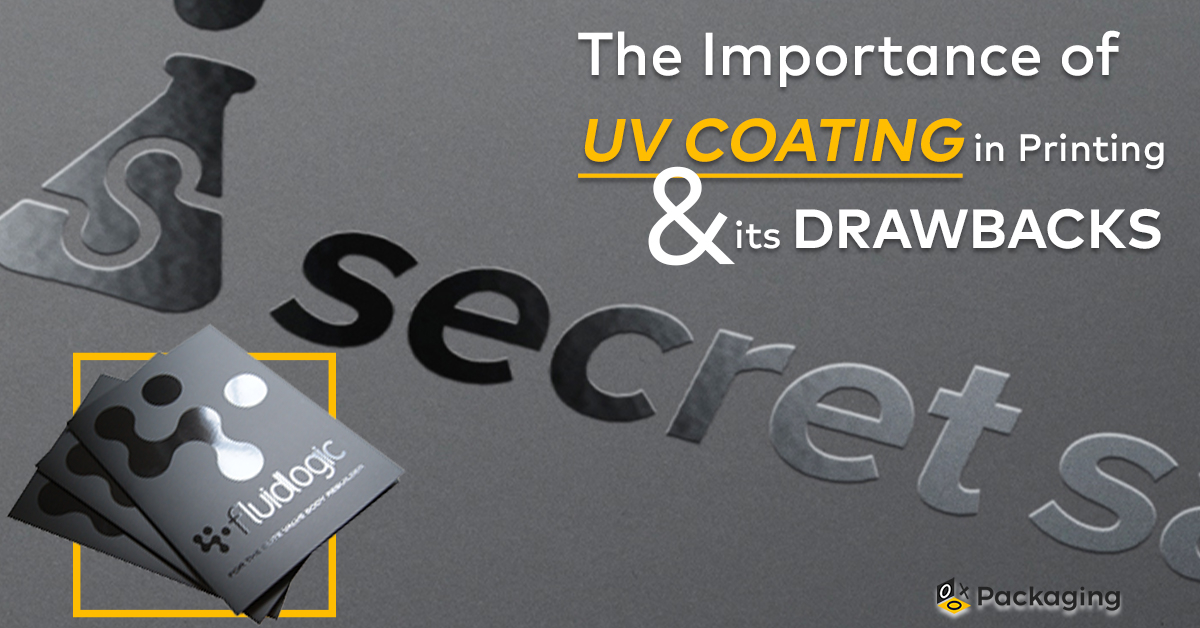
A UV-coating is a transparent liquid film applied on the surface of a packaging material using Ultraviolet light. UV coating is different from lamination. Even though it provides a more excellent gloss-like texture to the packaging surface, it is still different from gloss or matte lamination. These lamination types contain a plastic film coated on the packaging surfaces, and this plastic film then gives off the shine and velvet-like texture to the surface. However, the UV coating is different from lamination as it mainly gives a gloss-like texture and relies on ultraviolet light for its proper processing.
UV Coating Types and Their Packaging Uses
Different types of UV coating allow brands like yours to achieve specific visual and tactile effects on their packaging. Have a look at them:
|
UV Coating Type |
Appearance and Reflection |
Packaging Uses |
|
High-Gloss UV |
Delivers a highly reflective, shiny finish that makes colors pop and provides excellent protection. |
Used on retail and folding cartons for items like food or electronics. It keeps the packaging clean, water-resistant, and eye-catching on store shelves. |
|
Matte UV |
Creates a smooth, non-reflective finish that projects elegance and luxury, often used for high-end items. |
Often used on artisanal chocolate boxes or specialty coffee packaging, the matte finish gives a natural, organic look without sacrificing durability. |
|
Spot UV |
Applied only to specific design elements (like a logo or text). It highlights key details by creating a striking contrast against the surrounding matte or uncoated paper. |
Used on presentation folders, product catalogs, and business cards to draw immediate attention to brand logos or important text elements |
|
Raised UV (3D/Embossed) |
A thicker formulation that adds a tangible, dimensional texture. It mimics an embossing effect to make specific graphics stand out. |
Commonly used on premium items like perfume boxes, cosmetic packaging, liquor boxes, and limited-edition gift sets to signal high quality. |
|
Soft-Touch UV |
Produces a velvety, suede-like texture. It adds a tactile experience that feels highly premium in the consumer's hands. |
High-end brands use Soft-Touch UV on luxury boxes such as rigid set-up boxes for cosmetics, jewelry, or tech to elevate brand perception and create a memorable unboxing experience. |
|
Pearlescent UV |
Adds a lustrous, iridescent glow to the packaging surface. |
Commonly used for beauty packaging like perfume boxes and cream jars to convey luxury, radiance, and luminosity. |
|
Orange Peel UV |
Creates a textured, slightly bumpy surface that adds unique grip and visual depth. |
Applied to premium packaging such as cosmetics boxes, high-end spirits, and specialty retail goods to add a sophisticated, tactile dimension. |
Different Between UV Coating and Lamination
Both the lamination and UV coating are commonly applied on the surface of the packaging material. The Custom Jewelry Boxes and rigid boxes for necklaces have the utmost finishing of lamination. On the other hand, UV coating is applied on the surfaces of printed papers, business cards, and presentation folders, which magnifies the paper's shine. This coating hardens the paper's surface; therefore, it also protects the surface from unwanted harm, which I will discuss later.
The durability of lamination is much higher than the UV coating. For the packaging of products that require long-term handlings, such as book items and packaging surfaces, lamination is much more durable and demanding. On the other hand, UV Coating also provides several benefits in terms of protection but at moderate levels. Moreover, it is cost-effective and is perfect for the liquid coating of brochures, business cards, and packaging products.
Benefits of UV Coating
Compared with varnish and aqueous coating, the UV coating has several key benefits. These benefits are as follows.
- UV coating is Solvent Free. The coating does not emit any concentration of volatile organic compounds and is therefore pollution-free.
- All the paper, cardboard, and Kraft types that contain UV coating are Eco-friendly. This coating does not contain any inks, solute, or solvents and is therefore environmentally friendly.
- For Logos and details Offset Printing, UV coating is the perfect option. This is because UV printing makes the information on the packaging surface stand out. UV coating also magnifies the tiny details and pops them out. Therefore, UV coating is the proper companion if someone is interested in logo branding on custom packaging.
- UV coating, when applied on deep, rich shades like blues and blacks, the ultimate texture of the surface is wet-like. This may be successful with image-heavy projects like product catalogs or photography brochures.
- It is also famous for specific designs and items because of the Dazzling Sheen and Luxurious Shine it produces.
- A UV coating in itself is an Indication of high-end goods and services. You're a high-end brand if you apply UV coating on the products because it influences customers.
- When you print superior marketing materials with UV coating, it gives the idea that your business is booming – and if it is, you most likely have a long list of delighted customers. Therefore, people will be more willing to conduct business with you.
Limitations of UV Coating
- The curling of thin pieces of paper is a real issue when UV coating is applied to it. Even though it dries within a few minutes, the aesthetic elements of the packaging surface are still compromised.
- Since UV coating provides a shine, glossy, and smooth tone to the surface, there are fewer options for printing information and text on such a surface.
- Sometimes, the UV coating cracks when the paper is folded extensively. The UV rays are well known for their potential cracking defects.
- Writing through ink on UV-coated surfaces is highly difficult. Similarly, rubber stamping is also impossible on such surfaces, yet you can foil stamp first and coat UV later.
Compare the Pros and Cons of UV Coating
Weigh the advantages and disadvantages of UV coatings to find if UV coating is the right finish for your needs:
|
Feature |
Pros |
Cons |
|
Appearance |
Provides a sharp, bold, mirror-like gloss or luxurious matte finish |
Matte UV can easily show fingerprints |
|
Quality |
Excellent for making specific elements pop (Spot UV) |
May cause white surfaces to yellow over time |
|
Durability |
Excellent protection against abrasion, fingerprints, and moisture |
Cured coatings become rigid, which can lead to cracking if folded extensively |
|
Production Speed |
Hardens in seconds under UV lamps, removing long drying times |
Hard to write on with standard pens or a rubber stamp over |
|
Cost |
Contains almost zero solvents and emits no volatile organic compounds (VOCs) |
Requires specialized equipment and inks |
|
Environmental Impact |
No heat ovens are required for drying |
Certain UV-cured materials (like thick film coatings) can complicate paper recycling |
Common UV Coating Problems and How to Fix Them
As you have explored the importance of UV coating in printing and its drawbacks, here are some useful tips to solve problems you can come across:
1. Tacky or Soft Surface (Incomplete Curing)
The UV coating remains sticky or rubbery even after passing through the curing unit. It usually happens due to "oxygen inhibition," where ambient oxygen disrupts the cross-linking process. It can also be due to aging UV lamps, too-fast press speeds, or a coating layer that is too thick for the light to penetrate.
How to Fix?
- Increase UV irradiance by adjusting the lamp power or moving the lamp closer to the substrate.
- Slow down the conveyor belt/press speed to increase the UV exposure time.
- Reduce the coating thickness.
- Ensure lamps and reflectors are clean and that you replace aged lamps according to the manufacturer's suggested schedule.
2. Poor Adhesion (Peeling or Flaking)
The cured coating flakes off, fails the tape test, or delaminates from the substrate. Low surface energy on plastics or films, ink contamination, or inadequate curing cause this poor adhesion.
How to Fix?
- For plastic and non-porous substrates, apply a primer or use a Corona pre-treatment to increase surface energy.
- Confirm that your inks and coatings are compatible and that the underlying layers are completely dry before applying the UV coat.
- Ensure your UV light provides the correct wavelength and dosage.
3. Bubbling or Foaming
Tiny micro-foams or visible bubbles remain trapped in the cured coating. High coating viscosity, excessive agitation in the ink pan/fountain, or air trapped in the delivery pipes are the main reasons behind bubbling.
How to Fix?
- Add a defoamer or a suitable UV reducer to lower the viscosity and improve flow.
- Reduce the speed of the coating pump to minimize agitation.
- Ensure the coating system is clean and free of contaminants
Is UV Coating Eco-Friendly?
Unlike traditional coatings, UV coatings do not release solvent vapors or VOCs into the atmosphere, improving air quality. Because they cure instantly with light rather than heat, they consume less energy and allow for faster production times.
Keep in mind, UV-coated materials can be harder to recycle, and the products themselves are not biodegradable. They often rely on petroleum-based ingredients rather than sustainable alternatives.
How UV Coating Enhances Process Efficiency?
UV coatings contain photoinitiators that, when exposed to UV light, instantly polymerize the coating from a liquid to a solid. UV conveyor lines can operate at speeds up to 600–800 feet per minute, whereas conventional, solvent-based paint lines often run at only 5–10 feet per minute. Because the coating is cured instantly, products can be stacked, packed, or moved to the next production stage immediately, eliminating downtime.
6 Major Industries Using UV Coating
UV coatings are highly valued across manufacturing for their fast cure times, durability, and eco-friendliness. That’s why the following industries leverage these coatings to enhance the appeal of their product packaging:
- Printing and Packaging: Enhances the visual appeal of brochures, business cards, and product packaging, like cosmetics and food boxes, with glossy or matte finishes while protecting against scratches and fingerprints.
- Automotive Industry: Protects exterior and interior components such as dashboards, trims, and headlights from UV degradation, weather elements, and daily wear.
- Wood and Furniture: Applies hard, durable, and chemically resistant finishes to cabinets, hardwood flooring, and furniture, ensuring they remain scratch-free.
- Electronics and Consumer Devices: Acts as a protective, insulating layer on mobile phone casings, appliance control panels, screens, and printed circuit boards.
- Medical Device Manufacturing: Provides bio-compatible, chemical-resistant, and sterilizable coatings for various medical tools, implants, and equipment.
- Industrial Manufacturing: Used to coat architectural glass, structural steel, such as solar torque tubes, and pipes to prevent corrosion and rust.
UV Coating Applications by Industry
By instantly hardening when exposed to UV light, this coating provides superior scratch resistance, high gloss finishes, and durability across manufacturing. Its key industry applications include:
- Automotive: Used for anti-fog, glare-reduction, and scratch-resistant finishes on headlight lenses, touch screens, and instrument panels.
- Electronics: Applied as conformal coatings on circuit boards and as adhesives to bond micro-components in smartphones and tablets.
- Wood and Furniture: Delivers rapid-curing, high-quality finishes on flooring and wooden furniture without warping the material.
- Packaging and Graphic Arts: Enhances the visual appeal and durability of promotional packaging, luxury items, and book covers.
- Medical Devices: Provides antimicrobial and protective layers for catheters and syringes while allowing for clean, precise manufacturing.
Learn More about UV coating
Requesting a packaging product online or learning about it from the internet does not remove the blurry line that constitutes a decision. Here at OXO Packaging, we provide free design consultation services for you where we answer all your questions thoroughly. Besides UV printing, we also use various printing technologies, lamination types, and embossing. Feel free to contact me and clear your confusion regarding these printing methods. Our customer support team and printing jargon will be there for you.
Common types include Gloss, Matte, Soft-Touch, Raised (3D), Pearlescent, Orange Peel, and specialized coatings like Glitter or Scented, applied via flood or spot techniques. All these types are clear, instantly dried liquids applied to printed materials to enhance durability and appearance.
The UV coating process is a print finishing method where a liquid, resin-based formula is applied to a substrate (usually paper or packaging) and instantly dried and hardened using ultraviolet light. This process creates a glossy, matte, or textured protective layer that enhances durability and visual appeal.
UV coating is ideal for enhancing the color and providing a high-gloss finish to paper-based materials like postcards, brochures, and packaging, particularly 80 lb. or greater, coated paper. UV coating is frequently chosen for plastics because it is a "cold" process that cures instantly with light, avoiding the heat deformation risks associated with other coating methods.
UV coating is a liquid, chemical finish cured with ultraviolet light for a high-gloss, cost-effective shine. Lamination bonds a plastic film to paper while offering superior durability, tear resistance, and protection against moisture.






 Let's Call