


Explore Everything About Biodegradable Packaging in Detail
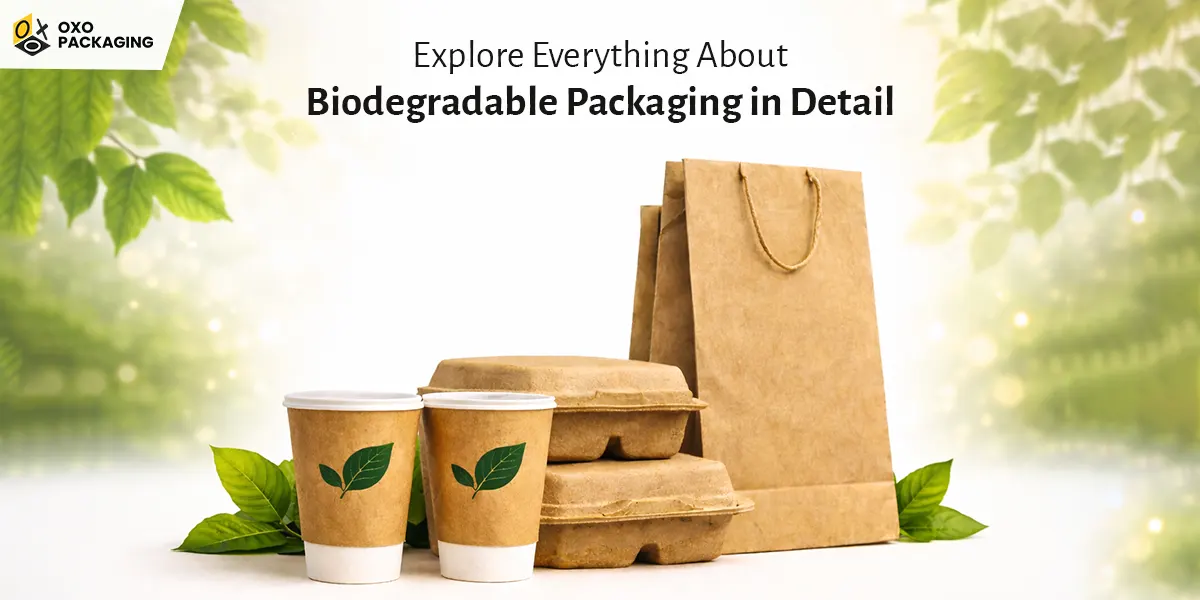
Modern packaging extends beyond protecting your products. It has evolved to protect your planet, too. As environmental concerns grow louder, businesses and consumers alike are questioning the long-term impact of traditional packaging materials.
That's where biodegradable packaging comes into play. Let's learn about biodegradable packaging in detail here. This blog helps you to elevate your business by leveraging biodegradable packaging.
Why Choosing Biodegradable Packaging Matters?
Before exploring what biodegradable packaging is, first understand its importance. No-brainer, plastic waste is choking oceans, overflowing landfills, and harmful emissions have made one thing clear: packaging choices matter. This is where biodegradable packaging plays a significant role. Because it offers a smarter, cleaner, and more responsible alternative to conventional packaging materials without sacrificing performance or presentation.
What is Biodegradable Packaging?
Biodegradable packaging refers to materials that naturally break down into non-toxic components like water, carbon dioxide, and biomass when exposed to environmental conditions such as moisture, heat, oxygen, and microorganisms.
Unlike traditional plastic, which can take hundreds of years to decompose, biodegradable materials are designed to return safely to nature within a much shorter timeframe, often months or a few years.
However, not all eco-friendly packaging is biodegradable. Some materials may be recyclable or compostable, but still not fully biodegradable. Understanding this distinction is essential when making sustainable packaging decisions.
How to Know Your Packaging is Biodegradable?
Not all packaging that looks eco-friendly truly is. To ensure your packaging is genuinely biodegradable, here’s what to look for:
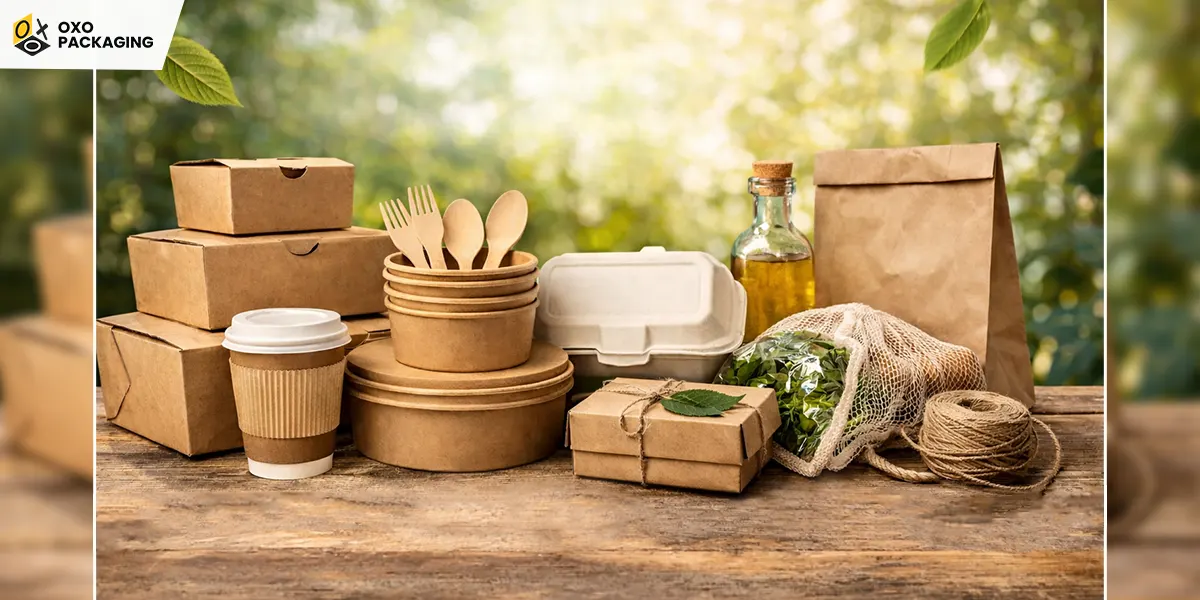
- 1. Material Transparency: Reputable manufacturers clearly mention the materials used, such as kraft paper, corrugated cardboard, PLA, or starch-based polymers.
- Certifications and Standards: Look for certifications like compostability standards or compliance with international biodegradation benchmarks.
- Decomposition Timeframe: True biodegradable materials decompose naturally within a reasonable time under appropriate conditions without leaving harmful residues behind.
- Manufacturer Claims vs Reality: Avoid vague terms like “eco-safe” or “green.” Instead, check if the packaging specifies how and where it biodegrades (soil, compost, industrial facilities, etc).
What are Biodegradable Packaging Materials?
Biodegradable packaging comes in various forms, each suited for different applications. Let’s break down the most common options.
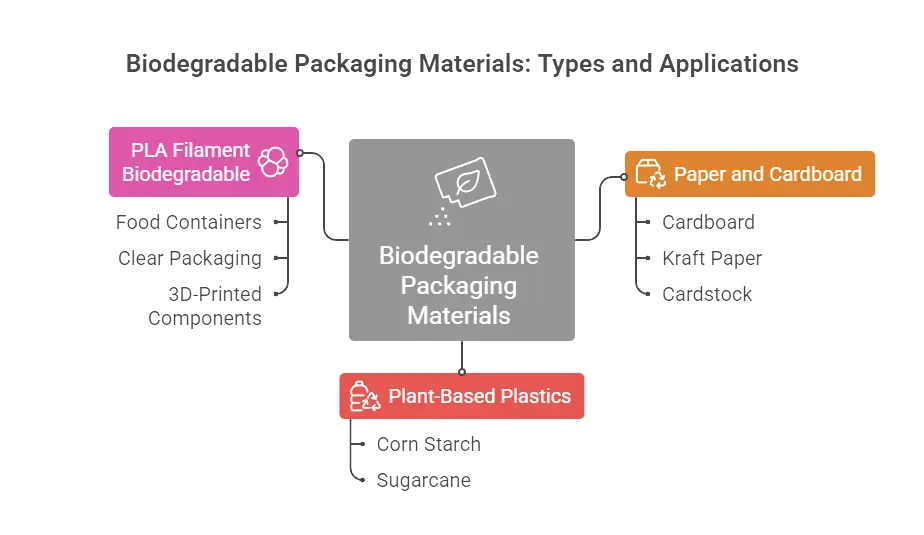
- Paper and Cardboard: Made from renewable wood pulp, paper-based packaging is one of the most accessible biodegradable materials, including cardboard, kraft paper, and cardstock. It decomposes easily and can also be recycled multiple times.
- Plant-Based Plastics: These materials are derived from renewable resources like corn starch or sugarcane instead of petroleum. Not all plant-based plastics are compostable in home composts; many require industrial, high-temperature, high-moisture composting conditions.
- PLA Filament Biodegradable: PLA stands for Polylactic Acid. It is a popular biodegradable plastic made from fermented plant starch, usually corn. It is widely used in food containers, clear packaging, and 3D-printed packaging components.
Tidbit: PLA looks and feels like traditional plastic but has a much lower environmental impact when disposed of properly.
What is Fossil-Based Polymer?
Now that you have explored major biodegradable materials, also explore one of the most popular non-biodegradable materials, fossil-based polymers. These polymers are traditional plastics derived from petroleum and natural gas.
They can persist in the environment for centuries. Their examples include Polyethylene (PE), Polypropylene (PP), and Polystyrene (PS). While durable and cheap, fossil-based polymers are a major contributor to pollution. That’s why many brands are actively replacing them with biodegradable or plant-based alternatives.
Consider Multiple Types of Biodegradable Packaging
Whether you want to manufacture biodegradable shipping boxes or biodegradable pouches, no single biodegradable material fits every product. Smart brands assess packaging needs based on:
- Product weight and fragility
- Shelf life and moisture sensitivity
- Storage and transportation conditions
- End-of-life disposal options
For example, cardboard boxes work best for shipping, PLA is ideal for transparent packaging, and molded pulp suits protective inserts. With different biodegradable materials, your business can achieve both functionality and sustainability without compromise. Here are common and uncommon types of biodegradable packaging you can choose from:
-
Hemp
Hemp packaging is a sustainable, durable, and biodegradable material made from the stalks (fibers and hurd) of the industrial hemp plant. It offers an eco-friendly alternative to plastic, paper, and styrofoam. It is commonly used for boxes, containers, and protective packaging in the cosmetics, CBD, and food industries due to its strength, natural moisture resistance, and compostability.
-
Cellulose
Cellulose packaging materials are bio-based, biodegradable, and renewable alternatives to plastic, derived from plant fibers like wood pulp, bamboo, or hemp. Commonly used in food packaging, they include transparent cellophane, cellulose acetate, and paperboard, which are often coated to provide moisture, air, and grease resistance. These sustainable materials are compostable and offer a durable, lightweight, eco-friendly solution to reduce petroleum-based waste.
-
Seaweed
Seaweed packaging is a sustainable, biodegradable, and often edible alternative to plastic, derived from farmed marine algae like red and brown seaweed. It is highly versatile, used for films, sachets, and coatings that are compostable within weeks, making it ideal for single-use items, food wrappers, and protective packaging.
-
Molded Pulp
Molded pulp is a sustainable, eco-friendly packaging material made from recycled paperboard, newsprint, or natural fibers (bagasse, bamboo) blended with water to form a slurry. It is a versatile, biodegradable, and recyclable alternative to plastics (EPS, PVC), used for protective, shock-absorbing packaging, egg cartons, and food containers.
Want Biodegradable Packaging? OXO Packaging Has Your Back!
If you’re looking to switch to biodegradable packaging without sacrificing quality or branding, OXO Packaging offers customized solutions tailored to your product and sustainability goals. From biodegradable shipping boxes to eco-friendly custom packaging, our focus is on responsible material sourcing, functional durability, brand-ready customization, and sustainable packaging strategies.
Materials like paper, cardboard, untreated wood, bamboo, and certain plant-based polymers are considered fully biodegradable when disposed of in the right conditions. However, additives and coatings can affect biodegradability, so material composition matters.
You should dispose of biodegradable bags according to the manufacturer’s guidelines. Some break down best in industrial composting facilities, while others can decompose in soil or home compost systems. Always avoid mixing them with regular plastic waste
PLA (Polylactic Acid) is one of the most planet-friendly biodegradable plastics available today. It’s derived from renewable resources, emits fewer greenhouse gases during production, and decomposes faster than traditional plastics under proper conditions.
Traditional plastic can take 100 to 500 years or longer to degrade. In contrast, biodegradable plastics like PLA may decompose within a few months to a few years, depending on environmental conditions and disposal methods.







 Let's Call