


What is GSM? Paper Weight, Fabric Weight and Custom Printing Explained
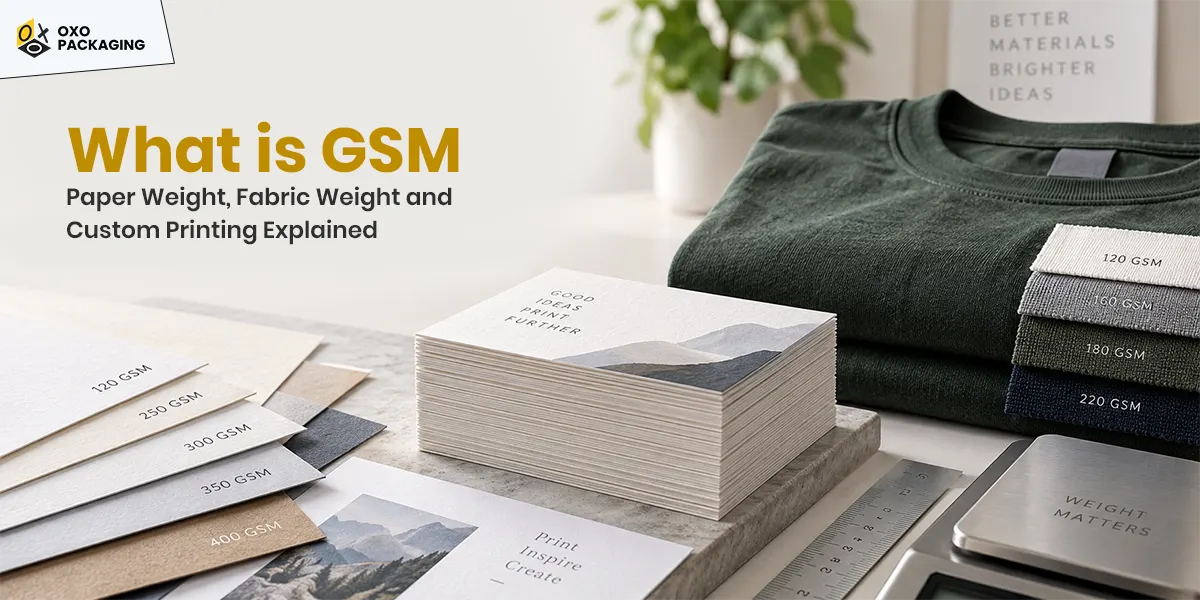
Have you ever held a business card that felt flimsy? Or worn a brand-new T-shirt that felt see-through after one wash? It instantly feels cheap. Texture and weight are everything in the world of custom printing.
And GSM dictates all of them. These three letters are the secret language of paper weight and fabric weight. For businesses, mastering this simple metric is a total game-changer. It allows you to confidently choose materials that feel premium to your customers while saving your budget from costly manufacturing mistakes. Let's learn how:
What is GSM?
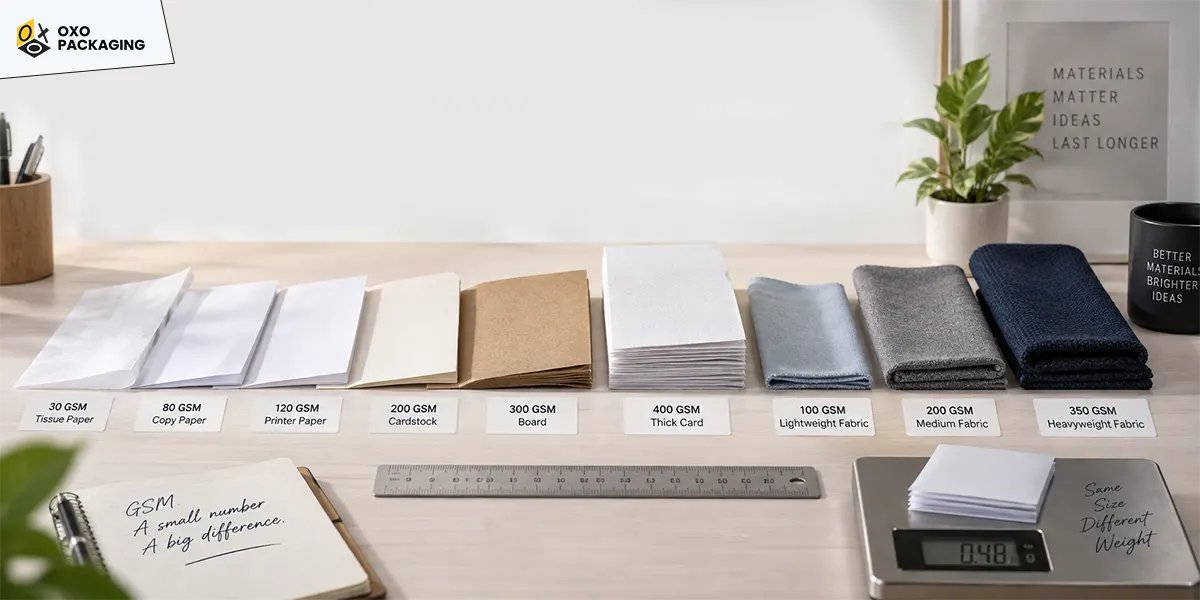
GSM stands for Grams per Square Meter. It is the metric unit that tells you how much one square meter of a material weighs in grams. GSM tells you how much one square meter of a material weighs in grams.
This means a higher GSM means a heavier, denser, and generally thicker material. However, a lower GSM means a lighter, thinner material.
GSM in Paper Weight
Paper weight uses GSM to show how heavy a specific sheet is. GSM determines how sturdy or flimsy a paper product feels in printing and packaging. It represents the actual mass of a one-meter-by-one-meter sheet of that paper.
Paper Thickness GSM Guide
GSM measures the weight and density of a single sheet of paper scaled to one square meter. While it measures mass rather than absolute thickness, a higher GSM generally shows a thicker, heavier, and more durable sheet.
|
Thickness |
Weight Type |
Uses |
|
35–55 GSM |
Ultra-Lightweight |
Newspapers, tracing paper, and flyers |
|
70–100 GSM |
Standard Office Paper |
Daily documents, drafts, and routine notes |
|
100–120 GSM |
Professional Quality |
Letterheads, presentations, and important reports |
|
130–200 GSM |
Heavyweight & Posters |
Promotional posters, magazine or booklet inner pages, brochures, and light cover pages |
|
200–300 GSM |
Light-to-Medium Cardstock |
Greeting cards, art sketch pads, watercolor paper, and high-end brochure covers |
|
300–450 GSM |
Heavy Card & Board Stock |
Luxury business cards, high-end invitations, and premium packaging |
A Real-World Example: Standard Printer Paper vs. A Business Card
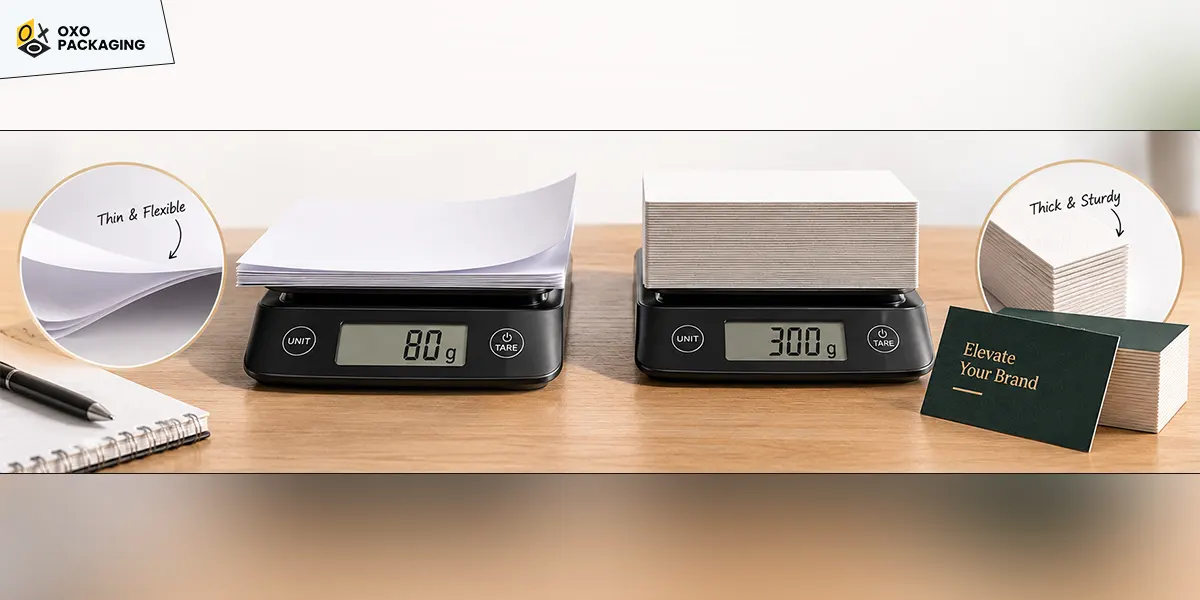
Imagine you have a large sheet of paper that measures 1 meter by 1 meter (an area of 1 square meter).
- 80 GSM Office Paper: If you cut out that 1-meter square piece of standard paper and put it on a scale, it would weigh 80 grams. This paper is thin, lightweight, and flexible, ideal for everyday office printing or school notebooks.
- 300 GSM Business Card Stock: If you do the same thing with a thick piece of cardstock used for luxury business cards, that same 1-meter square piece would weigh 300 grams. Because it packs more material into the same space, it feels rigid, heavy, and sturdy.
GSM in Fabric Weight
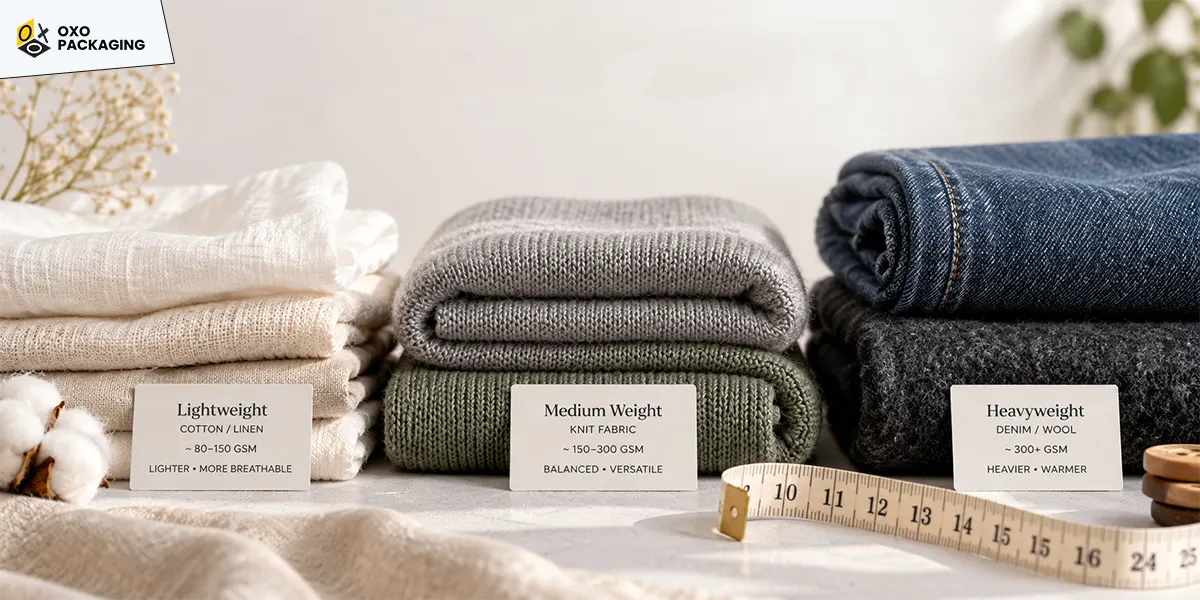
GSM classifies how heavy a piece of cloth is before it is sewn into garments in textiles and apparel. Put simply, fabric weight uses GSM to show the density and warmth of textiles. It tells you how much a one-meter-by-one-meter piece of fabric weighs in grams.
Higher GSM numbers mean the fabric is heavier, denser, and generally thicker. However, lower numbers mean it is lighter and more breathable.
Fabric Thickness GSM Guide
GSM measures the weight (mass per unit area) of a fabric rather than its physical thickness. Here are its key categories:
|
Thickness |
Weight Type |
Uses |
|
30–150 GSM |
Lightweight |
Summer apparel, scarves, and linings |
|
150–250 GSM |
Medium-Weight |
Standard t-shirt jersey, poplin, and chambray. Best for everyday shirts and dresses |
|
250–400 GSM |
Heavyweight |
French terry, denim, and canvas. Best for hoodies, winter wear, and structured jackets |
|
400+ GSM |
Extra-Heavy |
Heavy wool coats, duck canvas, and upholstery. |
A Real-World Example: T-Shirts vs. Hoodies
Think about buying a basic cotton T-shirt versus a winter hoodie. If you cut a 1-meter by 1-meter square out of this summer T-shirt, it will weigh 150 grams. It feels thin, soft, and airy, keeping you cool on a hot day.
On the other hand, if you cut the same 1-meter by 1-meter square out of a thick fleece hoodie, it will weigh 300 grams. Because it packs twice as much material into the same area, it feels thick, warm, and structured for cold weather.
A Quick Guide on Converting GSM to Pounds
If your business sources materials globally, a hidden language barrier could be draining your budget: the divide between international GSM and the American Pound (lbs) system. While the rest of the world relies on Grams per Square Meter, the U.S. relies on basis weights that vary wildly by paper type, creating room for costly manufacturing miscommunications.
Failing to translate these metrics accurately risks flimsy packaging, rejected art prints, or unexpected shipping fees. By mastering these conversions or utilizing a reliable conversion table, your business gets total control over production quality, commands authority with global suppliers, and ensures your products always look, feel, and perform exactly as intended across borders.
Generally, 1 GSM ≈ 0.67 lbs. Other popular weight conversions are:
- 100 GSM ≈ 67 lbs
- 120 GSM ≈ 81 lbs
- 200 GSM ≈ 135 lbs
- 250 GSM ≈ 168 lbs
- 300 GSM ≈ 202 lbs
Why is GSM Your Blueprint for Custom Printing Quality?
In custom printing, GSM indicates how ink interacts with your material, how machines process your design, and how the final product performs in your customer's hands. Choosing the wrong GSM can lead to bleeding ink, jammed printers, or warped apparel.
To ensure flawless print production, businesses must look at GSM through three main pillars:
-
Ink Absorption and Visual Clarity
- On Paper: Low-GSM papers (under 90 GSM) have loose, thin fibers. When hit with heavy ink saturation, like full-bleed backgrounds or vibrant color graphics, the paper will buckle, wrinkle, or suffer from ghosting (where the print bleeds through to the back). High-GSM stocks (250+ GSM) act like a solid canvas, absorbing heavy ink layers, spot UV, or foil stamping without losing shape.
- On Fabric: Lightweight fabrics (under 130 GSM) lack the structural density to hold heavy graphic inks. If you screen print heavy plastisol ink onto a feather-light T-shirt, the print will feel stiff, thick, and cause the surrounding fabric to sag or pucker. Medium-to-heavy fabrics (180–240 GSM) provide a stable, flat surface that keeps graphic prints crisp, even, and flexible.
-
Machinery, Methods, and Manufacturing Limits
Different production methods require exact weight thresholds to avoid manufacturing errors:
- Paper Printing Methods: Digital and offset presses have strict maximum thickness limits. Attempting to feed a heavy 400 GSM luxury cardstock through a standard machine causes severe jams or scuffed print lines. Furthermore, high-GSM paper requires a process called scoring before folding; if you try to fold a 300 GSM brochure without pre-scoring, the dense paper fibers will crack open and ruin your design.
- Fabric Printing Methods: Different apparel techniques demand specific fabric densities. Direct-to-Garment (DTG) printing requires tightly woven, medium-to-high GSM cotton to ensure the micro-droplets of ink don't slip straight through the threads. Conversely, dye sublimation works beautifully on lighter polyester weights (120–150 GSM) because the gas dyes bond directly with the synthetic fibers without needing a thick surface weave.
Wrap Up!
Choosing the perfect GSM paper thickness is a smart strategic move. It ensures your packaging protects your products perfectly while making an unforgettable first impression on your customers.
Now that you understand how paper and fabric weights work, you have the exact knowledge needed to lead your market. You can confidently select premium custom packaging that builds customer loyalty and instantly raises your brand's value. Best of all, this mastery gives you total creative control over every single print project your business creates from now on.
Fabric weight GSM stands for grams per square meter. It is the international standard metric used to measure how heavy or dense a specific piece of fabric is.
GSM paper weight stands for grams per square meter, which is the metric standard used to measure the density and weight of a sheet of paper.
300 GSM is thicker and heavier than 200 GSM. 200 GSM is a medium-weight, slightly flexible stock. However, 300 GSM is a heavy, rigid cardstock.
400 GSM in fabric means Grams per Square Meter, indicating that a one-meter-by-one-meter square of the material weighs 400 grams.







 Let's Call