


What Is Pharmaceutical Packaging? Everything You Need to Know
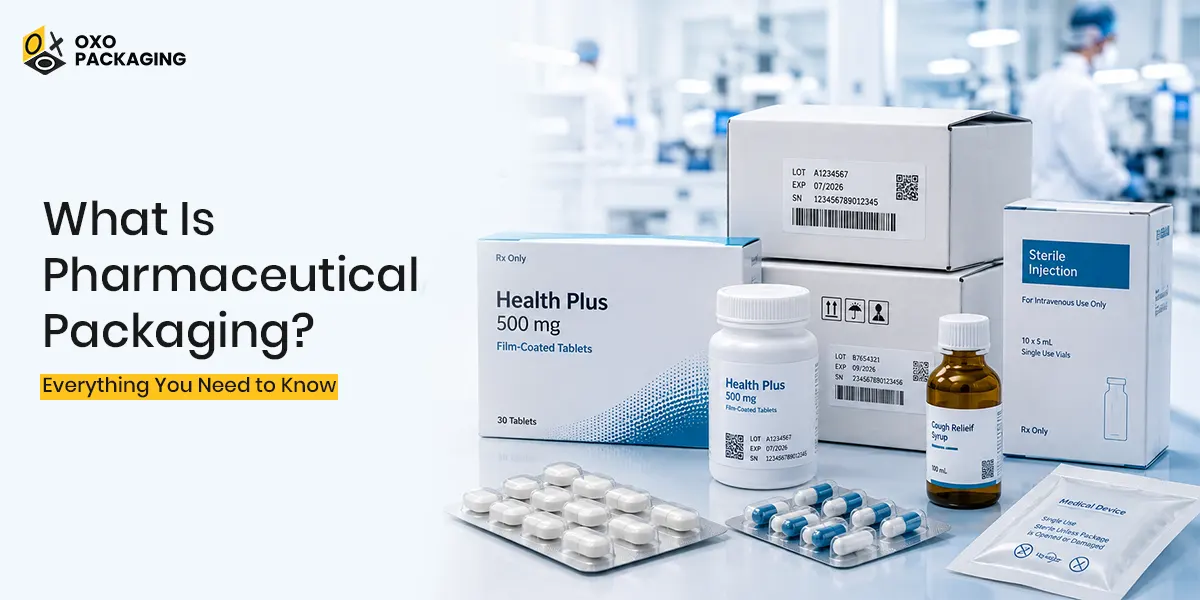
Packaging serves important functions: protecting, storing, transporting, and presenting. And most importantly, the usage of the products. The same is the case with pharmaceutical packaging, with the additional requirements and formalities, like FDA strict compliance, serialization process, and package testing for the ideal protection of the drugs.
Continue to read on to learn about pharmaceutical packaging in detail, from explanation to the functions, FDA requirements, materials choices, and more. Let’s explore pharmaceutical packaging in detail:
What is Pharmaceutical Packaging?
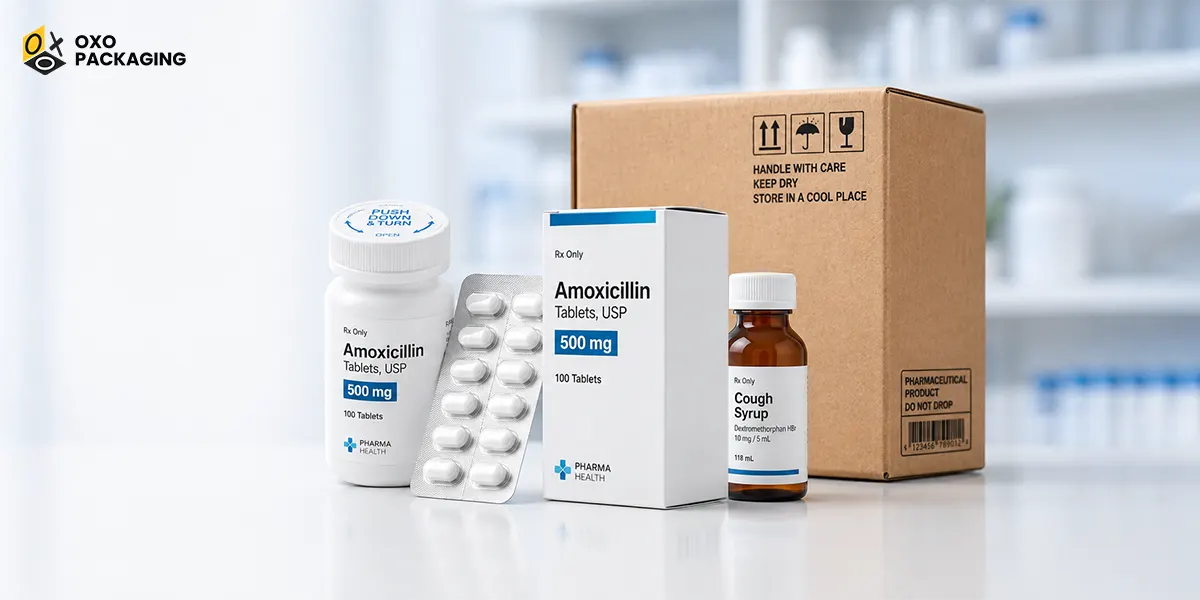
Pharmaceutical packaging is specialized packaging produced to perform excellent functionality, from protection to efficient usage, storage, and transportation, with child-resistance and some other legal requirements. This specialized packaging can be categorized based on its specific usage, like consumption and usage, retail and display packaging, and transportation and storage requirements.
Functions of Pharmaceutical Packaging
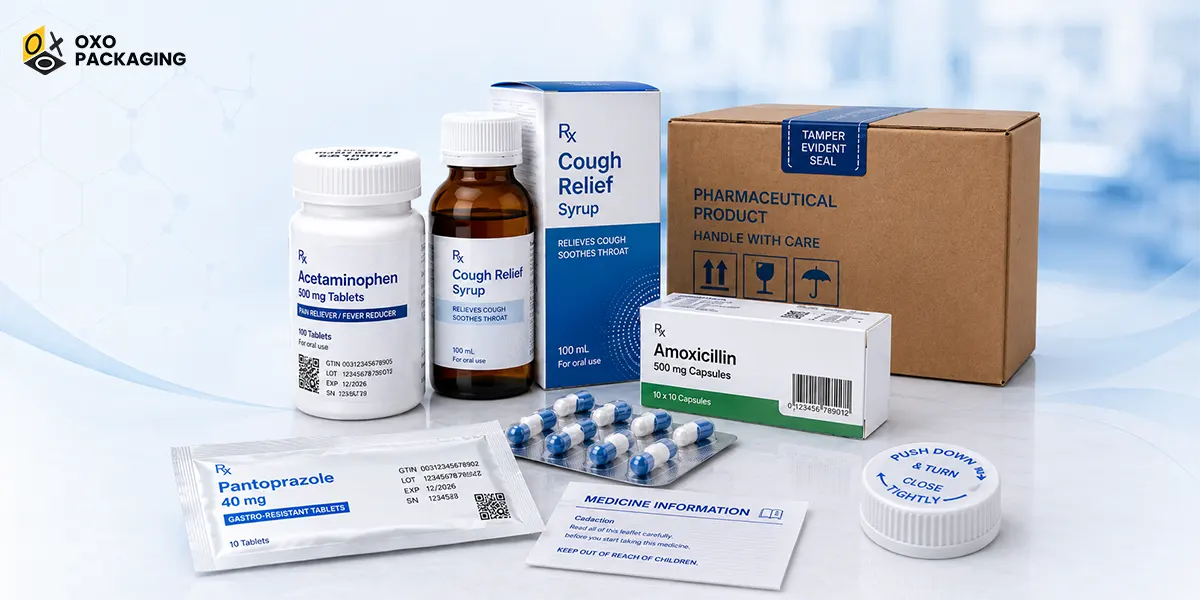
Before we explain what the types of pharmaceutical packaging are, it is wise to have an overview of the functions of pharmaceutical packaging. Let’s explore the main functions that cannot be ignored at any cost:
-
Protection of Pharma Products
Protection of the products of the pharmaceutical industry is of great importance. It cannot be compromised for any reason. Safeguarding medications from environmental hazards like humidity, light, and temperature is of high significance and must be cared for to protect these sensitive industry products.
Not only do environmental factors need to be cared for, but you also need to protect medications from damage during organization, storage, and transportation by ensuring that they are properly protected and maintain their chemical stability, potency, and safety until they finally fulfill their objective.
-
Containment from Packaging to the End User
Pharmaceutical products are highly sensitive and require special care from packaging to their final destination and consumption. Quality product packaging materials, structure, and protective closures must be taken care of to prevent medication from leakage, permeation, and diffusion, and also consider material compatibility. All these precautions might protect the medication ideally from packaging to reaching the end user.
-
Information for the End User and Pharmacist
Important information that can protect the medication, provide safety to the patients, and how to keep them safe and secure before final usage of the products. How to handle, take care of, temperature, and other environmental protection instructions should also be printed on the inserts used in the package of the medication.
-
Security to the Public Health
The pharmaceutical industry must pay attention to detail for highly effective safeguard measures for public health. Ensure compliance with the regulatory authorities, relevant laws, and regulations governing how to package, present, and store pharmaceutical industry products. Security functions are primarily performed by tamper-evident packaging, using anti-counterfeiting technologies, serialization (track and trace), and child-resistant packaging of the medication.
-
Compliance with Relevant Regulations
Pharmaceutical packaging requires strict legal compliance set and drafted by the legal authorities like FDA or EMA before the drug finally reaches the end user and in the market. Some major legal requirements include container closure integrity (CCI), tamper-evident features, child-resistant closures (CRC), and track and trace (serialization).
Patient compliance requires that the packaging must be designed so that patients can efficiently use the medication correctly and easily for the best favor to their health.
Types and Levels of Pharmaceutical Packaging
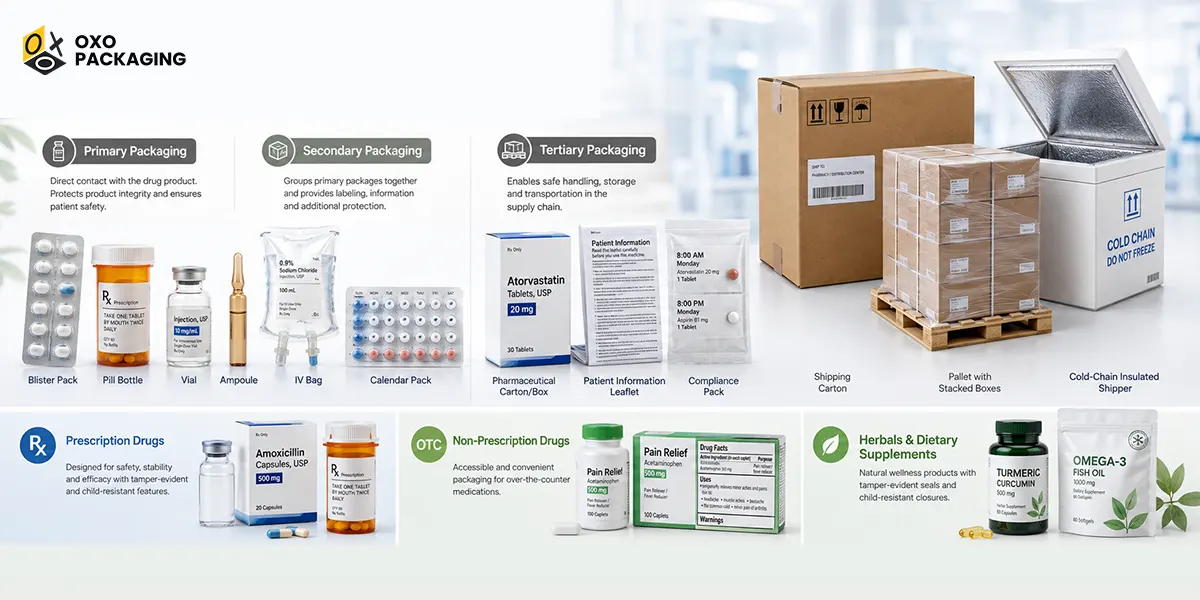
A wide range of pharmaceutical packaging is available to provide the perfect solution to package, protect, present, and ideally serve and consume the required dosage of the medication. The types of pharmaceutical packaging can be explained based on their functionality, formulation, and purposes.
Based on the use and types of substance packaged, we can explore the following types of pharmaceutical packaging for your products:
-
Prescription Drugs
Packaging produced for prescription drugs ensures patient safety by using the three levels of packaging: primary packaging, secondary packaging, and tertiary packaging. Where primary packaging can be further divided into these types: blister packs, alternative tamper-evident packaging, bottles, vials, ampules, intravenous bags, and calendar packs.
Secondary packaging, on the other hand, is designed to easily organize, guide, and provide crucial, useful, and detailed information to the patients and pharmacist, provide extra protective layers, and create ease in organizing the medication. This type of packaging includes cartons and boxes, patient information leaflets, and compliance packs.
Tertiary packaging, the final layer of the products for bulk organization, transportation, distribution, and warehousing of the pharma products. Examples of this type of packaging include shipping boxes, pallets, and cold-chain containers (like insulated crates or thermal shippers equipped with ice packs).
-
Non-Prescription Drugs
Non-prescription or Over the Counter (OTC) drug packaging is designed to efficiently organize the drugs for self-administration, consumer safety, and strict compliance. The same levels of packaging are used for the non-prescription drugs of the pharmaceutical industry.
However, some specialized features include this type of packaging drug facts labels. According to the FDA, OTCs must contain clear, easy-to-read labels that must include the ingredients, uses, warnings, clear dosage instructions, and more. Further, expiry and lot codes are also mandatory to ensure the quality of the products and their traceability.
-
Herbals and Dietary Supplements
Preserving potency and ensuring the safety of herbals and dietary supplements are the prime objectives of the pharmaceutical packaging. This packaging is designed to provide a great protective barrier to the botanical extracts against moisture, light, and oxygen. To meet the strict regulations of FDA labelling regulations, detailed supplement facts panels and clear tamper-evident packaging is required.
Dietary supplements are considered a food item rather than a pharmaceutical product, and are regulated under the Dietary Supplement CGMP Rule (21 CFR Part III). These products must have at least one tamper-evident feature, a child-resistant closure, and must be carefully tested to ensure no chemicals leach into the supplements.
Wrapping Up!
Pharmaceutical packaging is primarily focused on the creation of highly protective, tamper-evident, and child-resistant packaging options. This type of packaging began with the Poison Prevention Packaging Act of the 1970s to ensure that at least 80% of children cannot open the packaging in a given time frame.
FDA takes responsible action by providing sufficient guidance to ensure the safety, efficacy, and stability of the drugs. Some major FDA requirements for pharmaceutical packaging include material standards and integrity, safety and security features, labelling and serialization, and quality control and operations requirements.
Quality packaging materials that can provide excellent barrier properties to prevent pharma products from harmful environmental factors like light, oxygen, temperature, and humidity. Some of the popular materials include plastic, glass, metals, and paperboard in a broader sense. For the primary packaging, polyvinyl chloride, polyvinyl dichloride, polychlorotrifluoroethylene (Aclar), and aluminum foil are popular choices.
OXO Packaging can be the best partner for your custom packaging needs for the pharmaceutical products of your brand. We can provide excellent packaging with high barrier properties, excellent materials, and endless customization options to meet the strict regulations of the concerned authorities like the FDA.







 Let's Call