


What Type of Packaging is Used for Coffee? Explore in Detail
Running a coffee business comes with significant challenges. Preserving the freshness, aroma, and taste of roasted coffee beans is one of those challenges. If you fail to serve fresh coffee beans, potential customers may slip away. That means putting your coffee brand on the line.
However, you can turn the game around by paying close attention to coffee packaging. By choosing the right type of roasted coffee bags, you not only preserve the beans' freshness but also build your brand reputation while meeting sustainability standards.
Coffee bags serve as a powerful tool for amplifying your business. But is your current bag the best option for you? Let’s dive into that:
Explore Popular Custom Coffee Packaging Bag Types
When it comes to building a unique brand identity, preserving freshness, and enhancing shelf appeal, wholesale coffee bags outperform coffee boxes, pouches, and sachets. Now that there are versatile types of coffee packaging bags available in the market. So, which one should you choose to maximize your brand profitability?
To make the right choice, consider the following types of coffee bags and choose the one that suits your coffee, brand, and budget.
-
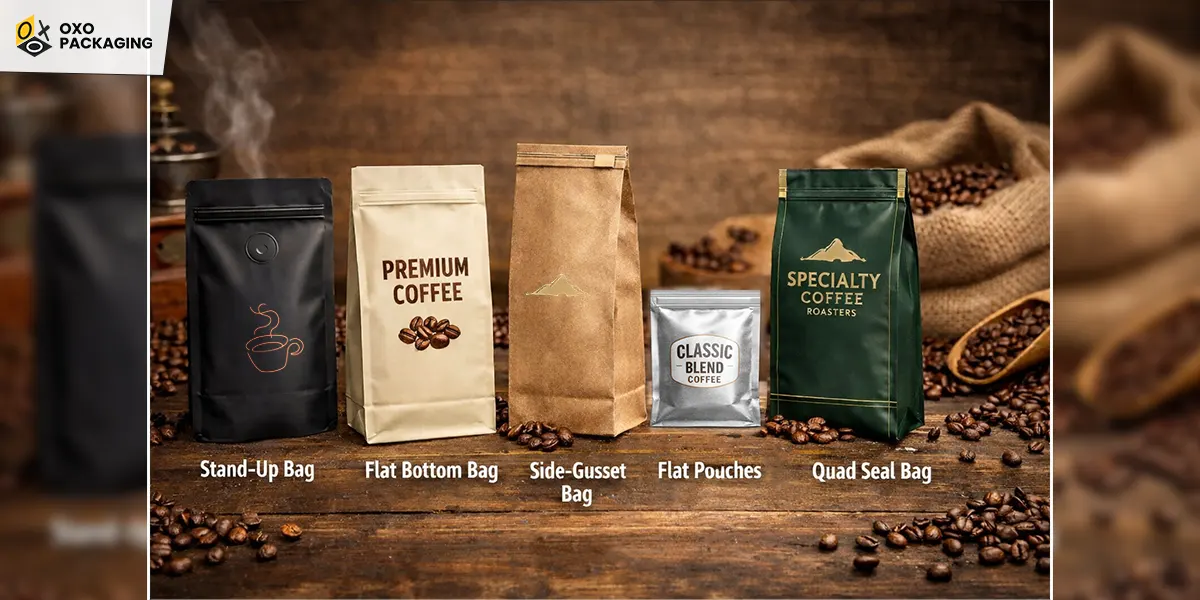
Stand-Up Bags/Doypacks
Stand-Up coffee bags are a popular choice for your specialty coffee. They preserve the freshness of coffee beans due to features such as nitrogen flushing, vacuum sealing, a one-way valve design, and a resealable closure for easy storage.
Their design gives them a competitive edge over other coffee pouches due to their W-shaped gusset at the bottom. When you open a standup bag, it forms a sturdy and free-standing base. The best part is that this bag type is more cost-effective than rigid boxes or cans due to its manufacturing from fewer materials.
Whether you sell whole bean coffee, ground coffee, organic coffee, single-serve, or coffee subscriptions, choose standup pouches due to their low cost and good shelf presence.
-
Flat Bottom Bags
As their name indicates, flat-bottom bags have five sides. These bags have a flat and rectangular bottom. Their structure forms a massive space and strength on the left and right side with a fastener on top. They are known as “Gussets.”
In terms of brand identity, flat-bottom bags offer a larger surface area to promote your business. The high-end, five-sided printable space of these bags makes them ideal for brands investing in custom printing, matte finishes, and specialized branding.
Flat-bottom coffee bags are Ideal for 500g, 1kg, and 5lb bags of coffee beans, as their boxy shape provides better stability and capacity than traditional stand-up pouches. While costing more to produce than standard stand-up pouches, brands with higher budgets seeking to elevate their market presence invest in these bags.
-
Side-Gusset Bags
Side-Gusset bags are also known as “Side-Fold bags.” Many brands choose the side-gusset style when they need to pack bulk amounts of coffee, such as 5lb. With a flat folded bottom, this bag can stand on its own.
Like flat-bottom bags, side-gusset bags also provide great branding potential. You can print all sides of these bags. Without zippers, side-gusset bags use adhesive tape or a tin tie to roll or fold them. Although they provide ease while closing, they are not as effective as zipper bags. This means coffee beans are not safe to store for long-term freshness in these bags.
From small artisan roasters to large manufacturers, side bags are a common choice due to their ability to maximize shelf space. Many smaller, independent roasters use custom-printed side gusset bags to display artisanal branding and detailed information about origin and flavor notes. For example, Blind Owl Coffee Co. uses fully recyclable flat-bottom side-gusset bags.
Wondering about their cost? Well, it is highly cost-effective as they need less material to produce than stand-up pouches. Following this, side-gusset bags become economical for large volumes.
-
Flat Pouches/Pillow Bags
The brands that want to serve their coffee beans in small quantities, like a sample for customers, flat pouches come into play. These pouches are small yet printable with their entire surface for good branding.
Keep in mind, you need to support a lay flat pouch to make it stay erect on retail shelves or a display booth. For example, you can use some kind of stand to keep it upright on shelves. If you want cost-effective packaging for launching new products, lay flat pouches stand out.
These pouches are generally the most affordable option compared to stand-up or flat-bottom pouches. While many lay flat pouches lack a degassing valve due to their simple structure, they can include high-barrier foil or polymer linings to ensure freshness. Several hotels, airlines, and corporate gift providers offer single-serve coffee in these pouches.
-
Quad Seal Bags
Other names for quad seal bags include block bottom or box pouch. With five panels and four vertical seals, these bags make a stable, rectangular, and rigid structure that holds coffee beans intact. Their sturdy design retains shape whether on the shelf or during shipping.
Because quad seal bags are highly durable and offer an airtight barrier, they are the preferred choice for specialty coffee that needs to showcase its quality. These bags are versatile enough for whole beans and ground.
Though quad seal bags are specifically favored for whole beans to maintain aromatic integrity over time. Due to their strength, they are ideal for shipping 1kg+ quantities. While they are a higher-cost packaging option compared to standard stand-up pouches, you can use quad seal bags to convey quality. Brands like Dutch Coffee Pack often choose these bags for their matte, haptic, or high-definition printing capabilities.
Things to Consider for Choosing Coffee Packaging Bags
Apart from considering diverse coffee bag types, you need to evaluate several more factors for effective coffee packaging solutions.
-
One-Degassing Valve
This feature is essential for fresh roasts as a one-way valve allows carbon dioxide to escape while preventing oxygen from entering, preventing bags from bursting, and preserving aroma. While dark roasts release gases faster, all coffee types benefit from the consistent aroma retention and shelf life protection that these valves offer.
-
Resealable Closures
Create a reliable, often airtight seal that protects coffee beans from oxygen, light, and moisture, which cause staling, with resealable zippers. You allow users to open and close resealable bags multiple times while encouraging the reuse of the package.
-
High-Barrier Materials
The coffee packaging materials must be high-barrier to slow down the oxidation process while allowing coffee to remain fresh for 6–12 months, compared to only a few weeks with unlined or basic paper bags. Materials like PET and aluminum foil prevent UV light from breaking down the chemical compounds in the beans, while preventing rancidity and fading of oils.
-
A Tear Notch
Provide a simple and convenient way to open the bag without scissors or sharp tools. Placed just below the heat-sealed edge, the tear notch guarantees that the package has not been opened before reaching the consumer.
-
Sustainability
A growing number of coffee consumers are eco-conscious and prefer brands with sustainable practices, often willing to pay a premium for them. So you must buy wholesale coffee packaging bags made from sustainable materials like kraft paper and PLA.
-
Reliable Supplier
Experienced suppliers provide custom, high-quality branding opportunities, including specialized pouch structures like quad-seal or block-bottom bags. OXO Packaging is one of those suppliers offering both aesthetic appeal and coffee bag stability on the shelf.
Wrap Up: Which Coffee Bag Is Right for You?
Now you have explored what type of packaging is used for coffee, but still wondering which coffee packaging wholesale bags you should choose? Pick stand-up pouches with zippers to keep your coffee beans fresh for home consumers. But if you are a high-end brand wanting premium branding, go for flat-bottom bags. For bulk or wholesale, side-gusset bags are durable, and small pillow bags are best for single-serve trials.
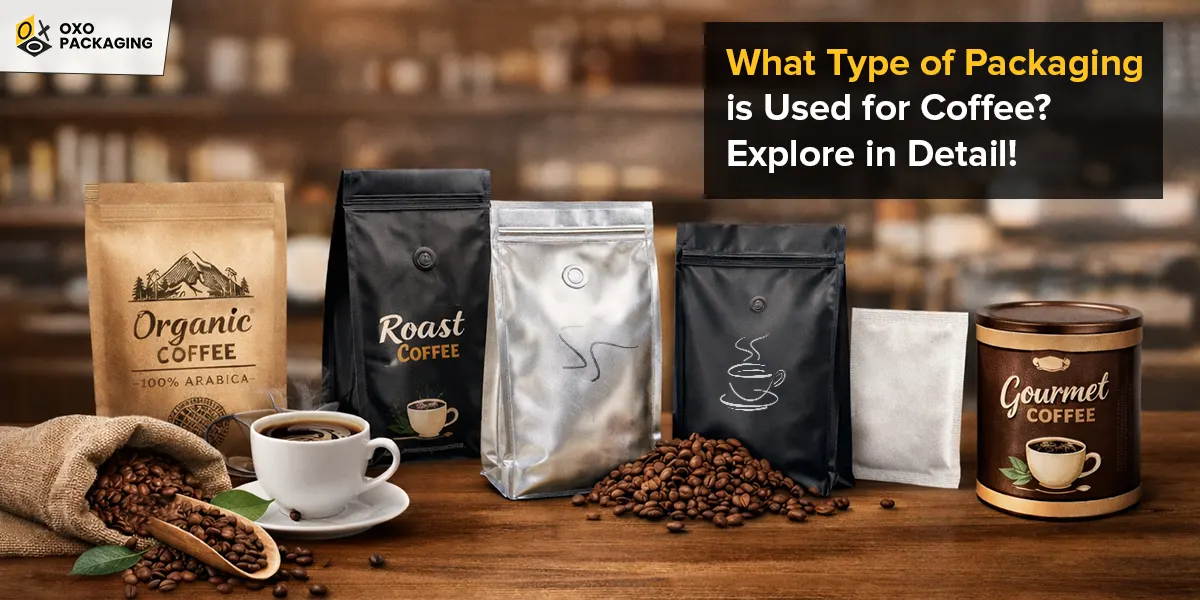
Major types of coffee packaging include flat-bottom bags, stand-up pouches, quad seal bags, side-gusset bags, single-serve pods, and tin cans, usually made from aluminum foil, kraft paper, or eco-friendly compostable materials.
Key types of primary packaging for coffee beans include foil-lined bags, pouches, coffee capsules, pods, sachets, and sealed metal tins.
The best containers for coffee are opaque, airtight, and vacuum-sealed. They are made of materials like stainless steel or ceramic to protect beans from light, air, and moisture.







 Let's Call