


Window Box Versus Full-Panel Carton: Choosing The Right Display
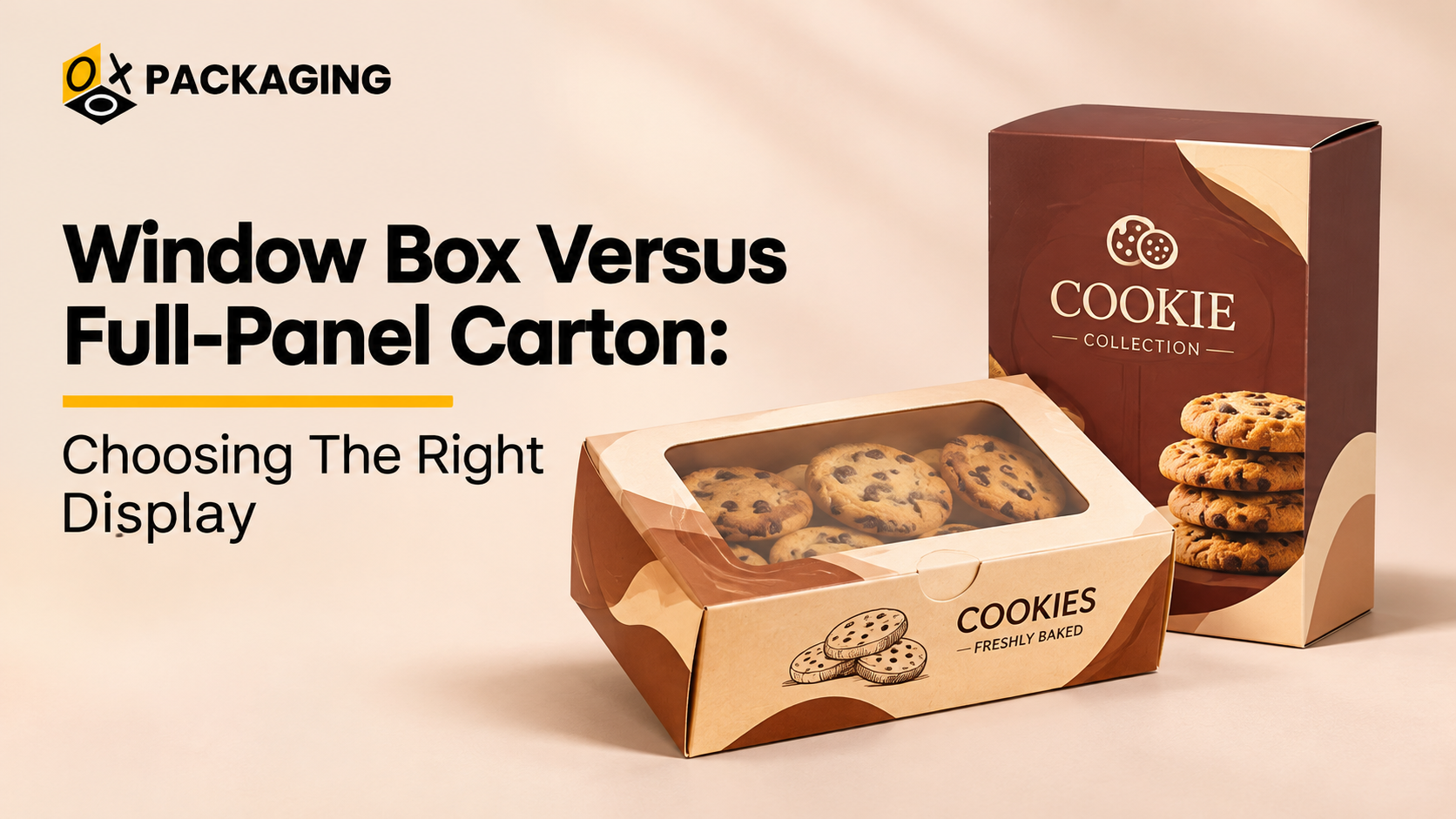
Do you deal in retail product packaging, brand strategy, or product design? If yes, knowing the window box versus full-panel carton is essential. This is because both box styles impact several key factors. Product presentation, consumer trust, manufacturing costs, and supply chain security rely on making the right choice.
So, choose the right packaging strategy for your product, brand, and retail environment. Then, explore the differences between window boxes and full-panel cartons here. Let’s dive right into it:
Overview of Window Box
Custom window packaging boxes are containers featuring a die-cut opening covered with a clear film. They allow customers to peek at the product inside without opening the box. They fill the gap between protective storage and eye-catching retail display.
Most window boxes use sturdy paperboard, corrugated cardboard, or eco-friendly kraft paper to hold their shape. Clear plastics like PET, PVC, or PP are glued over the cutout. However, eco-conscious brands often choose biodegradable cellulose films made from wood pulp.
Several retail, food, bakery, and cosmetics brands prefer to use these boxes. Because shoppers love knowing exactly what they are buying. Seeing the actual product builds immediate confidence and reduces the chance of returns.
Overview of Full-Panel Carton
Full-panel cartons are also called full overlap slotted containers (FOL) or full-panel folding cartons. They have outer flaps or structural walls that extend across the entire width or face of the package rather than meeting in the middle.
Depending on whether a product is crossing an ocean or sitting on a boutique shelf, full-panel design shows up in two main styles:
-
Full Overlap Slotted Containers (FOL)
Made from rugged corrugated cardboard, these shipping boxes feature outer flaps that span the full width of the box, making them ideal for long, narrow, or heavy goods like furniture parts, electronics, and industrial tools.
-
Full-Panel Folding Cartons
Made from sleek paperboard, these retail boxes use full-width dust flaps or fifth-panel extensions to lock delicate items like cosmetics, pharmaceuticals, and gourmet foods snugly inside while maximizing shelf appeal.
Key Comparison of Window Box vs. Full-Panel Carton
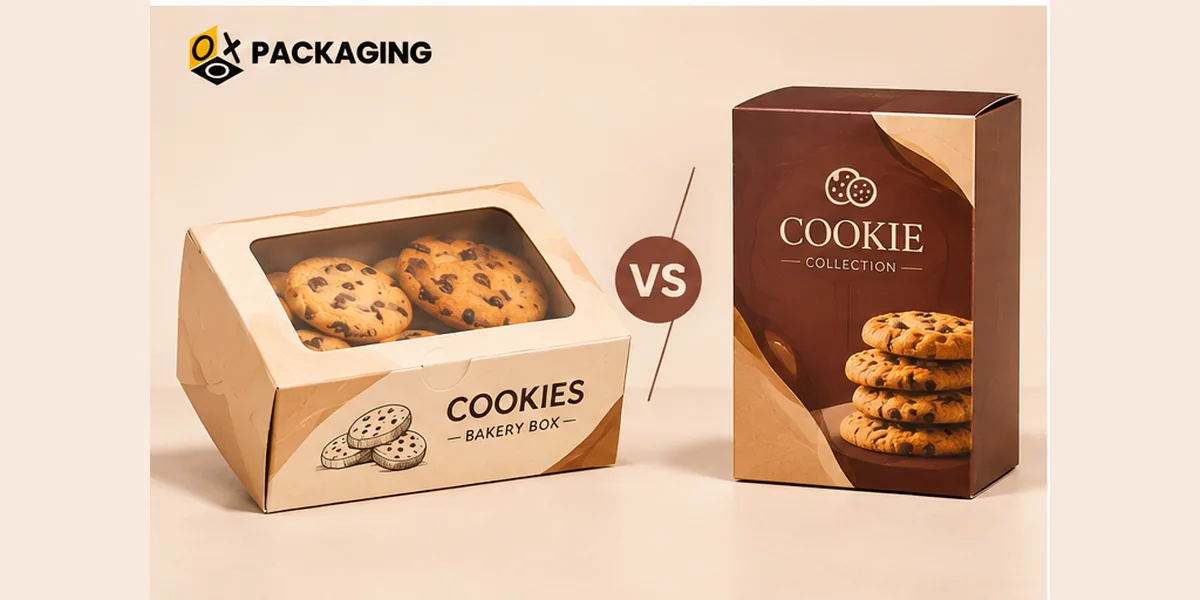
Window boxes offer instant visual proof of the product inside, while full-panel cartons maximize shelf branding and physical protection. Choosing between them comes down to whether your product sells itself by sight or by story:
-
Visibility
Window boxes give a direct view of the product, which can reduce returns and spark impulse buys. However, Full-panel cartons hide the item completely, shifting all focus to layout and imagery.
-
Protection
Full-panel cartons maintain continuous paperboard strength, offering better stacking stability and structural stiffness. Cutouts in window boxes reduce board continuity and may need extra reinforcement.
-
Sustainability
Full-paper cartons are simpler to recycle in standard curbside streams. But windows are made from plastic or fossil-based films. So they become complicated to recycle unless mono-material or certified recyclable films are used.
-
Cost
Window boxes cost more due to extra materials and processing such as die-cutting, film insertion, and adhesives. However, higher sales conversion can offset this expense. Full-panel cartons cost less because of simpler manufacturing.
Side-by-Side Showdown
|
Feature |
Window Box |
Full-Panel Carton |
|
Product Visibility |
High. Shoppers see the exact color, texture, and size immediately. |
None. Relies entirely on photos, illustrations, and text. |
|
Branding Space |
Limited. The cutout eats into valuable front-panel real estate. |
Maximum. Every square inch is a billboard for your brand story. |
|
Structural Strength |
Moderate. Cutting a hole weakens the board's crush resistance. |
High. Solid walls absorb bumps, drops, and heavy stacking. |
|
Production Cost |
Higher. Requires extra die-cutting and plastic or cellulose film patching. |
Lower. Simpler manufacturing with a single material stream. |
|
Eco-Friendliness |
Tricky. Mixed materials make recycling harder unless using pricey plant films. |
Easy. 100% paperboard goes straight into standard curbside recycling. |
Role of Both Options Across Key Areas
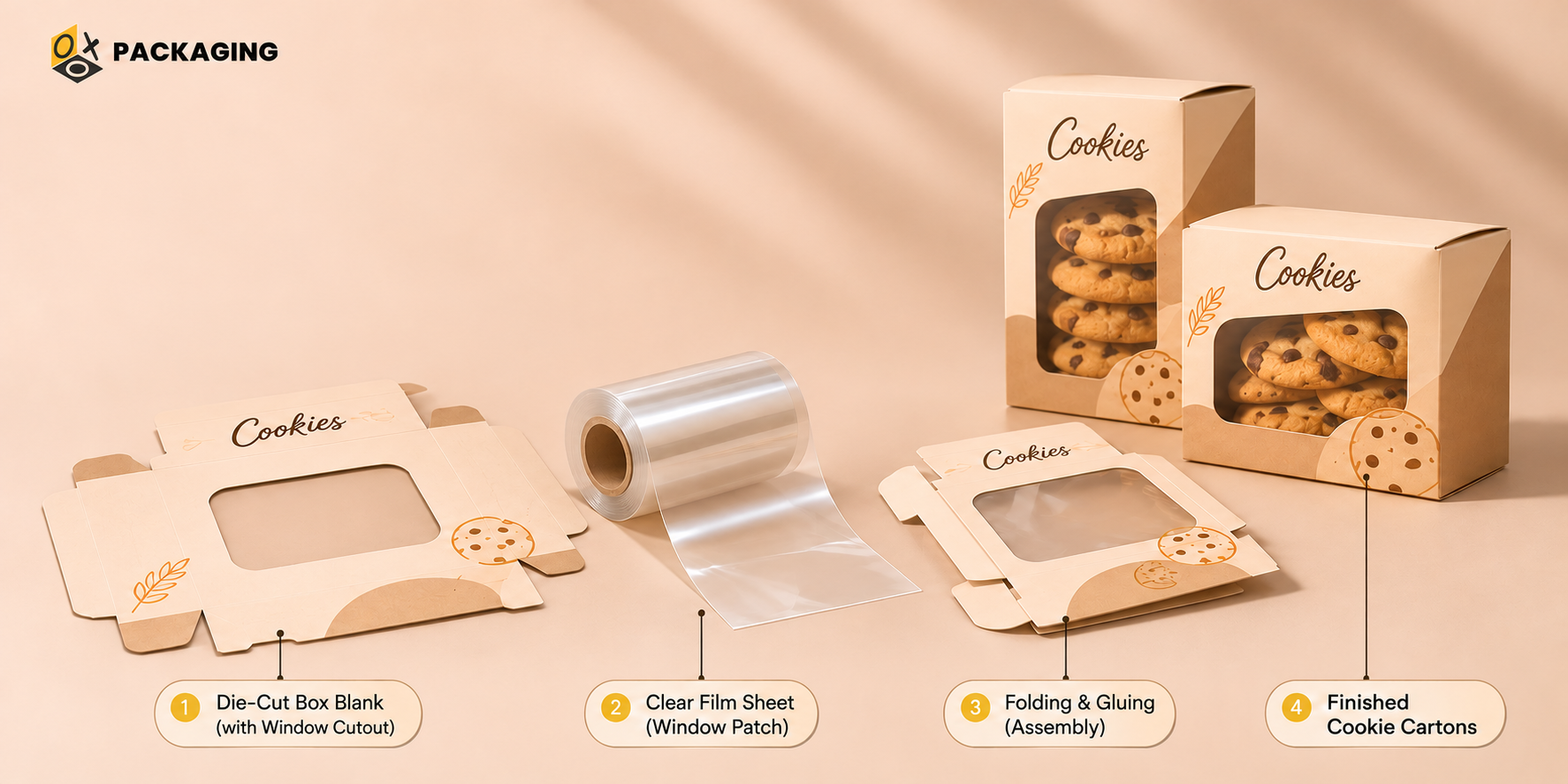
Each option plays a distinct strategic role depending on what your product needs to survive and sell. Look at how they affect main aspects:
Manufacturing and Supply Chain
Production for window packaging boxes needs extra steps, including custom die-cutting and gluing clear PET or cellulose film. This slows down assembly speeds and raises unit costs, especially on smaller runs.
However, single-material construction of full-panel cartons allows for high-speed printing, folding, and gluing. It keeps tooling budgets low and simplifies inventory management.
Branding And Retail Considerations
Custom packaging boxes with window cutouts remove buyer hesitation by showing what is inside before purchase. Seeing real textures, freshness, or exact colors triggers instant confidence and impulse buys.
While full-panel cartons grab attention from afar using bold colors, foil accents, and high-resolution photography. Instead of showing the raw item, it sells the lifestyle, mood, and promise behind the product.
When to Choose Window Boxes?
If you sell fresh pastries, colorful cosmetics, intricate toys, or similar products that need a visual hook, choose window boxes. They win customers the second they catch the eye. Shoppers love verifying the exact shade of a lipstick or fabric without opening the package. Or seeing a real, mouthwatering cookie builds instant craving faster than any printed photo ever could.
When to Choose Full-Panel Cartons?
Items like white pills, brown powders, or tangled cables look dull through plastic. So choosing plain cartons serves best. Supplements, delicate oils, and certain foods degrade when exposed to harsh store lighting. Complex electronics, skincare routines, and gourmet foods need ample space for instructions, ingredients, and bold artwork.
The Final Verdict
Go with a window box if your product is the star of the show and needs no introduction. Choose a full-panel carton if you need tough protection, lower costs, or a massive canvas to tell your brand's story.
Window box packaging is a cardboard or paperboard container featuring a die-cut cutout or transparent plastic panel that allows customers to view the product inside without opening the box.
Yes, window boxes are a great idea because they instantly boost curb appeal and allow you to garden in limited space.
The primary types of carton boxes are folding cartons, corrugated boxes, and rigid boxes (non-collapsible boards for luxury products).
A box is a general term for any rigid container, whereas a carton is a specific lightweight container made of paperboard or folding board used primarily for retail or food and beverage packaging.






 Let's Call