


Explore the Advantages of Using Corrugated Boxes for Your Brand
The corrugated industry is blossoming due to rising consumer demand. According to the survey, the corrugated market is more likely to reach a CAGR of 5.2% by 2035. Several factors are behind this driven market growth for corrugated packaging boxes.
From strengthening your brand image to cutting down your shipping costs, custom corrugated boxes serve best. Explore the major advantages of using corrugated boxes to make the best use of them for your business growth. Let’s begin:
An Overview of Corrugated Cardboard
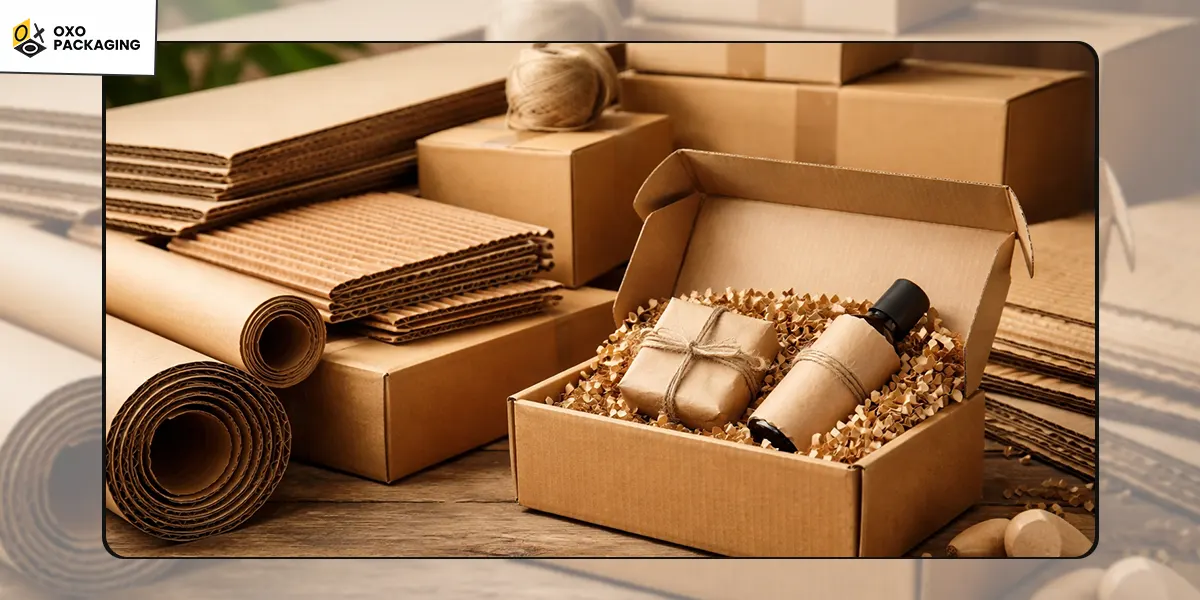
Before jumping right into the advantages of using corrugated boxes, first understand them. Corrugate material refers to a wavy, “fluted” sheet sandwiched between two flat linerboards (cardboard). That is why it is also called “Corrugated Cardboard.” Durability, light-weight nature, and recyclability make corrugated cardboard a distinct material in the packaging world.
Made from renewable wood pulp, it is biodegradable. Also, corrugated is among the most recycled materials in the world, with over 90% recycling rates in the US. It often contains 70%-100% recycled fiber.
Explore Key Factors of Corrugated Packaging
Designed to withstand high stacking load, vibration, and impact during shipping, custom corrugated boxes reduce in-transit damage. Its inherent strength exists due to several factors mentioned below:
Structure and Composition
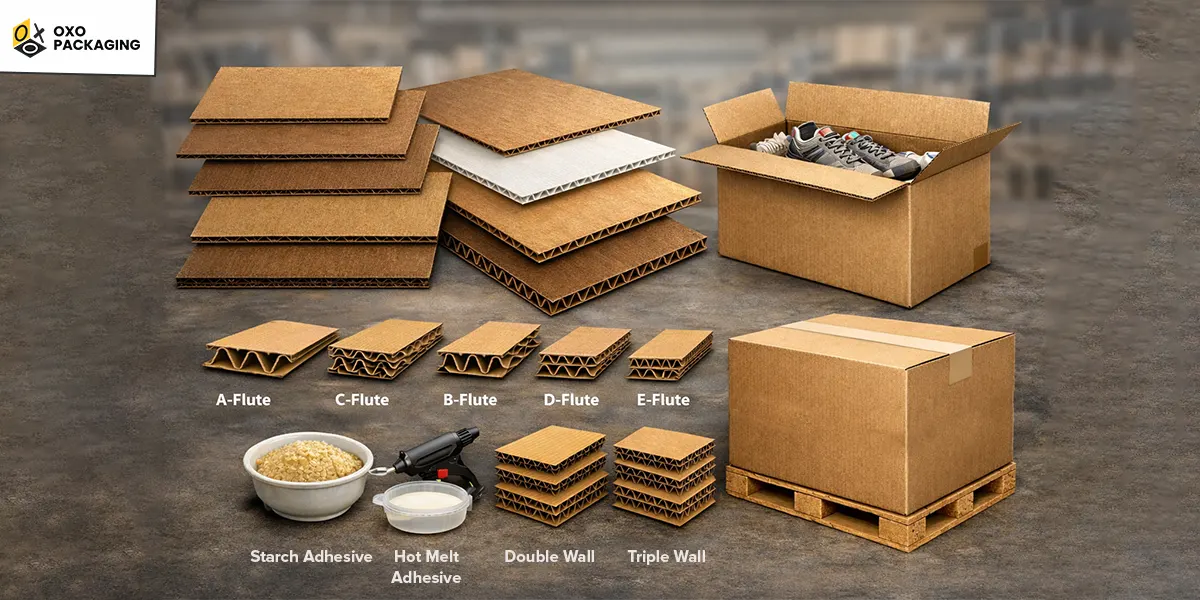
Corrugate material provides cushioning, moisture resistance, and stacking strength for product protection during transit due to:
-
Liners
The outer and inner flat layers are usually made of kraft paper. Liners (inside and outside) give the corrugated box its rigidity and prevent punctures. They have distinct types:
- Kraft Liner: Typically made from 70–80% virgin wood pulp, providing high moisture resistance and strength.
- Test Liner: Made from recycled fibers, usually used for inner layers due to lower moisture resistance compared to Kraft.
- White Top Liner: A Kraft or test liner with a bleached white outer layer for superior printing and branding quality.
- Barrier Liners: Specialized liners treated to resist moisture, grease, or oxygen.
-
Fluting
Fluting is the inner, wavy sheet that provides rigidity, cushioning, and insulation. Flutes are classified by the size of the arch, ranging from thickest (A) to thinnest (F). Their different sizes enable a balance between shipping durability (e.g., C-flute) and superior printing quality (e.g., E-flute). By the size of the arch, the major types of flutes are:
- A-Flute (Thickest - ~5.0 mm): The original, largest flute. Offers the best cushioning and high stacking strength for heavy or fragile items, but has a lower flute count per foot, making it less ideal for printing.
- C-Flute (Second Thickest - ~3.5–4.0 mm): The most common standard for shipping boxes (RSC). It strikes a balance between strength, cushioning, and printability, making it highly versatile.
- B-Flute (Medium - ~2.5–3.2 mm): A lower-profile, thinner flute that offers high resistance to puncture and crushing, making it ideal for inside packing, retail boxes, and high-quality printing.
- D-Flute (Medium-Thin - ~2.0 mm): An intermediate flute between B and E. It offers a balance of strength and space-saving, often used for fast-food, pizza boxes, and retail displays.
- E-Flute (Fine/Thin - ~1.2–1.8 mm): A micro-flute that offers a very smooth surface for premium printing and is ideal for high-end retail packaging and small, lightweight boxes.
- F-Flute (Thinnest - ~0.8–1.0 mm): An ultra-thin, high-density flute (sometimes called F or N) used for luxury packaging, cosmetics, and eco-friendly, rigid folding cartons.
-
Adhesives
Adhesives are specialized bonding agents used to create the fluted medium and bond linerboards together. They are essential for structural integrity, providing rigidity, moisture resistance, and rapid adhesion in high-speed manufacturing. Their key types include:
- Starch-Based Adhesives: The industry standard for combining fluting and liners due to being eco-friendly, biodegradable, and cost-effective. They are typically made from corn, wheat, or potato starch.
- Hot Melt Adhesives: Thermoplastic glues that melt with heat and set rapidly upon cooling, commonly used for box sealing and, in some cases, forming. They offer high strength and moisture resistance, ideal for waxed boards.
- Water-Based/Emulsion Adhesives: These include polyvinyl acetate (PVAc) and are used for gluing, folding, and carton sealing, providing a flexible bond and good performance on coated boards.
-
4 Major Types of Walls
Walls in corrugated packaging refer to the number of corrugated layers (fluted medium and linerboard) used to construct the board, directly influencing the box's strength, durability, and cushioning capabilities. The primary wall types are:
- Single-Wall (Double Face): Comprises one wavy fluted medium glued between two flat linerboard sheets. This is the most common, versatile type for shipping standard e-commerce goods, generally handling items up to roughly 10 kg.
- Single-Face: Consists of only one linerboard adhered to one fluted medium, often used for protective wrapping rather than as a box structure.
- Double-Wall: Consists of three flat linerboards with two fluted mediums sandwiched between them. It provides significantly higher compression strength and puncture resistance for heavier or fragile items (up to 30 kg).
- Triple-Wall: Made of four linerboards with three fluted mediums sandwiched between them, providing maximum strength and stacking ability for heavy-duty, industrial, or fragile products.
Consider the Major Advantages of Using Corrugated Boxes
When it comes to shipping your fragile items securely with a cost-effective packaging solution, corrugated cardboard boxes win. Here are the versatile benefits that give these boxes a competitive edge:
-
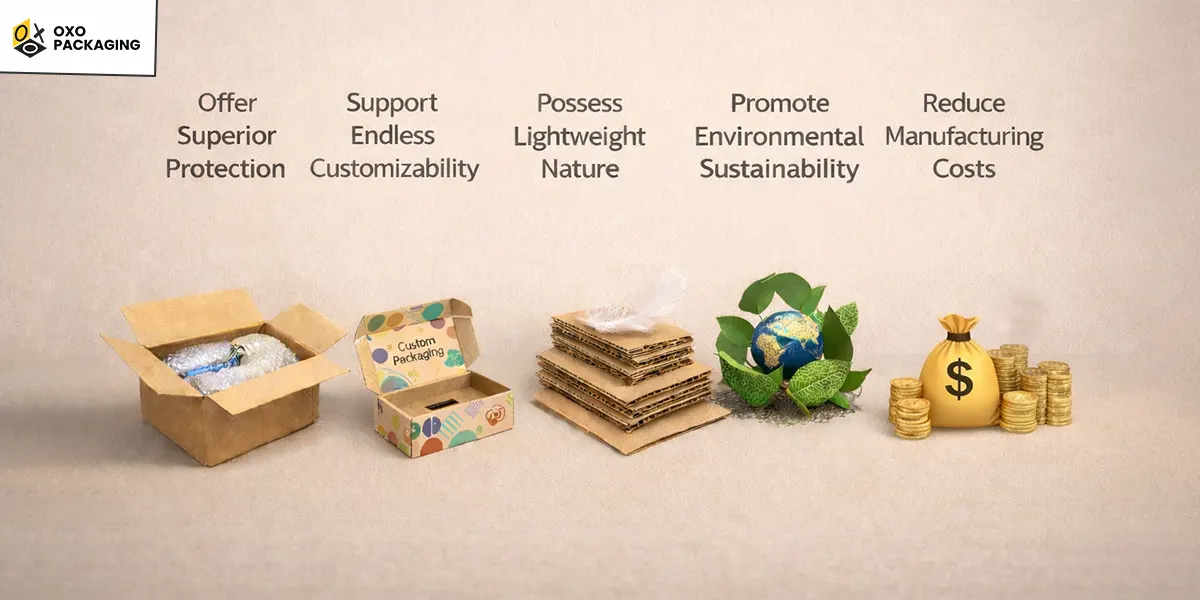
Offer Superior Protection
The arch-shaped flutes are designed to withstand high vertical compression, making them ideal for stacking in warehouses and during shipping. Air pockets within the fluting provide natural insulation against temperature changes, while specialized coatings can provide moisture resistance.
-
Support Endless Customizability
Corrugated boxes are not limited to standard shapes. They can be cut, folded, and tailored to the precise dimensions of a product to ensure a secure, snug fit, reducing the need for excess filler material.
Corrugated surfaces allow for advanced printing techniques, including digital printing (good for small batches) and litho-laminating or flexographic printing (ideal for high-volume, detailed graphics).
You can utilize options like matte or glossy coatings, embossing, gold/silver foiling, and spot UV on printed corrugated boxes to get a luxury, branded feel.
-
Possess Lightweight Nature
The corrugated design involves a ruffled "fluted" layer sandwiched between two flat liners. The air trapped in these flutes provides thickness and strength. They act as a cushion, without the weight of solid materials.
Despite being lightweight, their often fluted structure protects products from impact and provides, at times, sturdy, high-impact, and moisture-resistant storage. It means it helps you reduce shipping costs due to their lightweight.
-
Promote Environmental Sustainability
Roughly 90% of corrugated materials are recycled. They are made from renewable, sustainable fibers, often with a high percentage of recycled content. As a natural, paper-based product, corrugated cardboard is biodegradable, and if not recycled, it breaks down rather than lingering in ecosystems.
Since they are lightweight, corrugated boxes require less fuel for shipping compared to heavier, non-sustainable alternatives, directly lowering carbon emissions. They offer superior protection for goods, reducing damage-related waste.
-
Reduce Manufacturing Costs
As a lightweight packaging material, corrugated boxes significantly lower shipping expenses by reducing both actual and dimensional weight, which is particularly beneficial for international shipping.
Using recycled, cost-efficient, and standard-grade materials for non-critical applications decreases raw material expenses. Also, their standardized designs are easy to assemble, increasing production speed and reducing operational downtime.
Compare Custom Corrugated Boxes vs Others
Overall, custom corrugated boxes offer the best balance of durability, low cost, and high sustainability for shipping and e-commerce. Rigid boxes provide a premium, luxury feel for high-end retail, while plastic offers moisture resistance but low sustainability. Have a look at their comparison in detail:
-
Corrugated Boxes vs Plastic Packaging
|
Properties |
Corrugated |
Plastic |
|
Durability |
Short-term |
Long-term |
|
Moisture-Resistant |
Low |
High |
|
Recyclability |
High |
Low |
|
Manufacturing Cost |
Low |
High |
|
Best Use Cases |
Shipping, e-commerce, short-term storage, and eco-conscious brands |
Long-term storage, protecting goods from moisture, and specialized food/pharmaceutical logistics. |
-
Corrugated vs Rigid Boxes
|
Properties |
Corrugated |
Rigid |
|
Durability |
High |
Very High |
|
Cost |
Low to Moderate |
High |
|
Storage |
Collapsible |
Non-Collapsible |
|
Recyclability |
Excellent |
Moderate/Low |
|
Primary Use |
Shipping and Logistics |
Retail and Luxury Branding |
Where to Find Well-Customized Corrugated Boxes?
Since you have explored the advantages of using corrugated boxes, utilize them to elevate your shipping experience. Find well-customized corrugated boxes through specialized online packaging manufacturers and suppliers.
OXO Packaging is one of those suppliers that offer custom printing and tailored sizing with endless customization for corrugated packaging.
Corrugated boxes are durable, lightweight shipping containers made from a three-layered paper material: two flat outer linerboards and a wavy, fluted inner medium.
Carton boxes, specifically corrugated cardboard boxes, are primarily made from wood pulp, often pine, fir, or spruce, processed into heavy-duty paper, usually kraft paper or recycled paper
Yes, corrugated boxes are highly eco-friendly, featuring a 100% recyclability rate and high reuse potential. They offer a sustainable alternative to plastics
Yes, corrugated boxes provide excellent protection for products during shipping due to their rigid, multi-layered structure.
The corrugated box types include double-wall boxes, ideal for heavy/fragile items due to high durability, while single-wall boxes are best for light, everyday shipping
C-flute is the best all-rounder for shipping and stacking, E-flute is superior for high-quality printing and retail, and B-flute is ideal for specialized mailers.
Corrugated cardboard’s primary disadvantages include its high susceptibility to moisture damage, low durability against extreme pressure or stacking, and limited reusability.







 Let's Call