


Pick the Optimal Packaging: Bubble Mailers vs Paper Padded Mailers
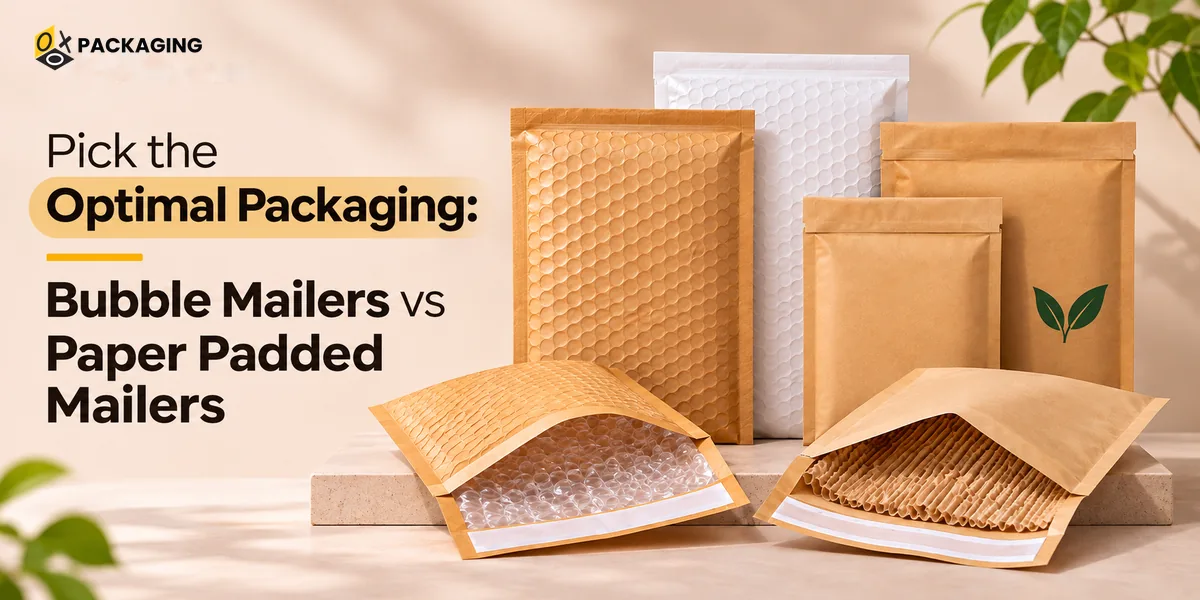
Mailer packaging is one of the compact and lightweight solutions to pack and ship products in their best state. But not all mailers are crafted the same way, as some are more sustainable while others aren’t. Here in this blog, we’ll explore the difference between bubble mailers vs. paper padded mailers and what perks they can offer for your business packaging needs. So, let’s read on.
What is a Bubble Mailer?
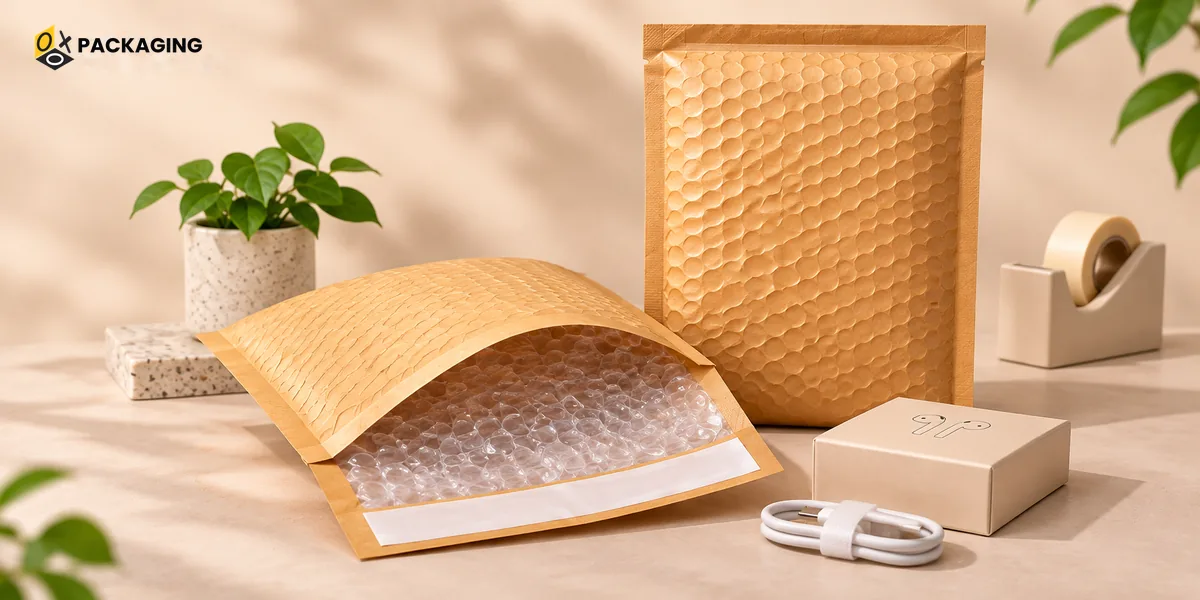
A bubble mailer is a lightweight shipping envelope that contains a protective sheet of air-filled bubbles. These packaging solutions are designed to absorb the logistics shocks and ensure that the products packed in it remain free from damage. The bubble mailers are not only lightweight but are also affordable for businesses to consider for their offerings.
Below are the standard elements and layers of a bubble mailer packaging:
- Outer Layer: It consists of either Kraft paper or a water-resistant polyethylene sheet that is being used depending on the packaging demands.
- Inner Layer: The inside layer of the mailer consists of a coated sheet of air-filled plastic bubbles. This lining features great cushioning against high impacts or drops. So, the shock doesn’t pass to the actual product.
- Closure: For standard bubble mailers, it features a self-sealing adhesive strip that doesn't demand any separate tape or clips.
What is a Paper Padded Mailer?
Similar to bubble mailers, the paper padded mailer may have the same approach from the outside, but its crafting and usage can vary. The inside of the packaging is designed differently to provide decent cushioning with the unique patterns, while the aim is to maximize sustainability. Here is the standard structure of the padded mailers:
- Exterior: The outer layer is made of either heavy-duty Kraft paper or paperboard to feature a rigid packaging structure.
- Interior Padding: It contains the recycled paper-based lining patterns or surface, which works the same way as the air-filled bubbles do.
- Closure: One of the common closures of the padded mailer can be either a pressure-sensitive adhesive strip or even a gummed flap.
Interior Cushioning Options for Paper Padded Mailer
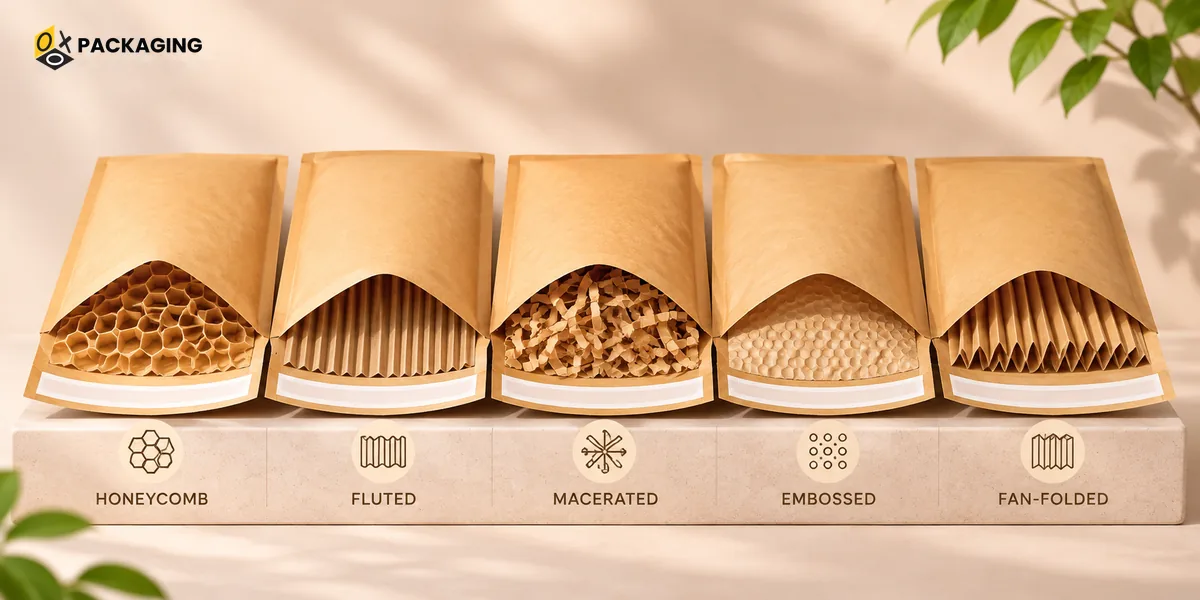
Since the crafting of the paper padded mailers is different, their interior can be catered with multiple pattern options, as the details for them are as follows:
|
Pattern / Type |
Structure |
Usage |
Pros |
|
Honeycomb |
Hexagonal grid that traps air |
Cosmetics, jewelry |
Lightweight & flexible |
|
Fluted |
Wavy corrugated ridges |
Books, rigid items |
High puncture resistance |
|
Macerated |
Shredded paper sandwich |
Heavy parts, tools |
Thickest shock defense |
|
Embossed |
Raised dimples stamped in paper |
Apparel, flat goods |
Low profile, cheapest |
|
Fan-Folded |
Accordion-style pleats |
Stacked items, documents |
Uniform thickness |
Who Won the Recyclability Race Among Mailer Options?
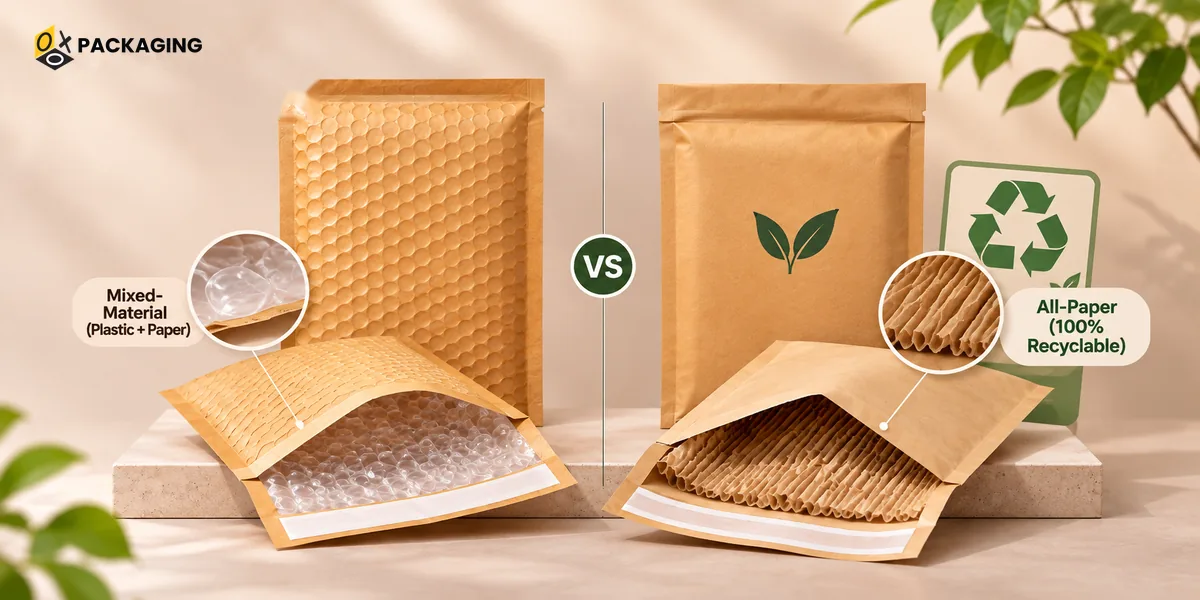
If we compare both of the mailer packaging solutions, they feature optimal packaging solutions in their usage. While there will be a significant difference on the sustainability side because of the padding material used for each.
-
Bubble Mailers
First, for the bubble mailers, the exterior side is fully sustainable as it is biodegradable and can easily be composted. But for the lining of bubbles, the major concern arises. The plastic-based sheet is neither easy to recycle nor fully planet-friendly. It demands a sophisticated process to separate it from the paper, and then further processing is done for it.
-
Paper Padded Mailers
On the other hand, the entire structural components of the paper-based mailers are sustainable by all means. Once the packaging is used for its primary purposes, it becomes recyclable or compostable from that phase onward. There’s no need to remove any plastic or synthetic sheets from its structure. That’s why it's all-good to recycle without demanding any resources.
Who Wins: After comparing the terms we’ve discussed for both, paper padded mailers are the clear winner for your sustainable packaging solutions.
Cost Comparison of Bubble Mailers & Paper Padded Mailers
The sustainability factors count a lot, but the cost can become a major element for brands. Since the materials used for the mailer changes can affect the final cost, businesses have to count beforehand. Below is the chart that describes the difference between the packaging choices:
|
Cost Factor |
Bubble Mailers |
Paper Padded Mailers |
Cost Impact |
|
Unit Price |
$0.35 – $1.10 per unit |
$0.40 – $1.25 per unit |
Paper costs 2¢ to 15¢ more per mailer. |
|
Material Weight |
~0.8 oz (highly lightweight) |
~2.2 oz (2–3x heavier) |
Paper can push shipments into higher postal tiers. |
|
Storage Expense |
Thin profile; low warehouse footprint |
Bulky profile; requires more space |
Paper increases inbound freight and storage fees. |
|
End-of-Life Fees |
Higher Extended Producer Responsibility (EPR) fees |
Lower or exempt EPR fees (fully recyclable) |
Paper saves money in regions with strict eco-taxes. |
The Bottom Line
All in all, we hope now you’ve got a comprehensive idea of the difference between the two mailer packaging choices. If you’re still unsure what suits your offer's requirements, feel free to reach your trusted packaging company. Call us anytime by dialing (510) 500-9533 or writing your query to sales@oxopackaging.com for a detailed response.
The paper padded mailers are a bit costlier because of the more paper usage, which isn’t only a scarce resource but also adds more weight. That’s why the minor shipping and logistics costs can change a lot in the end packaging rates.
The weight of the mailer packaging options can vary as per their style, sizes, and other aspects. For instance, some of the standard ranges for this can be the:
- Poly Mailer Weight Range: 0.2 – 1.0 oz
- Kraft Paper Weight Range: 0.3 – 1.4 oz
It depends on the product whether the businesses can consider them as the primary packaging or not. But we recommend using them only for shipping purposes, as the product’s own packaging always ensures a safe environment inside.
Bubble mailers are more durable because of the plastic-based bubble cushioning. They’re more durable compared to 100% pure paper padded options.






 Let's Call