


How Do Display Boxes Differ from Other Types of Packaging?
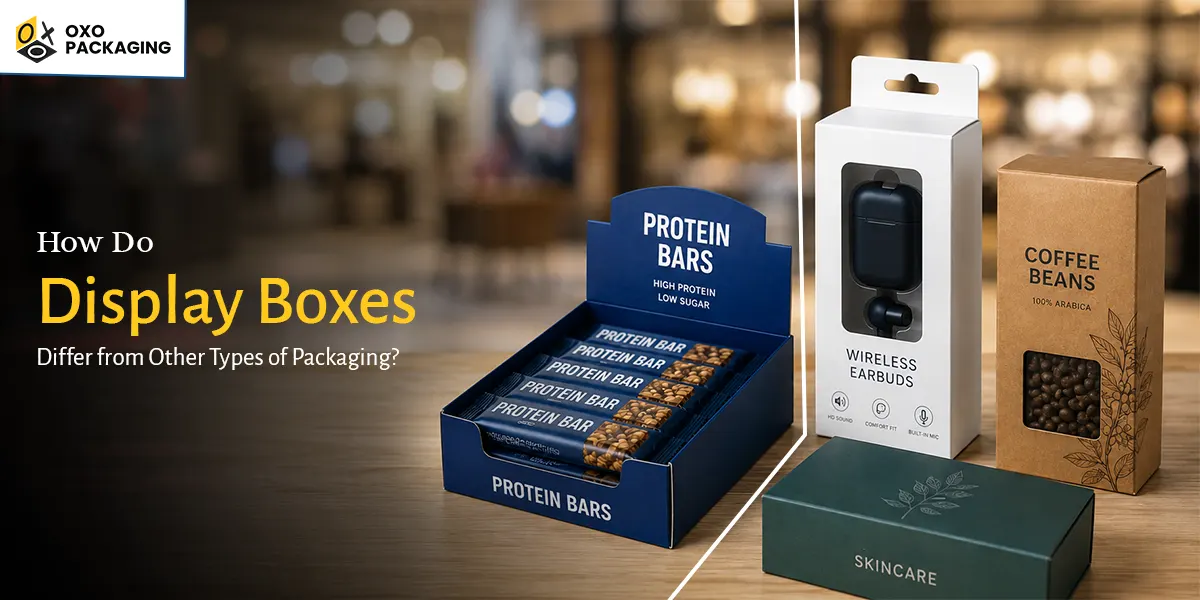
Have you ever noticed some products grab your attention as soon as you enter the retail store? While others disappear into the background, just like the Bermuda Triangle. It happens because of product presentation.
How you present your products strongly affects your customers' buying decisions. And especially if you choose the display boxes, then you maximize your brand visibility. That’s the reason the display packaging market size is likely to reach USD 40.42 billion at a CAGR of 5.5% by 2034.
Wondering how do display boxes differ from other types of packaging? Explore it in detail here!
When is the Display Box Used?
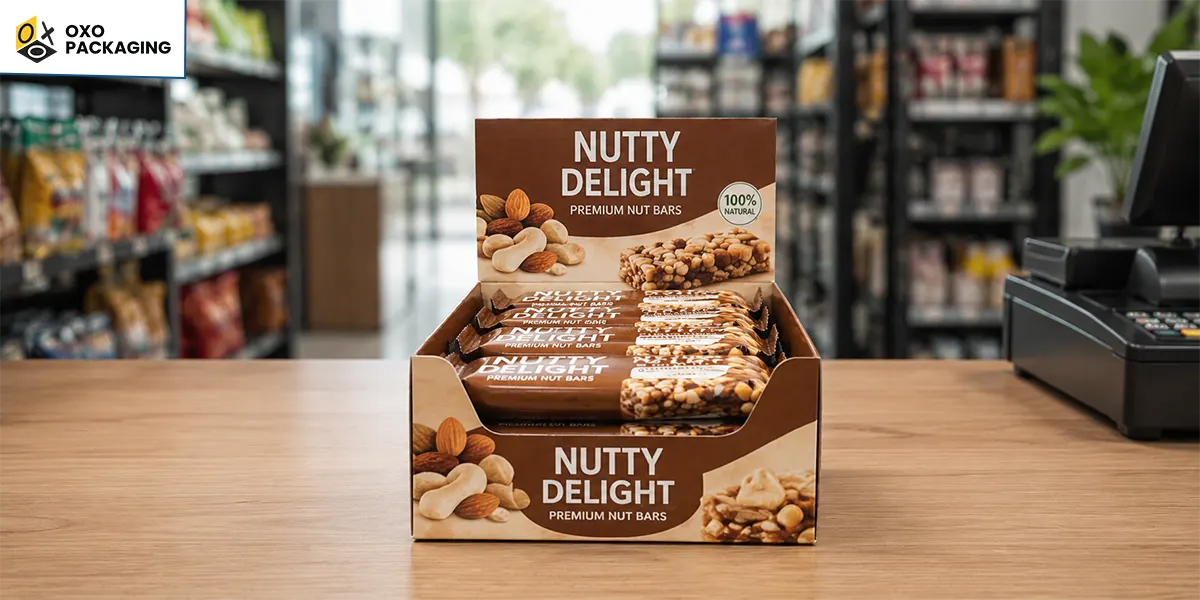
Simply, your box presentation is a facade of your brand. But why choose custom display packaging specifically? You leverage them when your purpose is marketing, visibility, and presentation. However, standard boxes are used for protection and secure shipping.
Unlike standard shipping boxes, display boxes serve as a direct, active marketing tool to organize products on countertops. As a result, they increase your brand presence and eventually sales. For example, businesses place countertop displays near cashiers to encourage last-minute, grab-and-go purchases of small items like candy, lip balms, or accessories.
An Overview of Display Packaging
Display packaging is a specialized form of retail merchandising designed to hold, protect, and showcase products directly on store shelves, countertops, or in high-traffic aisles. Unlike standard shipping containers, custom display boxes are designed to be aesthetically pleasing and functional, often doubling as a “silent salesperson” that drives impulse purchases and increases brand visibility without requiring separate store fixtures.
Explore Key Characteristics of Custom Display Boxes

Compared to standard boxes, display boxes usually feature open-front structures, die-cut windows, and tiered designs like staircase interiors to ensure products are visible and easily accessible.
-
Packaging Materials
Cardboard (SBS), corrugated board, Kraft paper, and rigid board are major packaging materials for crafting display boxes. Corrugated is Ideal for heavier or bulk products, floor displays, and shipping, offering high impact resistance.
Other materials designed to be customizable in shape and size. They often feature protective coatings to ensure product safety on retail shelves.
-
Packaging Styles
Talking about styles, display boxes have a wide variety. Countertop Display Boxes (CDU), PDQ (Pretty Darn Quick), Floor Display Units (FSDU), Window Display Boxes, Peg Display Boxes, and Double Flip Top Boxes are common examples.
How Do Display Boxes Differ from Other Types of Packaging?
While display boxes are often delivered as “shelf-ready,” requiring little to no assembly, allowing for rapid placement. Other factors that distinguish them from other packaging boxes are:
-
Offer Excellent Protection and Containment
Made from sturdy materials, product display boxes absorb shocks and protect your products from damage during transport and on-shelf handling. They often feature custom-designed die-cut inserts, trays, or partitions to hold items securely in place while preventing them from moving around, colliding with each other, and breaking.
-
Facilitate Handling and Logistics
Display boxes allow retail staff to place products directly on shelves, countertops, or end-caps without unpacking individual items. This significantly reduces restocking time and labor costs, particularly in high-volume environments.
-
Maximize Your Branding Information
Custom printed display boxes frequently include a header card that acts as a vertical billboard, allowing for larger, more visible branding (logo, company name, tagline) that stands out on shelves from a distance. Learn how catchy custom display boxes can further strengthen product visibility and maximize sales.
Key Differences of Display Boxes vs Other Packaging Types
Consider certain factors that differentiate display packaging from other types of boxes, such as custom pillow boxes:
-
Primary Purpose
The core function of custom display boxes is to “actively sell” the product by attracting customer attention and facilitating grab-and-go purchases. While traditional packaging prioritizes securing the product from damage, impact, dust, and moisture during handling and transportation.
-
Visibility and Structure
Unlike sealed boxes, display boxes often feature open fronts, cut-outs, or large transparent windows, allowing customers to touch, feel, or see the product inside without opening a package.
-
Retail Placement
Custom display boxes wholesale are typically placed on checkout counters, end-caps, or high-traffic areas to encourage last-minute impulse buys. Standard retail packaging is meant to sit on a generic shelf, blending with competitors.
-
Accessibility
Compared to conventional boxes like folding cartons that require unfolding, tearing, or searching, display boxes are designed to be "shelf-ready," allowing customers to see, touch, and retrieve products instantly.
-
Assembly and Marketing
You can set up display boxes quickly and easily, often in minutes, needing fewer, simpler steps to assemble and disassemble. Through unique shapes and custom designs, display boxes also allow for better brand storytelling and distinction from competitors.
-
Capacity
Display boxes (CDUs/FSDUs) are designed to hold smaller volumes of products for immediate, grab-and-go access at checkout. In contrast, corrugated shipping boxes are designed for maximum volume to protect products during transport, often containing several display boxes within them.
Comparison of Display Boxes vs Other Types
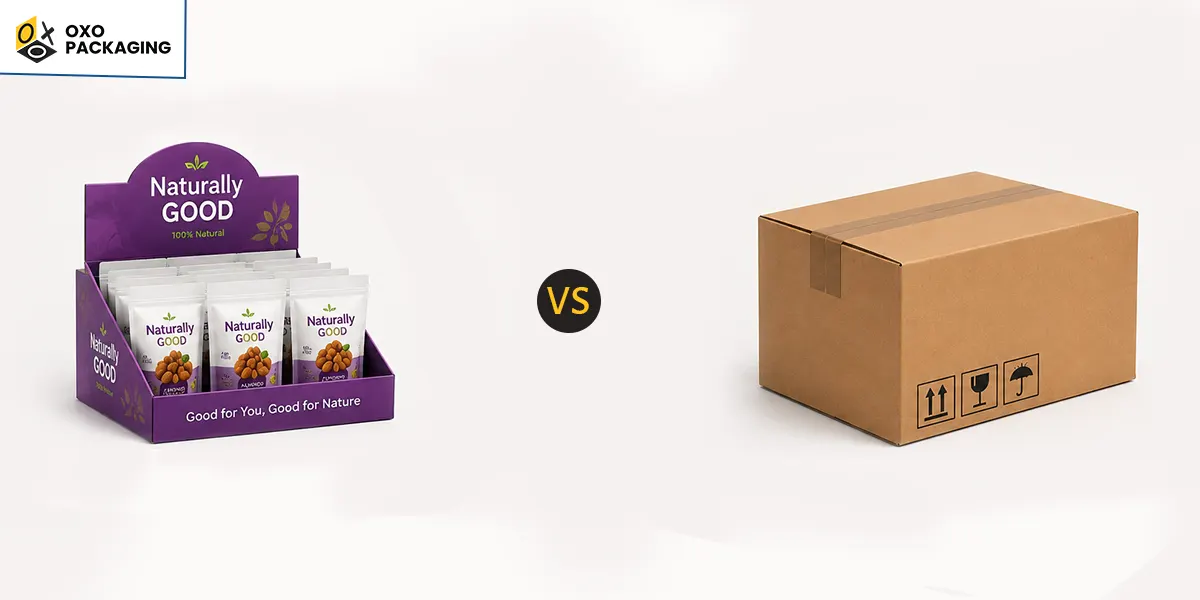
Since you have read the major differentiating factors of display boxes, now consider their comparisons with two other major types of boxes:
-
Display Boxes vs Shipping Boxes
Shipping boxes are popular for durability, stacking, and protecting contents during transit. They are often bland and meant to be discarded. Display boxes are printed with high-quality graphics and designed to be placed directly on shelves to grab attention.
-
Display Boxes vs Retail Boxes
Display boxes (especially POP displays) are designed to grab attention at the last minute and encourage impulse buys. Retail boxes enhance brand awareness on the shelf. Also, display boxes often have open designs, allowing consumers to see or interact with products. Retail boxes often have secure, fully enclosed, and specialized shapes.
When to Use Display Boxes vs Other Packaging?
When your purpose is to promote your brand visibility or marketing, confidently pick display boxes. They are excellent for promotions, seasonal products, and high-traffic areas. If you are still confused, contact OXO Packaging to choose the right packaging boxes tailored to your needs.
Display boxes are generally considered secondary packaging, not primary packaging, because they typically hold already-packaged products like bottles or boxes together for retail display
Yes, display boxes provide significant protection for products. Beyond enhancing visibility, they secure items against physical damage, environmental factors, and potential theft.
The best materials for display packaging are cardboard for affordability, corrugated fiberboard for durability, and rigid board for luxury, often chosen for their customizability.
Yes, display boxes are highly eco-friendly, especially when manufactured from cardboard or corrugated materials. These materials are biodegradable, recyclable, and often made from recycled content







 Let's Call