


How Many Cigarettes Are in a Pack? Read on to Find!

Knowing the number of cigarettes in a cigarette box is essential for the manufacturers and sellers. It not only helps you abide by the law of the state but also assists in managing your stock efficiently.
You should also know how many cigarette boxes you should pack in a carton for shipping and storage purposes. In this blog, we will discuss in detail how many cigarettes are in a pack. Also, we’ll be exploring the importance of knowing these numbers. Read on!
Importance of Knowing How Many Cigarettes Are in a Pack
If you are clueless about how many cigarettes you have in a single box packaging, you will never be able to calculate your stock accurately. Stacking and managing the product stock suitably is a need for every business. Here are some benefits of knowing the number of cigarettes in a pack:
Accurate Ordering & Restocking:
By accurately knowing the number of cigarettes a single packet accommodates, you can streamline ordering and restocking. You don’t have to mention the gross number of cigarettes on every order. Just mention how many packets you are sending to your customers or forward your restocking requirement to the manufacturers in the number of boxes instead of cigarettes.
Reduces Packaging & Shipping Errors:
Boxes are easier to stack and arrange in a limited space than individual cigarettes. So, standardizing the number of cigarettes in a single packaging box will help you streamline your packaging and shipping and reduce the chances of errors.
Efficient Inventory Management:
Packaging boxes are easy to store in inventory. Counting all the cigarettes can be a hectic task for you. So, make packets of cigarettes, each containing 20 pieces. It will help you manage your inventory proficiently.
How Many Cigarettes are Packed in a Box?

If you are a cigarette-selling business, you should know how many of your cigarettes will be perfectly packed in a single box. As discussed earlier, it can bring you a lot of benefits like inventory management and more.
Before we dive into the actual number of cigarettes in a packaging box, we should understand how to calculate the right size of the box that you can use to pack your cigarettes. An average packet of cigarettes is 3.35 x 2.20 x 0.87 cubic inches in size.
Considering the dimensions of an average cigarette, not more than 30 cigarettes can be accommodated in this box.
Legislative Guidelines for Number of Cigarettes in a Box
Although cigarette boxes can accommodate 30 cigarettes per packet, it doesn’t mean that all the cigarette boxes come with 30 cigarettes. This number also depends upon the permission granted by the government.
In the US, you are allowed to pack 20 cigarettes in a single packaging box. However, in Canada and Australia, this number can range from 25 to 30. Keep in mind that you should pack the number of cigarettes in your packaging that your State allows!
How Many Boxes of Cigarettes Are in a Carton?
We know that the total number of cigarettes may vary from 20 to 30 cigarettes in a single packet. But how many cigarettes are in a carton is yet to be answered. If you want to manage inventory or ship your cigarettes wholesale, you should know how many cigarette boxes you should pack in a single carton.
The number of cigarette boxes in a shipping or mailing carton depends upon the size of the carton. Usually, a pack of 10 packets is packed in a small cigarette carton.
However, when shipping cigarettes in bulk, one carton can accommodate at least 50 or more cigarette packaging boxes.
Impact of Cigarette Box Dimensions on Brand
Choosing the right cigarette dimensions plays a crucial role in building a brand reputation. Consider these dimensions to boost customer experience, so they can easily carry them in their pockets or bags. Wondering why? Knowing cigarette stick sizes and lengths directly helps you measure the interior volume, structural proportions, and exterior dimensions of cigarette box packaging.
The length of the cigarette stick determines the height of your cigar box. However, the width and depth of your cigarettes decide the number of sticks to be packed in a box. For that, consider standard cigarette stick sizes and lengths:
Standard Cigarette Lengths
|
Cigarette Stick Type |
Length |
|
Regular (Short) |
70 mm (2.75 inches) |
|
King Size |
84 mm to 88 mm (about 3.3 to 3.5 inches) |
|
100s (Long) |
100 mm to 101 mm (about 3.9 to 4.1 inches) |
|
120s (Extra-Long) |
110 mm to 121 mm (about 4.3 to 4.7 inches) |
Cigarette Stick Diameters
|
Cigarette Stick Type |
Diameter |
|
Regular (Short) |
7.5 mm to 8.0 mm |
|
King Size |
7.5 mm to 8.0 mm |
|
100s (Long) |
5 mm to 6 mm |
|
120s (Extra-Long) |
5 mm to 6 mm |
Standard Pack and Carton Configurations
|
Packaging Type |
Cigarette Count |
Dimensions (Metric) |
Dimensions (Imperial) |
|
Standard Pack |
20 cigarettes |
85 mm × 55 mm × 22 mm |
3.35 × 2.17 × 0.87 inches |
|
Standard Carton |
10 packs (200 cigarettes total) |
270 mm × 85 mm × 55 mm |
10.63 × 3.35 × 2.17 inches |
What Factors Affect Cigarette Box Sizes?
There are certain factors that affect the dimensions of the cigarette box. Here are some of those factors for you to consider:
1. Market Demand
Cultural preferences and smoking habits also play a crucial role in determining the most popular cigarette sizes within a particular market region-wide. For example, the most common cigarette pack size contains 20 cigarettes in America.
While other pack sizes, such as 100s and slim pack exist, but 20-cigarette pack is the standard and most commonly purchased size in the American market.
2. Economic Considerations
Economic factors also influence the number of cigarettes included in a box. Production costs and pricing strategies are among the economic factors. Larger packs may need more material and potentially cost more to produce. But they might also be more cost-effective per cigarette.
Manufacturers may adjust pack sizes to remain competitive or to appeal to different consumer segments. For example, offering a smaller pack at a lower price point can attract price-conscious users.
3. Government Regulations
Several countries have mandated larger health warnings on cigarette packs. They control a significant portion of cigarette packaging, at approximately 50% or 60%. This action is taken to lower the negative health impact of smoking.
This is the reason the US federal government mandates that cigarette packs contain 20 cigarettes. This standard size is consistent across all states and is intended to ensure uniform pricing and packaging.
Economic and Marketing Considerations for Cigarette Packaging
Economic factors, including production costs, taxes, and consumer preferences, affect the number of cigarettes in a box. Larger packs may be favored for cost savings, while smaller packs can appeal to infrequent smokers.
- Production Costs: The cost of manufacturing cigarettes, including materials and labor, affects the number of cigarettes packed together. Larger cartons may offer a cost advantage for bulk purchases.
- Taxes: Taxes on cigarettes are often levied per pack, and this can influence manufacturers to adjust pack sizes. A larger pack size might appear more attractive if the per-cigarette cost is lower due to how taxes are applied.
- Consumer Preferences: Individual smoking habits and preferences play a role. Some smokers prefer larger packs for convenience, while others might opt for smaller packs to control their consumption or due to budget limitations.
Types of Cigarette Packaging Boxes
Now that we know the number of cigarettes you can pack in a cigarette box, let’s explore some common types of custom cigarette packaging boxes. You can choose the one that can fulfill your requirements. Here are two types of cigarette boxes you can consider:
1. Soft Cigarette Boxes
Soft cigarette boxes are made of flexible and thin paper or cardboard material that is inexpensive and has less weight than other options. These boxes for cigarettes are perfect for those who are looking for a budget-friendly packaging solution for their products.
Despite being soft and flexible, they can pack and bear the weight of at least 20 cigarettes without any hassle. Being flexible, these boxes are easy to customize in the shapes and sizes of your requirements. So, you do not have to mandatorily go for expensive and high-end cigarette boxes to enjoy customization options.
2. Hard Cigarette Boxes
Protective and premium cigarette packaging is made of thick cardboard or rigid stock. Such packaging boxes are commonly known as hard cigarette boxes. They are famous for their robust packaging material that protects premium cigarettes from any type of damage.
Although these packaging boxes may cost you a bit more than others, they can help boost your cigarette brand as they offer a luxurious feel to your buyers.
These packaging boxes are premium; however, their capacity for storing cigarettes is similar to others, helping you abide by the law. You can pack 20 cigarettes in hard packaging boxes easily.

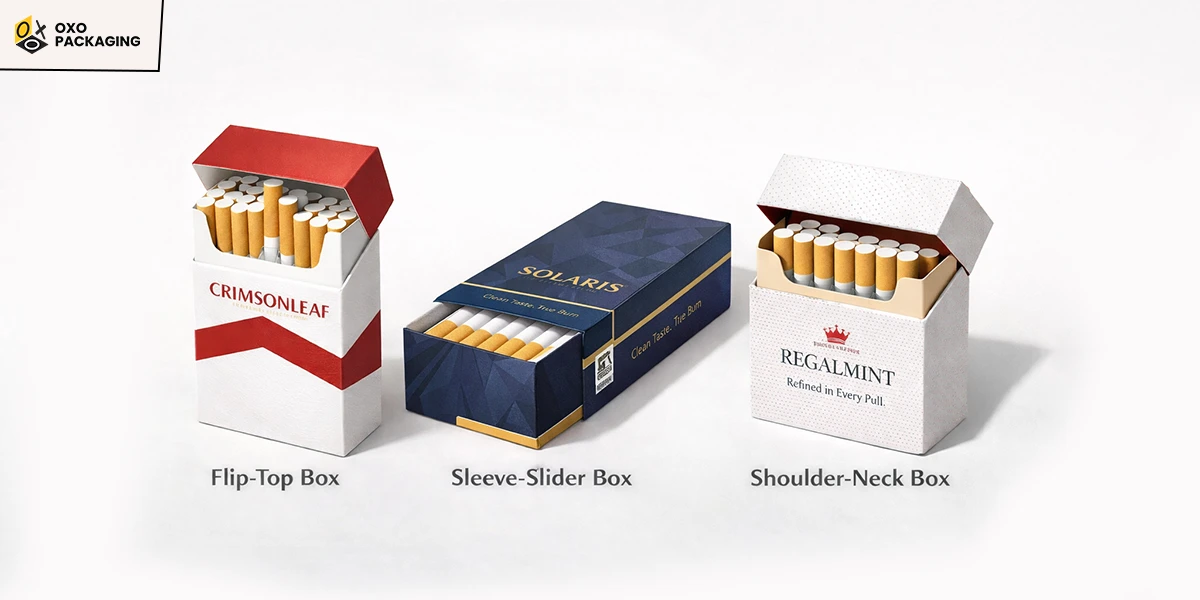
Styles of Cigarette Boxes
The number of cigarettes packed inside a box can be influenced by the box style. Here are some common box styles that help you easily pack 20 cigarettes and provide an exceptional unboxing experience as well:
- Flip-Top Box: One of the most commonly used cigarette box styles is flip-top. It comes with a hinged lid on the top that can be conveniently flipped to open the packaging box.
- Sleeve-Slider Box: This box style is famous for its classy unboxing style. The drawer-style unboxing mechanism provides a unique experience for users.
- Shoulder-Neck Box: For premium and high-end cigarettes, the shoulder-neck box style is excellent. This style of rigid cigarette boxes mostly accommodates fewer than 20 cigarettes, yet greatly enhances the perceived value of products.
Cost of Cigarettes in a Pack
Understanding how many cigarettes are packed inside a pack also helps you calculate the exact price of each cigarette. For instance, the average price of a cigarette pack is around US$ 8. This means that a pack of 20 will cost you US$0.40 per cigarette. The cost of cigarettes is determined by various factors such as expenses of production, quality of cigarettes, and government taxes.
When it comes to production, raw material, labor cost, packaging cost, and shipping prices are major determinants of price. The quality of raw materials also comes in a range of prices. Government taxes are mainly applied to cigarette packs to discourage such a hazardous habit.
A Brief History of Cigarette Packaging
Early cigarette boxes were simple in the 1800s. They were entirely unadorned paperboard sleeves designed purely to keep crushed tobacco leaves safe during shipping. Manufacturers used to insert small picture or collectible cards inside the packs to keep the paper structure stiff (giving rise to classic "cigarette cards").
Over time, there was a rise in branding in the early-to-mid 1900s. Advancements in printing allowed brands to use vivid colors, logos, and distinct typography to build identity. Some vintage styles used round metal or paper containers with pull-tab and peel-back lid mechanisms, which became popular in the 1930s.
Introduced in the early 1950s, the hard hinge-lid or flip-top box let users open and close the pack cleanly while keeping cigarettes rigid and fresh. Following reports like the 1964 U.S. Surgeon General’s report, governments began forcing tobacco companies to print textual health warnings on the side or front of packages (such as the 1965 Act in the U.S. and 1971 rules in the UK).
However, tobacco firms fought back legally and politically to keep warnings small and quiet, while marketing continued to dominate the visual space. And this approach is still in practice to this day.
Where to Buy Cigarette Packaging Boxes?
If you are looking for a reliable packaging company to customize your cigarette boxes, look no further than OXO Packaging. We are among the best packaging suppliers in the USA, offering high-quality packaging solutions at a reasonable price.
You can get endless customization choices from us to get perfect boxes that snugly pack 20 cigarettes. Personalize shapes, sizes, and prints of your cigarette boxes to your liking.
Conclusion
As a cigarette business owner, you should know the number of cigarettes that can be packed in a cigarette box. In this blog, we have discussed in detail how many cigarettes are in a pack. If you are still confused, you can reach out to our customer support via call or email. You can also reach out to us to get an instant quote for custom cigarette boxes.
A standard carton of cigarettes typically contains 10 packs, with each pack containing 20 cigarettes. Therefore, a carton of cigarettes contains a total of 200 cigarettes.
A sleeve of cigarettes typically contains 10 packs, and each pack usually contains 20 cigarettes. Therefore, a sleeve contains a total of 200 cigarettes (10 packs x 20 cigarettes/pack).
A reasonable estimate for a standard carton of 200 cigarettes is around $50 to $60 USD. However, generally cost of carton is based on brand, location, and taxes.
A pack contains 20 cigarettes, which are commonly found among different cigarette makers and are a regulated size in the US.






 Let's Call