


Tuck Boxes in Retail: Why They’re a Universal Packaging Choice
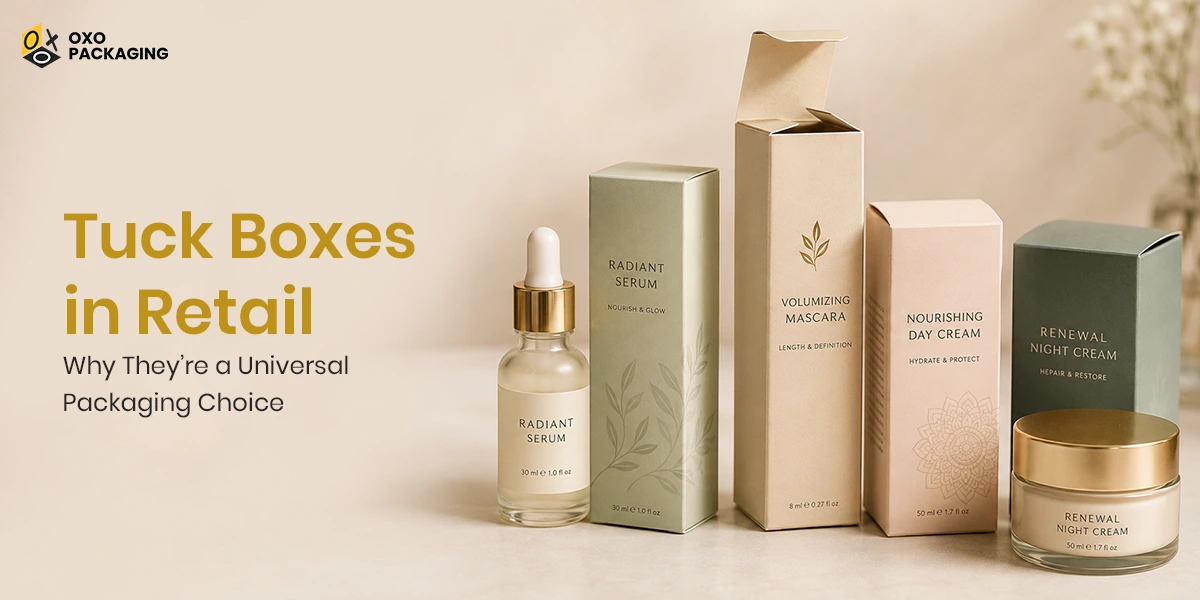
Tuck boxes are the unsung heroes of retail store shelves. Smart brands love using them as they are marketing superstars, space savers, and speed demons, as quick assembly speeds up the packing line. And the best thing about them? They don’t empty your wallet while doing your 360-degree branding.
Take inspiration from L’Oréal USA, a beauty and cosmetics brand that uses tuck boxes for serums, mascaras, and creams to create a clean front panel on store shelves. Their product packaging perfectly reflects iconic branding that creates a big business impact. You can also do the same. Explore here in detail to learn how.
What are Tuck Boxes?
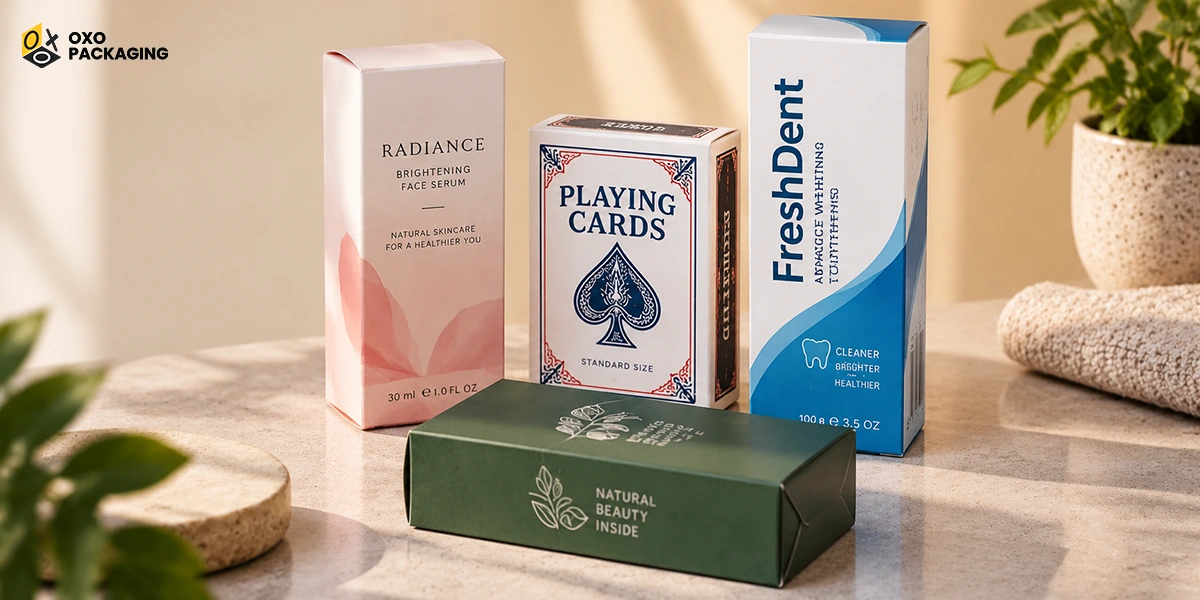
A tuck box is a lightweight, folding carton packaging solution. It secures its contents using integrated paperboard flaps that “tuck” directly into the box structure.
If you have ever opened a deck of Bicycle playing cards, unwrapped a fresh tube of toothpaste, or pulled a bottle of serum out of a cosmetic box, you have interacted with a tuck box. It is a masterful piece of structural origami designed to hold your items securely without needing tape, glue, or specialized fasteners.
Explore Popular Types of Tuck Boxes
The magic of the tuck box lies entirely in friction. It is manufactured from a single flat sheet of durable cardstock or kraft paper. Once folded into shape, it relies on tension to stay closed. Here are the main types of tuck boxes categorized by how their flaps meet:
1. Straight Tuck
The top and bottom flaps fold toward the exact same side of the box. This keeps the front face completely smooth and unblemished, making it the favorite choice for high-end retail displays. For example, Crayola uses straight tuck end boxes that feature the unmistakable yellow and green branding, optimized for quick shelf-stacking and easy child access.
2. Reverse Tuck
The top flap closes forward, while the bottom flap closes backward. This alternating design allows manufacturers to nest the flat layouts tightly together on a single sheet of cardboard, drastically reducing material waste and production costs.
Widely found in US drugstores and supermarkets, Burt’s Bees uses small reverse tuck boxes for lip balms, small skincare items, and soaps to highlight their natural yellow-and-honey branding.
3. Auto-Lock Bottom
The top still features a classic tuck flap, but the bottom flaps are pre-glued to automatically snap and lock together the moment the box is popped open. This provides a heavy-duty base perfect for heavier retail items like candles or perfume jars.
Glossier, the cult-favorite US beauty brand, relies on distinctive signature mailer and auto-lock boxes. They feature their iconic millennial pink interiors, utilizing quick-assembly structures that make customers immediately link the packaging design to the brand experience.
Versatile Box Packaging Materials
Several materials are used to make tuck boxes. The exact material choice determines whether a tuck box feels like an affordable drugstore cosmetic container or a luxury tech package. Here are the primary materials used based on their unique personalities and strengths:
Solid Bleached Sulfate (SBS) Paperboard
It is a premium, pure white inside-and-out material that offers an ultra-smooth surface. They are commonly used for high-end cosmetics, luxury perfumes, and pharmaceutical packaging that needs sharp text and vibrant color accuracy.
Kraft Paperboard
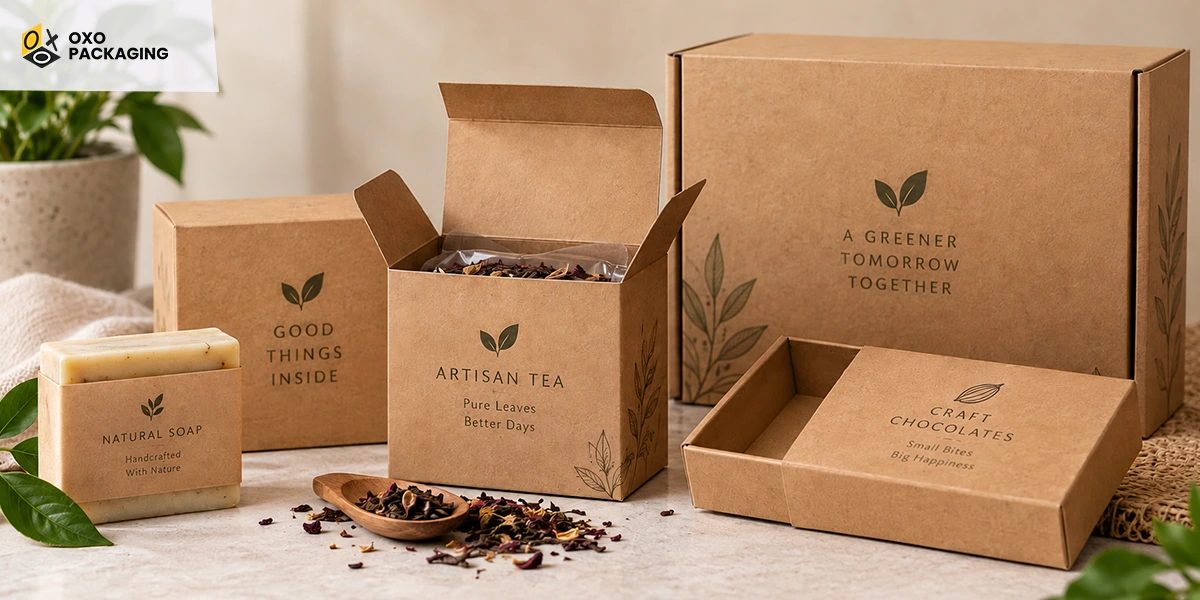
Made from unbleached wood fibers, kraft paperboard features a natural, rustic brown texture. It signals an “organic” and “eco-friendly” personality to customers the moment they look at it. Organic soaps, artisanal teas, craft chocolates, and eco-conscious subscription boxes are made using them.
Corrugated Cardboard
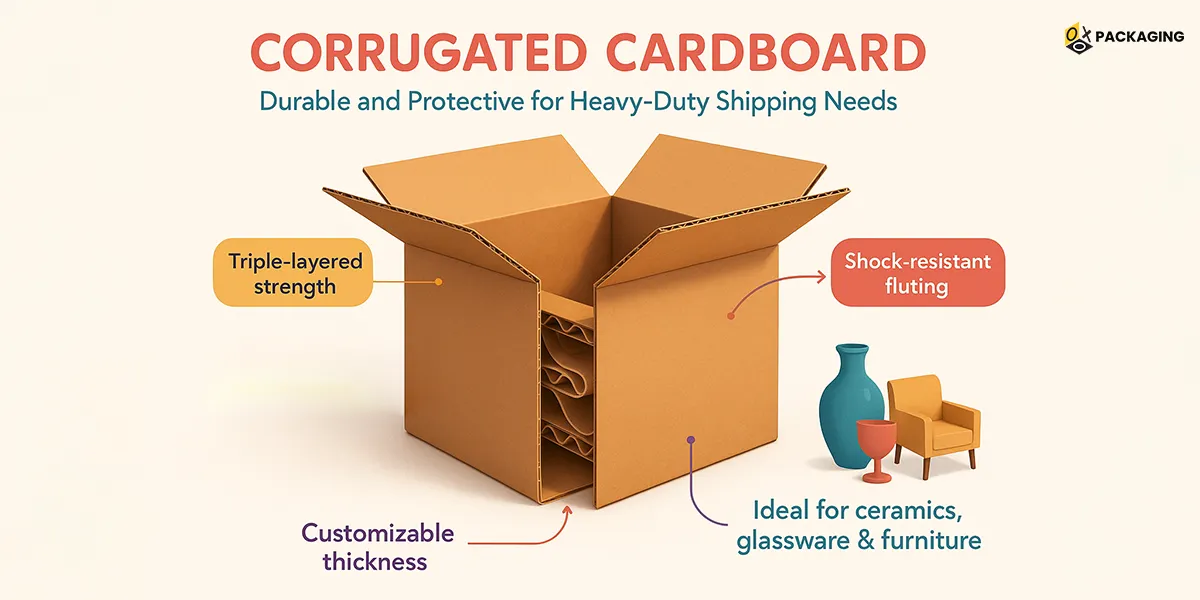
When a standard paperboard is too flimsy, corrugated board steps in. It utilizes a three-layer sandwich design featuring a wavy flute layer hidden between two flat liners. Tuck boxes use micro-flutes like E-flute (1.6mm) or F-flute (0.8mm) to maintain a slim profile while offering structural strength.
Specialty Cardstocks
These are paperboards pre-treated with metallic foils, holographic films, or unique matte or gloss textures. They catch retail lighting efficiently and bypass the need for heavy external printing.
Design Options to Elevate Branding in the Retail Market
Tuck boxes are much more than simple packaging. By utilizing full CMYK color printing, brands like yours can transform all six panels of a box into a fully immersive retail brand experience. This process ensures high-resolution product photography, logos, scannable barcodes, and regulatory text are reproduced with absolute clarity, instantly catching the consumer's eye on crowded retail shelves.
The Anatomy of a Six-Sided Story
Every angle of a retail tuck box serves a specific marketing or informational purpose:
- Front Panels: Feature bold product names and striking hero imagery to capture immediate attention.
- Side Panels: House technical data, including nutrition facts, ingredient lists, or game components.
- Back Panels: Deliver descriptive product copy, step-by-step usage instructions, and marketing messages.
- Interior Printing: Reveal a premium unboxing experience with hidden surprise elements or brand patterns.
Finishes That Leave a Lasting Impression
The final touch of a tuck box relies on texture and light manipulation to elevate the product's perceived value:
- Gloss Coating: Boosts color vibrancy for maximum shelf presence.
- Matte Coating: Softens the look for a sleek, sophisticated, and modern appearance.
- Spot UV: Creates a dramatic, high-contrast texture by layering glossy accents over matte surfaces.
- Soft-Touch Coating: Introduces a velvety, tactile luxury that encourages customers to hold the package.
Tuck Box Pricing Estimate
Tuck box pricing varies as your order volume increases; your cost per box drastically decreases. Its production costs change based on your chosen box dimensions, material thickness, and printing complexity. To maximize your budget, you're looking at the sharp drop in per-unit rates (estimated) across production tiers:
- 100 Units: $1.45 per box ($145.00 total investment)
- 500 Units: $0.75 per box ($375.00 total investment)
- 1,000 Units: $0.52 per box ($520.00 total investment)
Common Applications of Tuck Boxes
Tuck boxes are used everywhere from game nights to pharmacy shelves, but their most common uses include:
- Small Goods: They keep little products like soaps, candles, teas, and supplements safe, look great, and make opening a product feel like unwrapping a tiny present.
- Cosmetics and Skincare: Keep long, thin tubes standing upright and neat on crowded store shelves. Shields delicate pressed powders and mirrored lids from sudden drops and bumps.
- Game and Hobby Industry: They are the compact, foldable cardboard packaging that keeps your favorite components safe, organized, and ready for action.
- Retail Hanging and Display: Tuck boxes act as the street performers, levitating at eye level, grabbing attention, and refusing to be ignored.
Where to Get Well-Designed Tuck Boxes?
Whether you need a straight tuck box for a clean, sleek retail display, or auto lock boxes for e-commerce transit, the right manufacturing partner makes all the difference. Consider OXO Packaging, which offers incredible custom options for your tuck packaging, such as professional structural expertise, endless paperboard choices, and jaw-dropping finishes.
A tuck box is a foldable paperboard carton that closes securely by tucking its flaps inside the body without needing tape or glue.
A standard custom tuck box usually costs between $0.35 and $2.50 per unit, depending almost entirely on your order volume, the box size, and the level of customization.
Retail boxes fall into three main structural material categories, including folding cartons, rigid boxes, and corrugated boxes.
Tuck boxes hold small, lightweight items like playing cards, cosmetics, and small retail goods such as soaps, toothpastes, and candles.







 Let's Call