


Starting a Chocolate Business: Packaging Checklist
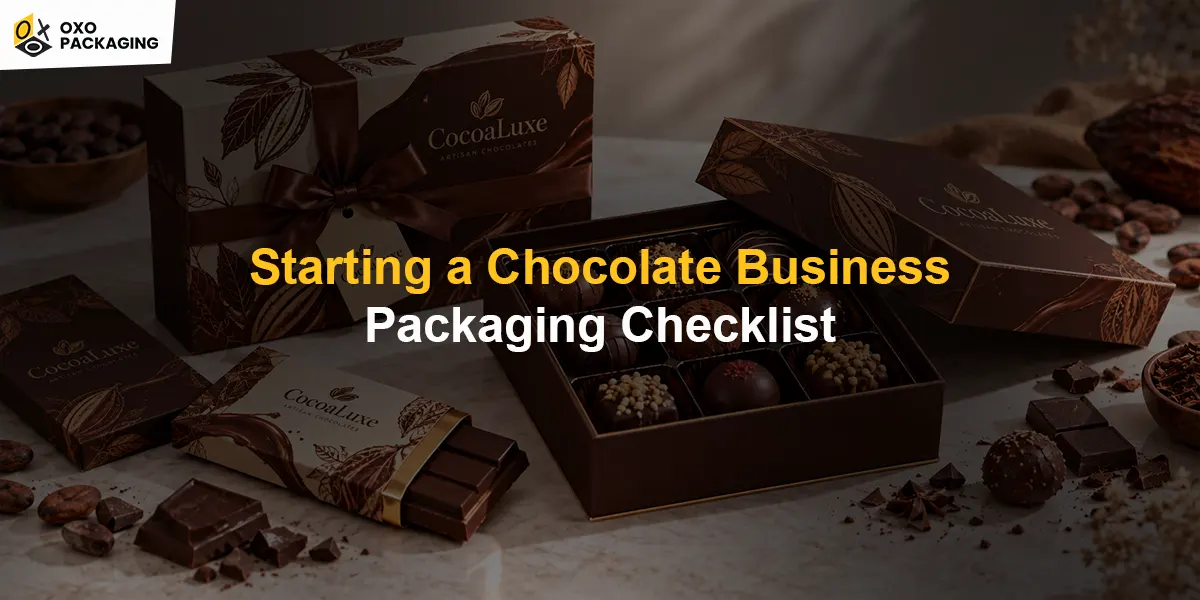
If you are starting a chocolate business, you might face fierce competition. The reason is that the retail aisle is crowded with big global chocolate brands. So how can you cut the market? By choosing proper packaging for your chocolates, truffles, or bonbons.
Wondering why? First impressions are everything in the chocolate world. And your packaging speaks before the customer even takes a bite. Consumers judge your chocolate's taste and quality based on how it looks before they ever open it.
Read this comprehensive guide on chocolate packaging to ensure your brand stands out and stays fresh.
Functional and Protective Packaging
Imagine you received an order for artisanal 72% dark chocolate truffle infused with a hint of rare Madagascan vanilla. You just crafted it in a boutique kitchen. And your final destiny is to bring absolute bliss to your customer’s celebration.
But between the chef’s counter and that first luxurious bite lies a treacherous, chaotic journey. This is why functional and protective packaging isn't just a wrapper; it's your high-tech superhero suit. Consider the factors below to prevent chaotic chocolate delivery and unboxing:
-
Temperature & Moisture Control
Cocoa butter melts at 34°C – 38°C. Using proper insulation or foil layers, you can prevent the chocolate from melting or deforming in warm conditions. Apart from extreme heat, moisture also releases water vapor. It causes sugar bloom (a white, sticky surface crust) and ruins the crisp chocolate texture. However, airtight wrappers keep ambient moisture out, keeping your chocolate texture pristine.
-
Structural Integrity
Chocolate bars are sensitive to vibrations, temperature drops, and stacking pressures during shipping. If your packaging structure is weak, fat or moisture migrate to the surface. This migration results in a dull, whitish coating known as bloom. While harmless to eat, bloom makes the chocolate look unappealing and taste stale.
However, strong structural integrity ensures that your bars do not crack, and delicate filled bonbons do not collapse or leak. Rigid boxes serve as ironclad shields. They absorb shocks during transit, preventing the bars or truffles from breaking, chipping, or scratching.
-
Food-Grade Certification
Cocoa butter and fats in chocolate act as solvents that accelerate the absorption of harmful substances like plasticizers, inks, or industrial adhesives from non-compliant materials. Choosing certified materials ensures the packaging is inert, preventing unwanted cardboard smells or chemical tastes from ruining the delicate flavor of the chocolate.
Authorities like the US FDA or EU food-contact regulations require documented proof that materials touching edibles are completely non-toxic. Certification marks give buyers confidence that the product is safe to eat and handled under strict sanitary standards.
-
Insert Cushions & Dividers
Dividers and custom trays hold each piece of chocolate firmly in place. They stop chocolate bars from sliding, colliding, or rubbing against one another during shipping. Cushion pads use multi-layered or elastic paper structures to absorb external vibrations and impact forces from shipping carriers like FedEx, UPS, or Amazon.
As a result, intricate toppings, decorative cocoa drizzles, and fine coatings remain intact without chipping or scuffing. Also, specialized glassine-faced or greaseproof cushion pads isolate cocoa butter migration, keeping box lids and outer packaging clean and stain-free.
Branding and Visual Aesthetics
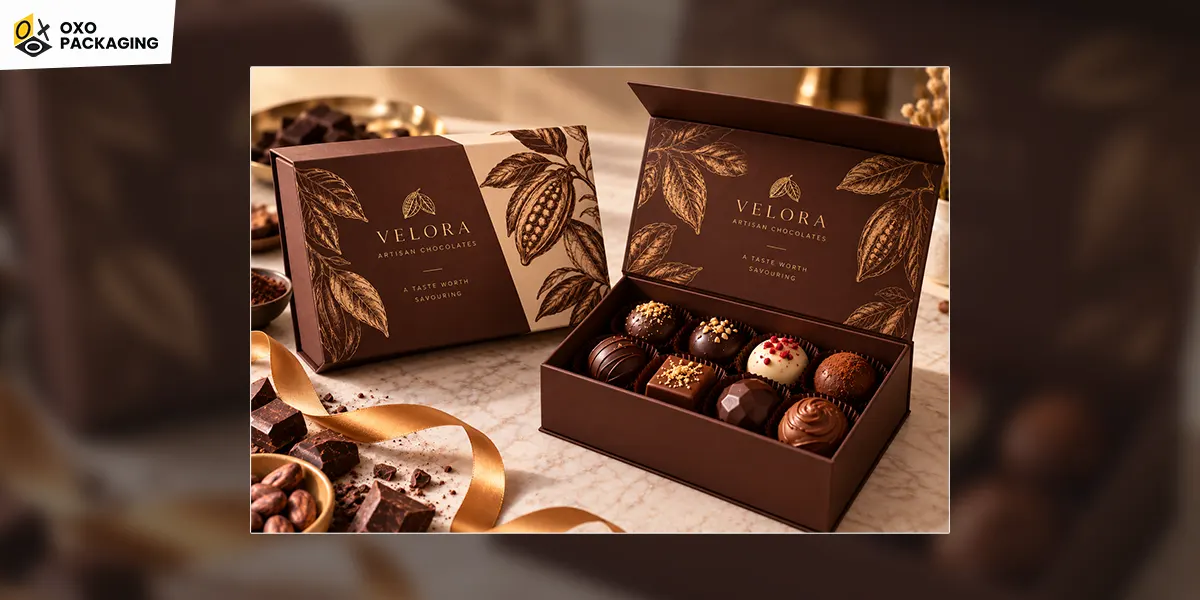
Chocolate is inherently an emotional and sensory purchase. That’s why packaging becomes an exclusive part of branding and marketing for chocolate startups to stand out and build immediate trust. Because consumers cannot taste a product through a screen, your packaging visuals must do the heavy lifting of communicating flavor, quality, and values:
-
Brand Identity Alignment
The colors, typography, and textures used on packaging heavily influence how consumers expect the chocolate to taste. For example, deep earth tones suggest organic, dark chocolate, while pastels often hint at creamy, milk chocolate, or adventurous flavors.
On a crowded retail shelf or Instagram feed, you have less than three seconds to catch a shopper's attention. Unique visual elements make customers stop the scroll or the stroll.
-
Exterior Materials
The materials you choose for outer chocolate packages play an important role in protecting the product and communicating brand value. For example, outer cartons, folding boxes, and rigid cardboard sleeves shield delicate chocolate bars, truffles, and assortment boxes from bending, crushing, and physical impact during shipping and retail handling.
While inner foils or plastic films handle direct moisture and oxygen defense, sturdy exterior paperboard and cardboard layers add an extra defense against light, minor humidity shifts, and temperature fluctuations.
-
Printing Options
Clear printing ensures that ingredients, batch numbers, expiration dates, and food safety compliance details remain legible and smudge-resistant. High-resolution logos, unique typography, and printing options (Offset, Digital, and Flexography), precise color schemes (like CMYK or PMS palettes) make your brand instantly recognizable on a crowded shelf.
-
Finishing Touches
Tactile finishes on packaging like soft-touch lamination or embossing encourage customers to touch and hold the product, increasing engagement time and boosting purchases. Embellishments such as foil stamping and spot UV coatings signal high quality and care, allowing brands like yours to command premium pricing.
-
The Unboxing Journey
Because premium chocolate is an affordable luxury, a gift, or a personal reward, the layers a customer peels back let you build anticipation, engage the senses, and tell your brand’s story before they even take the first bite.
Such as sliding off a textured custom sleeve, opening a rigid lid, lifting a sheet of branded glassine paper, and finally revealing neatly arranged, pristine bonbons. They turn a simple unboxing into a memorable, shareable ritual that justifies a premium price point and makes your chocolates highly giftable.
Legal and Regulatory Compliance
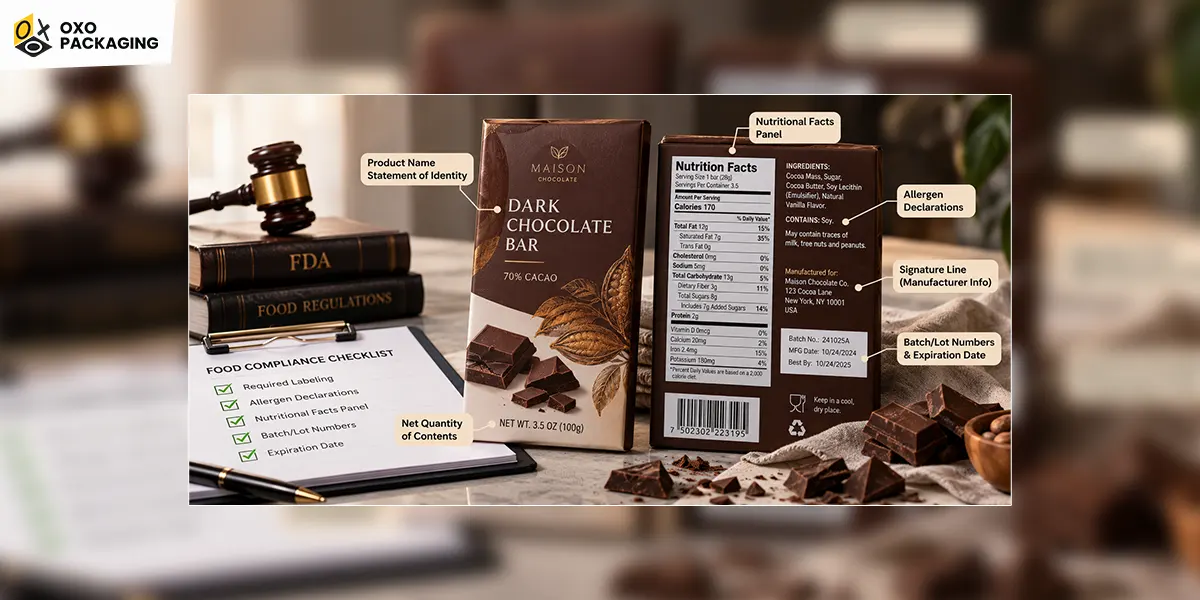
Before a single piece of chocolate can be sold, your packaging must double as a legal document. Food regulatory bodies, such as the FDA in the United States, have strict rules to protect consumers. Skipping these steps can lead to costly fines, product recalls, or health risks:
-
Required Labeling Elements
Your outer packaging must present three significant pieces of information clearly, usually on the front or principal display panel:
- Statement of Identity (Product Name): You must state exactly what the product is. It cannot just say “Dark Delight”; it must explicitly say “Dark Chocolate Bar” or “Assorted Chocolate Truffles.”
- Net Quantity of Contents (Net Weight): This is the actual weight of the chocolate itself, excluding the wrapper and box. It must be listed in both ounces/pounds and grams (e.g., Net Wt. 3.5 oz (100g)) and placed in the bottom third of the front label.
- Signature Line: This includes the name and physical address of your manufacturing business, packer, or distributor so authorities and consumers can contact you.
- Allergen Declarations You must clearly identify if your product contains, or was made in a facility that processes, the “Big 9” allergens.
- Direct Ingredients: If your chocolate contains milk, soy lecithin (a common emulsifier), tree nuts (almonds, hazelnuts), peanuts, or wheat/gluten, these must be explicitly stated in the ingredient list or in a dedicated "Contains" statement directly below it (e.g., Contains: Milk, Soy, Hazelnuts).
- Cross-Contamination Warnings: If you make dark chocolate on the same equipment used for milk chocolate, or use shared kitchen space, you must include a precautionary label such as: “May contain traces of milk and tree nuts” or “Processed in a facility that also handles peanuts.”
- Nutritional Facts Panel Most commercial food products require a standardized nutrition label. However, as a startup, you should look into small business exemptions.
- The Standard Grid: If required, you must feature the familiar rectangular grid detailing serving size, calories, total fat (including saturated and trans fats), sugar, and key vitamins.
- The Small Business Exemption: In many regions, if your business employs fewer than a certain number of people or sells fewer than a specific number of units annually, you may be exempt from printing a full nutrition grid. Unless you make a health claim on the package (e.g., "High in protein" or "Sugar-free").
- Traceability If a batch of ingredients is ever recalled by your supplier, or if a customer reports an issue, you must be able to track every single item you sold.
- Batch/Lot Numbers: You must leave a designated space on your packaging (often a blank white box) where you can stamp or sticker a unique batch code for every production run.
- Expiration Tracking: Pair your lot number with a clear "Best By" or "Manufacturing Date" to ensure retailers rotate your stock and consumers eat the chocolate at peak freshness.
Wrap Up!
Launching a successful chocolate brand means you need to pay special attention to packaging. By treating your packaging as an essential ingredient, you ensure that your chocolates taste exactly as exquisite as you intended them to.
Use this blog as your roadmap, balance your striking visual branding with airtight legal compliance, and your brand will easily carve out its own space in a crowded retail aisle.
The best packaging for chocolate includes aluminum foil or metallized film to block moisture and odors, with a protective outer layer (like rigid paperboard, kraft paper, or tin boxes) to prevent physical damage and light exposure
A chocolate box generally costs between $20 and $500, heavily depending on the size, brand, and level of customization
Popular chocolate packaging ideas focus on minimalist designs, luxury unboxing, eco-friendly materials, and festive and seasonal themes.
A standard 1lb (16 oz) box of assorted chocolates typically contains between 28 and 36 pieces. However, 32 pieces is the most common average.






 Let's Call