


Why Labels Peel Off Mylar Bags & Stay on the Stock?
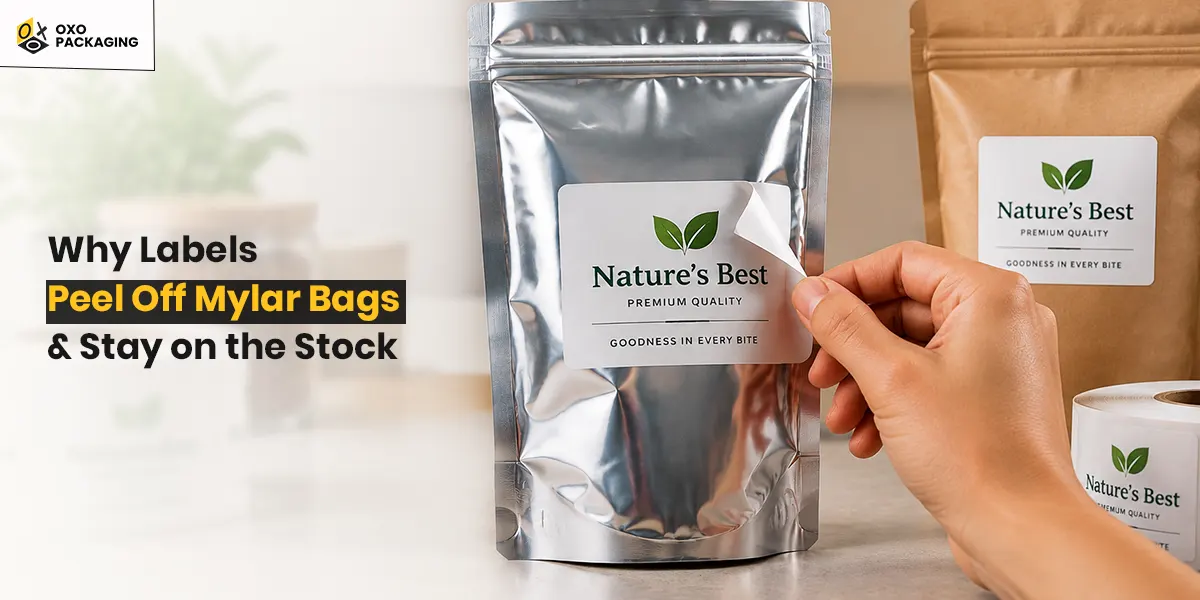
Whenever you visit a store or a mart, you often see multiple products which are stickered, showcasing the brand’s identity elements and multiple details on them. The labels are one of the effective ways to communicate with the customers when the actual printing isn’t being utilized on the primary packaging. Here in this blog, we’ll explore the reasons why some materials retain labels on them while others don’t. So, let’s read on.
Why Do Labels Don’t Last on Mylar Bags?
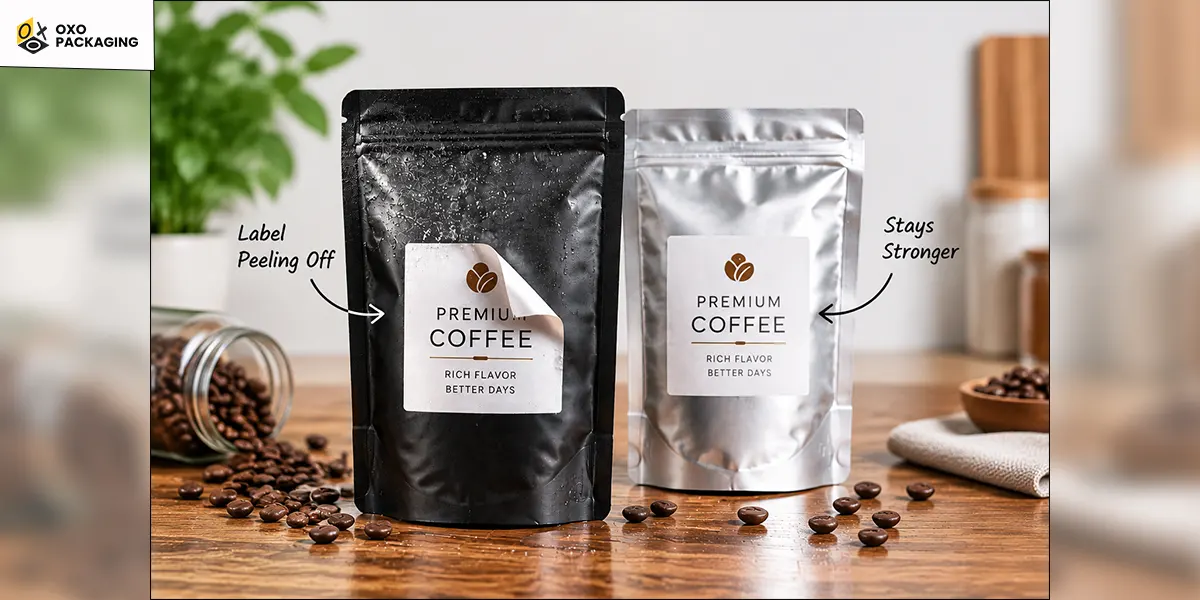
Mylar bags are one of the most reliable solutions for preserving packed contents. Its multi-layered properties resist the best against the environmental factors that can degrade the quality of the item. The printing aspect is concluded during the manufacturing phase, in which the brand’s imagery is stamped on the pouches.
However, there are also labels for specific reasons strain names, batch dates, promotions where clear labels keep the printed pouch visible underneath, such as sales promotions or limited-edition offerings. Since the stickers or labels are attached to it, there’s a high chance of them falling off the surface. Some of the reasons why this happens are briefly mentioned below:
-
The Unseen Moisture Under the Label
First of all, the moisture is the enemy of the glue, and it can’t retain its stickiness if it’s exposed for long. Once stickers are applied to the mylar bags, they grip the material for a long time, but the temperature changes the whole scenario here.
When the packed content is refrigerated due to the cooling environment, moisture forms on the packaging, which slowly peels off the labels. Its hidden root cause behind it is the inability of the sticker to maintain its grip anymore. A paper-faced sticker loses its grip here; waterproof stickers on film with a permanent acrylic adhesive don't.
-
Improper Application of Labels
There’s something uncommon that just starts once the stickers are being placed on the packaging. If the application of the labels gets any bubbles or empty spots in the process, this can impact the rest of the gluing.
Meanwhile, the issue isn’t in the stickers or labels, but their application determines whether they will stay on it for long or not. That’s why top packaging suppliers recommend applying the stickers in a proper way to maximize their output.
-
Uncontrolled Application Environment
Unfortunately, the environment in which the labels are applied can also impact its lasting. Here, the same scenario happens as with the post-application moisture. If the labels are applied in a high-humidity environment, the gluing ability of the labels gets compromised, and there’s a high chance that it will peel off quickly.
For the successful completion of this job, below are some of the ideal environment conditions that must be counted on:
- Room Temperature: 18°C to 24°C (65°F to 75°F)
- Surface Temperature: 10°C to 40°C (50°F to 104°F)
- Relative Humidity: 40% & 60%
-
Rough Surface of Application
Just like the application of the sticker counts a lot, the surface on which it’s being applied also matters. If the surface is bumpy or uneven, there’s a high chance that the stickers won't last there for long. Though that’s a rare case scenario with mylar packaging, as the surface is mostly flat for them.
Note: Due to some customization aspects, such as embossing or debossing, this can also happen for the mylar pouches as well. Kraft mylar bags are the exception: their paper face takes a label the way a box does.
Reason Why the Labeling Stickers Stick Well on the Stock
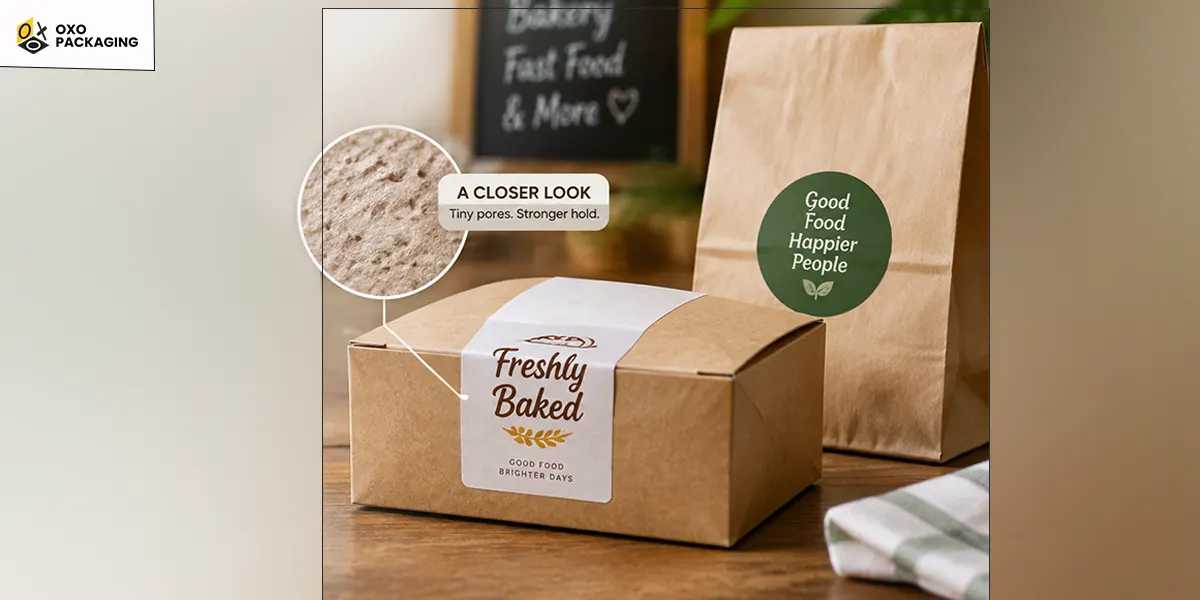
Now, the next comes the placement of labels on the paper-based packaging options. The scenario with paper boxes or bags is different, as the material properties are totally different compared to the mylar. Below are some of the reasons why the stickers don’t easily peel on or off from the stock.
-
Dry Packaging Surface
First of all, the opposite of the Mylar packaging surface is true with the paper. Its moisture-free surface makes it an ideal option to let the stickers be applied on it for the long term. Since there’s no risk that the label's effectiveness is compromised due to water content, brands consider them with utmost reliability.
For instance, one of the top applications of the stickers on the paper-based packaging can be for bakery items or fast food. These feature top-notch adhesion, which isn’t achieved the best way with a compatible surface.
-
Pores of the Surface
Something we usually don’t see is the Nano-level surface of the packaging, which offers an ideal environment to stick the labels. The surface of the paper packaging contains tiny pores which seem rough if we observe them with a magnifier, but in actuality the surface feels smooth.
Meanwhile, once the stickers are applied on it, the glue fills those tiny gaps and creates a resistive adhesion. The application gets more fixed as there’s no risk of any moisture, which can decrease the effectiveness of the labeling.
The Bottom Line
All in all, we hope you understand the difference and reason behind why the labels don’t peel off on some packaging materials and why they do on others. The way to avoid peeling is to match the stock to the surface: vinyl stickers for film pouches, paper for board. A trusted packaging company can help you choose the best option for your brand. You can reach us anytime by calling us at (510) 500-9533 or writing your query to sales@oxopackaging.com for a detailed response.
There’s a high chance that the labels peel off in a cold environment if they’re poorly placed on the packaging material whose surface is non-porous.
The unattached labels can be applied again, but their stickiness won’t be as effective as fresh application.
If the room has humidity scores around 40% to 50%, then there’s a high chance that the labels won’t get off the surface.
Some alternatives that can work for this situation are possible. For instance, the labels can be applied on the sleeves, and then those sleeves can be covered on the plastic, glass, or Mylar packaging.







 Let's Call