


Packaging Materials for Electronics: Paperboard vs Corrugated vs Rigid vs Molded Pulp
Did you know that electronics (e-waste) is more likely to reach 82 million tons by 32% in 2030? It was 62 million tons in 2022. That shows e-waste is increasing over time. The reason? Electronics are fragile, sensitive to static, and highly vulnerable to environmental factors.
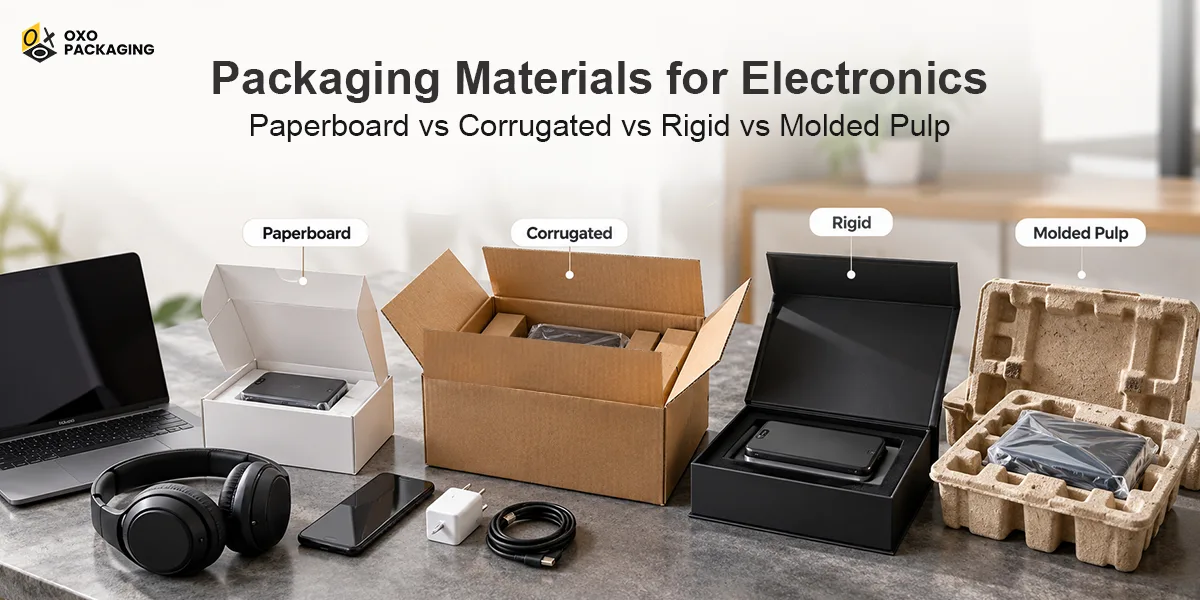
So they need protective electronics packaging boxes or pouches to prevent shock, breakage, or spoilage during global shipping. Following this, 4 key packaging material types for electronics emerge. Paperboard, corrugated, rigid, and molded pulp are among them.
The question arises: which one should you opt for to protect your electronics and reduce your shipping costs? Read on!
Paperboard
To understand what type of material to choose for electronics packaging, first understand all kinds in detail. When it comes to paperboard, Solid Bleached Sulfate (SBS) plays a significant role. Wondering what is SBS paperboard? It is a premium, virgin wood pulp-based material used in electronics packaging for its brilliant white finish, structural rigidity, and superior print fidelity.
Key Features
- Material Composition: Made from 100% bleached chemical virgin pulp (with optional clay coatings like C1S or C2S), ensuring a smooth, uniform surface free of impurities or recycled specks.
- Paperboard Thickness: Generally, ranges from 0.021 to 0.024 inches (21–24 pt) or 350–450 GSM for folding cartons, making them ideal for lightweight electronic accessories, cables, and headphones.
- Superior Printability: The ultra-smooth, clay-coated white surface allows for high-resolution graphics, vibrant brand colors, crisp typography, and metallic or foil accents that elevate tech products on retail shelves.
- Clean Structural Integrity: SBS offers precise, clean cuts, sharp creases, and excellent folding performance, enabling tightly fitted folding cartons that securely hold lightweight gadgets, accessories, or device packaging.
- Aesthetic Appeal: Its uniform white interior and exterior convey a high-end, modern, and minimalist unboxing experience expected by premium consumer electronics buyers.
- Customizability: The material is easily die-cut, embossed, or combined with custom internal paperboard or molded pulp inserts to cradle fragile components like chargers, earphones, or smart devices.
When to Choose?
Choose SBS paperboard when your electronics are high-end or luxury items requiring flawless, high-resolution printing, vivid colors, and a pristine white unboxing experience. It is best for compact accessories like earbud cases, chargers, or smartphone skins that do not need heavy-duty structural tear resistance.
Limitations
- SBS is optimized for consumer-facing retail display rather than heavy transit protection; electronics typically require an outer corrugated shipper box for safe logistics.
Uncoated or standard SBS has poor resistance to moisture, meaning specialized barrier coatings are needed if shipped through humid environments.
Corrugated Packaging
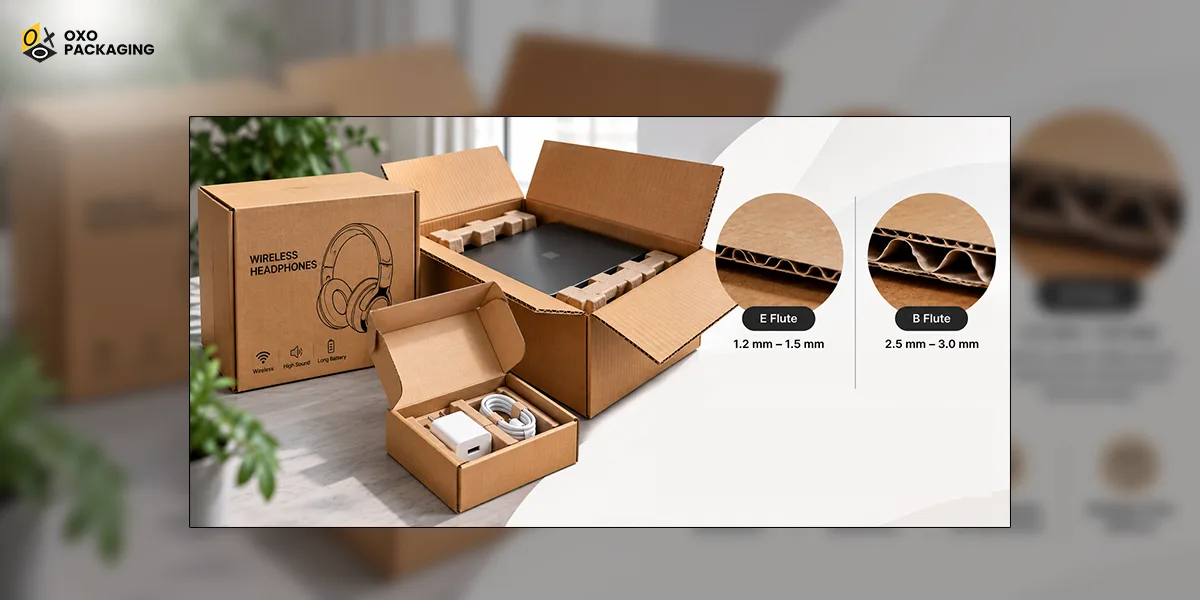
Corrugated cardboard is one of the prime types of protective packaging materials. It is widely used for shipping and protecting sensitive electronics because its fluted inner layer absorbs shocks and prevents impact damage.
Though corrugated is a type of cardboard packaging. But there is a difference between them. Know corrugated vs cardboard? Corrugated packaging provides the robust structural protection and crush resistance needed to safely ship and handle electronics due to its fluted layering. However, standard flat cardboard is only suitable for lightweight retail product boxes.
Talking about corrugated packaging, it varies in fluted layers that serve distinct purposes for electronics. Two flute types are most common: E Flute and B Flute. If you compare E flute vs B flute, you come to know that E flute is a micro-flute having thickness 1.2 mm to 1.5 mm, making it ideal for small, lightweight electronics with high-end retail branding.
Comparatively, B-Flute has a thickness of 2.5 mm to 3.0 mm, making it ideal for heavier, bulkier devices needing extra cushioning and stacking strength.
Key Features
- Shock Absorption and Cushioning: The inner fluted (wavy) layer sandwiched between linerboards acts as a spring, absorbing drops, bumps, and transit vibrations.
- High Stacking Strength: High Edge Crush Test (ECT) ratings allow boxes to withstand heavy vertical compression during warehouse stacking and bulk transport.
- Scalable Wall Thickness: Options range from single-wall boards for lightweight accessories to double- or triple-wall constructions for heavy appliances and large screens.
- Moisture and ESD Protection: Special coatings resist humidity, while anti-static treatments prevent electrostatic discharge from damaging vulnerable microchips and circuit boards.
When to Choose?
Use corrugated cartons for heavier devices, appliances, or delicate circuit boards that require multi-layered impact resistance rather than thin folding paperboard. They perform best when your electronic goods face rough courier handling, stacking loads in warehouses, or multi-stop transit. Also, consider specialized plastic (PP) corrugated sheets if your electronics need anti-static (ESD) properties or high humidity resistance during industrial transport.
Limitations
- The naturally rough texture of corrugated boxes can scratch delicate surfaces without an internal protective liner.
- Lower-quality aesthetic finish that doesn’t reflect your brand visuals as persuasively as paperboard or rigid boxes.
Rigid Packaging

It uses thick, heavy-duty chipboard (1mm to 3mm thick) that maintains its permanent shape to provide maximum structural protection and a luxury unboxing experience. Wondering what is chipboard? Well, it is a heavy, solid paperboard made from 100% recycled paper pulp pressed into rigid sheets without the wavy, hollow inner fluting found in corrugated cardboard.
Key Features
- High Structural Strength: Built from heavy-duty greyboard or chipboard that is up to four times stronger than standard cardboard, preventing crushing during shipping.
- Custom Foam and Molded Inserts: Utilizes precision-cut EVA foam, polyethylene, or molded pulp to tightly secure the device, absorb shock, and stop internal movement.
- Electrostatic Discharge (ESD) Protection: Incorporates anti-static coatings or conductive liners to protect sensitive microchips and internal circuits from static shocks.
- Premium Closure Styles: Uses secure two-piece lift-off lids, sliding drawer boxes, or concealed magnetic flap closures for a high-end tactile feel.
- Surface Customization: Features smooth exterior wrap papers that support luxury finishes like matte lamination, foil stamping, and spot UV branding.
- Environmental Barriers: Often layered with moisture-resistant or thermal linings to protect sensitive hardware from humidity and temperature shifts.
When to Choose?
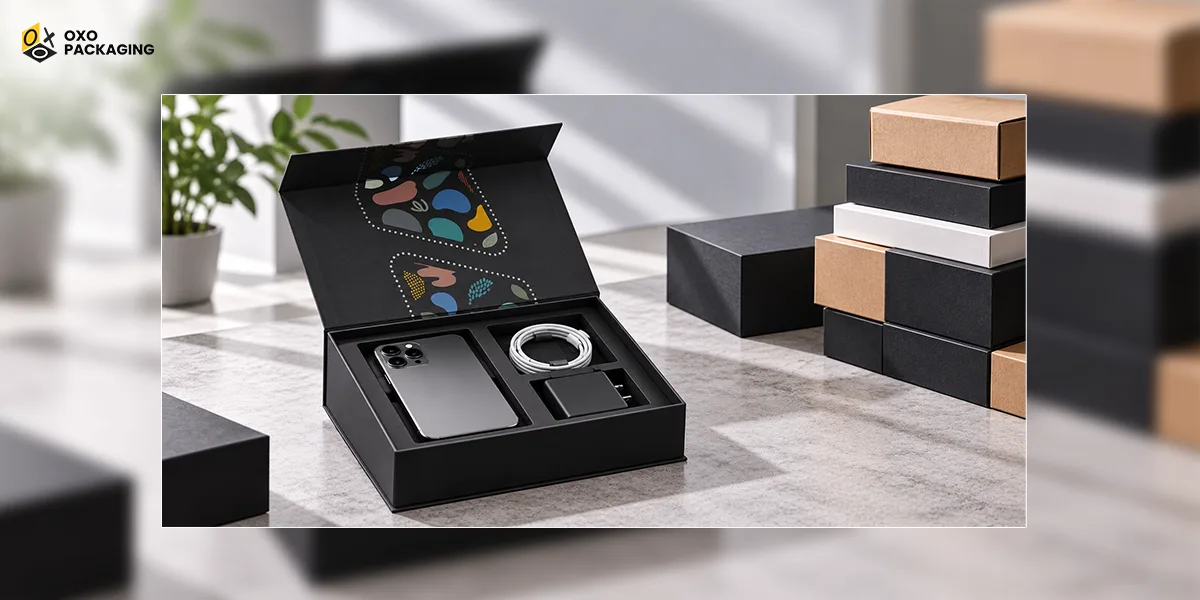
Use rigid boxes for delicate items like smartphones, smartwatches, headphones, and tablets that need superior compression and impact protection. Or when you want to deliver a high-end, premium feel during retail display or unboxing.
Limitations
- Rigid containers made of thick plastic, metal, or heavy paperboard add dead weight. Shipping heavier boxes raises total transportation and fuel costs.
- Custom molds, die-cutting, and premium rigid box manufacturing cost significantly more than flexible alternatives.
Molded Pulp
Molded pulp packaging is a sustainable, paper-based alternative to traditional plastic foam used to immobilize, cushion, and protect electronic devices during shipping. Made from 100% recycled paper or plant fibers (like bamboo or bagasse), it is fully biodegradable, compostable, and recyclable.
Key Features
- Superior Shock Absorption: Fibrous structures and custom crush zones dissipate impact energy to reduce peak G-forces on fragile microchips and screens.
- Vibration Damping: Porous fiber matrices naturally absorb transit vibrations, protecting delicate solder joints and connectors from resonance damage.
- Precise Immobilization: Custom 3D-contoured cavities, raised ribs, and edge clearances lock devices tightly in place to prevent internal shifting or surface abrasion.
- High Compression Strength: Designed wall thicknesses and structural designs resist heavy stacking loads during warehouse storage and long-distance shipping.
When to Choose?
When you need sustainable, custom-contoured shock absorption for high-volume production. If you want to reduce plastic waste while attracting eco-aware shoppers. Molded pulp is useful when a soft, non-abrasive fiber texture is needed to eliminate the risk of surface scratches compared to harder plastics.
Limitations
- High upfront tooling costs for custom mold creation.
- Can produce dust or have a rougher texture, occasionally requiring a smooth coating for scratch-sensitive electronics.
Head-to-Head Material Comparison
|
Material |
Primary Role |
Protective Strength |
Printability & Aesthetics |
Cost-Efficiency |
Sustainability |
|
Paperboard |
Retail Box / Outer Wrap |
Low |
Excellent |
High |
High |
|
Corrugated |
Shipping Box / Master Carton |
High |
Moderate |
High |
Excellent |
|
Rigid Box |
Premium Luxury Packaging |
Very High |
Excellent |
Low |
Moderate |
|
Molded Pulp |
Internal Tray / Cushioning |
Moderate to High |
Low (Functional) |
Moderate |
Excellent |
Conclusion
Now that you have explored all main types of packaging materials for electronics, choose the one that suits your needs best. For premium brand appeal, opt for paperboard. Choose molded pulp for building a sustainable image of your brand. And rigid boxes for premium appeal as well as supreme protection, while being ready to pay a premium price too. However, corrugated serves best for long-distance shipping. You can also contact our packaging experts at OXO Packaging in case you need further guidance!
Electronic packaging is the design of housing, connecting, and protecting delicate electronic parts so they can work safely and reliably
The best type of packaging for electronics is a combination of a sturdy corrugated cardboard outer box paired with custom-fit foam inserts and anti-static (ESD) protection
Popular electronic packaging ideas focus on combining secure product protection with a sleek, premium unboxing experience.
Common packaging materials for electronics include corrugated, paperboard, rigid boxes, and molded pulp.






 Let's Call