


5 Key Pharmaceutical Packaging Trends for Drug Makers
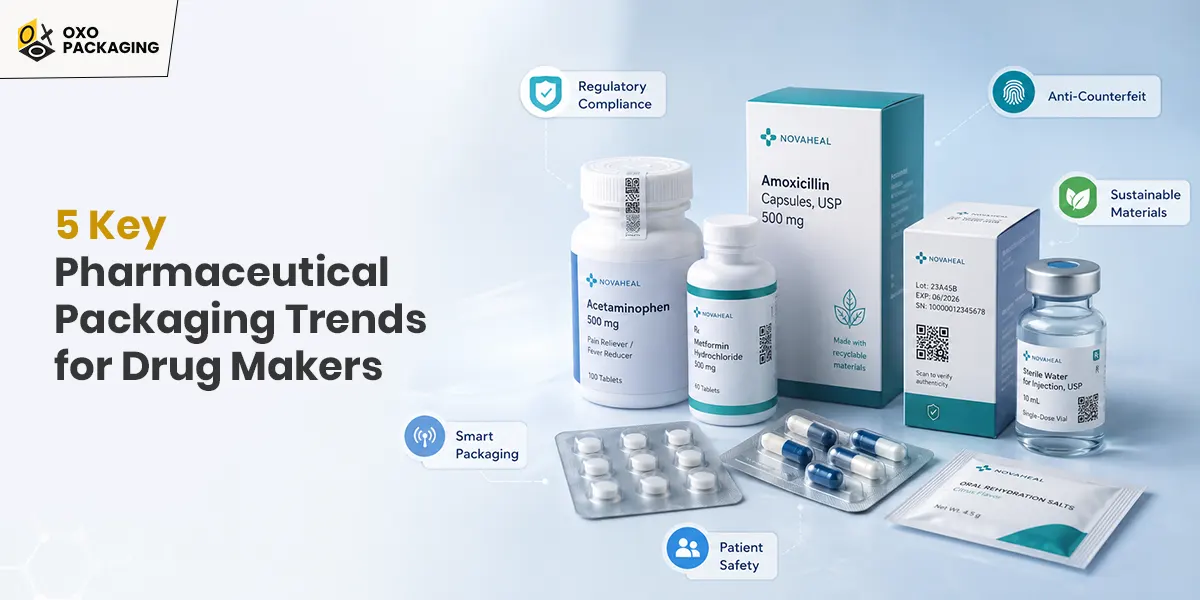
The pharmaceutical packaging market is facing a massive shift. Between stricter global regulations, rising counterfeit threats, and an urgent push for sustainability, traditional drug packaging is no longer enough.
Today, your choice of materials directly impacts compliance, product safety, and patient trust. So drug makers must adapt or risk falling behind. From eco-friendly materials to connected smart technology, here are the 5 key pharmaceutical packaging trends you need to adopt right now to protect your products, reduce waste, and safeguard your bottom line. Let’s dive into that:
1. Sustainable Packaging and Eco-Friendly Materials
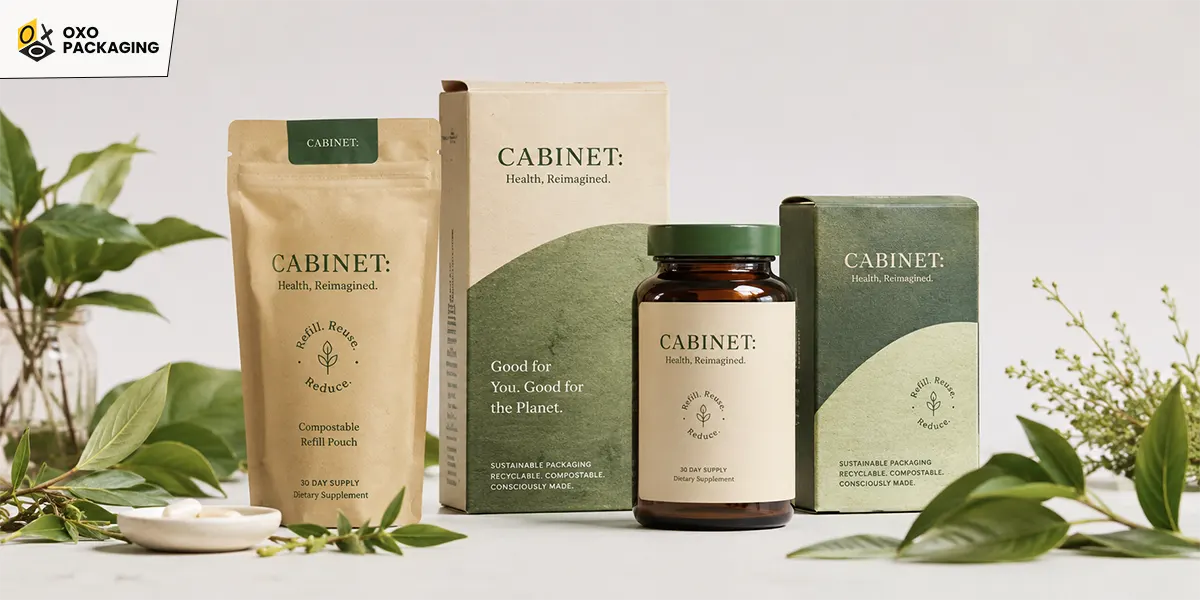
Strict rules such as Europe's Packaging and Packaging Waste Regulation (PPWR) and extended producer responsibility (EPR) laws force drug manufacturers to minimize space and use recyclable components rather than plastics.
Inspired by stringent regulations like EPR laws in the USA, forward-thinking pharmaceutical manufacturers are increasingly adopting eco-friendly materials and paper-based alternatives to plastics. Innovative fiber-based solutions successfully match the structural protection of traditional plastics while integrating into circular waste streams.
Many brands are replacing traditional polyvinyl chloride (PVC) and multi-material layers with mono-material solutions, green aluminum, and paper-based cartons. They also use plant-based polymers, including biodegradable options made from cornstarch, seaweed, or sugarcane, to offer alternatives for single-use medical waste.
Cabinet Health is a prominent American sustainable healthcare and pharmaceutical brand that replaces traditional single-use plastic pill bottles with infinitely reusable glass medicine jars and 100% compostable refill pouches.
2. Smart Packaging and Traceability with Labels
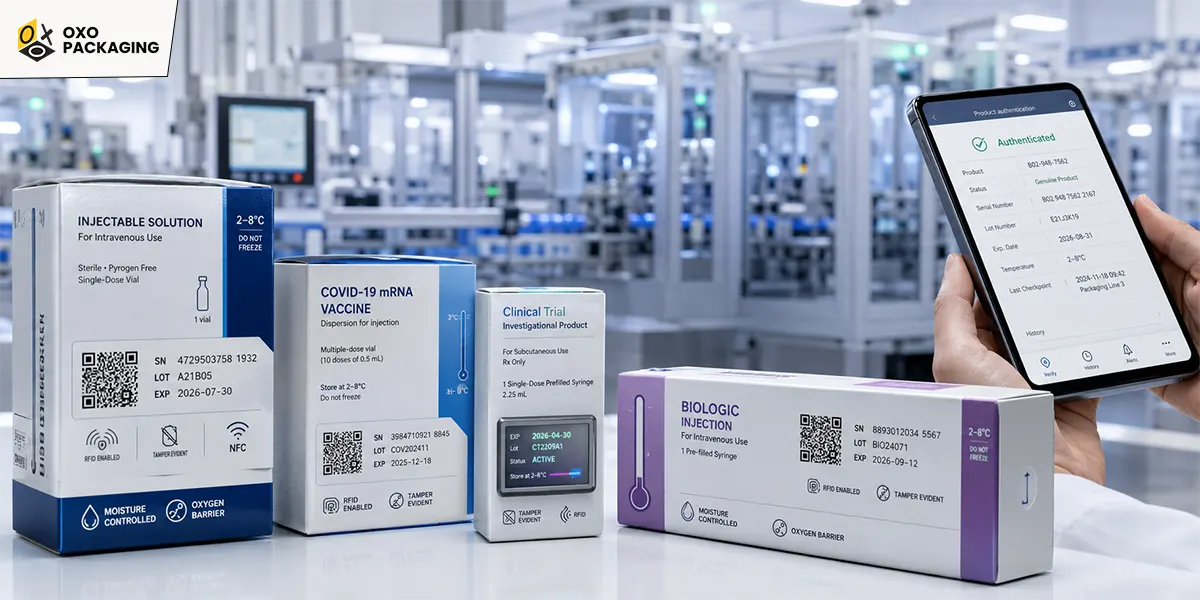
Modern pharmaceutical supply chains need unprecedented visibility and security through smart packaging technologies integrated into labels. For this purpose, RFID chips, QR codes, and Near-Field Communication (NFC) play an important role.
They link physical boxes to digital apps for tracking, temperature monitoring, and product authentication to meet regulatory compliance and safeguard sensitive biologics. Modern pharmaceutical packaging now actively protects sensitive biologics, vaccines, and injectables with built-in moisture absorbers, oxygen scavengers, and temperature indicators.
Apart from this, push-button screens are embedded directly into clinical trial packaging that allow researchers to update expiration dates and warnings remotely. For example, Merck leverages advanced automated serialization and digital tracking on packaging lines to ensure precise compliance, patient safety, and end-to-end supply chain visibility.
3. Safety and Prevention of Anti-Counterfeiting Practices
Pharmaceutical brands are facing the rise of sophisticated fakes that may compromise their integrity. To prevent this, they utilize embedded interactive serialized QR codes and NFC tags directly onto cartons. As a result, patients and pharmacists verify a product's authenticity with a quick smartphone scan.
Packaging engineers are also designing smarter physical barriers, such as holographic foils, color-shifting inks, and void-revealing seals that make any attempt at supply chain tampering instantly visible.
Talking about an example, consider Pfizer. The company utilizes intelligent serialization and scannable QR codes with cold-chain temperature sensors on critical vaccine and biologic packaging. That helps them monitor environmental integrity and combat counterfeiting across distribution networks.
4. Custom and Accessible Packaging via Smart Features
The transformation toward personalized medicine is fundamentally reshaping pharmaceutical packaging. It is forcing a shift from a one-size-fits-all approach to patient-centric design. To support highly individualized therapies, modern formats must seamlessly adapt to diverse consumer needs through tailored instructions, customized layouts, and accessible, easy-open structures.
To make your packaging personalized, multipage labels and custom booklets deliver exhaustive, multilingual details without expanding the physical footprint of the container. Also, advanced digital printing allows brands like yours to personalize information down to the individual unit level, keeping production lines agile and streamlined.
For example, CVS Health uses a custom label structure featuring large, high-contrast typography and prominent temporal icons (Morning, Afternoon, Bedtime) rather than confusing blocks of text. The brand innovates its packaging to strengthen customer satisfaction.
On the other hand, embedding smart features like interactive QR codes or NFC tags transforms pharmaceutical boxes into dynamic internet gateways. Patients can scan the package with a smartphone to immediately unlock visual tutorials, step-by-step videos, and localized language options that improve comprehension and compliance.
Consider the custom clinical engine of CVS Health that automatically reviews a patient’s multi-medication routine to generate a unified, color-coded ScriptPath Prescription Schedule. This streamlines complex dosing and reduces the risk of dangerous double-dosing or missed medication for seniors.
5. Patient-Centric and Compliance Design
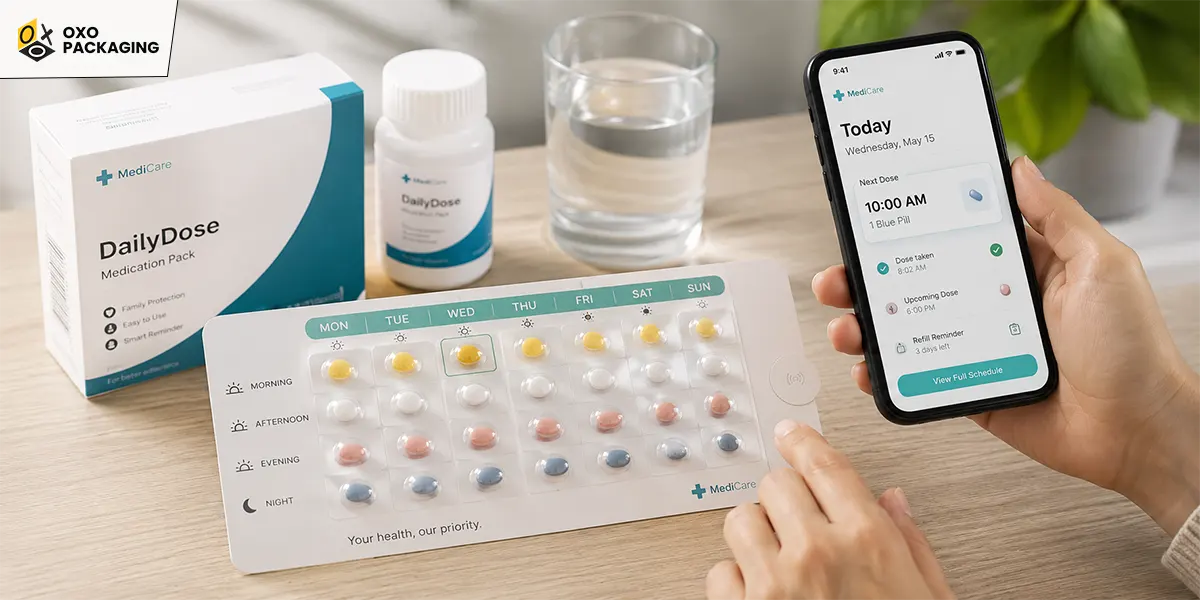
The ultimate measure of a drug's success is whether a patient takes it correctly. As a result, 2026 pharmaceutical packaging trends are shifting away from rigid, industrial designs toward intuitive, human-centered formats that actively support medication adherence. By blending clever structural design with digital tools, modern drug manufacturers are removing the friction from daily healthcare routines such as:
- Next-generation blister packs use integrated calendar markers, color-coded daily dosing, and even embedded electronic sensors that log when a dose is taken, helping patients manage complex regimens effortlessly.
- New primary packaging formats focus heavily on dexterity, featuring easy-open yet child-resistant mechanisms that empower elderly or chronic pain patients to access their medication without frustration.
- These physical designs seamlessly sync with smartphone apps to trigger automated dosing alerts and refill reminders, closing the loop between the physical package and patient compliance.
Where to Find Innovative Packaging for Pharmaceuticals?
Since you have explored major pharmaceutical packaging design trends in 2026, you need a reliable custom packaging partner. Wondering why? Bringing these patient-centric, smart, and sustainable designs to life needs collaboration with forward-thinking packaging suppliers like OXO Packaging.
By aligning with us, you can transform your packaging from a mandatory regulatory requirement into a strategic differentiator that ensures medication adherence and protects patient health.
The latest trends in pharmaceutical packaging focus on sustainability, digital connectivity, and advanced safety features to improve patient adherence and supply chain integrity.
High-density polyethylene (HDPE) and borosilicate glass are the best pharmaceutical packaging materials because they offer superior chemical resistance, safety, and protection against moisture and light.
The absolute best material depends on the application, but mono-material polypropylene (PP) laminates are the top choice because they offer exceptional moisture protection while being fully recyclable.






 Let's Call