


Your Ultimate Guide to Pet Food Packaging is Here!
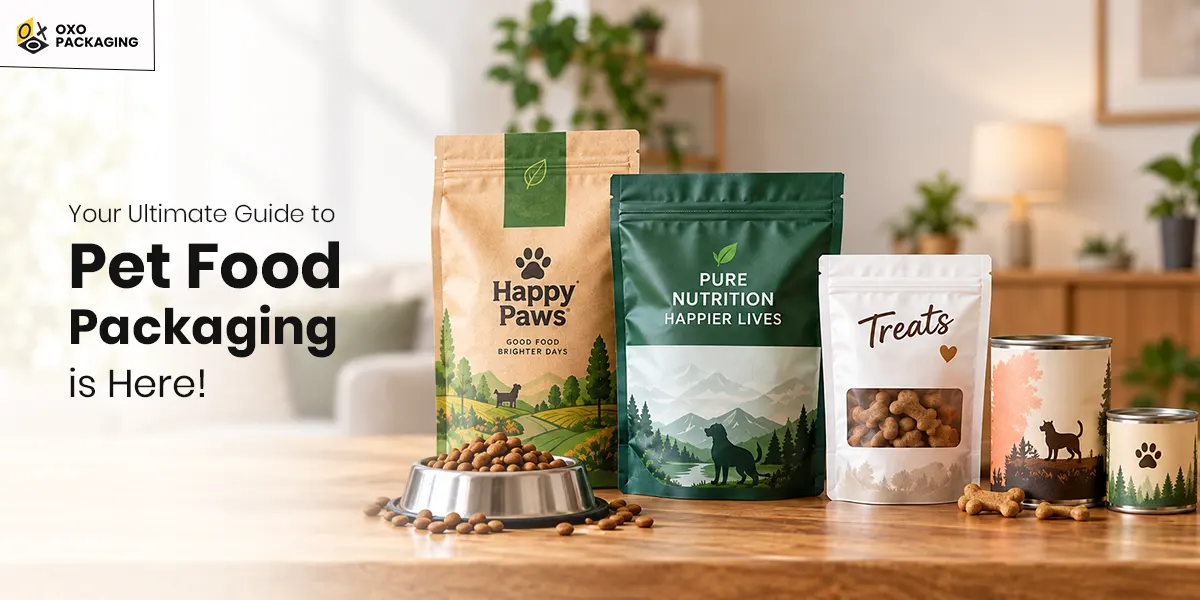
Pet food packaging does much more than hold kibble, treats, or wet food. It protects nutritional quality and helps maintain the freshness of your pet products. That communicates your brand identity and can influence whether a customer chooses your pet product over another on the shelf.
So for pet food manufacturers, choosing the right packaging requires more than selecting an attractive bag or container. The ideal solution needs to balance product protection, convenience, cost, sustainability, regulatory requirements, and brand presentation.
With pet owners increasingly treating pets as family members, packaging expectations are changing too. Brands like yours need packaging that protects the food while delivering a convenient and responsible experience.
Why Pet Food Packaging Matters?
Since the pet care packaging market is more likely to reach $21.74 billion globally by 2034, you have huge potential to target it and boost ROI. It matters because your pet food can be sensitive to moisture, oxygen, light, contamination, and temperature changes.
So, if you choose poorly selected packaging, it can reduce shelf life, affect product quality, increase waste, and damage consumer confidence in your brand. Packaging also plays an important role throughout the supply chain.
The right format can reduce storage requirements, lower transportation weight, improve warehouse efficiency, and make pet products easier for customers to handle. On the other hand, sustainability is another growing consideration.
The Pet Sustainability Coalition estimates that approximately 300 million pounds of pet food and treat bags are generated in the United States each year, with about 99% lacking a sustainable end-of-life solution.
Hence, for manufacturers, this creates an opportunity to rethink packaging materials and formats without compromising product protection.
Explore Common Types of Pet Food Packaging
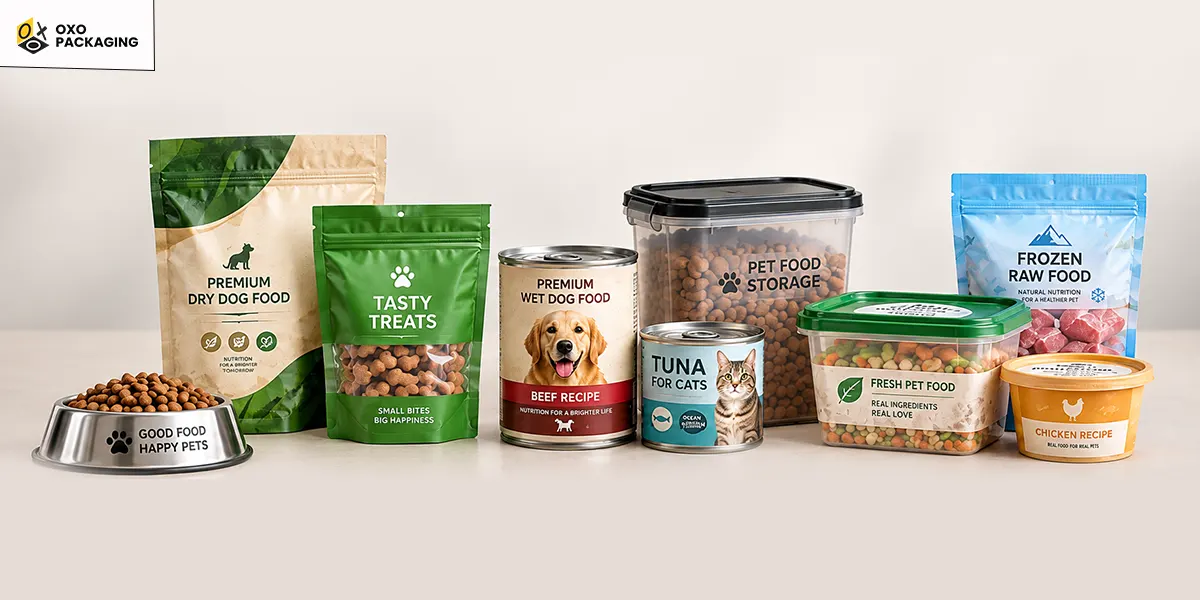
Since you have gone through the importance of pet care packaging, now consider some other essential elements. Different pet food products need different packaging characteristics. Some of the most widely used types include:
1. Flexible Pouches and Bags
Flexible packaging is widely used for dry food, treats, fresh food, and specialty pet products. Stand-up pouches and resealable bags can provide excellent convenience while requiring less material and space than many rigid alternatives.
Their lightweight construction can also reduce shipping weight and storage requirements. Resealable closures help consumers maintain freshness after opening.
2. Cans and Other Rigid Containers
Rigid packaging is particularly suitable for wet pet food and products that need strong impact resistance. Metal cans provide a sturdy barrier and are familiar to consumers, while plastic containers can offer flexibility in size, shape, and design.
Rigid types can also provide strong shelf presence, making them useful for brands positioning products as premium offerings.
3. Tubs, Tubs With Lids and Other Specialty Formats
Fresh, refrigerated, frozen, and specialty pet foods may require packaging designed around temperature, handling, portioning, and resealing requirements. The best format depends on the product's moisture content, distribution environment, expected shelf life, and consumer usage pattern.
What to Choose: Flexible vs Rigid Pet Food Packaging?
Now that you have explored different types of pet food packaging, you should know what to opt for. Well, there is no universal winner between flexible and rigid packaging. The right choice depends on your product and commercial priorities.
Flexible packaging generally offers advantages in weight reduction, storage efficiency, shipping costs, resealability, and material efficiency. It can be particularly valuable for brands selling through e-commerce or subscription models.
Rigid packaging, meanwhile, can offer durability, impact resistance, strong barrier protection, and a premium physical presence for animal food packaging. Your decision should consider:
- Product type and moisture level
- Required shelf life
- Oxygen and moisture barrier requirements
- Transportation conditions
- Storage requirements
- Consumer convenience
- Packaging machinery
- Sustainability objectives
- Target price point
- Branding requirements
Choose the Right Pet Food Packaging Material
Material selection is one of the most important packaging decisions a manufacturer can make. So here are a few considerations to make. For example, plastic remains common because it can provide durability, barrier protection, flexibility, and design versatility.
Recycled plastics, including post-consumer recycled materials, can also support sustainability goals where the application permits. On the other hand, metal is frequently used for wet pet food because of its strength and protective properties.
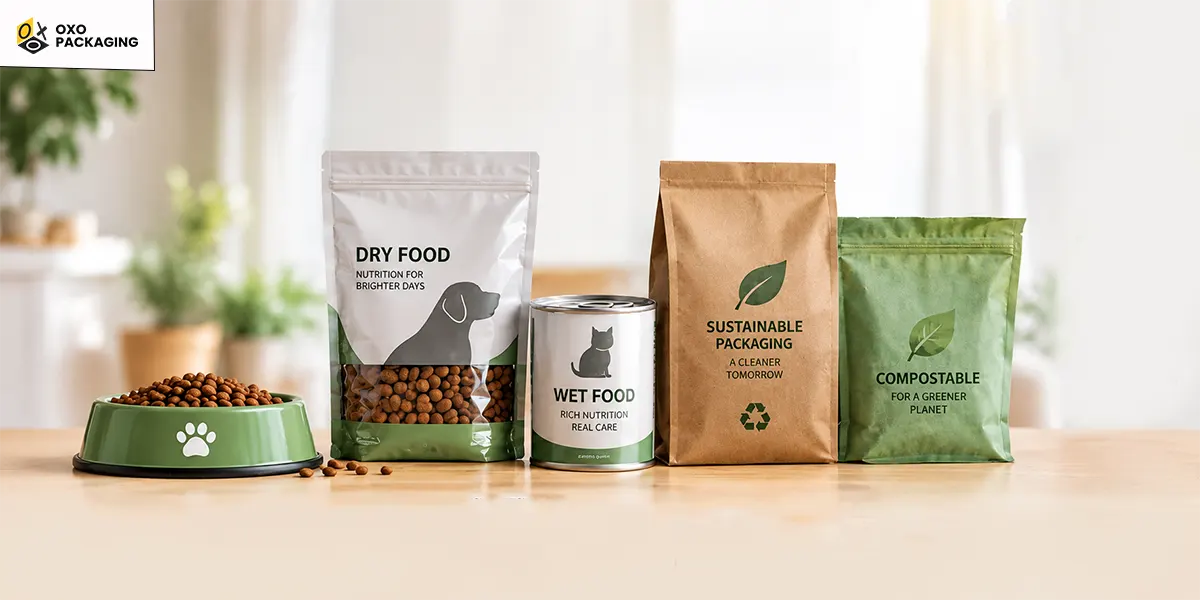
Emerging sustainable solutions include recyclable structures, recycled-content materials, compostable formats, and simplified material constructions. However, sustainability should never be evaluated in isolation.
A material that sounds environmentally friendly may not be appropriate if it cannot protect the product throughout its intended shelf life or lacks a practical end-of-life pathway.
Consider Sustainable Pet Food Packaging
Sustainability has become a major consideration for pet food brands and their customers. So a sustainable packaging strategy can involve several approaches:
- Reducing unnecessary material
- Lightweighting packaging
- Increasing recycled content
- Designing packaging for recyclability
- Exploring compostable materials where appropriate
- Improving package-to-product ratios
- Reducing transportation weight
- Offering appropriately sized formats to minimize food waste
Flexible packaging can help reduce material use and transportation weight, while newer recyclable structures are being developed to address some of the challenges associated with traditional multilayer packaging.
However, brands should evaluate the complete packaging lifecycle, including manufacturing, transportation, product protection, consumer use, and disposal.
Ensure Packaging and Supply Chain Efficiency
Your packaging decisions can directly affect operational costs. A package that takes up unnecessary warehouse space or adds excessive transportation weight can increase costs throughout the supply chain. Conversely, an efficiently designed package can improve pallet utilization, reduce shipping volume, and simplify inventory management.
So consider packaging during product development rather than treating it as an afterthought. Bring packaging, procurement, production, logistics, and marketing teams into the process early. Testing a new format through a limited production run can also reveal problems before a full-scale rollout.
Dive Into Safety and Regulatory Considerations
Pet health packaging must protect the contents from contamination, damage, and environmental exposure. You also need to consider applicable food-safety and labeling requirements.
Depending on the market, organizations and standards such as the FDA, AAFCO, HACCP, ISO, and GFSI may be relevant to product safety and quality systems. Quality control should cover more than the finished package.
You should evaluate material specifications, seals, closures, printing, barrier performance, storage conditions, and transportation durability. Maintaining traceability is equally important. Clear lot information and best-by dates can support effective inventory control and recall management when necessary.
How to Choose the Best Pet Food Packaging?
Before selecting a packaging solution, answer these questions:
- What are you packaging?
Dry kibble, wet food, treats, supplements, fresh food, and frozen products have different requirements.
- How long must it remain fresh?
Determine the required barrier protection and shelf life before choosing the material structure.
- How will it be distributed?
E-commerce, retail, subscription delivery, refrigerated transport, and traditional distribution can place different demands on packaging.
- What does your customer expect?
Resealable closures, easy-open features, portion sizes, handles, and convenient storage can improve the user experience.
- What are your sustainability goals?
Define whether you want to reduce material usage, increase recycled content, improve recyclability, or explore alternative formats.
- What are your production capabilities?
The ideal package must work with your filling, sealing, labeling, and inspection equipment.
Boost Your Pet Food Packaging with OXO Packaging!
After reading a comprehensive guide on pet food packaging, if you want to find a credible packaging supplier, consider OXO Packaging. Whether you choose a flexible pouch, resealable bag, metal can, plastic container, or another specialized format, we provide everything based on your business needs.
The best packaging for dog treats is a resealable, food-safe stand up pouch or flat-bottom bag equipped with a strong moisture and oxygen barrier.
The best material for pet food packaging is a multi-layer laminated flexible mylar film, which provides superior barrier protection against oxygen, moisture, and light to prevent kibble fats from turning rancid.
Storing dog food directly in a plastic container can cause animal fats to seep into tiny scratches on the plastic and turn rancid.
You can find credible pet food packaging suppliers through global industrial manufacturers, specialized flexible packaging companies like OXO Packaging.







 Let's Call